


Vintage Oak Vanity
A vintage oak vanity brings solid timber character and period craftsmanship to a bedroom through dressing tables, mirrors, and washstands.
Vintage Oak Vanity
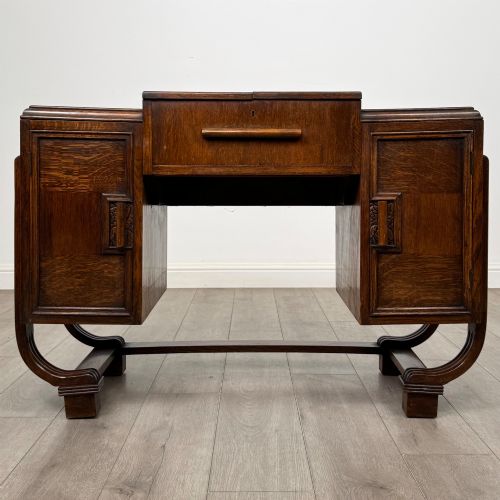
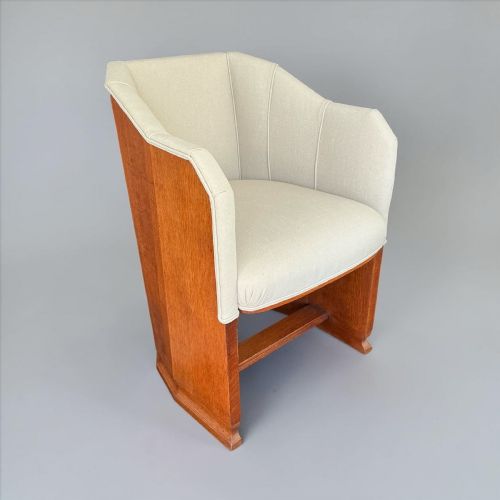
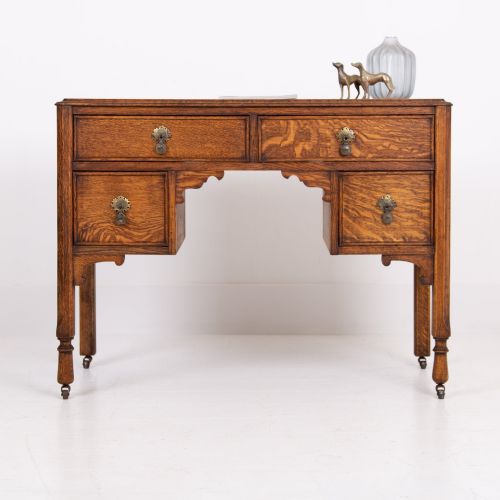
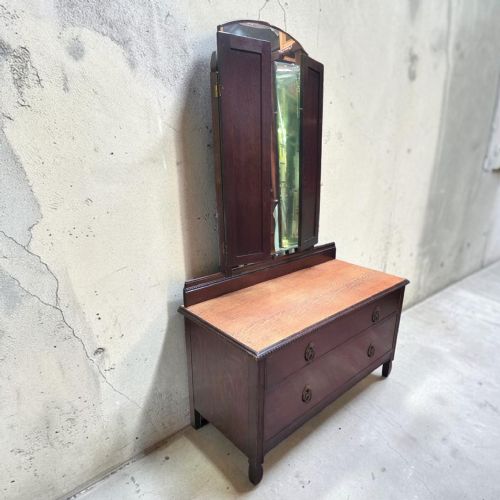
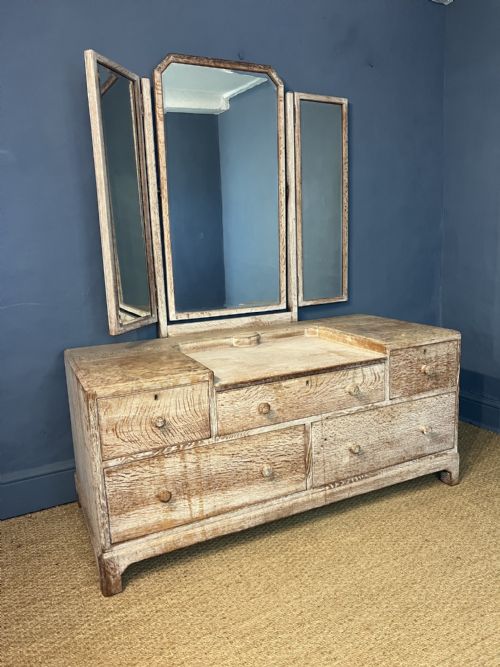
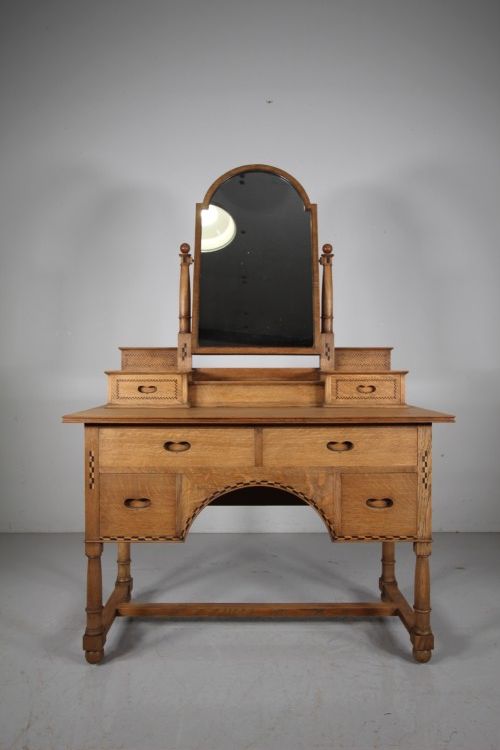
A vintage oak vanity encompasses dressing tables, dressing chests with triple mirrors, and washstands originating across the nineteenth and early twentieth centuries. These pieces reflect shifts from ornate Victorian and Edwardian revival designs to the clean lines of the Art Deco period and the Cotswold School.
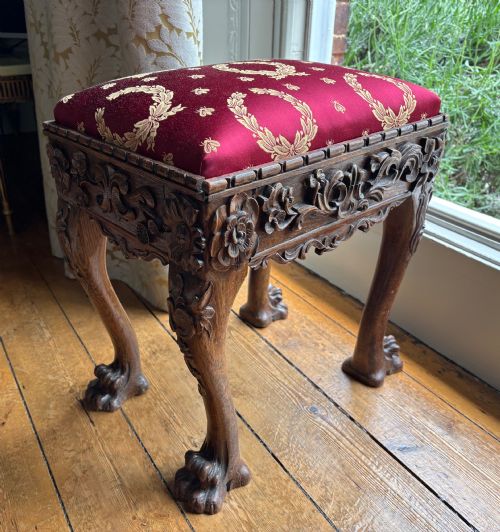
The material palette centres on solid oak, frequently paired with glass, brass hardware, marble inserts, and fabric upholstery. Pieces span distinct stylistic movements including Arts and Crafts, French Provincial, and Chippendale Revival.
Materials and construction
Construction relies heavily on solid oak and blonde oak timbers, sometimes treated with limed finishes in early twentieth-century workshops. Joinery techniques range from traditional hand-carved detailing on nineteenth-century frames to geometric streamlining found in Art Deco pieces.
Functional hardware incorporates polished brass handles, hinges, and tilting brackets that support adjustable glass dressing mirrors. Washstands and dressing chests frequently integrate heavy marble slabs and tiled splashbacks to withstand daily use.
Listings feature oak furniture spanning the Victorian, Edwardian, and Art Deco periods, incorporating materials such as marble, brass, and glass.
Assessing quality and origin
Quality rests on the integrity of the timber, the precision of the joinery, and the retention of original maker labels or stamps. Pieces produced by notable firms exhibit superior carving, balanced proportions, and careful selection of grain figures.
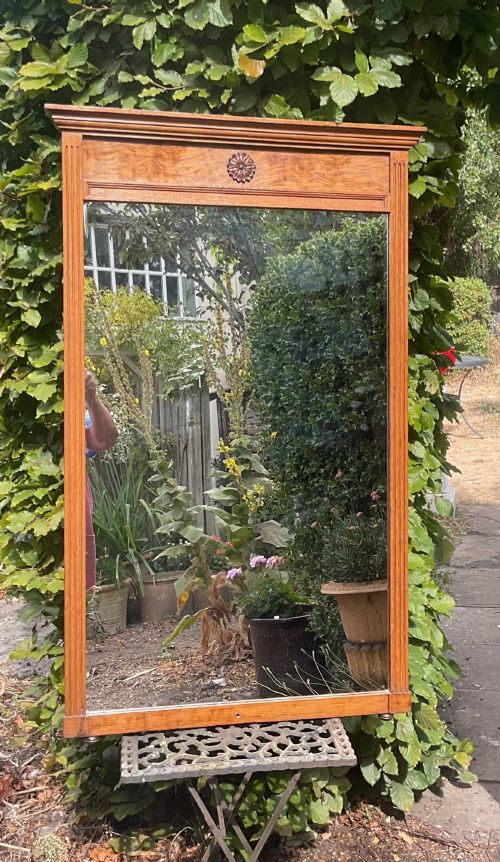
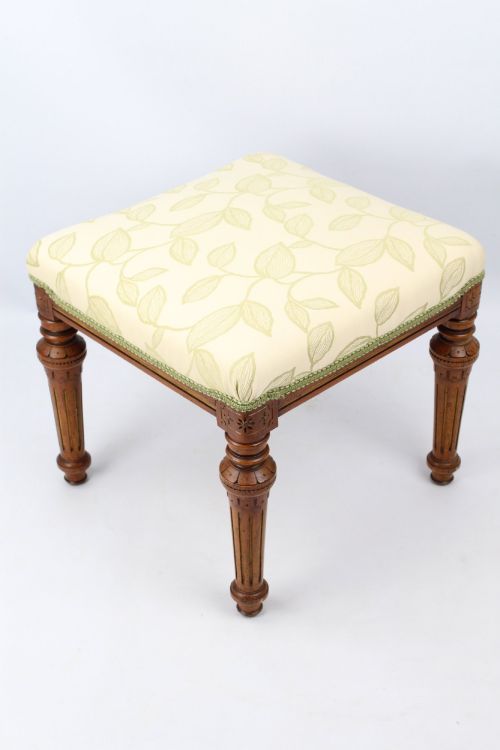
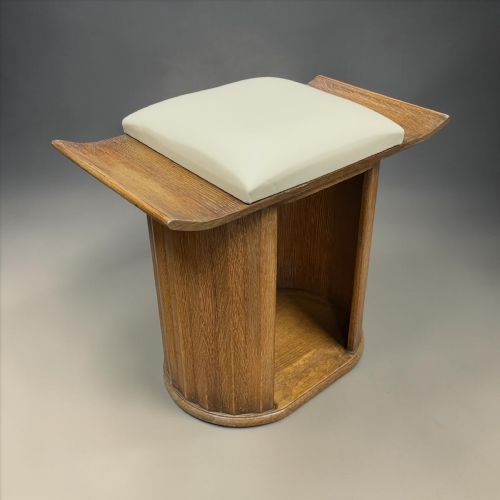
The presence of original bevelled glass mirrors, matching stools, and intact brass fittings distinguishes standard utility items from higher workshop productions. Surface treatments, whether traditional wax finishes or period limed coatings, demonstrate the original maker's attention to detail.
Heals·Harry and Lou Epstein·Shapland and Petter·James Shoolbred
The Vintage Oak Vanity Glossary
- Limed oak
- Timber treated with a specialised pigment finish that leaves a white deposit in the grain pores. This technique gained popularity during the interwar period.
- Dressing chest
- A lower chest of drawers fitted with an attached or pivoting mirror. These units serve a dual function for storage and grooming.
- Washstand
- A wooden wash furniture piece featuring a stone or marble top designed to hold a basin and jug. They often incorporate tiled splashbacks and lower shelf storage.
- Shaving stand
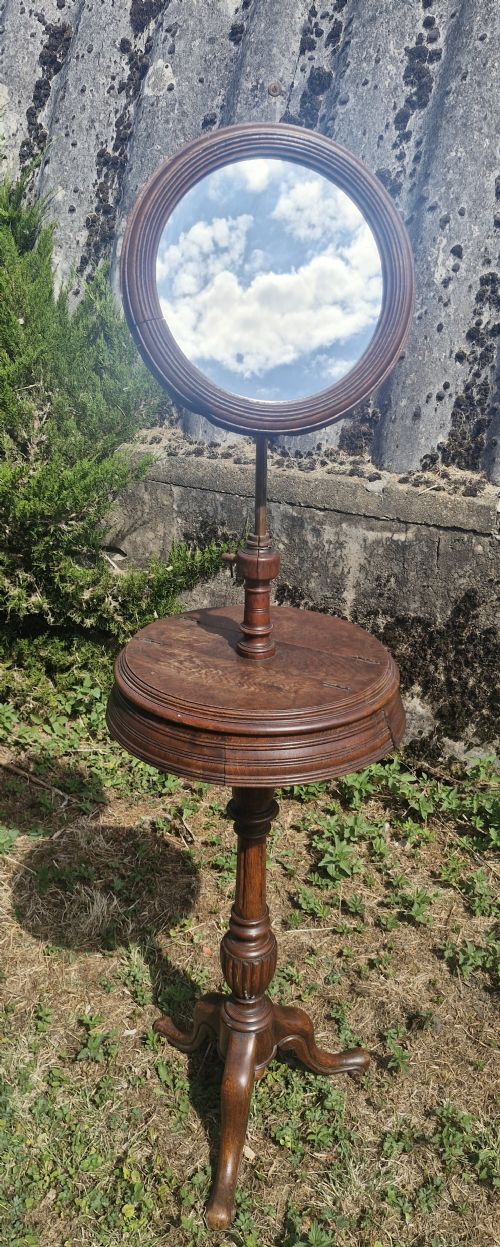
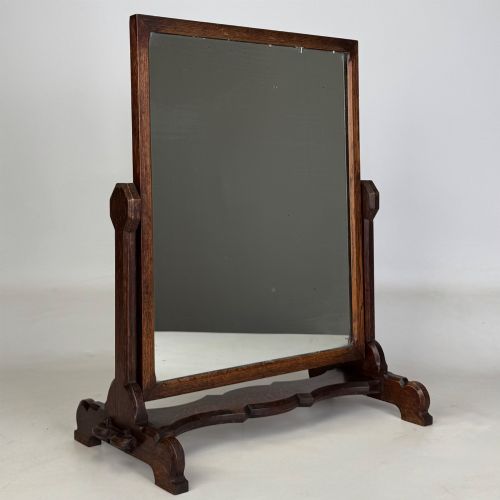
- A specialist adjustable furniture piece designed for personal grooming. They typically include tilting mirrors and small platforms for shaving equipment.
- Arts and Crafts
- A design movement emphasising handcraftsmanship, simple forms, and visible construction methods. Pieces often highlight the natural grain of the oak.
Vintage Oak Vanity: Frequently Asked Questions
How do I date a vintage oak vanity?
Dating relies on architectural styles, hardware types, and construction methods visible in the piece. Victorian and Edwardian examples often feature heavy carvings and mirror frames, while 1930s pieces show geometric Art Deco influences.
Maker stamps, paper labels, and registration marks provide definitive production dates when present on the timber frame.
Can I replace the mirror on an old dressing table?
Original mirrors frequently show foxing or silver loss due to age, which many collectors preserve as a sign of authenticity. Replacing the glass is possible if the original frame remains undamaged.
Ensure any replacement mirror matches the original thickness and bevel profile to fit securely into the antique wooden rebates.
How do I care for limed oak surfaces?
Limed oak requires gentle cleaning with a dry or barely damp cloth to avoid stripping the delicate white pigment from the grain. Avoid silicone-based polishes that can discolour historic finishes.
Apply a traditional beeswax occasionally to nourish the timber and protect the surface from moisture.
Are marble tops on washstands removable?
Marble slabs on washstands are generally heavy loose inserts resting on the wooden frame rather than being permanently fixed. This design allowed for easier transport and cleaning during the nineteenth century.
Lift the stone carefully with assistance if dismantling the unit for moving to prevent chipping the polished edges.