
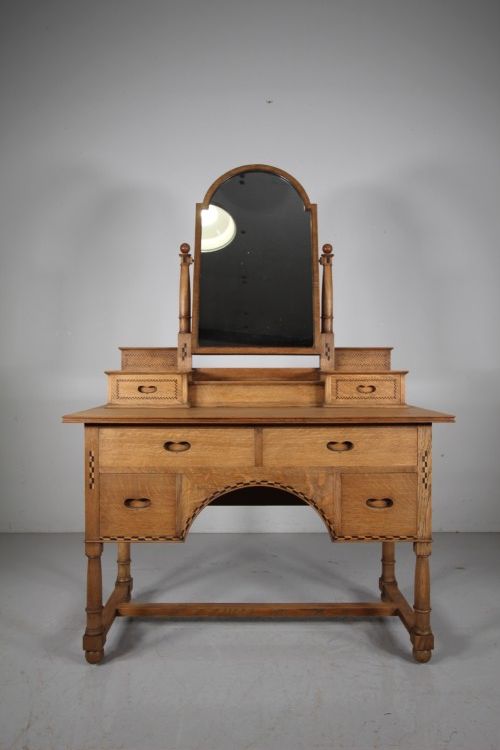


Solid Oak Dressing Table
A solid oak dressing table brings honest grain and sturdy joinery into the bedroom, offering a surface for morning routines that outlasts modern flatpack alternatives.
Solid Oak Dressing Table
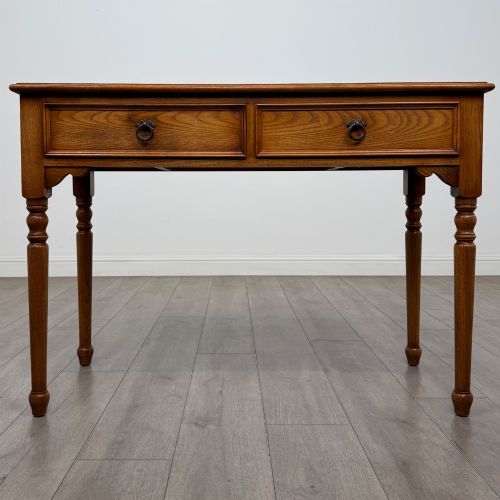
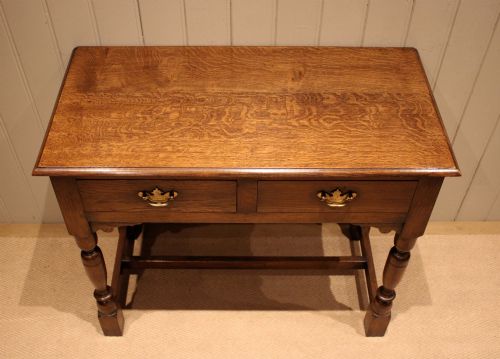
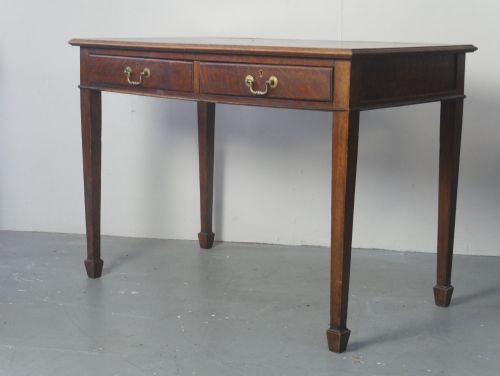
A solid oak dressing table represents a practical piece of bedroom furniture built from durable timber, often incorporating mirrors and storage drawers. When searching for a solid oak dressing table, buyers encounter examples stretching from the Victorian era through the Edwardian period and into the 1920s and 1930s. These pieces frequently manifest through Arts and Crafts ideals, Jacobean Revival mass, or simple English Country styles.
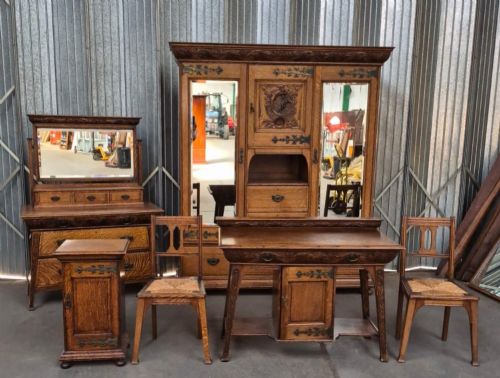
The surviving inventory and archive records show a heavy reliance on dressing chests, side tables adapted for personal grooming, and full bedroom suites. Pieces featuring bevel-edged swing mirrors and integrated drawers appear regularly alongside simpler writing desks and side tables utilised for similar functions. Makers such as Heal's and George Walton shaped this domestic tradition, producing marked or labelled pieces that collectors prize.
How they were made
Makers built a solid oak dressing table using sturdy framing timbers, often displaying prominent grain patterns or golden hues favoured by Arts and Crafts workshops. Wood inlay, brass handles, and iron fittings provide functional contrast to the heavy timber frames, while rush seating sometimes accompanies matching stools.
Surface decoration relies heavily on natural material qualities rather than applied veneers, with visible grain and pegged joints demonstrating traditional cabinet-making methods. Bevel-edged glass swing mirrors are secured to tabletop superstructure frames using brass or metal pivot fixings.
Early piano stools occasionally moonlighted as dressing seating when bedroom space ran short.
What varies in quality
The distinction between standard domestic furniture and the finest workshop output rests in the architectural ambition of the design and the integrity of the timber selection. Pieces bearing the documented marks of known makers like Heal's or George Walton command greater attention due to their documented provenance and deliberate stylistic vision.
Hardware quality and structural honesty separate routine production from exceptional pieces. Original brass or iron fittings, intact bevel-edged mirror glass, and clean, unwarped solid timber drawers indicate a higher standard of original manufacture.
George Walton
The Solid Oak Dressing Table Glossary
- Arts & Crafts
- A design movement prioritising handcrafting, natural materials, and simple utility over mass-produced ornamentation. This style heavily influences many oak bedroom pieces from the late nineteenth and early twentieth centuries.
- Dressing Chest
- A lower chest of drawers topped with a mirror and small trinket drawers, serving the same function as a dressing table. These pieces combine storage capacity with a dedicated surface for morning routines.
- Swing Mirror
- A looking glass hung within a movable frame supported by vertical uprights attached to the table or chest top. This allows the user to tilt the glass to various angles.
- Barley Twist
- A turned column detail resembling a twisted rope, frequently seen on the legs and supports of tables and dressing furniture from revival periods. This decorative turning technique adds visual texture to heavy timber frames.
- Wood Inlay
- The technique of embedding pieces of contrasting timber or other materials into the surface to create decorative patterns. It appears sparingly on select furniture surfaces.
Solid Oak Dressing Table: Frequently Asked Questions
What periods do these tables cover?
The available selection spans from the late nineteenth century through the Victorian and Edwardian eras, extending into the 1920s and 1930s.
Most pieces date from the height of the Arts and Crafts movement and the subsequent revival decades.
Are the mirrors original?
Many surviving examples retain their original bevel-edged glass swing mirrors, often mounted on upright supports fastened to the main timber top.
Replacement glass does occur over decades of domestic use, making original silvering a notable feature when present.
How do I care for solid oak?
Solid oak requires simple dusting with a dry cloth and occasional treatment with natural beeswax to nourish the grain.
Keeping the timber away from direct heat sources and strong sunlight prevents drying and splitting.
Did these come with matching stools?
Certain examples formed part of larger bedroom suites that included dedicated piano stools or rush-seated chairs.
Standalone tables are more common, having been paired with various seating over their working lives.