
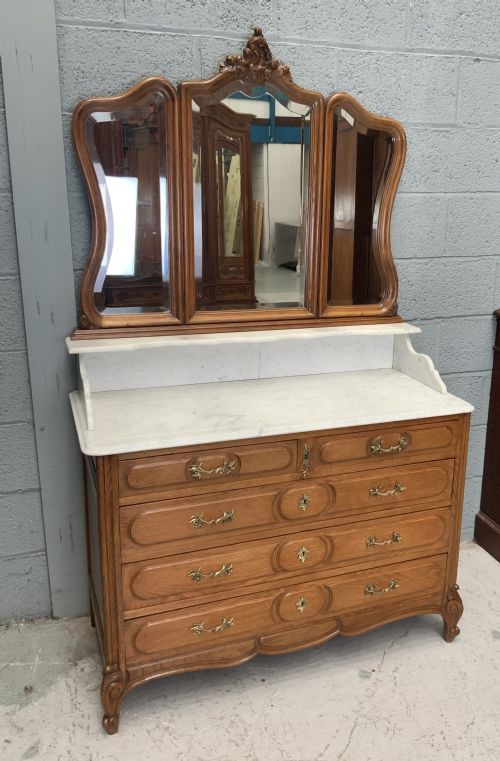


Vintage Oak Vanity Desk
A vintage oak vanity desk combines solid timber construction with functional mirrors and drawers for daily grooming.
Vintage Oak Vanity Desk
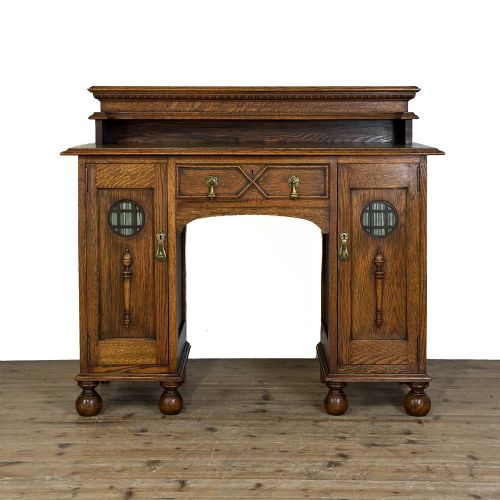
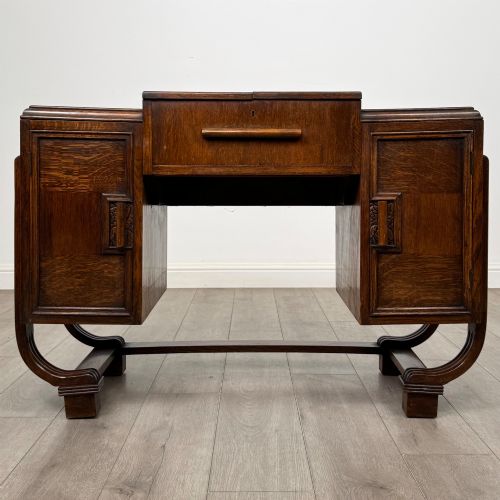
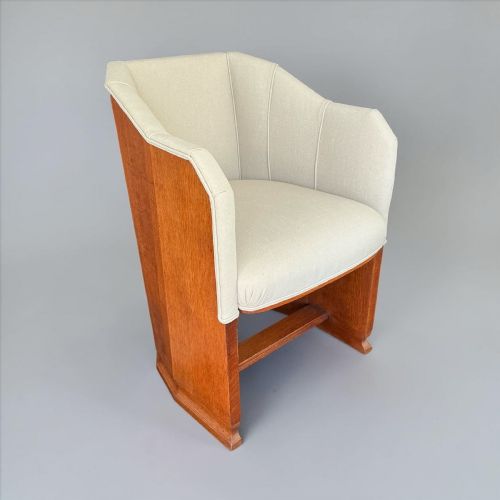
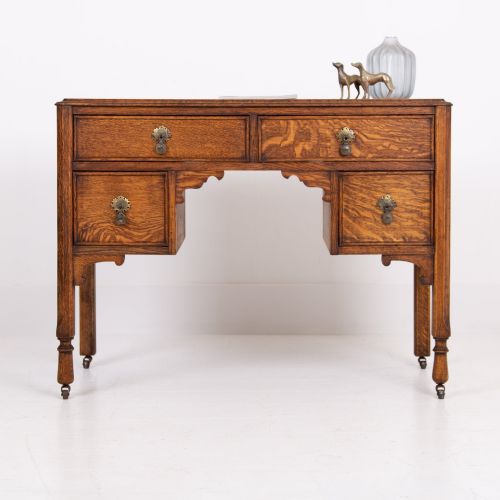
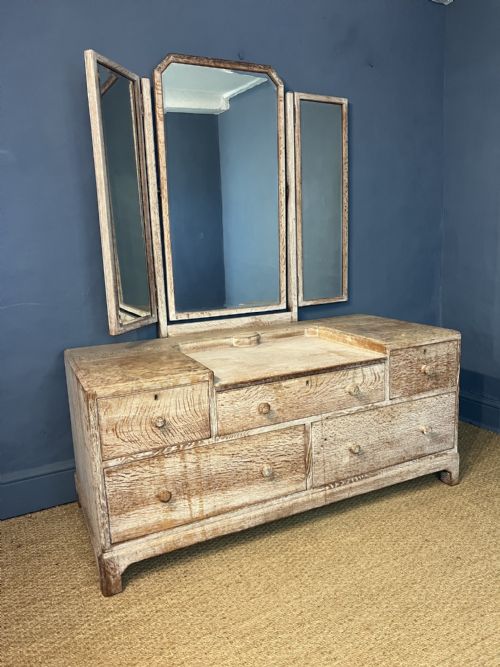
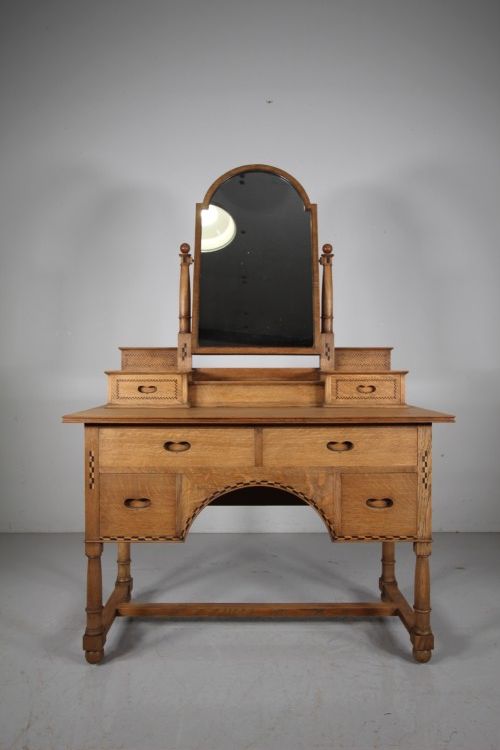
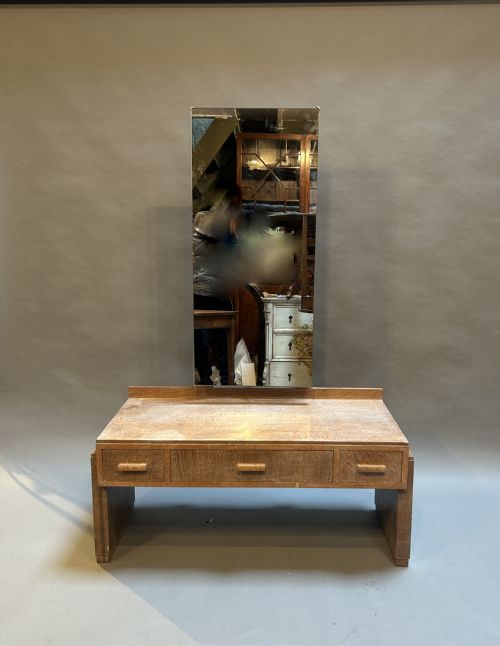
When you search for a vintage oak vanity desk, you encounter pieces primarily from the Victorian, Edwardian, and 1930 periods, alongside Arts and Crafts and Art Deco examples. These pieces serve as dressing tables, dressing chests, and occasional desks, often retaining matching mirrors or associated seating like armchairs and slipper chairs.
The most common formats on this page include sturdy oak dressing chests from the 1930s, often associated with makers like Heals, alongside Edwardian designs featuring oval mirrors and Arts and Crafts interpretations with honest joinery. French Provincial influences and Tudor Revival carved details also appear among the oak frames.
Buyers select these items for their durable construction and practical surface area, which suits modern bedrooms just as well as historical interiors. The variety spans simple rectangular consoles to twin pedestal configurations with integrated drawers and marquetry inlay.
What varies in quality
The distinction between ordinary and exceptional pieces lies in the fidelity of the cabinet work, such as the precision of the marquetry inlay and the depth of hand-carved details on the oak panels. Maker attribution, particularly labels from workshops like Heals or Shapland and Petter, elevates a piece significantly.
Proportion and structural integrity define the upper tier, where drawers operate smoothly within solid timber frames and original bevelled glass mirrors remain intact. Simpler vernacular pieces contrast with sophisticated Cotswold School or Art Deco designs that display distinct stylistic ambition.
Some dressing chests arrive with secret compartments designed for hiding midnight letters.
Heal and Sons·Shapland and Petter
The Vintage Oak Vanity Desk Glossary
- Dressing table
- A low chest or table fitted with a mirror, designed for grooming and personal care. These pieces often include multiple small drawers for cosmetics and accessories.
- Limed oak
- A wood finishing technique that imparts a pale, frosted appearance to the grain of the oak. This treatment gained popularity during the early twentieth century for modern interiors.
- Arts and Crafts
- A design movement prioritising traditional craftsmanship, visible construction, and simple forms over mass-produced ornamentation. Pieces from this style frequently showcase honest joinery and minimal decoration.
- Marquetry
- The art of applying decorative veneer pieces to a structure to form ornamental patterns and pictures. It appears on select tabletops and drawer fronts within these selections.
- Barley twist
- A type of furniture turning resembling a spiralling rope or barley sugar stick. This decorative structural detail appears frequently on table legs and supports.
Vintage Oak Vanity Desk: Frequently Asked Questions
How do I date a vintage oak vanity desk?
Dating relies on stylistic clues, construction methods, and materials recorded across different eras. Victorian and Edwardian examples often feature applied carvings and bevelled mirrors, while 1930s pieces lean towards clean Art Deco lines or limed oak finishes.
Examining drawer joints and hardware helps confirm the period. Hand-cut dovetails suggest earlier Victorian or Edwardian craftsmanship, whereas machine-made components typically point towards twentieth-century production.
Are mirrors original to these dressing tables?
Many pieces retain their original swinging or fixed mirrors, secured by wooden uprights or pivoting brass brackets. Original glass often displays subtle imperfections and foxing that confirm its age.
Replacements do occur over time due to damage, so inspecting the fit and silvering behind the glass provides clarity. Integrated mirrors mounted directly into the chest back are typical of 1930s designs.
What is the difference between a dressing chest and a desk?
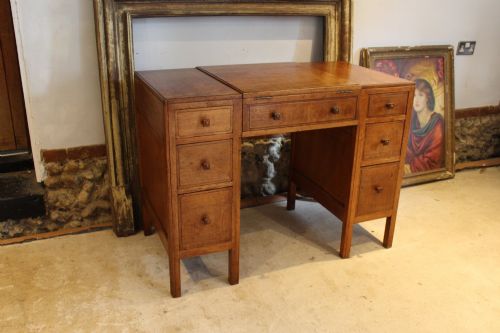
A dressing chest incorporates a built-in mirror and smaller trinket drawers designed specifically for personal grooming items. A desk focuses on a flat writing surface with kneehole space underneath.
Some hybrid forms blur these lines by offering kneehole pedestals combined with surface mirrors. Both formats utilise solid oak framing and similar period stylistic vocabulary.
How do I care for limed oak surfaces?
Limed oak requires gentle cleaning with a dry or barely damp microfiber cloth to preserve the pale pigment settled within the grain. Avoid harsh chemical cleaners and excessive moisture that can strip the finish.
Applying a quality wax periodically helps nourish the timber and protect the surface from everyday wear. Direct sunlight should also be avoided to prevent fading the oak tone.