


Vintage Oak Swivel Chair
A vintage oak swivel chair brings sturdy timber, mechanical ingenuity and daily comfort to a study or workspace.
Vintage Oak Swivel Chair
A vintage oak swivel chair is a purposeful seating form designed for offices, studies and workshops during the Victorian, Edwardian and early twentieth century periods.
The pieces listed here comprise desk chairs, armchairs and revolving office seats rendered in solid oak, often paired with contrasting hides and metal bases.
Buyers will most frequently encounter Edwardian and Victorian iterations featuring four-legged timber spider bases or heavy cast-iron mechanisms that allow both rotation and tilt.
Materials and construction
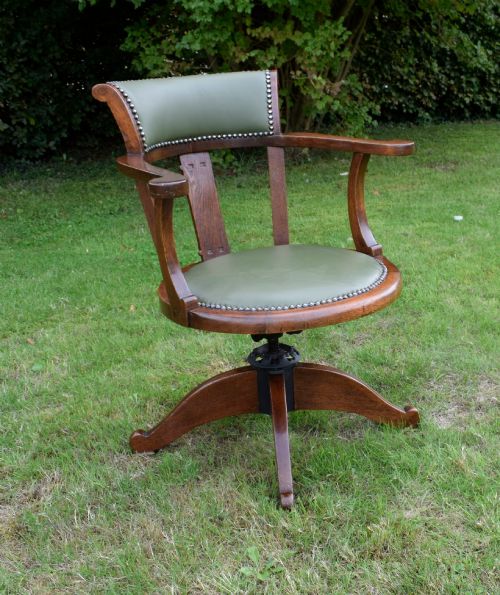
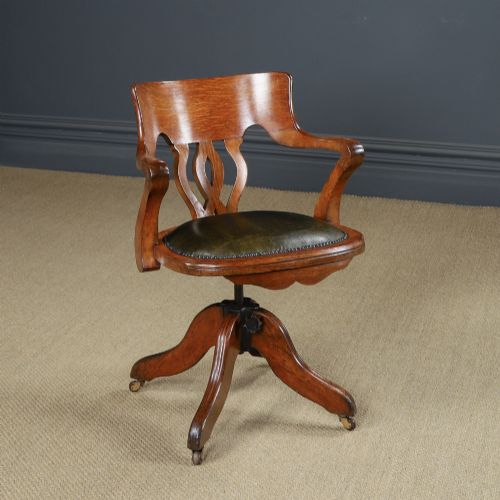
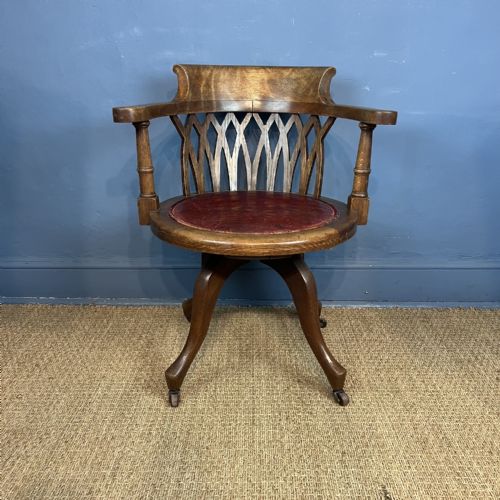
Makers utilised durable oak for the structural frames, steam-bending timber components like armrests and bentwood backs to achieve ergonomic curves.
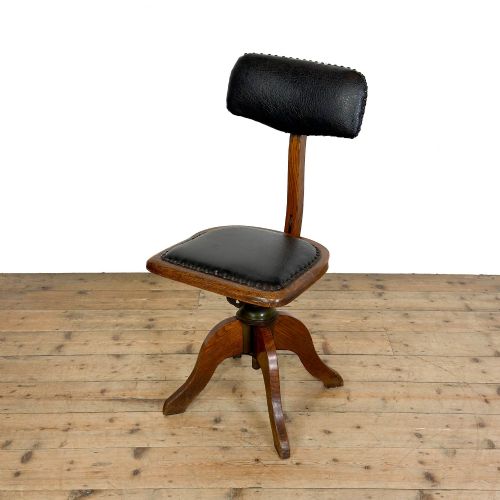
Cast iron and brass feature heavily in the undercarriages, forming the central spindles, adjustable height screws and four-pronged spider legs that support the revolving mechanism.
Upholstered seats and backrests were typically finished in green or tan leather, secured with brass tacks to withstand heavy daily use.
Listings span from the 1880s through the 1930s, uniting Victorian Gothic Revival and Edwardian styles with early industrial workshop designs.
Assessing quality and finish
The sophistication of the revolving and tilting mechanism dictates the upper tier of the range, particularly when combined with smooth height adjustment and patent springs.
Carving depth and timber selection separate utilitarian workshop seating from bespoke office furniture, with heavily carved details and figured grain marking superior examples.
The integrity of the original joints and the preservation of the patina on both the oak frame and the leather upholstery define the overall worth of the piece.
S&H Jewell·Edward William Godwin·Evertaut
The Vintage Oak Swivel Chair Glossary
- Swivel mechanism
- The underseat hardware allowing the chair to rotate fully. It usually incorporates a central threaded spindle or iron collar.
- Tilt action
- A mechanical function permitting the occupant to lean backward against an adjustable spring tension.
- Spider base
- The four-legged or five-legged support base radiating from the central column, frequently fitted with castors.
- Bentwood
- Timber shaped by exposure to steam and pressure to form curved structural components without joints.
- Bergere
- A cane-panelled seating insert occasionally utilised within the wooden framework of office chairs.
Vintage Oak Swivel Chair: Frequently Asked Questions
How do I adjust the height?
Most models feature a central threaded spindle beneath the seat, allowing the user to spin the entire upper portion upward or downward.
Older mechanisms may rely on a simple thumbscrew or a patent lever to lock the chosen height in place.
Are these chairs comfortable for daily work?
These office seats were engineered for long hours at administrative desks, featuring supportive curved backrests and generous proportions.
Adding a sheepskin or cushion can improve the comfort if you plan to sit for extended periods at a modern desk.
How do I date a revolving chair?
Look to the construction methods, such as the transition from hand-carved Victorian details to simpler Edwardian forms and later industrial metal frames.
Patent dates stamped into the iron swivel mechanisms also provide a reliable indicator of the exact manufacturing era.
Will the castors damage modern flooring?
Original iron or brass castors can be heavy and rigid, potentially marking delicate wooden floors or modern carpets over time.
Many collectors place these chairs on a protective rug or swap the rollers for period-appropriate glass cups.