


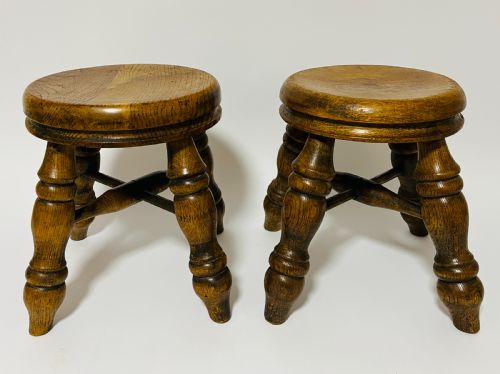


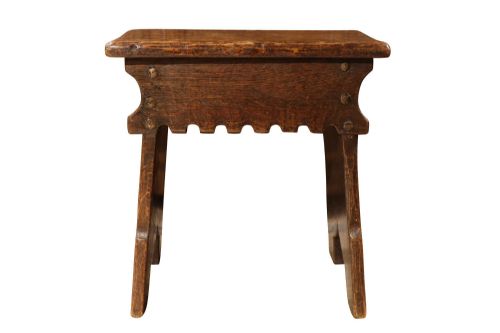

Vintage Oak Side Stool
A vintage oak side stool brings honest timber and sturdy utility to a quiet corner.
Vintage Oak Side Stool
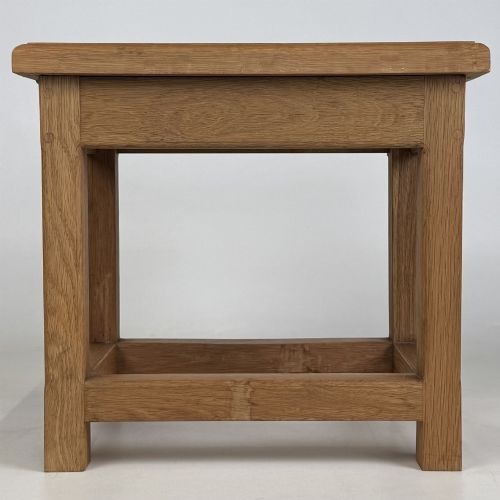
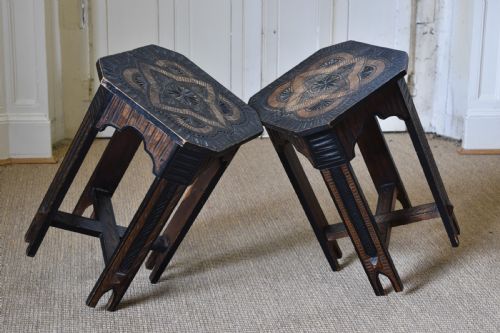
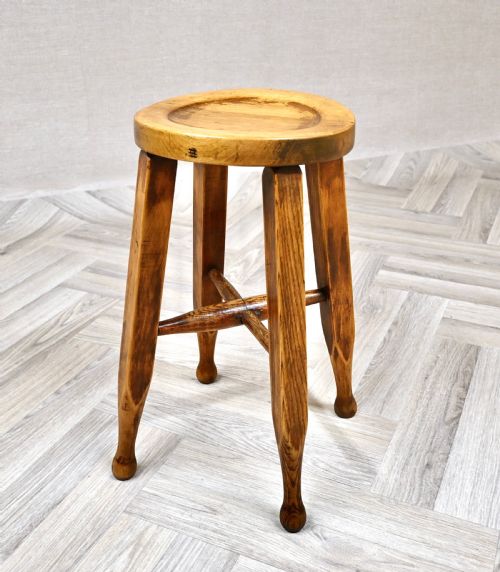
A vintage oak side stool is a compact seating piece or small perch shaped from solid wood, often found spanning the nineteenth and early twentieth centuries. These listings include sturdy joint stools, rustic country examples, and Arts and Crafts designs alongside occasional tables and chopping blocks.
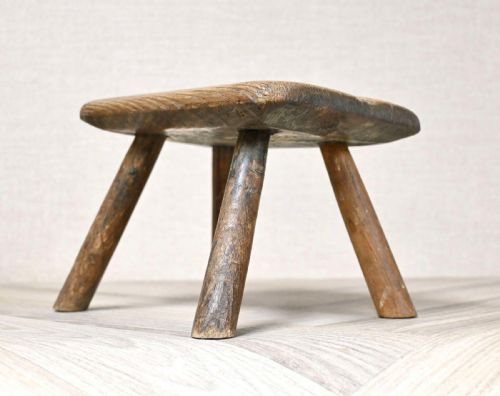
Buyers seeking a vintage oak side stool most frequently encounter pieces fashioned in revivalist or utilitarian forms, such as pegged joint construction or simple three-legged country frames. The selection draws heavily on English and French vernacular traditions, favouring honest grain over elaborate veneer.
Materials and construction
Makers relied on solid oak, frequently paired with secondary timbers like ash and elm for legs and stretchers, building frames designed for heavy daily use. Pegged construction and traditional jointing methods ensured these small seats remained rigid without reliance on metal fasteners.
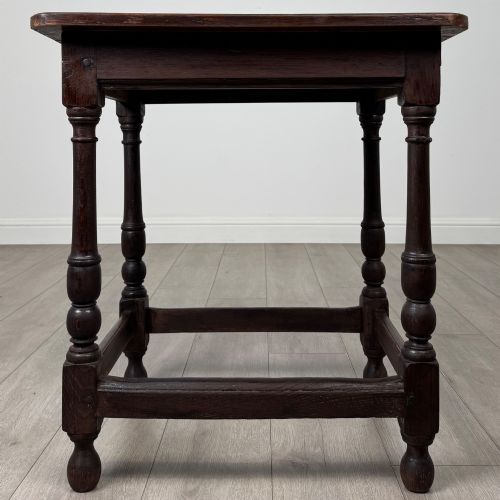
Surface finishing remained straightforward, utilising hand-carving, chip-carving, or simple wax polishing to protect the timber while highlighting the natural grain and growth rings. Details such as bobbin turning, rush seating, and brass accents appear selectively across various regional workshops.
Several heavy game blocks and chopping pieces share shelf space here, proving that a solid stump is just a stool waiting for a new job.
Markers of distinction
Quality rests in the integrity of the timber selection and the tightness of the original joints, where substantial oak stock outlasts lighter hardwood alternatives. Pieces displaying crisp hand-carved detail or thoughtful proportion stand apart from plain utilitarian iterations.
Patina dictates much of the appeal, with deep, unblemished surface wear developed over generations marking the superior examples. The balance between sturdy construction and unaltered original condition ultimately determines the standing of each piece.
The Vintage Oak Side Stool Glossary
- Joint stool
- A sturdy wooden stool constructed with mortise and tenon joints pegged together rather than glued. These pieces served versatile domestic roles in medieval and later households.
- Pegged construction
- A method of securing furniture joints using wooden dowels or pins instead of metal nails. This technique allows the wood to expand and contract naturally with seasonal humidity changes.
- Arts and Crafts
- A design movement valuing handcraftsmanship, simple forms, and traditional materials over mass production. Pieces from this tradition often feature exposed joinery and honest construction.
- Bobbin turned
- Turned woodwork featuring a series of rounded, spool-like shapes carved along the length of a leg or stretcher. This decorative turning style became popular in seventeenth-century furniture and later revivals.
- Rush seat
- A woven seating surface made from twisted dried marsh grasses stretched tightly across a wooden frame. This traditional technique provides a resilient and slightly flexible seat.
Vintage Oak Side Stool: Frequently Asked Questions
What is a joint stool?
A joint stool is a sturdy wooden seat built with mortise and tenon joinery secured by wooden pegs. They earned their name because pieces were literally joined together by a carpenter.
Historically, these low seats served multiple purposes in the home, functioning as portable seating, small side tables, or steps for reaching high shelves.
How do I care for an oak stool?
Keep antique oak furniture away from direct heat sources and strong sunlight to prevent the timber from drying out and splitting. Apply a quality natural beeswax polish occasionally to nourish the wood and maintain its protective finish.
Avoid using modern chemical sprays or wet cloths, as excess moisture damages aged timber and traditional wax surfaces.
Are these stools comfortable for sitting?
Most antique stools were designed for utility and short tasks rather than long lounging sessions. Many feature firm wooden tops, though some country examples incorporate woven rush seats that offer slightly more give.
Buyers often place them in hallways or beside armchairs to hold books or small lamps rather than using them as primary chairs.
How can I date an oak stool?
Dating involves examining the tool marks left by makers, the method of joint construction, and the overall wear patterns on the timber. Hand-cut peg holes and irregular grain patterns often point towards older vernacular craftsmanship.
Later revival pieces from the twentieth century typically feature more uniform machine preparation while still mimicking historical joinery styles.