

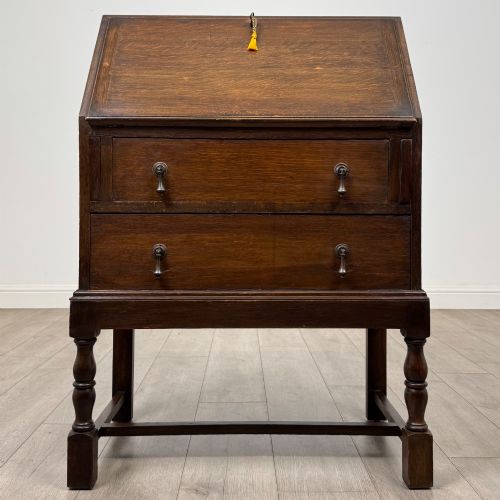

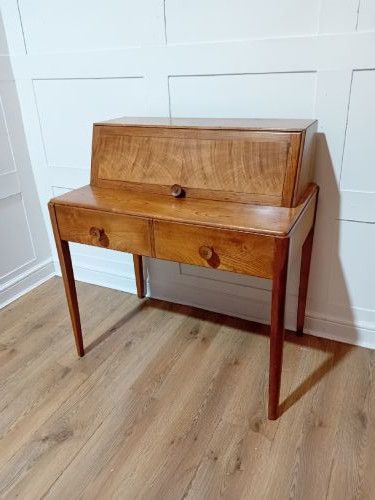
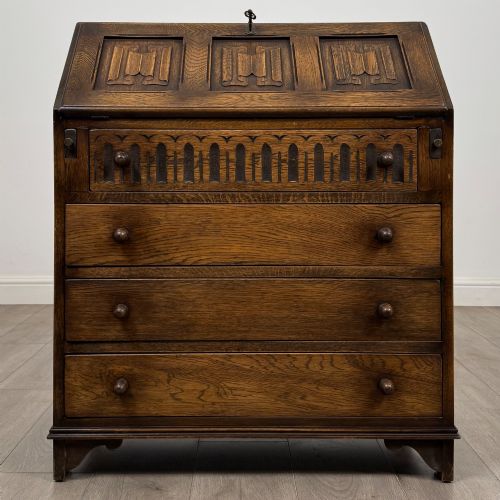
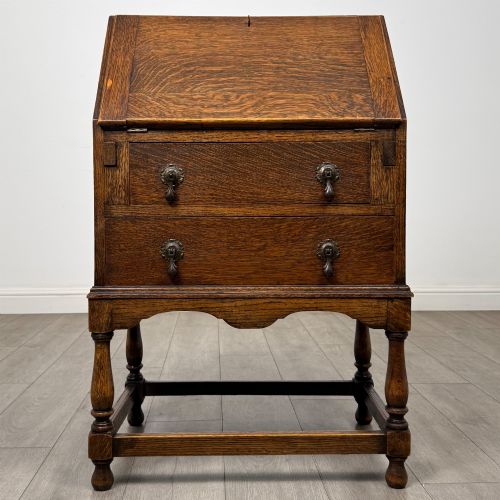
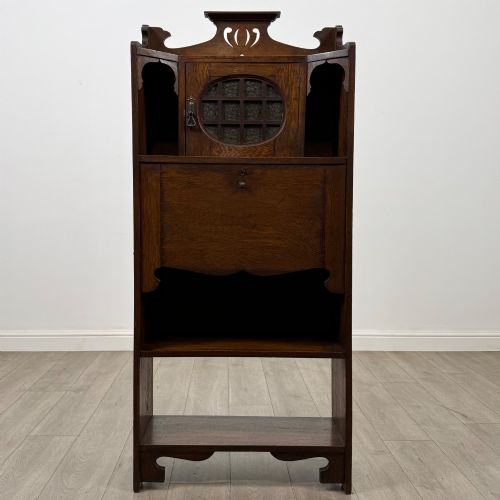
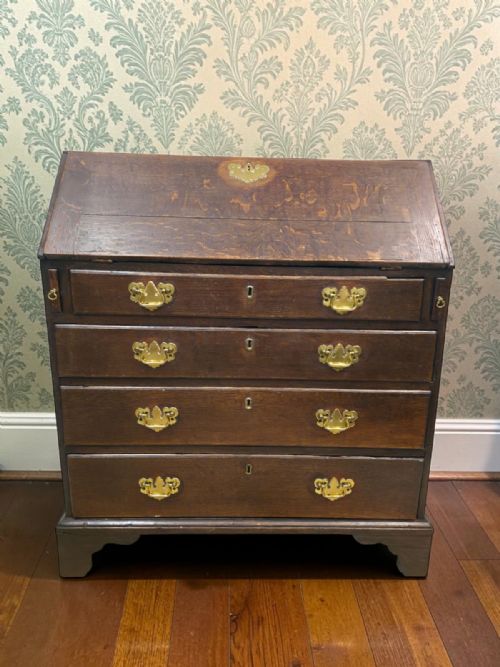
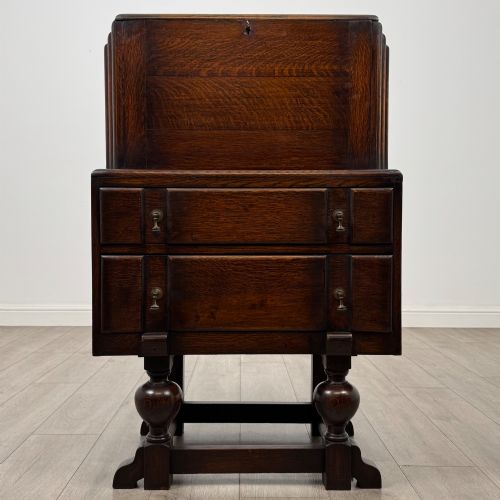
Vintage Oak Secretary Cabinet
A vintage oak secretary cabinet combines a practical writing surface with concealed storage, offering enduring utility for domestic study spaces.
Vintage Oak Secretary Cabinet
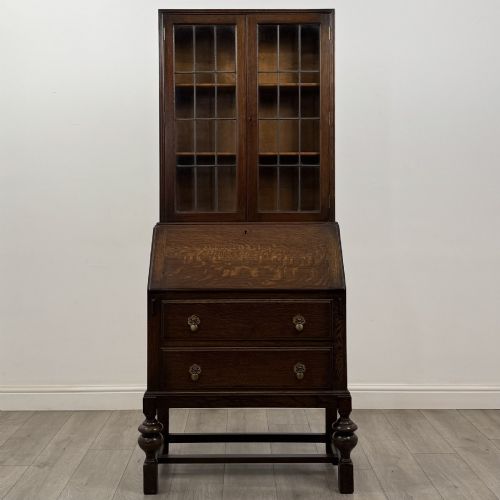
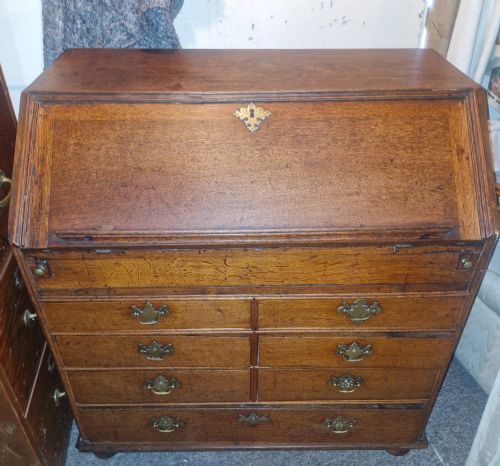
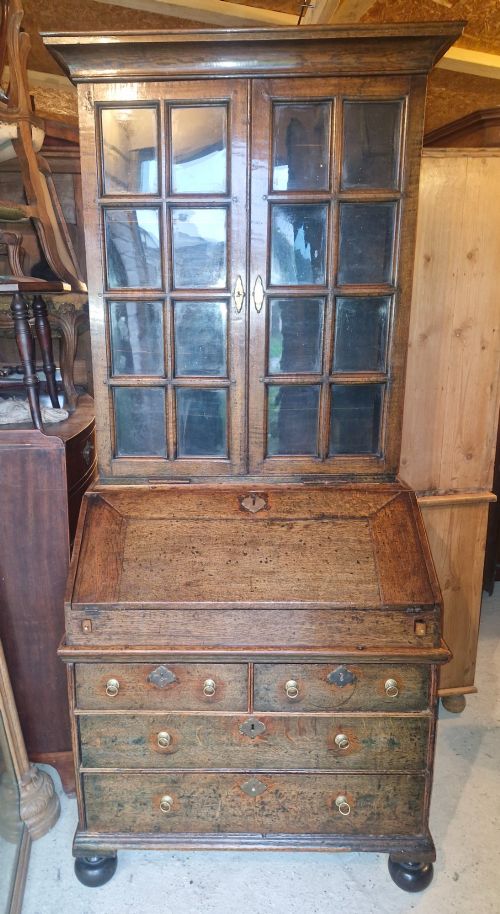
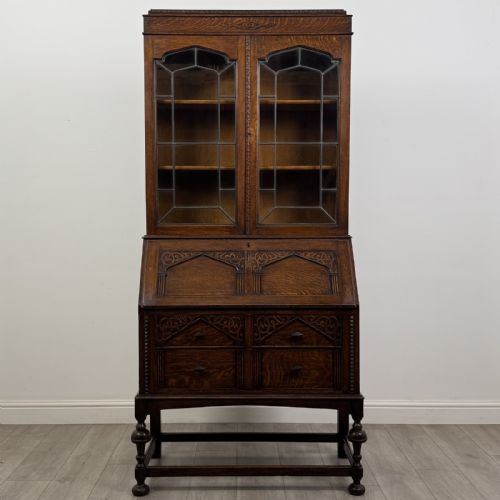
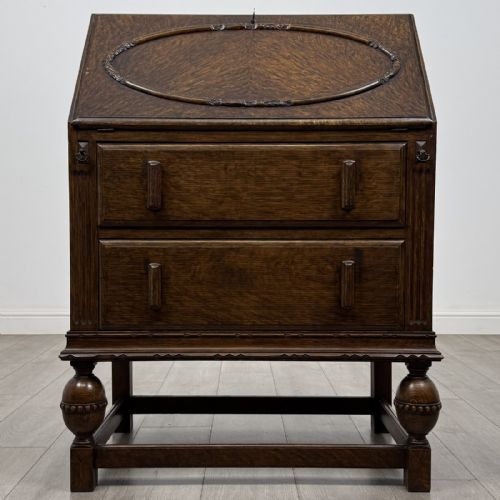
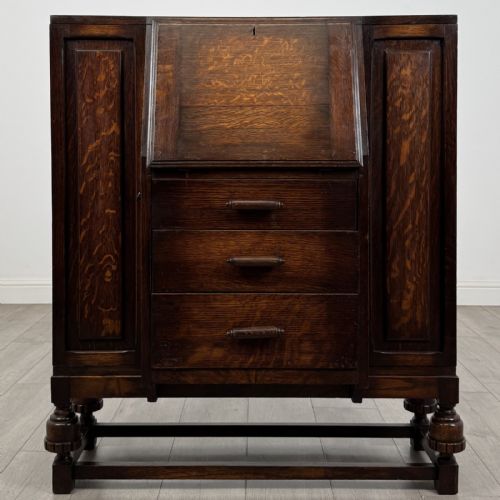
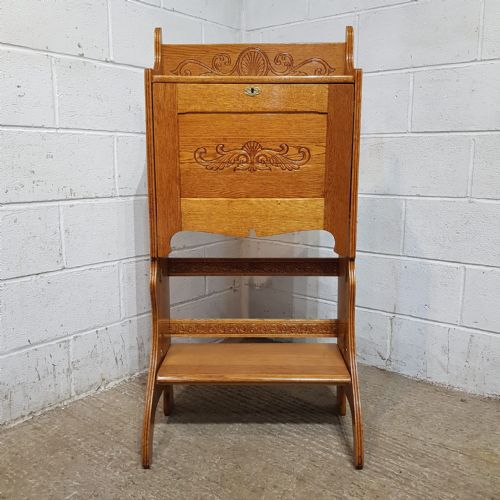
A vintage oak secretary cabinet primarily appears as a bureau, a bureau bookcase, or a fall-front writing desk. These pieces span from the eighteenth century through the Georgian, Victorian, Edwardian, and early twentieth-century periods.
The most common versions on this page are Edwardian and 1920s examples, frequently featuring fall-front writing desks, fitted interiors, and upper glazed display sections.
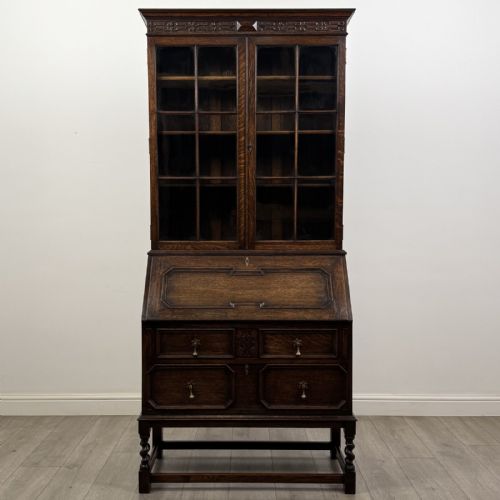
Makers and workshops across different eras adapted these forms using styles such as Arts and Crafts, Jacobean Revival, Art Deco, and Tudor Revival.
Materials and construction
Construction relies heavily on oak and English oak, occasionally enhanced with oak veneers or decorative inlays. Brass hardware, iron fixtures, and leaded glass provide functional and visual contrast to the timber.
Joinery methods range from eighteenth-century pegged construction to early twentieth-century production techniques, often incorporating carved detailing, linenfold panels, barley twist legs, or candle slides.
Vintage Oak Secretary Cabinet Retail Price Guide 2026
Typical asking prices for vintage oak secretary cabinet among the pieces listed under this phrase on Sellingantiques today, from the lower quarter to the upper quarter. They describe what is for sale here now, not the wider market.
Materials across the selection include solid English oak, brass handles, leaded glass doors, and iron hardware.
Judging quality
Quality rests on the integrity of the timber selection, the crispness of carved details or inlaid work, and the stability of the fall-front mechanism. Pieces that retain original hardware, fitted pigeonholes, and working locks demonstrate superior craftsmanship.
Proportion and scale distinguish standard commercial production from finer workshop pieces, particularly in how harmoniously the upper bookcase integrates with the lower writing bureau.
E Gomme·Arthur Basil Reynolds·Robert Mouseman Thompson·Harris Lebus·Liberty and Co·James Shoolbred and Co
The Vintage Oak Secretary Cabinet Glossary
- Bureau bookcase
- A combination furniture piece featuring a sloping writing desk below an enclosed shelving unit with doors. These doors frequently incorporate glass panes or leaded detailing to showcase books.
- Fall-front
- A hinged writing flap that pulls down to form a horizontal desk surface, concealing pigeonholes and small drawers behind it. This panel locks shut when not in use to keep writing materials tidy.
- Linenfold
- A carved wood panel motif designed to resemble folded linen fabric, popular in revival styles. This decorative technique adds texture to cupboard doors and drawer fronts.
- Candle slide
- A narrow pull-out wooden board mounted beneath the writing surface to hold a candle for illumination. These functional sliders appear primarily on earlier pieces before the advent of gas and electric lighting.
- Fitted interior
- The arrangement of small drawers, compartments, and pigeonholes revealed when the bureau flap opens. A more complex interior indicates a higher tier of domestic furniture.
Vintage Oak Secretary Cabinet: Frequently Asked Questions
How do I use a bureau desk?
Lower the hinged fall-front panel to create a stable writing surface while accessing the interior pigeonholes and small drawers. When finished, fold the panel back up to conceal your papers and keep the room tidy.
Many designs include lower drawers or upper shelving units for additional storage of books and stationery. This dual function makes them practical for modern home offices where space is limited.
How do I date an oak bureau?
Examine the construction methods, hardware, and stylistic influences to determine the period of manufacture. Eighteenth-century examples show hand-cut joinery and pegged construction, whereas Edwardian and 1920s pieces often utilise machine-cut elements and revival motifs like barley twist legs.
Labels, stamps, or receipt records can sometimes confirm a specific workshop or retail origin. Comparing the decorative details, such as linenfold panels or leaded glass, helps narrow down the decade.
Where should I place a secretary cabinet?
Position the cabinet against a sturdy interior wall away from direct sunlight and heat sources to protect the oak timber from drying out. Ensure there is enough floor space in front of the piece for the fall-front to open fully and a chair to be pulled up comfortably.
Because many examples include tall bookcase tops, check ceiling height and clearance before placement. Their compact footprint makes them suitable for studies, living rooms, and bedrooms alike.
What is the difference between a bureau and a secretary?
In British terminology, a bureau typically refers to a writing desk with a sloping fall-front flap, often combined with a bookcase top. A secretary generally describes similar furniture forms that integrate a fold-down writing surface within a larger cabinet structure.
Both terms describe multi-functional pieces designed for correspondence and storage. Regional preferences often dictate which name local makers and dealers use for the same form.