



Vintage Oak Planter Bucket
These vintage oak planter bucket examples bring solid timber and metal binding into domestic spaces, offering traditional vessel forms suited for modern planting.
Vintage Oak Planter Bucket
A vintage oak planter bucket takes the structural form of coopered vessels originally built for holding grain, water, peat, or washing, adapted through time for botanical displays and fireside storage. Buyers searching for a vintage oak planter bucket encounter items ranging from Georgian well buckets to Edwardian garden vessels and Arts and Crafts jardiniere stands.
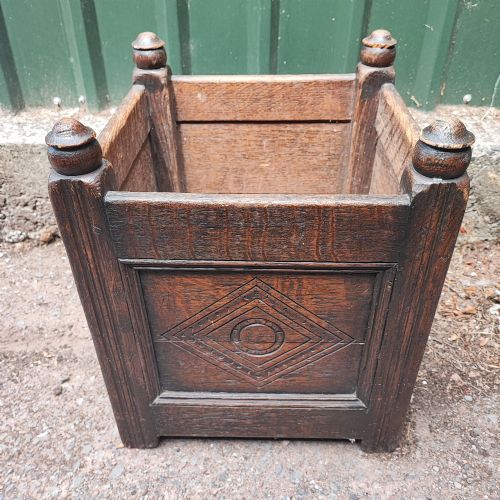
The objects on this page span the nineteenth and early twentieth centuries, drawing on rustic country, French country, and formal decorative traditions. Forms include low jardiniere pots, tall stick stands, log bins, and deep well buckets fitted with handles or metal liners.
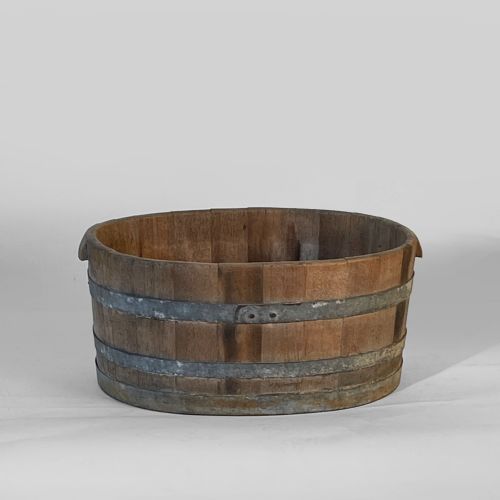
Most examples rely on traditional cooperage techniques, assembling curved oak staves bound with metal hoops. These functional vessels transition easily from garden use to interior decor as plant holders or fuel stores.
Construction and materials
Makers built these vessels using solid oak staves shaped by hand and locked together with metal bands in copper, brass, iron, or wrought iron. The coopered construction required precise woodworking so the curved timber staves formed watertight or sturdy hollow cylinders without modern glues.
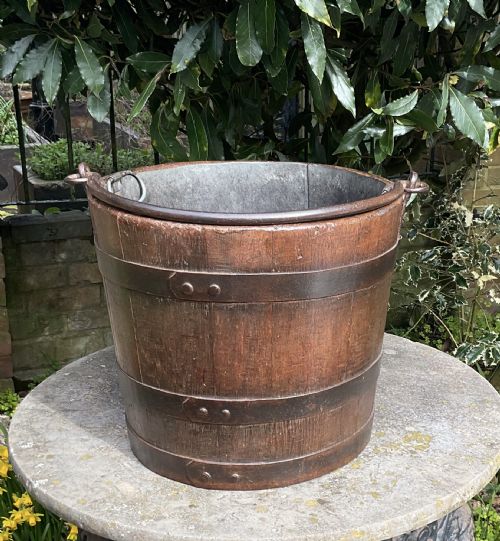
Many items incorporate internal metal liners in zinc or copper to protect the wood from moisture when holding live plants. Handles in iron or brass provide functional lifting points, while some pieces sit elevated on dedicated wooden stands.
Some nineteenth-century peasants accidentally gave future collectors fabulous interior planters by simply misplacing their grain.
Assessing quality in coopered vessels
Quality rests upon the tightness of the coopered joints and the integrity of the oak staves. Superior examples display careful grain matching and secure metal bands that hold their tension evenly around the timber body.
The distinction between standard utility vessels and finer decorative pieces often lies in the quality of the metal mounts, such as heavy brass strapping or decorative handles, and the survival of original interior liners.
Lister and Co
The Vintage Oak Planter Bucket Glossary
- Coopered
- Built from curved wooden staves joined together side by side and bound with hoops, following the traditional method of barrel making.
- Jardiniere
- An ornamental pot or stand designed to hold plants and flowers indoors, often elevated on legs or a matching base.
- Stave
- One of the narrow shaped strips of oak that form the sides of a barrel, tub, or bucket.
- Well bucket
- A deep cylindrical vessel historically used for drawing water from a well, characterised by a strong swing handle and robust metal bands.
- Grain measure
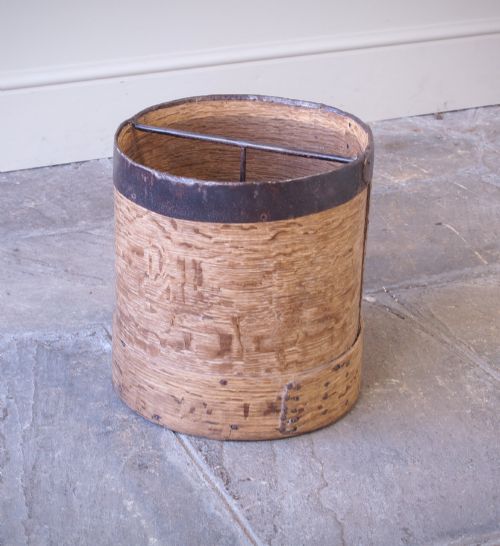
- A cylindrical wooden container originally calibrated for measuring dry agricultural produce before finding later use as a decorative container.
Vintage Oak Planter Bucket: Frequently Asked Questions
Can I use these buckets for live plants?
Many of these vessels feature metal liners designed to contain soil and moisture safely.
For pieces without a modern liner, placing a potted plant inside on a saucer protects the historic oak staves from dampness.
How do I clean an old oak planter?
Dust the exterior gently with a dry cloth to preserve the natural patina of the timber.
Avoid soaking the wood or using harsh chemical cleaners that might strip the aged finish of the oak and metal.
Are these buckets watertight?
While originally built as functional tubs or grain measures, age and dry indoor atmospheres can cause timber staves to shrink.
If you intend to hold water directly, check whether the interior liner remains intact and sealed.
How do I date a coopered oak bucket?
Dating relies on the style of the metal mounts, the type of joinery, and the tool marks visible on the oak staves.
Georgian and Victorian examples often display hand-forged iron or heavy brass bands, while Edwardian pieces may show more uniform factory turning.