
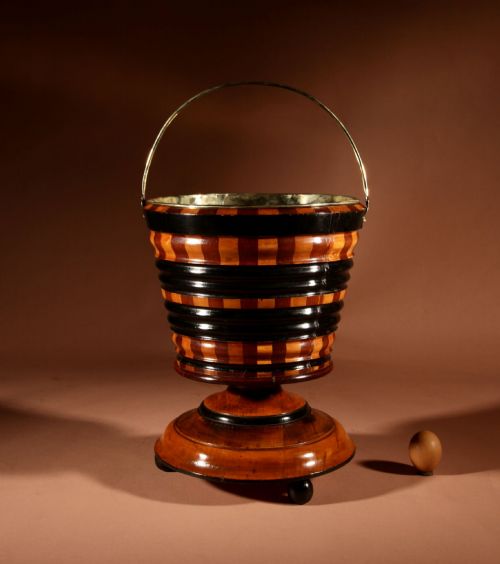


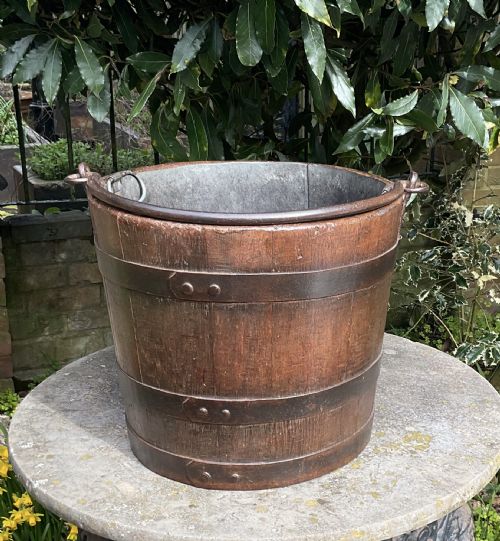


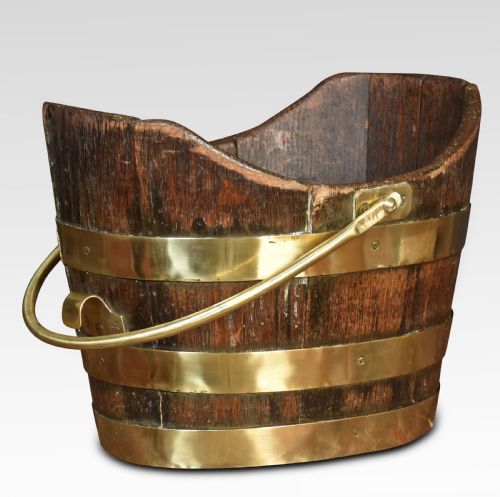


Coopered Peat Bucket
A coopered peat bucket is a sturdy vessel built for fireside service, offering rich timber grain and polished metal work.
Coopered Peat Bucket
A coopered peat bucket serves as a fireside vessel designed to hold fuel or function as a planter, jardinière, or wine cooler.
Buyers encounter examples spanning the Georgian, Victorian, and Edwardian eras, with Dutch traditional and country styles appearing frequently alongside Scottish and English pieces.
Forms range from traditional barrels and butter buckets to triangular fireside bins and tea stove buckets.
How they were made
Construction relies on traditional coopering techniques, joining vertical wooden staves together to form round or shaped bodies.
Materials include oak, mahogany, walnut, and ebonised wood, secured with substantial brass or iron bands and fitted with metal handles or zinc liners.
Some Dutch peat buckets double as tea stoves, proving that historical heating methods came with a side of hospitality.
What varies in quality
Quality rests in the precision of the stave assembly, the selection of figured timber such as mahogany or walnut, and the weight of the brass mountings.
The integrity of the original metal liners and the crispness of turned details distinguish standard vessels from more decorative fireside pieces.
The Coopered Peat Bucket Glossary
- Coopered
- Method of construction using shaped wooden staves fitted together to form a watertight or sturdy vessel. This technique creates the curved sides typical of barrels and buckets.
- Teestoof
- A Dutch term for a tea stove or heating device, often associated with small buckets used for peat or embers. These pieces served both domestic utility and decorative purposes.
- Jardinière
- An ornamental pot or stand designed to hold plants or flowers. In heavier wooden forms, they double as planters or wine coolers.
- Stave
- One of the narrow vertical strips of wood that form the sides of a bucket or barrel. Tapered edges ensure the tight fit required for stable construction.
Coopered Peat Bucket: Frequently Asked Questions
What is a coopered peat bucket used for today?
These vessels suit modern interiors as log bins, umbrella stands, or large planters for houseplants. Their robust build allows them to sit comfortably beside a fireplace or in a hallway.
Many collectors also utilise them as wine coolers or decorative storage containers for living spaces.
How do I distinguish between Dutch and English styles?
Dutch examples often feature pronounced brass bands, turned teak, or dual purposes as tea stoves and planters. English and Scottish pieces tend to favour plain oak or mahogany construction with simpler iron or brass handles.
Examining the timber choice and metalwork usually reveals the regional origin.
Are these buckets waterproof?
Many retain their original metal or zinc liners, which were designed to hold damp peat, embers, or water safely. Those without liners function best for dry storage or potted plants placed inside a saucer.
Checking the interior condition clarifies whether water can be held directly.
How can I date a wooden peat bucket?
Dating relies on timber selection, such as Georgian mahogany versus Edwardian oak, alongside the style of the brass mountings and handles. Hand-forged iron bands often point towards earlier 18th or early 19th-century manufacture.
Construction marks and wear patterns provide additional clues to the period.