


Vintage Oak Monks Bench
A vintage oak monks bench brings robust timber seating and clever dual-purpose design directly into a hallway or living space.
Vintage Oak Monks Bench
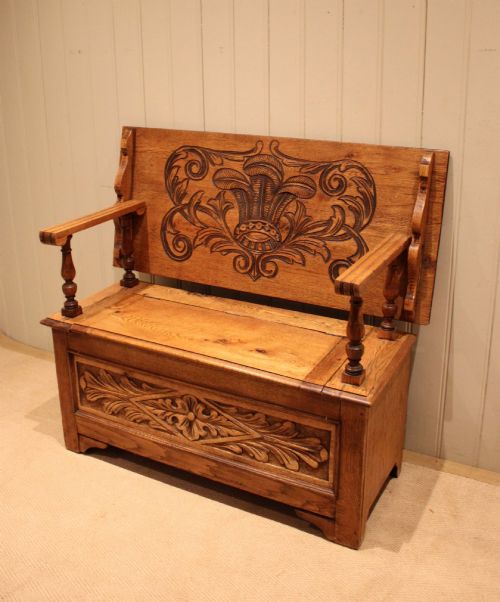
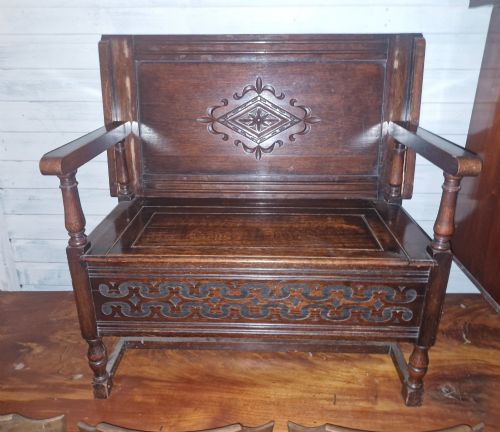
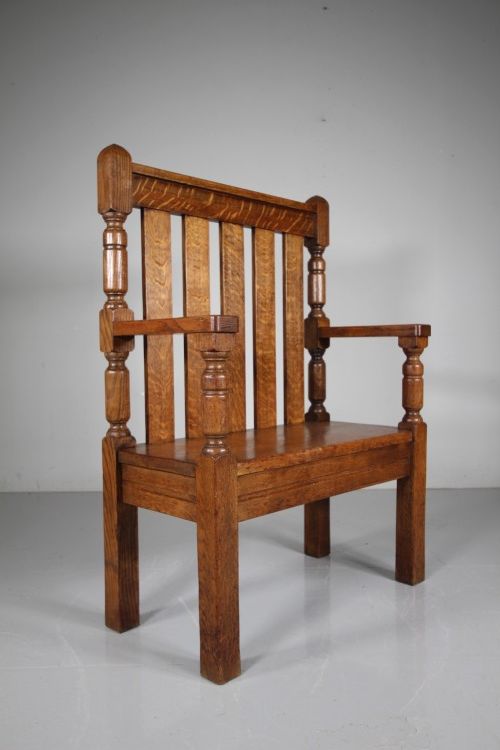
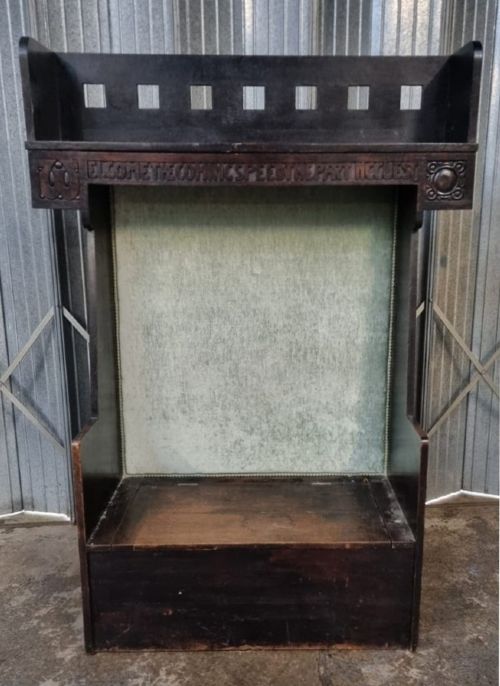
A vintage oak monks bench combines a practical seat with a clever pivoting top that converts into a table or desk surface when folded forward. These versatile pieces frequently appear as hall benches, settles, and armchairs spanning the nineteenth and early twentieth centuries.
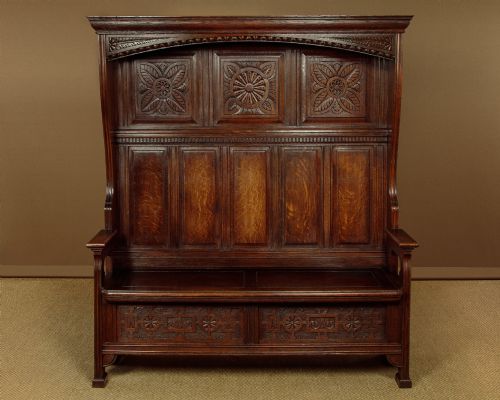
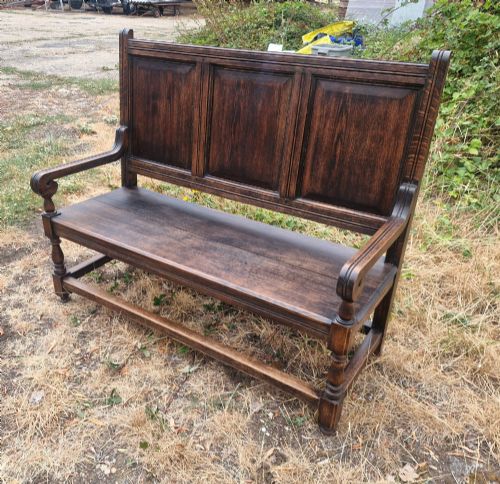
The selections here range from compact Edwardian hall seats to carved canopy top box settles and golden oak examples influenced by the Art Nouveau and Arts and Crafts movements. Buyers encounter diverse regional interpretations, from dark oak Jacobean revival styles to clean-lined country house furniture.
Materials and construction
Solid oak provides the primary structural timber for these benches, often complemented by secondary elements of brass, metal, or iron used for hinges and fixings. Fabric occasionally appears on upholstered seat pads, though sturdy timber panels dominate the construction.
Joinery methods rely on traditional panelled construction, pegged joints, and hand carving to decorate backs and arm supports. Cabinetmakers utilised sturdy turning and pivoting mechanisms to allow the heavy wooden backrests to transition smoothly into table tops.
Some benches hide interior compartments beneath the seat, offering a discreet spot to stash your spare keys or emergency chocolate.
Assessing craftsmanship
Quality rests in the crispness of the hand carving, the weight of the solid timber, and the mechanical stability of the pivoting arms or hinges. Superior examples display balanced proportions and tight joinery that withstands the daily stress of conversion between seat and table.
The depth of colour in the timber and the subtlety of decorative details, such as panel moulding or integrated storage compartments, separate standard production items from finer workshop pieces.
Liberty·Shapland & Petter
The Vintage Oak Monks Bench Glossary
- Monks bench
- A dual-purpose wooden seat featuring a hinged back that folds down over the arms to form a table top. This historic form experienced strong revivals during the Victorian and Edwardian periods.
- Settle
- A wooden bench with a high back, solid arms, and often a storage box beneath the seat. They were traditionally placed near hearths to block draughts in period homes.
- Jacobean Revival
- A nineteenth and early twentieth century design style copying seventeenth century English oak furniture. It is characterised by heavy proportions, geometric panel moulding, and strapwork carving.
- Arts and Crafts
- A design movement promoting hand craftsmanship and traditional materials over mass production. Pieces from this tradition often feature simplified forms and subtle, nature-inspired decorative details.
Vintage Oak Monks Bench: Frequently Asked Questions
How do you convert a monks bench into a table?
The upper backrest pivots forward on wooden pegs or metal pins situated near the arms. Once flipped over, the flat rear surface rests securely upon the armrests to create a functional table top.
Returning the surface to an upright position reverses the action, locking the backrest into place to provide comfortable seating with a supportive wooden back.
Where should I place a monks bench in my home?
These pieces excel in entrance halls and narrow corridors where dual-purpose furniture maximises limited floor space. They provide a convenient spot for putting on shoes while offering hidden storage beneath the lift-up seat.
Living rooms and studies also accommodate smaller examples well, particularly versions that function as coffee tables or accent chairs when the top is folded.
How do I care for vintage oak furniture?
Maintain solid oak surfaces by dusting regularly with a soft, dry cloth and applying natural beeswax periodically to nourish the grain. Avoid placing wooden furniture near direct heat sources or in damp environments to prevent splitting or warping.
Protect the timber from liquid spills by using coasters on table top surfaces when the bench is in its converted position.