
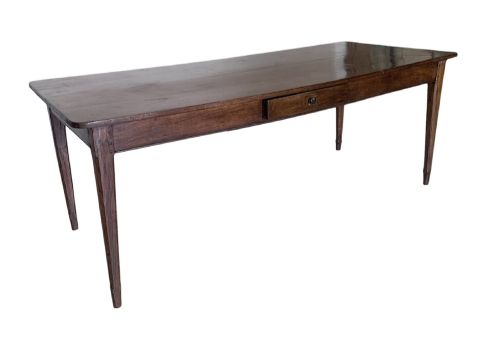
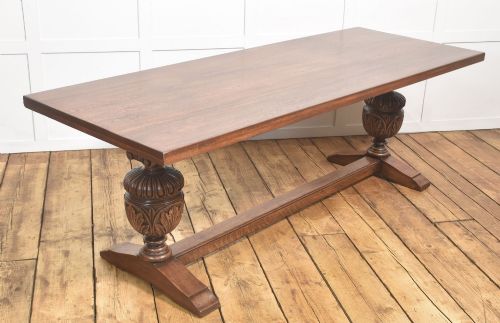
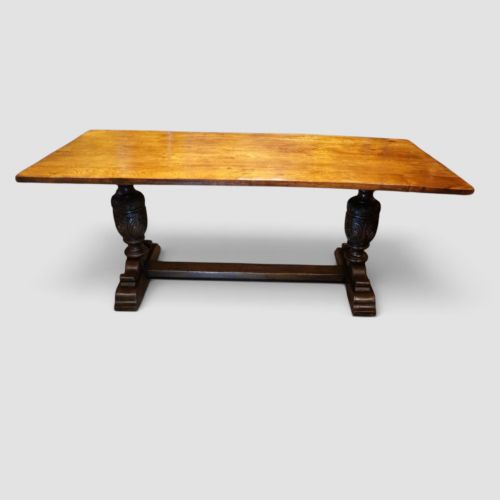


Vintage Oak Monastery Table
These heavy dining boards are built to anchor a room, and a vintage oak monastery table brings substantial timber and grounded presence to daily meals.
Vintage Oak Monastery Table
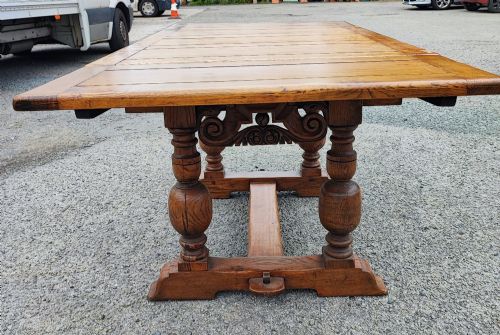
A vintage oak monastery table typically appears as a long dining surface designed for communal gatherings, drawing heavily on historic refectory and abbey forms. When browsing this selection, you encounter pieces spanning from the eighteenth century through the early twentieth century, with strong representation from the nineteen-twenties and nineteen-thirties.
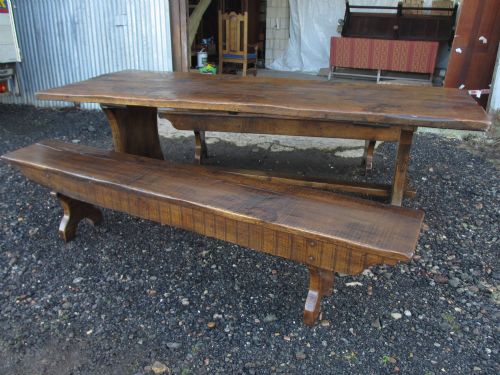
The aesthetic vocabulary leans toward revival styles, including Jacobean Revival and Tudor Revival, alongside French provincial and rustic farmhouse traditions. Alongside standard dining tables, the inventory incorporates draw leaf mechanisms, trestle ends, and occasional matching bench sets.
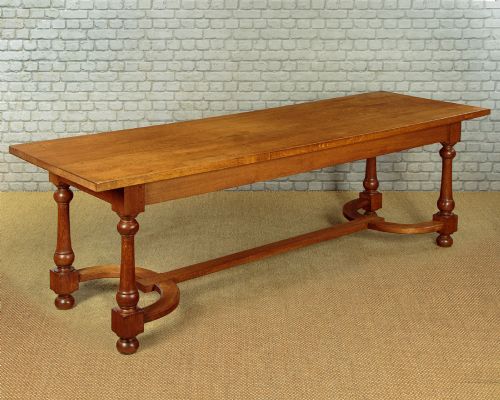
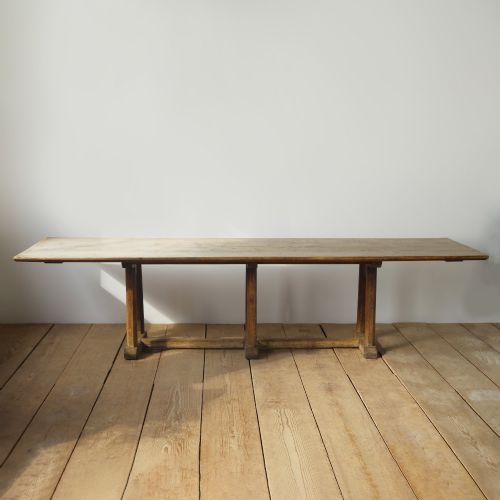
Origins stretch across British and continental workshops, producing substantial boards intended for heavy daily use. The forms remain remarkably consistent, favouring long rectangular tops supported by sturdy trestle or stretcher bases.
Assessing quality and proportion
The distinction between ordinary and exceptional examples rests in the selection of timber and the integrity of the structural joinery. Heavier scantlings of oak and boards with pronounced medullary rays command greater appreciation among traditionalists.
Proportion and surface patination dictate the visual success of the piece. Tables retaining an honest, unbleached surface or showing deep integration of repairs from decades of use demonstrate a superior character compared to heavily stripped variants.
Listings feature solid oak and elm construction across Edwardian, Arts and Crafts, and Jacobean Revival styles.
The Vintage Oak Monastery Table Glossary
- Refectory table
- A long, narrow dining table originally built for monastic dining halls. These pieces evolved into domestic centrepieces featuring robust stretcher bases.
- Trestle ends
- Support structures consisting of upright posts connected by a horizontal foot or beam. They provide stability and allow maximum legroom along the length of the board.
- Draw leaf
- An extension mechanism where auxiliary leaves store beneath the main top and pull out when needed. This permits rapid adjustment of the table length for larger gatherings.
- Jacobean Revival
- A nineteenth and twentieth century design movement mimicking seventeenth century English furniture. It employs dark finishes, turned legs, and geometric panel carving.
- Medullary rays
- Ribbons of tissue radiating outward through oak timber rings. Their prominent visibility indicates quartersawn boards of higher structural stability.
Vintage Oak Monastery Table: Frequently Asked Questions
How do I clean a vintage oak monastery table?
Wipe surfaces using a slightly damp, lint-free cloth to remove everyday dust and debris. Avoid harsh chemical cleaners that strip natural oils from aged timber.
Apply a traditional beeswax polish periodically to nourish the wood and maintain a soft protective sheen. Buff gently with a dry cloth after application to prevent residue build-up.
Can I seat people comfortably on the sides?
Trestle placement determines legroom along the length of the board. Many designs position supports near the ends to accommodate benches or multiple chairs.
Check the clearance beneath the side stretchers to ensure standard dining chairs slide underneath without obstruction. Bench sets often accompany these listings to maximise seating capacity.
How do I distinguish revival periods from older work?
Examine the underside of the top boards and internal framing for tool marks and timber seasoning clues. Machine-sawn consistency points toward twentieth-century revivals rather than hand-riven eighteenth-century boards.
Hardware types, screw threads, and the method of pegging joints also offer clear indicators of age. Makers working in nineteen-thirties revival styles often utilised older construction vocabulary with modern workshop efficiency.
Will daily family use damage the surface?
Solid oak provides a durable surface that withstands regular activity when treated with reasonable care. Using protective mats under hot dishes and liquids prevents ring marks on historic finishes.
Minor knocks and surface marks accumulate over time, adding to the character of tables already shaped by decades of use. The dense grain resists deep denting under normal domestic conditions.