
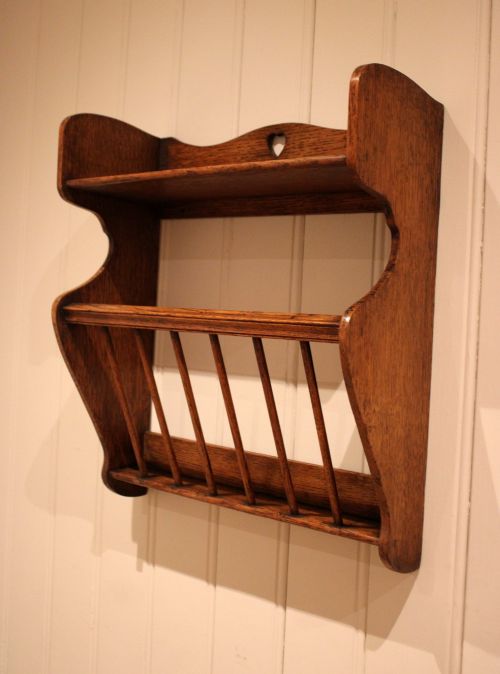


Vintage Oak Magazine Rack
A vintage oak magazine rack brings honest grain and practical design to a sitting room, keeping periodicals tidy while adding genuine period character.
Vintage Oak Magazine Rack
When you search for a vintage oak magazine rack, you encounter sturdy pieces designed to hold newspapers and periodicals in domestic spaces. These furnishings emerge from periods spanning the Victorian era through the Edwardian years and into the 1920s, 1930s, and mid-century modern times.
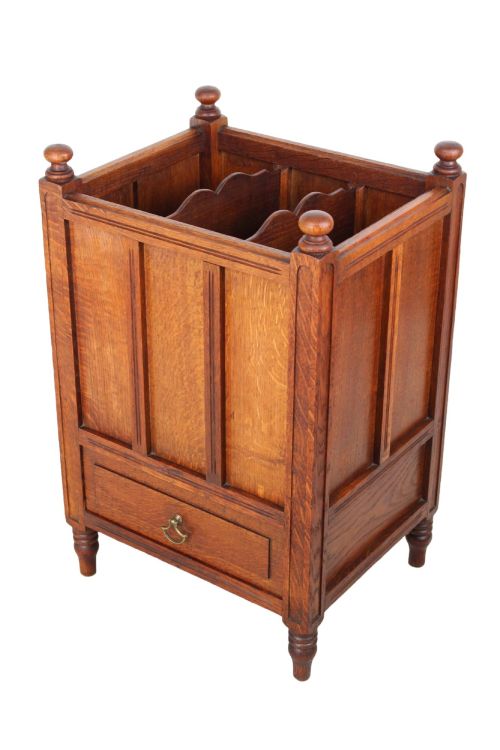
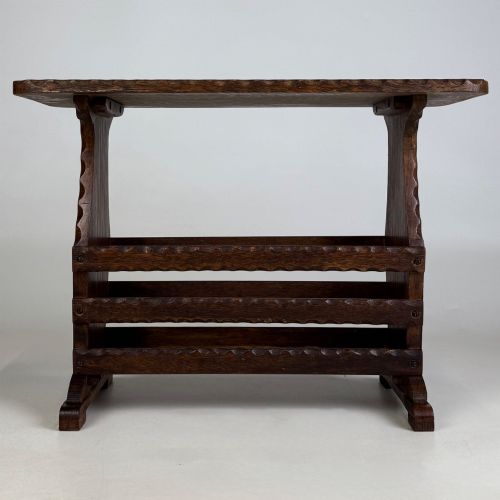
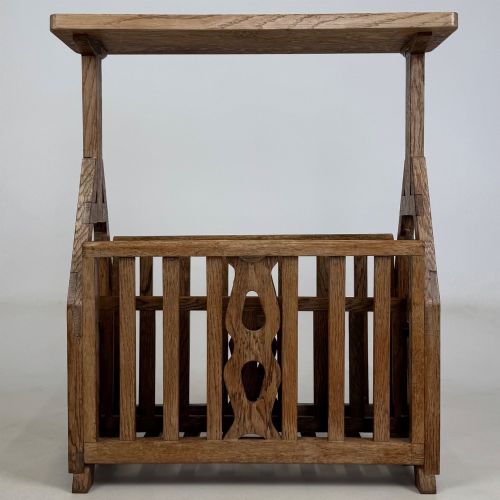
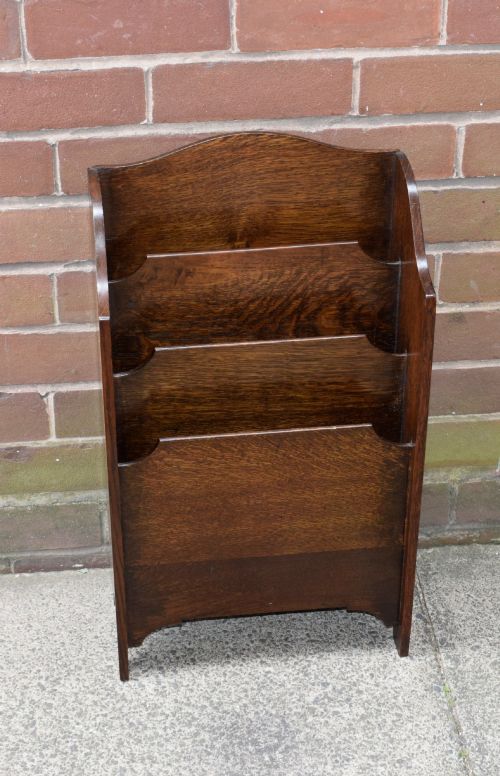
The most common forms on this page include standard magazine racks, folding reading tables, wall shelves, and side tables combined with storage compartments. Makers utilised robust timbers, frequently incorporating brass carrying handles or supports, and occasionally combining the rack with a Canterbury or revolving stand.
Origins trace back to English workshops, with styles ranging from plain utility pieces to characteristic Arts and Crafts interpretations. Buyers often select these items to complement traditional interiors or to add tactile warmth to contemporary living rooms.
Materials and construction methods
Construction relies heavily on oak, appearing in standard and light oak finishes that highlight natural timber grain. Workshops shaped these pieces from solid wood, frequently applying glass elements or satinwood stringing on finer decorative examples.
Assessing quality and craftsmanship
Quality reveals itself in the selection of the timber and the integrity of the joinery rather than mere ornamentation. Superior examples display carefully chosen oak grain and robust construction that withstands daily handling without wobble.
The incorporation of secondary materials like brass or glass marks the difference between utilitarian items and more considered pieces. Better items integrate function with form, such as metamorphic designs or clever side table combinations that demonstrate advanced cabinetmaking skill.
The Vintage Oak Magazine Rack Glossary
- Canterbury
- A low stand fitted with divisions for holding sheet music, books, or periodicals. This form often includes a small drawer beneath the rack section.
- Arts and Crafts
- A design movement valuing handcraftsmanship and simple vernacular forms over mass production. Pieces from this tradition often display exposed joinery and honest use of oak.
- Metamorphic
- Furniture designed to transform into another object, such as a magazine rack that converts into a folding reading table. These ingenious items served multifunctional roles in compact homes.
- Revolving
- A descriptor for stands mounted on a pivot mechanism allowing the user to spin the rack for easy access. This feature appears frequently on Edwardian book and periodical stands.
- Satinwood
- A pale, hard timber used for decorative inlay and stringing on cabinet furniture. It provides a bright contrast against darker oak surfaces.
Vintage Oak Magazine Rack: Frequently Asked Questions
What is a Canterbury?
A Canterbury is a traditional piece of partitioned furniture originally designed to hold sheet music or folios. In the context of magazine storage, it provides upright vertical divisions.
These pieces typically feature low legs and may include a carrying handle or a small drawer at the base for smaller items.
How do I date an oak rack?
Dating relies on observing stylistic clues, construction methods, and hardware choices. Victorian and Edwardian examples often feature heavier turned elements and brass fittings.
Later interwar and 1930s pieces tend toward simpler geometric lines, whilst Arts and Crafts items showcase visible peg joinery and hand-worked surfaces.
Where should I place it?
These racks suit living rooms, studies, or hallways where periodicals accumulate. Side table combinations work well beside an armchair or sofa for dual utility.
Wall-mounted versions fit smaller spaces or hallways where floor area is limited, keeping reading material off surfaces.
Are brass fittings original?
Brass handles, rods, and castors are common on Victorian and Edwardian examples. They were utilised both for structural reinforcement and decorative contrast against the oak.
Patina on the brass generally indicates age and matches the wear on the surrounding timber.