
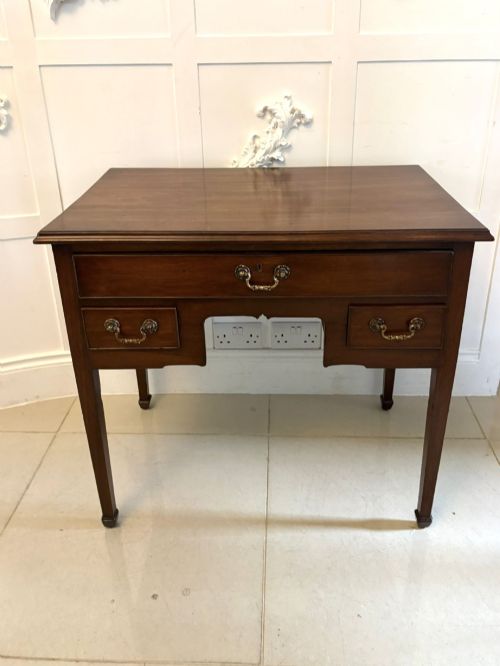
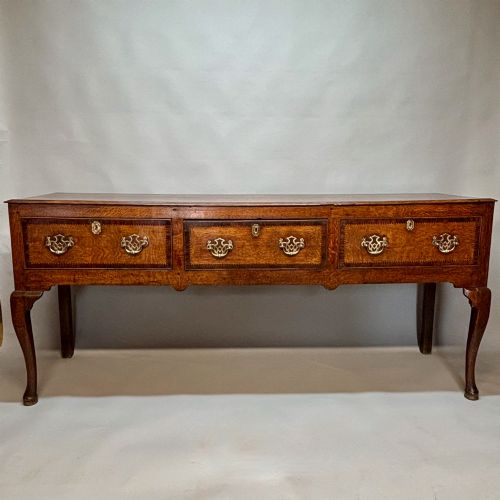
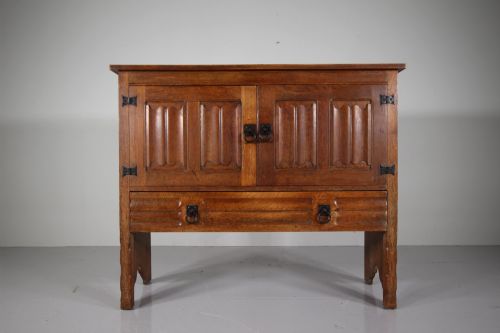
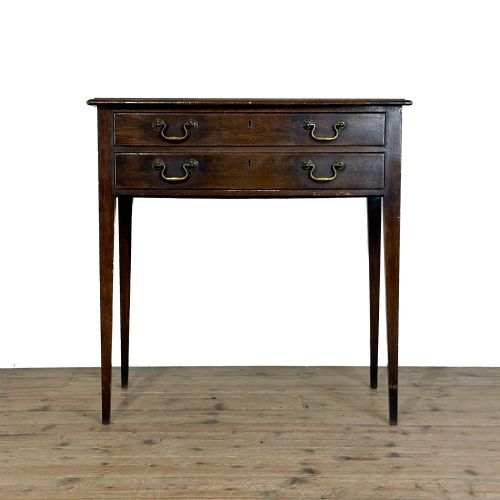
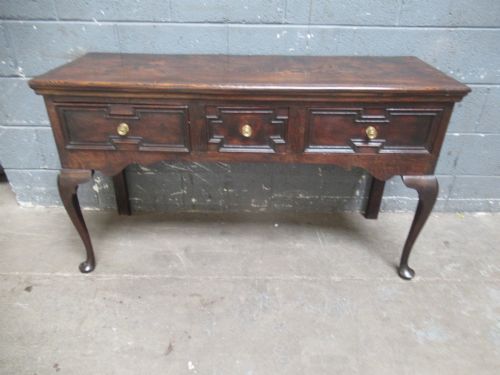
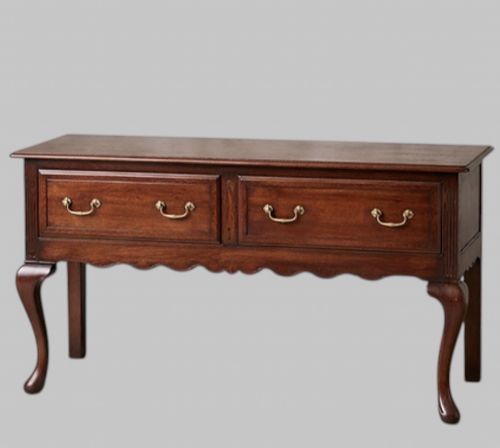


Vintage Oak Lowboy
A vintage oak lowboy serves as a compact table with drawers, offering practical surface space and period character for any room.
Vintage Oak Lowboy
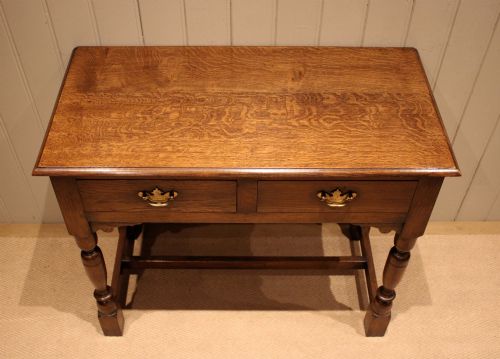
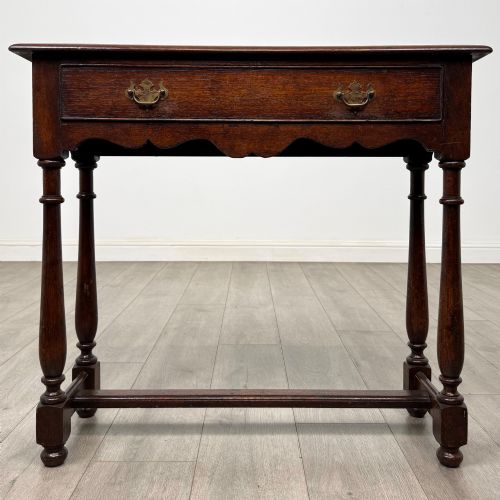
A vintage oak lowboy functions primarily as a small side table or dressing table equipped with drawers beneath the top surface. These pieces appear in forms ranging from eighteenth-century Georgian examples to later revival styles dating into the twentieth century.
Buyers searching for a vintage oak lowboy will encounter variations including regional English country pieces, Welsh lowboys, and later Georgian revival side tables. The fundamental design combines a sturdy timber frame with convenient under-counter storage.
While many examples originate from the eighteenth and nineteenth centuries, twentieth-century interpretations also populate the selection. These functional tables fit easily into hallways, bedrooms, and reception rooms alike.
What varies in quality
The degree of refinement in timber selection and joinery separates standard production from finer examples. Earlier eighteenth-century pieces often display hand-carved details and patination accrued over centuries, whereas revival items from the twentieth century reflect the manufacturing standards of their specific decade.
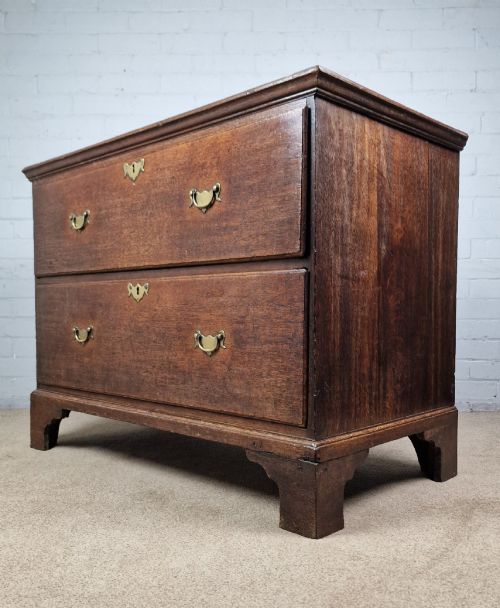
Proportion and structural integrity dictate the overall calibre of each piece. Tables retaining their original brass handles, sound drawer construction, and stable timber frames command greater appreciation among collectors.
Listings span from the eighteenth century through the Edwardian era into the 1920s, featuring oak, mahogany, fruitwood, and brass.
The Vintage Oak Lowboy Glossary
- Lowboy
- A small table with drawers, typically used as a dressing table or side table in eighteenth-century interiors.
- Dresser base
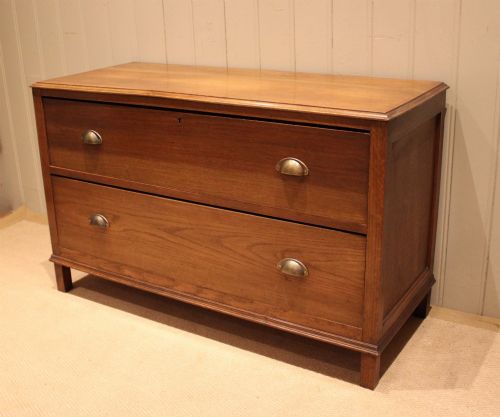
- The lower section of a kitchen or dining room dresser, often functioning as a sideboard or console table.
- Georgian revival
- A twentieth-century style that copies or adapts the architectural and furniture designs of the Georgian period.
- Patina
- The surface sheen and colour developed on wood and metal over many years of use and polishing.
Vintage Oak Lowboy: Frequently Asked Questions
What is a lowboy used for?
A lowboy serves as a versatile side table or dressing table with built-in drawer storage. Its compact footprint makes it suitable for tight spaces like hallways and bedrooms.
Historically utilised for grooming or storing small personal items, today it functions well as a lamp table or decorative surface.
How do I date an oak lowboy?
Dating relies on observing construction methods, timber characteristics, and stylistic details. Eighteenth-century pieces display hand-cut joinery and aged patination.
Revival pieces from the twentieth century often feature machine-tooled elements and cleaner timber surfaces that reveal their later origins.
Are all lowboys made of oak?
While oak remains the predominant timber, related pieces incorporate mahogany, fruitwood, or painted wood finishes. Regional variations sometimes utilise local hardwoods alongside the primary oak structure.
Hardware materials like brass and iron also contribute to the overall composition of each individual table.
Where should I place a lowboy?
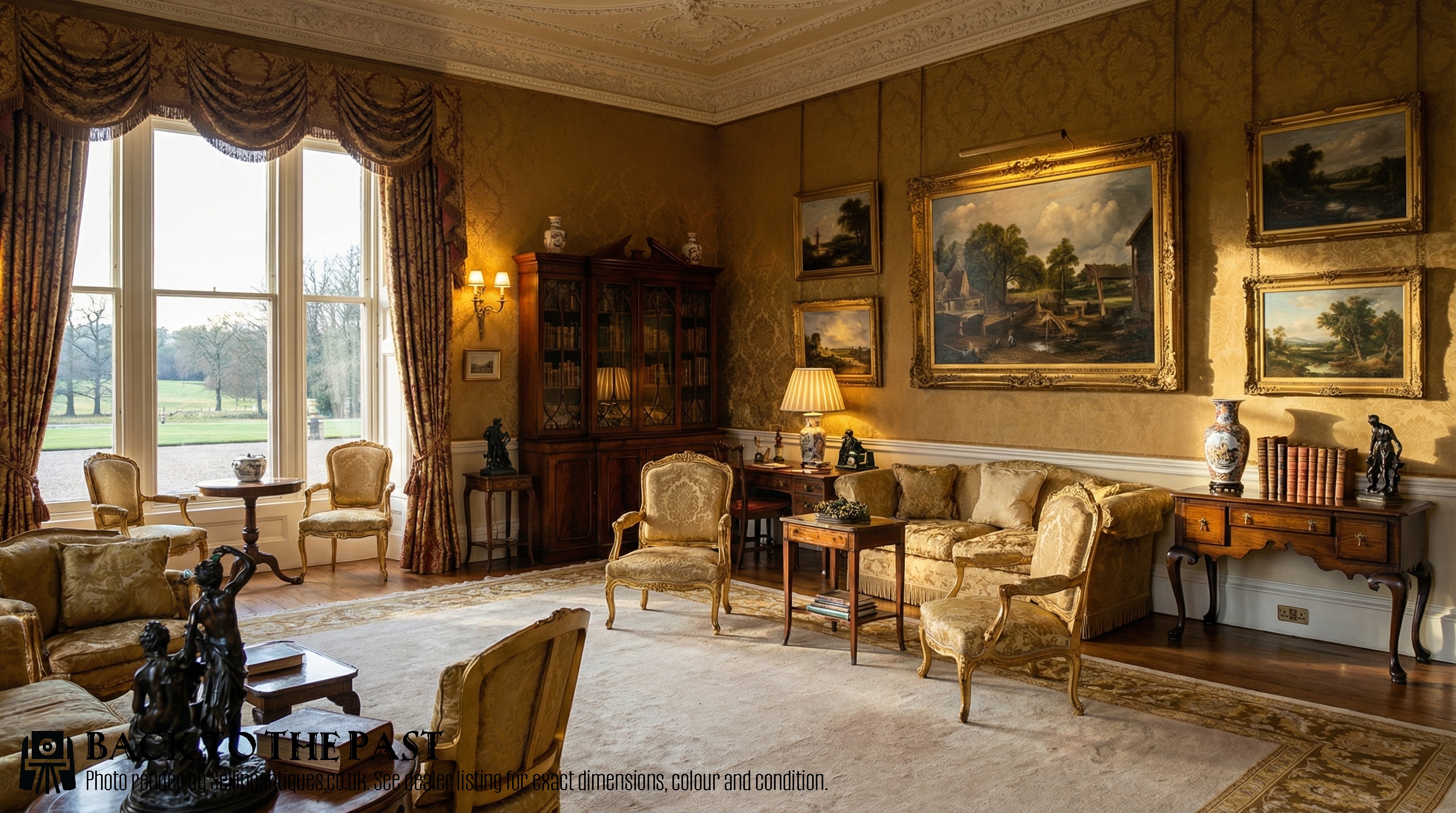
A lowboy fits comfortably in a hallway as a console table or in a living room as a lamp table. Its modest height and depth prevent it from overwhelming smaller rooms.
Pairing the table with a mirror creates a traditional dressing area in a bedroom setting.