


Vintage Oak Horology
Vintage oak horology gathers timber clocks and watchmaker cabinets spanning centuries of British and continental timekeeping.
Vintage Oak Horology
Vintage oak horology encompasses timepieces and cabinets framed in timber, stretching from eighteenth-century longcase clocks to twentieth-century mantel and wall designs. Buyers encounter everything from tall grandfather clocks to compact bracket clocks and watchmaker cabinets.
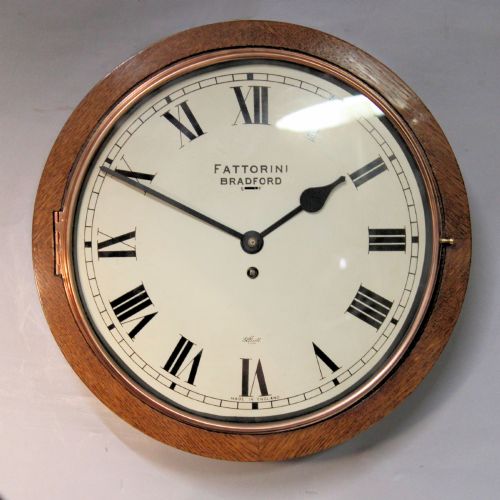
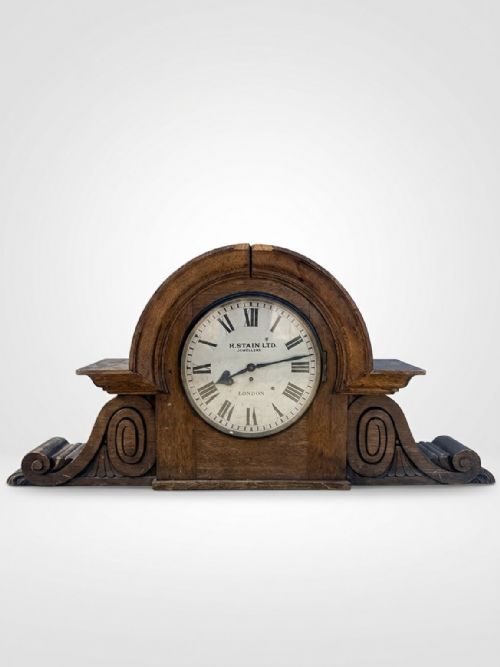
The selection ranges across Victorian, Edwardian, and Art Deco periods, alongside Georgian and early twentieth-century examples. Wall dials, Westminster chime mantel clocks, and railway tool clocks appear frequently alongside traditional longcase forms.
Makers and origins vary widely, incorporating English, Scottish, and German craftsmanship. Pieces such as fusee mantel clocks and oak-cased wall clocks demonstrate the practical utility inherent in these traditional wooden housings.
Materials and construction
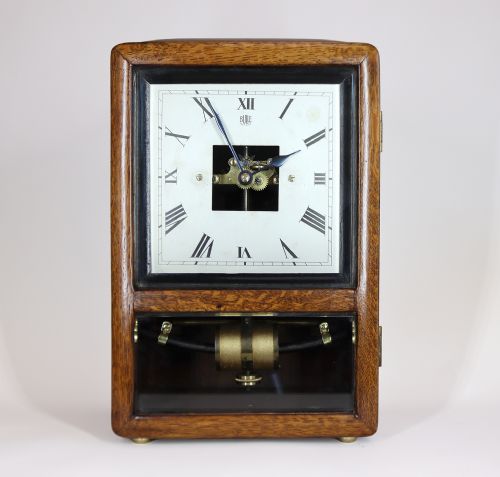
Oak forms the primary structural material across these pieces, often paired with glass viewing panels and brass or painted iron dials. Walnut, chrome, and iron appear in supporting roles, particularly in later twentieth-century or industrial transport designs.
Mechanisms rely on traditional brass and metal gearing, incorporating lever escapements, double fusee movements, and anchor mechanisms. Cabinets utilise traditional joinery suited to housing delicate clockwork and watchmaker tools.
Listings feature oak across multiple centuries, pairing timber cases with brass, glass, and painted iron components.
Distinguishing quality
Quality rests in the precision of the movement, the integrity of the oak casing, and the legibility of the dial. Pieces featuring signed movements by established makers or complex chime mechanisms demonstrate higher levels of horological ambition.
Proportion and timber selection dictate visual success, particularly in tall longcase clocks and smaller bracket clocks. Original components, uncompromised dial faces, and crisp case carving separate standard production from superior examples.
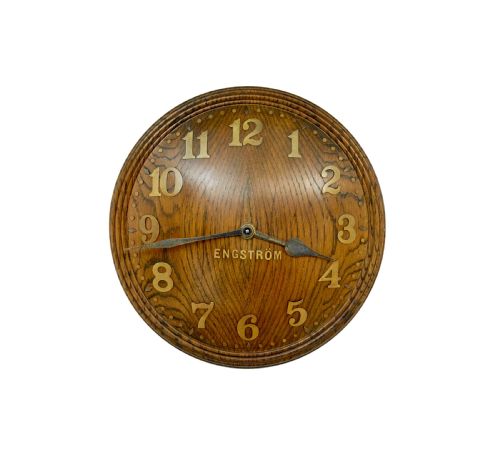
Elliott·Engström by Zenith·Manoah Rhodes & Sons Ltd·Richard Prew Of Tewksbury·Smith·Payne & Co of London
The Vintage Oak Horology Glossary
- Fusee
- A conical pulley used in clock movements to maintain even force as the mainspring unwinds. This mechanism improves timekeeping accuracy across the duration of the wind.
- Escapement
- The mechanical linkage that regulates the speed of the gear train by giving periodic impulses to the pendulum or balance wheel. Lever escapements are common in portable or wall-mounted clocks.
- Longcase clock
- A tall freestanding weight-driven timekeeper housed in a wooden trunk, often referred to as a grandfather clock. These pieces originated in the seventeenth century and continued through the Georgian and Victorian eras.
- Bracket clock
- A portable table or shelf clock originally designed to sit upon a wall bracket. Many examples feature brass carrying handles and glazed side panels.
- Dial
- The face of the clock where hours and minutes are displayed via numerals and hands. Dials on these pieces utilise painted iron, brass, or silvered brass plates.
Vintage Oak Horology: Frequently Asked Questions
How do I wind an antique oak clock?
Winding requires a dedicated key matched to the square arbours on the dial face. Turn the key gently until resistance signals the mainspring is fully tensioned, taking care not to overwind.
For weight-driven longcase clocks, pull the cords or crank the weights upwards slowly. Ensure the pendulum hangs straight before setting the movement in motion.
Where should I place a longcase clock?
Position the clock against an interior wall away from direct sunlight, central heating vents, and damp areas. Temperature fluctuations can affect the wooden case and metal movement.
A stable floor surface is essential so the case stands plumb, allowing the pendulum to beat evenly without catching on the interior backboard.
How do I tell an 18th-century clock from a Victorian one?
Eighteenth-century longcase clocks often display simpler oak proportions, brass dial faces with cast spandrels, and thirty-hour or eight-day weight-driven movements. Cabinet construction frequently relies on hand-cut joinery.
Victorian and later pieces incorporate machine-sawn timber, varied dial styles including painted iron, and diverse movements such as spring-driven fusee or lever escapements housed in mantel or wall formats.
What maintenance do these clocks need?
Clocks benefit from professional cleaning and lubrication every few years to prevent wear on the brass pivots and gear teeth. Dust accumulation inside the case should be removed with a soft brush.
Keep the glass panels clean and check that the movement remains securely fixed within the oak housing. Avoid applying household polishes directly to antique timber surfaces.