
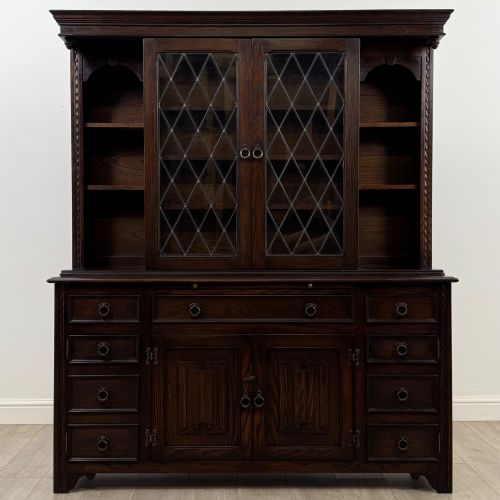
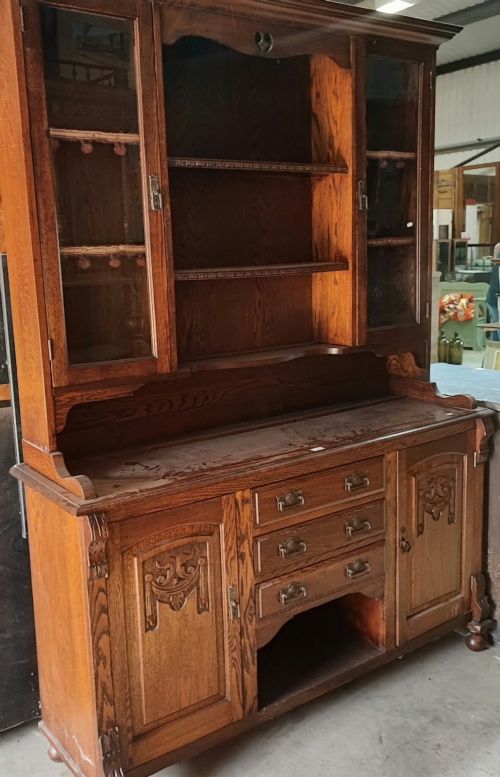
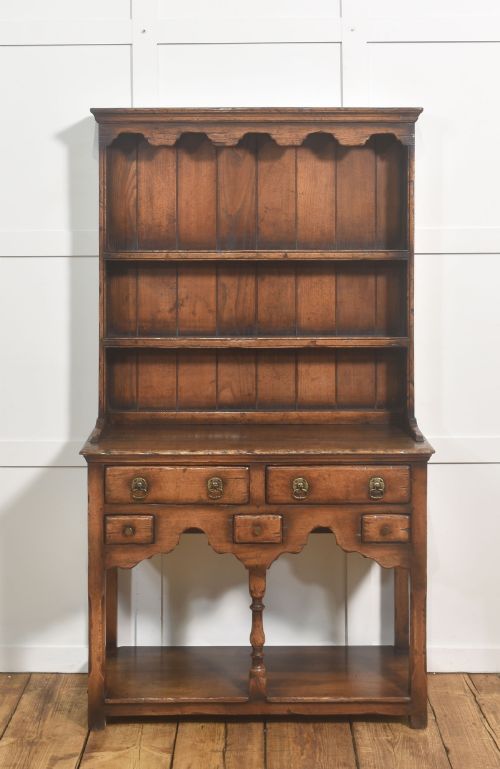
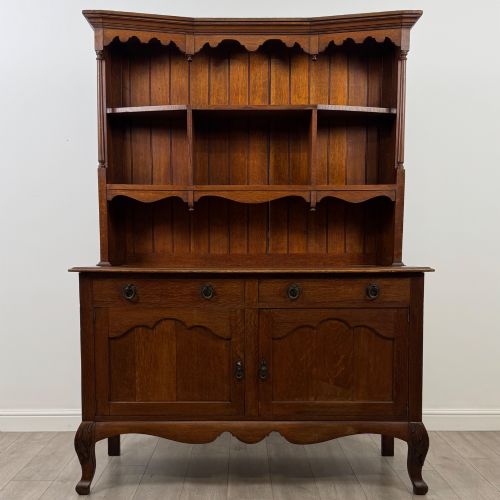
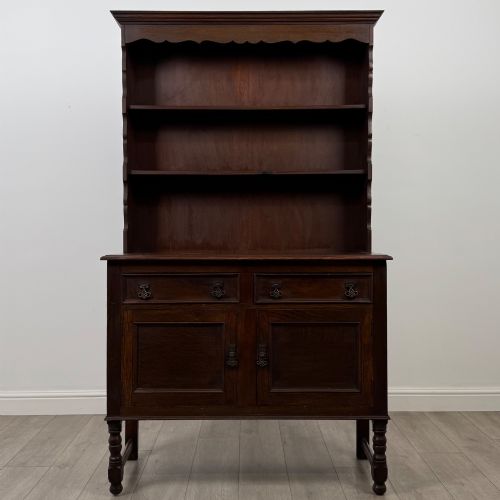

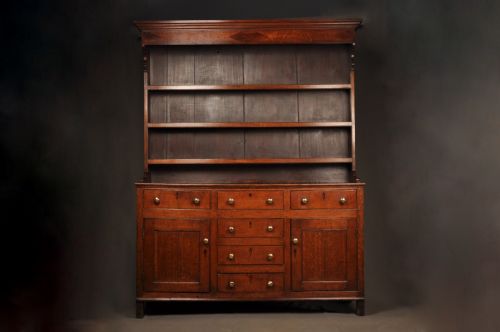
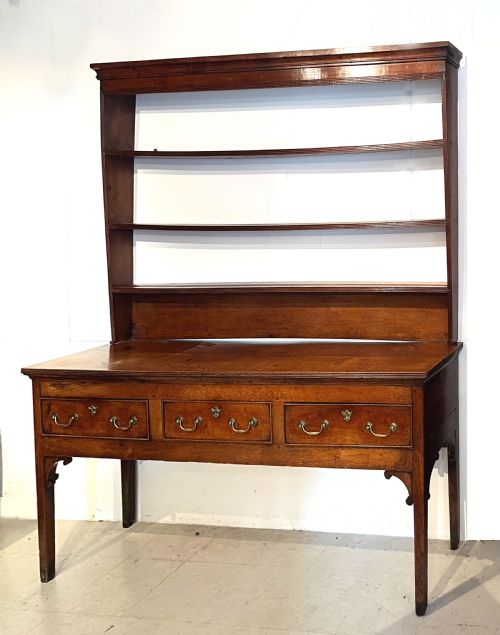


Vintage Oak Dresser Hutch
A vintage oak dresser hutch brings together practical timber storage and open plate display, anchored in centuries of English and regional craftsmanship.
Vintage Oak Dresser Hutch
A vintage oak dresser hutch serves as a substantial storage and display unit, combining a lower base of cupboards or drawers with an upper plate rack or glazed cabinet. When exploring this selection of a vintage oak dresser hutch, buyers encounter forms ranging from 18th-century country pieces to Edwardian and later revival iterations.
The objects span periods from the 18th century through the Victorian, Edwardian, and 1930s eras, reflecting stylistic shifts from plain country utility to Jacobean, Arts and Crafts, and Renaissance revivals. Welsh dressers and farmhouse examples feature prominently, offering shelved upper racks for displaying ceramics alongside enclosed lower storage.
Regional variations emerge across English country, Cornish, and Welsh types, utilising native timber and traditional construction methods. Buyers most frequently meet two-part configurations and cottage dressers designed to anchor a kitchen or dining room.
What varies in quality
Quality rests in the integrity of the timber selection, the crispness of hand-carved ornamentation, and the proportion between the upper rack and the lower base. Earlier 18th-century joined examples display superior timber density and cabinetmaking skill compared to later mass-produced revival pieces.
The originality of brass hardware, glass panes, and backboards heavily influences the character of the piece. Fine examples maintain balanced proportions, harmonious patination across the oak surfaces, and robust structural joinery in the base cupboards.
The listings span multiple centuries, uniting 18th-century country pieces with 1920s Jacobean revival styles and Arts and Crafts oak designs.
Heals of London
The Vintage Oak Dresser Hutch Glossary
- Welsh dresser
- A traditional kitchen or dining furniture form featuring open plate shelves mounted above a base of drawers and cupboards. These pieces evolved to store and display domestic tableware.
- Plate rack
- The upper open-shelved section of a dresser designed specifically to hold plates upright against a timber backboard. It often includes plate grooves and side cheeks.
- Tiger oak
- Oak timber exhibiting strong, mottled medullary ray figuring resembling tiger stripes. This figuring occurs naturally when quartersawn lumber reveals the growth rings.
- Leaded glass
- Small panes of glass held together within a network of lead cames to form glazed cabinet doors. This technique appears on later display cabinets and revival dressers.
- Joined oak
- Furniture constructed using mortise and tenon joinery pinned with wooden trunnels rather than modern metal fasteners. This method defines earlier 18th-century cabinetmaking.
Vintage Oak Dresser Hutch: Frequently Asked Questions
What is the difference between a Welsh dresser and a standard dresser hutch?
A Welsh dresser traditionally emphasises an open display rack for plates mounted above a lower base of drawers and cupboards. Other regional dresser hutch variations might feature enclosed glazed upper cabinets or simpler bookcase configurations.
Both forms serve similar storage and display functions in domestic interiors, though Welsh pieces remain particularly sought after for their traditional country proportions.
How do I date an older oak dresser hutch?
Dating relies on examining construction methods, timber characteristics, and style markers. Earlier 18th-century pieces often feature hand- cleft boards and joined framework, while Edwardian and 1920s revival items show machine-sawn elements and distinct revival motifs.
Hardware styles, tool marks on the timber backboards, and overall patination also provide reliable clues to a piece's period of origin.
How should I care for a vintage oak surface?
Maintain the timber by keeping the dresser away from direct heat sources and dramatic humidity fluctuations, which can cause the oak to split. Regular dusting with a soft cloth and occasional application of appropriate beeswax preserve the natural finish and patination.
Avoid silicone-based sprays, as they build up over time and dull the historic grain of the wood.
Are these dressers delivered in one piece?
Many traditional dresser hutches are constructed as two-part units, consisting of a heavy lower cupboard base and a detachable upper plate rack. This two-part construction facilitates transport and placement within domestic spaces.
Larger 18th-century joined examples may be single solid structures, requiring careful measurement of doorways and stairwells before acquisition.