
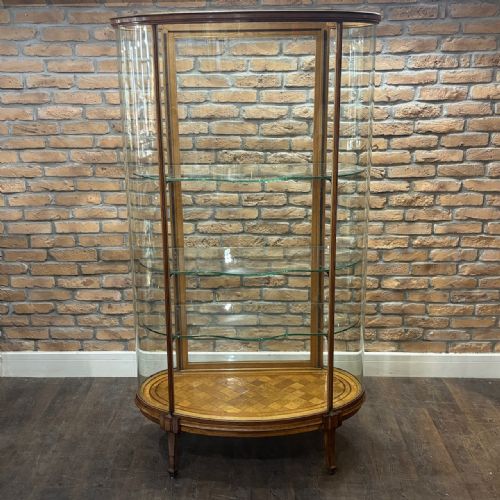
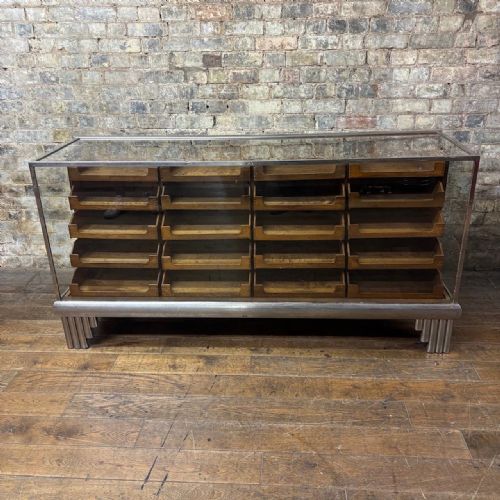


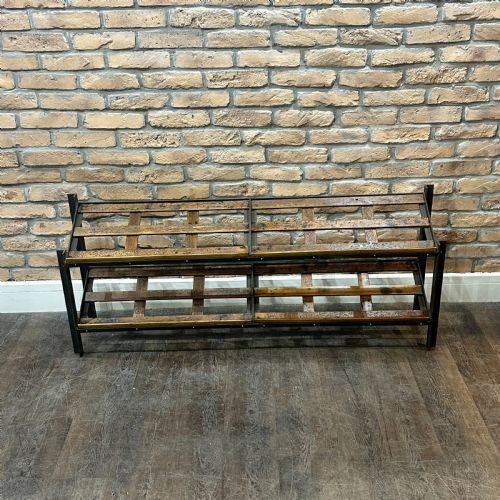


Vintage Oak Display Counter
These vintage oak display counters are utilitarian shop fittings built for commerce, bringing sturdy timber and glass to modern interiors.
Vintage Oak Display Counter
When you search for a vintage oak display counter, you encounter functional shop furniture spanning the Victorian, Edwardian, and interwar commercial periods. The selections range from large floor-standing haberdashery counters and tailor tables to compact countertop drawer units and watchmaker cabinets.
Most pieces date from the nineteenth century up through the nineteen-thirties, reflecting eras of traditional retail where merchandise required physical containment behind glass. You will frequently meet Edwardian shop fittings alongside French drapers tables and Art Deco commercial pieces.
Makers recorded in these listings include commercial outfitters like F. Sage and Co, Dudley and Co, and Manoah Rhodes and Sons Ltd. These firms supplied specialised trade furniture built to withstand daily mercantile use.
How they were made
These counters rely primarily on solid oak frameworks joined to accommodate large glass panels for optimal visibility of goods. Cabinet makers integrated brass handles, chrome trim, and cast iron supports to reinforce structural points subjected to heavy retail traffic.
Interior components often incorporate velvet linings for delicate wares alongside multiple shallow drawers designed for haberdashery, needles, or watch parts. Secondary timbers such as pine appear in hidden structural areas like drawer bases and carcase backs.
Several early twentieth-century cabinets carry later chocolate sign-writing, proving someone once sold confectionery where sewing goods lived.
What varies in quality
Superior examples originate from established commercial furnishers and specialised trade workshops, displaying refined joinery and robust hardware that survive decades of shop use. Simpler provincial items or utilitarian utility counters tend to feature plainer timber selections and less intricate internal configurations.
The integrity of the original glazing, operational drawer runners, and surviving maker plates or specialised trade sign-writing distinguish finer specimens from standard commercial survivors.
F. Sage and Co·Dudley and Co·Manoah Rhodes and Sons Ltd
The Vintage Oak Display Counter Glossary
- Haberdashery counter
- A shop counter featuring multiple shallow drawers, often with glass fronts or pulls, originally used for ribbons, threads, and small sewing goods.
- Countertop display cabinet
- A smaller tabletop showcase designed to sit atop a larger sales counter for high-value merchandise like watches or chocolate.
- Drapers table
- A long wooden table utilised in cloth and textile trade shops, frequently constructed in French provincial styles with generous surface areas.
- Watchmaker cabinet
- A specialised desktop or countertop cabinet fitted with numerous tiny drawers intended for miniature tools and watch components.
- Shop fitting
- Fixtures and furniture built specifically for commercial retail environments rather than domestic residential use.
Vintage Oak Display Counter: Frequently Asked Questions
What is a haberdashery counter?
A haberdashery counter is a commercial shop fixture designed with numerous shallow drawers to organise small dry goods like buttons and threads.
These pieces typically incorporate glazed fronts or tabletops to allow customers to view stock while keeping items secure.
How do I date a shop counter?
Dating relies on stylistic markers, construction techniques, and materials shifting from Victorian solid oak through Edwardian forms to Art Deco and nineteen-thirties chrome accents.
Maker plaques and recorded institutional periods help narrow the decade of manufacture.
Were these used in homes?
These pieces originated entirely within nineteenth and twentieth-century retail shops, drapery stores, and trade workshops.
Contemporary interiors repurpose them as kitchen islands, sideboards, and statement storage furniture.
What woods were used?
Oak serves as the primary structural and visual timber across these commercial counters, often paired with secondary woods like pine in hidden internal sections.
Some French examples feature bleached oak finishes.