
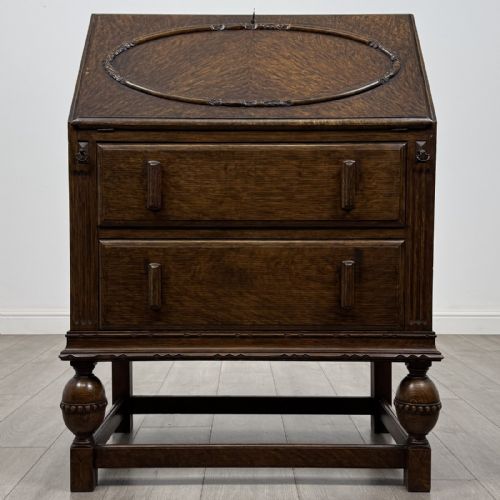
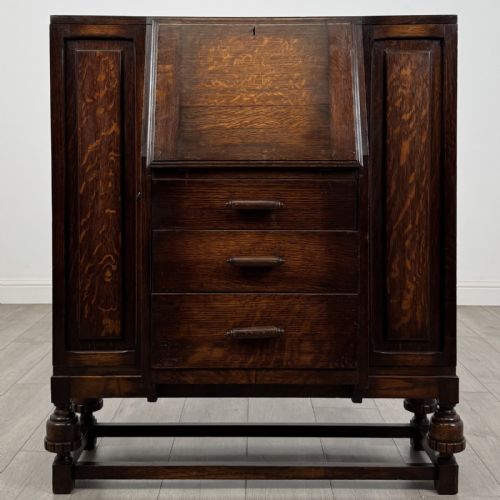
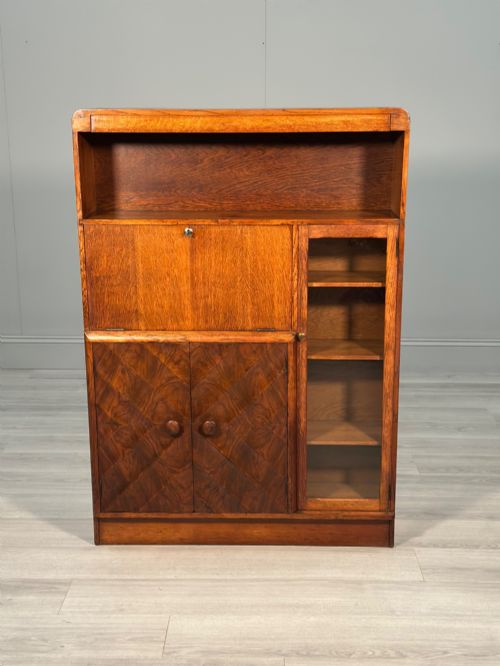
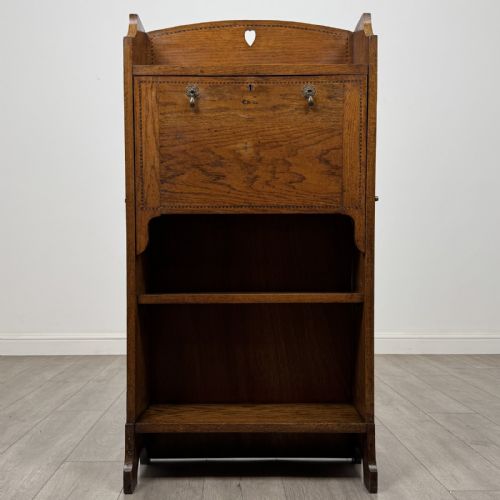

Vintage Oak Bureau Cabinet
A vintage oak bureau cabinet is a working writing desk paired with storage or display, built to last and organise daily life.
Vintage Oak Bureau Cabinet
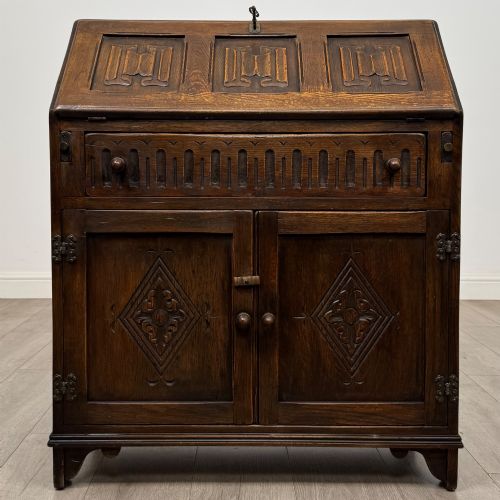
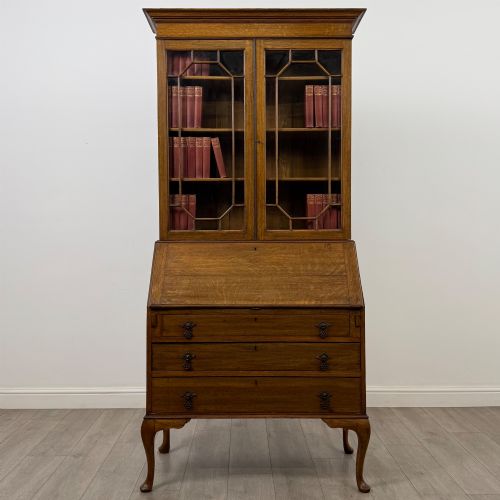
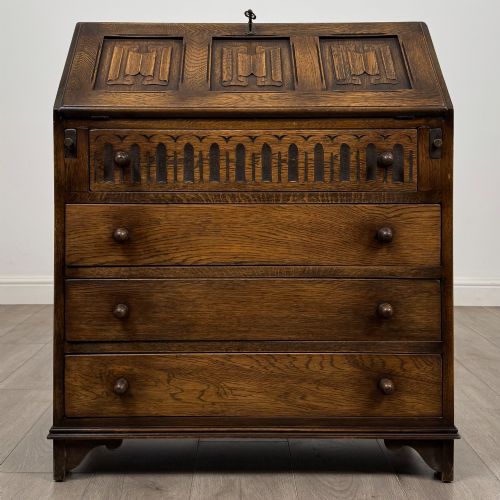
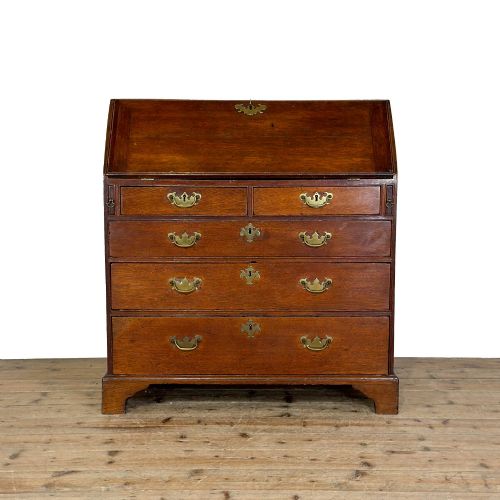
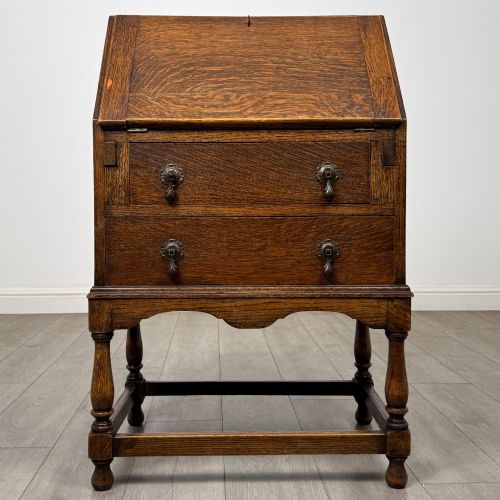
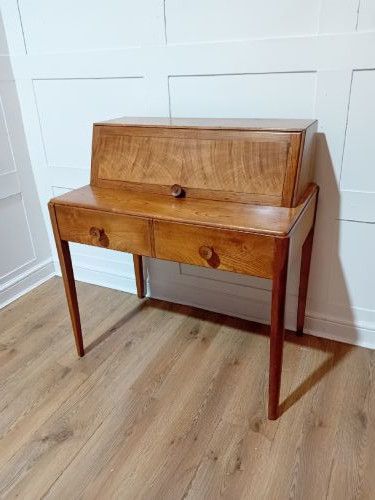
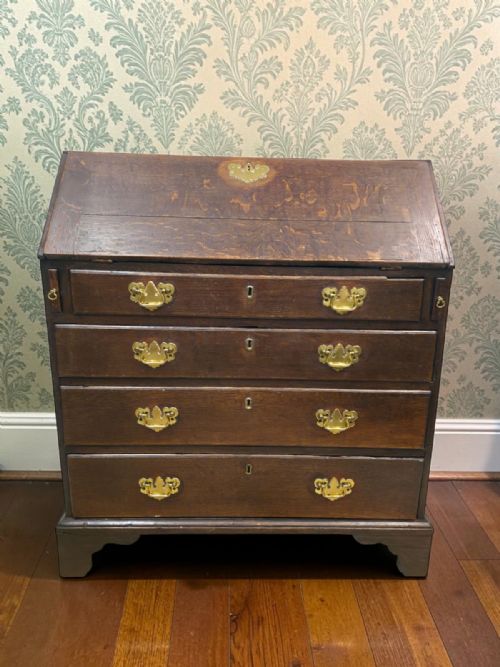
When you search for a vintage oak bureau cabinet, you encounter sturdy writing furniture designed with a fall-front desk flap that opens to reveal internal compartments, pigeonholes and small drawers. These pieces frequently incorporate upper glazed bookcases or lower chests of drawers to form a dual-purpose item for the home.
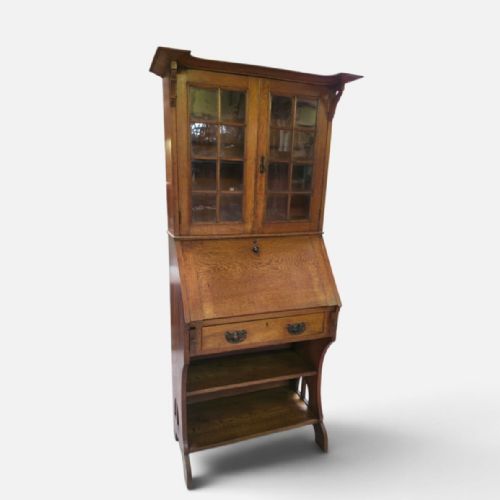
The selection on this page is dominated by Edwardian and early twentieth-century interpretations, alongside Georgian precursors and later revival styles. Forms range from compact students' desks to tall bureau bookcases featuring leaded glass doors and brass hardware.
Materials and construction methods
Construction relies heavily on solid oak and oak veneers, often highlighted with brass drop handles, key escutcheons and iron hinges. Certain examples introduce painted surfaces, ebonised finishes or limed treatments to alter the natural grain.
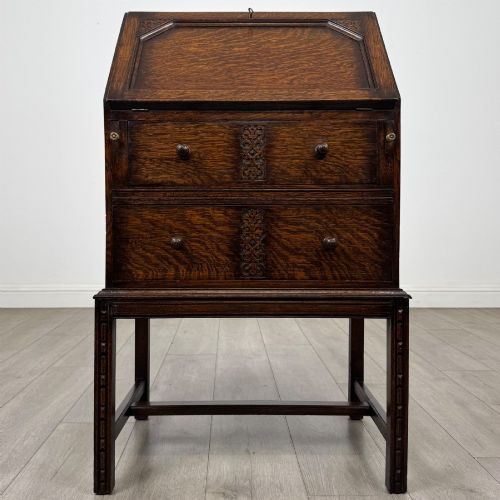
Cabinetmakers utilised traditional joinery techniques, visible in the carved linenfold panels, applied mouldings and fitted interiors found across Arts and Crafts, Jacobean revival and Georgian pieces.
One piece includes a carved wooden mouse signature tucked away on the furniture.
Separating grades of manufacture
The distinction between standard production and superior craftsmanship rests on the selection of timber and the execution of interior details. Higher tier items display carefully figured oak grain, well-fitted pigeonholes with secret compartments, and hand-cut dovetailing on the drawer construction.
Makers identified by workshops or labels achieve higher distinction through disciplined proportions and restrained carving, whereas mass-produced alternatives rely on applied decorative motifs with less attention paid to the internal secondary woods.
Arthur Basil Reynolds·Stanley Webb Davies·Bryn Mawr·Robert Mouseman Thompson·Harris Lebus·Liberty and Co
The Vintage Oak Bureau Cabinet Glossary
- Bureau
- A writing desk featuring a sloping fall-front flap that drops down to create a flat writing surface. It conceals a fitted interior of small drawers and pigeonholes.
- Bureau bookcase
- A tall cabinet combining a lower bureau desk with an upper shelving section enclosed by glass doors. These pieces serve both writing and display functions.
- Fall-front
- The hinged writing flap of a bureau that rotates from a vertical or sloping position into a horizontal plane for writing. It is typically supported by lopers or side arms when lowered.
- Linenfold
- A style of carved wooden panelling that resembles folded vertical pleats of fabric. It appears frequently on Edwardian and revival furniture.
- Lopers
- Wooden pull-out brackets positioned beneath the fall-front flap of a bureau. They slide out from the cabinet frame to support the weight of the open desk.
Vintage Oak Bureau Cabinet: Frequently Asked Questions
What is a bureau cabinet used for?
A bureau cabinet serves as a dual-purpose piece of furniture for writing and storage. The drop-down flap creates an immediate workspace equipped with compartments for correspondence.
The upper shelving or lower drawers provide enclosed space for books, stationery and household items, making them practical for studies and living rooms.
How do I identify an Edwardian bureau?
Edwardian bureaus frequently display lighter golden oak tones, clean proportions, and decorative elements such as linenfold carving or Arts and Crafts influence. They date from the early twentieth century and often incorporate simpler lines than heavy Victorian predecessors.
Hardware on these pieces typically includes pressed brass handles and internal stationery fittings arranged in orderly banks around a central small door.
What is an Arts and Crafts bureau?
Arts and Crafts bureaus emphasise honest construction, hand-worked materials, and simple functional forms rather than excessive factory ornamentation. They often showcase the natural grain of golden oak alongside exposed joinery and hand-beaten metal hinges.
Many examples associated with this movement display influences from specific regional workshops and maker signatures on labels or stamps.
How do I care for an oak bureau?
Maintain oak furniture by keeping it away from direct heat sources and rapid temperature shifts that cause timber to dry and split. Regular dusting with a dry cloth preserves the finish.
Apply a traditional beeswax polish occasionally to nourish the wood grain and protect the surface from everyday wear without building up heavy chemical residues.