
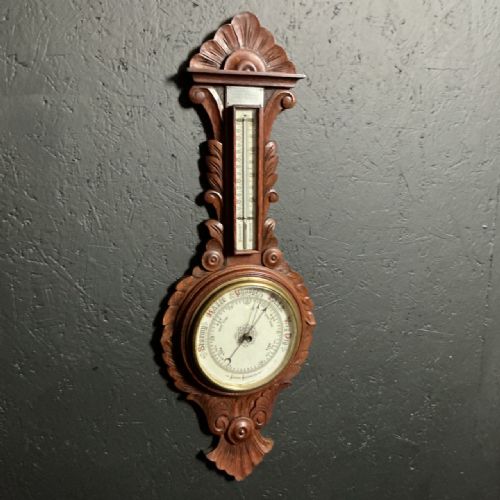
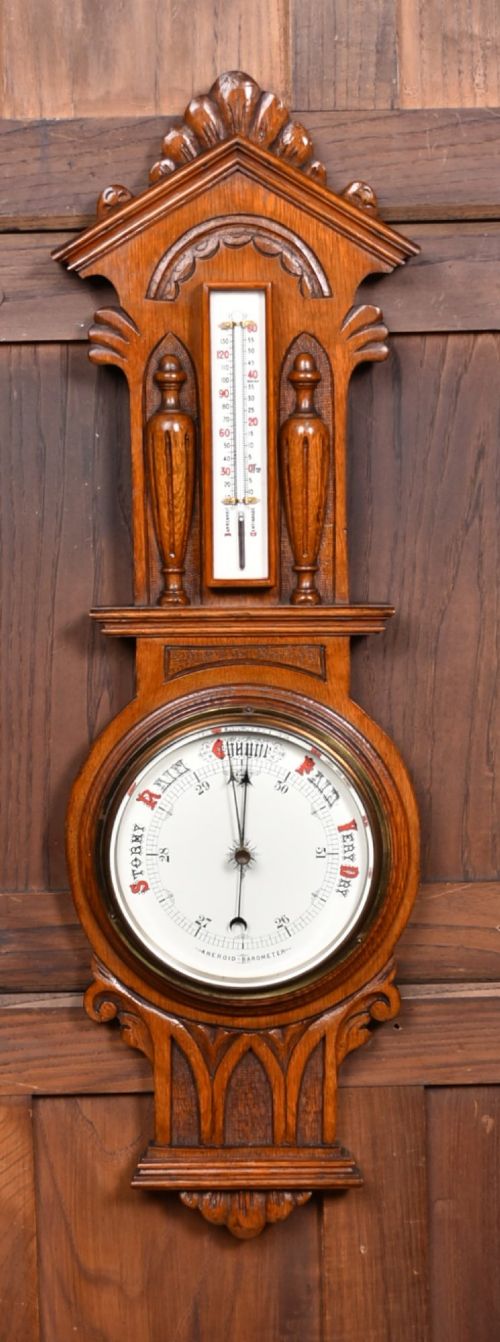
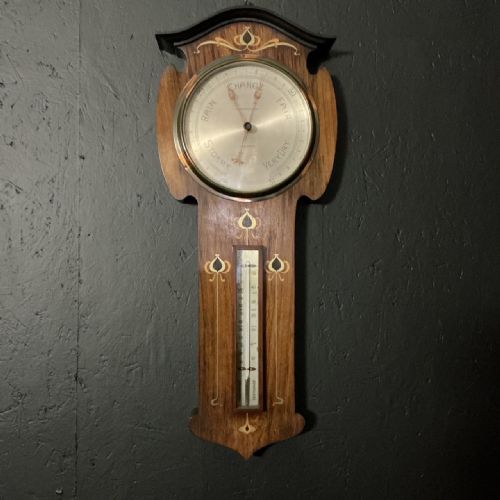
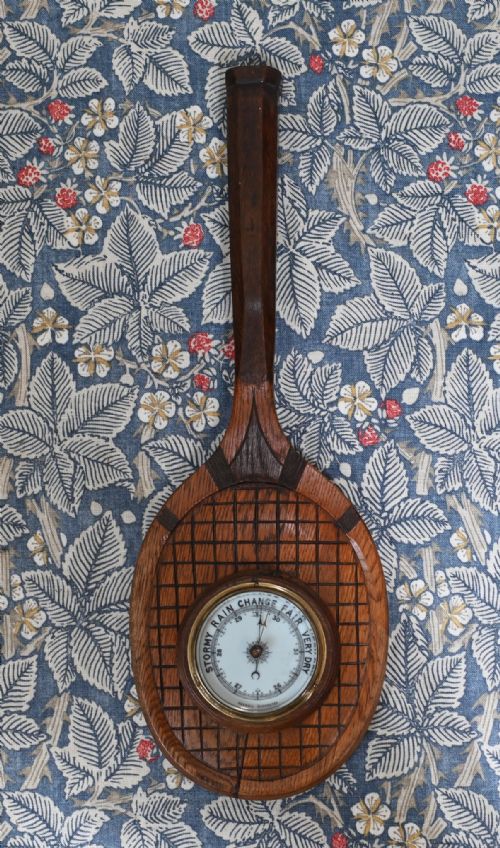
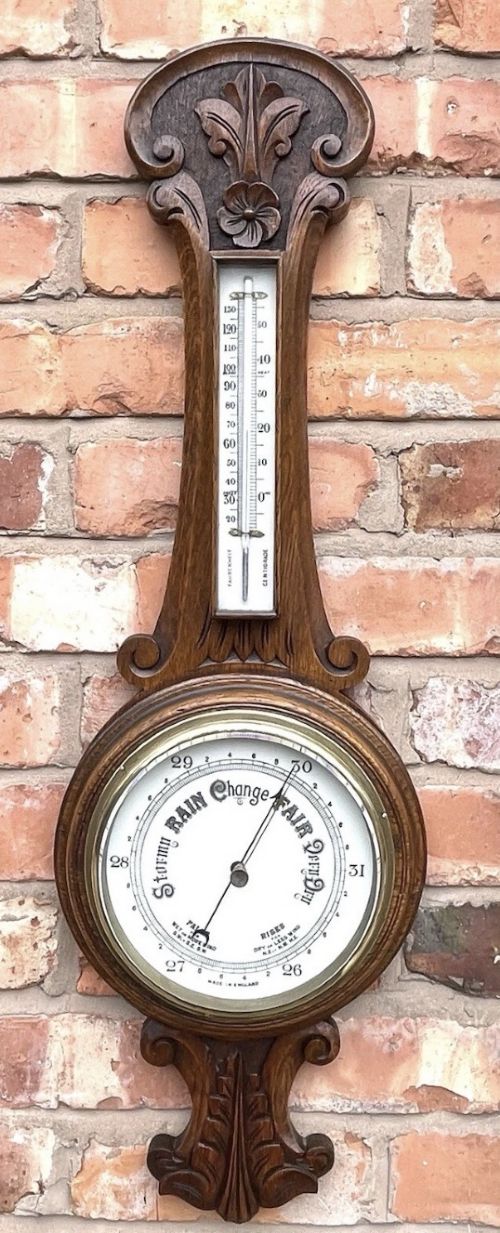


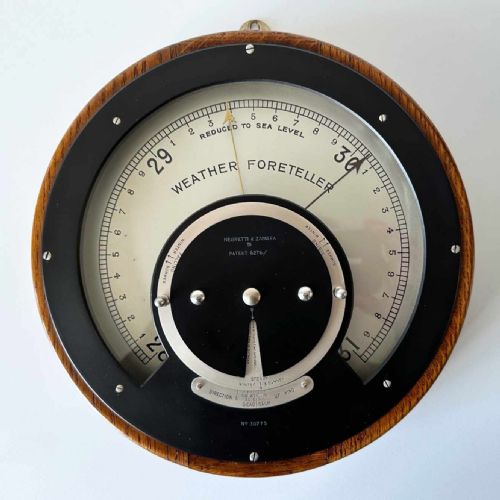
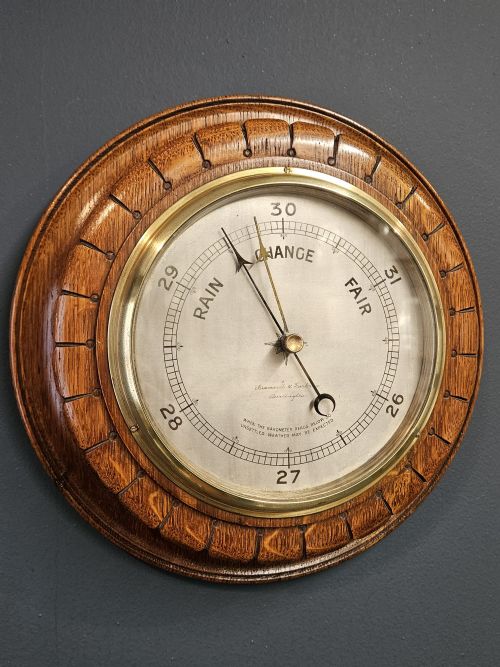
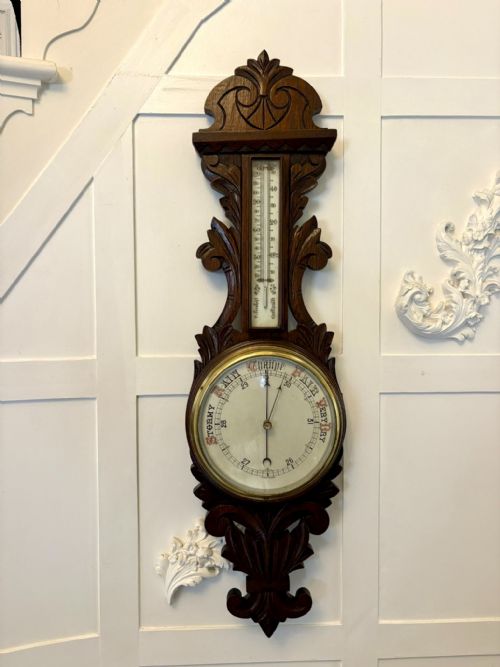


Vintage Oak Aneroid Barometer
A vintage oak aneroid barometer brings mechanical weather recording into a room through solid timber and glass dials.
Vintage Oak Aneroid Barometer
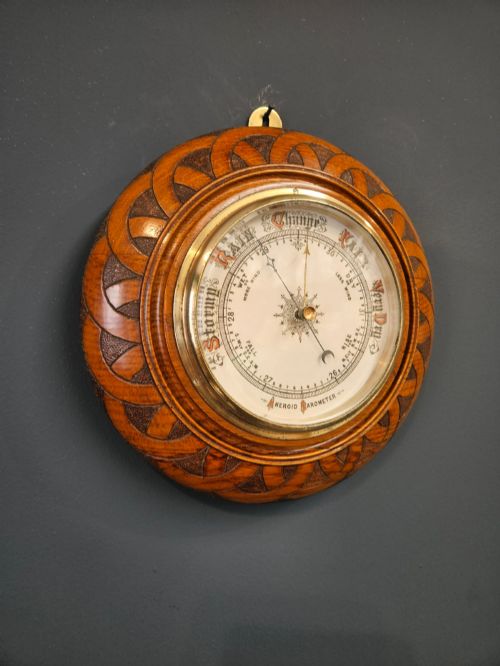
A vintage oak aneroid barometer is a domestic weather instrument housed in timber casing, operating without liquid through an internal metal vacuum box that responds to atmospheric pressure. When searching this phrase, a buyer looks at wall-hanging instruments designed to measure local pressure changes for daily forecasting. The pieces found here span the Victorian, Edwardian, and early twentieth-century periods, capturing styles from plain geometric cases to deeply carved foliage.
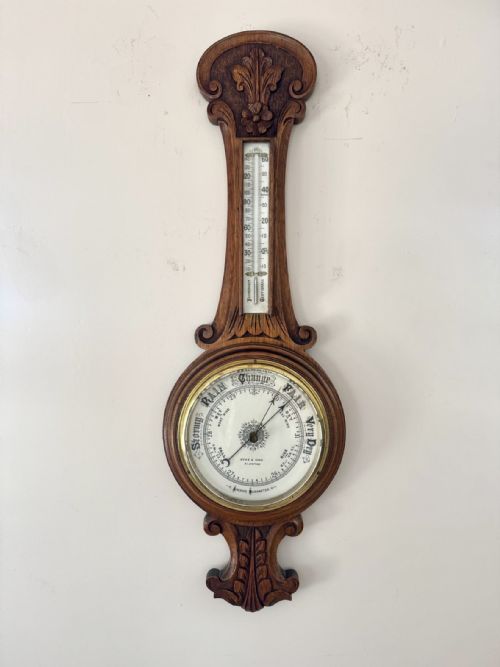
The version most commonly met on this page is the oak-cased banjo barometer, often combining a circular dial at the top with a mercury thermometer inset along the stem. These instruments frequently appear with carved oak frames reflecting the tastes of the nineteenth and early twentieth centuries, alongside occasional desk forms and mechanical barographs. Oak provides a robust, visible grain that makes these practical scientific objects well-suited for domestic walls.
How they were made
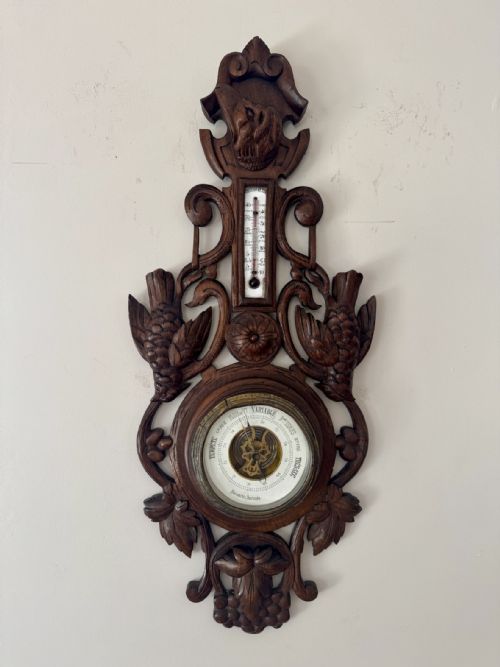
Casing construction relies primarily on solid oak, carved walnut, and mahogany, shaped by hand or turned on lathes to form circular bezels and elongated banjo stems. Carved examples display regional woodworking traditions, particularly Black Forest designs featuring deep relief foliage and animals executed in timber. Bevelled glass protects the delicate silvered or ceramic dials without distorting the scale read by the user.
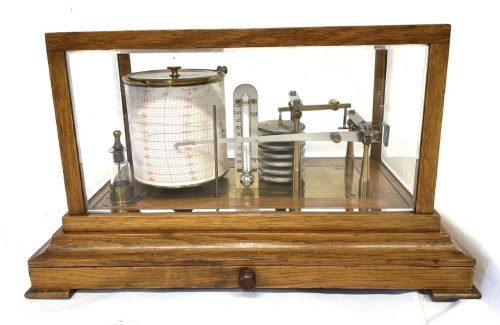
Internal mechanical assemblies combine brass movements with flexible aneroid capsules that expand and contract under air pressure changes. Makers mounted these mechanisms alongside liquid-filled thermometers and, in larger barographs, clockwork drum movements that record weekly pressure traces on paper charts. Signed dials reveal precision engraving, connecting scientific utility directly to cabinetry.
Listings feature oak alongside walnut, mahogany, brass, ceramic, and bevelled glass across Victorian and Edwardian periods.
What varies in quality
Quality separates through the crispness of the timber carving and the architectural proportion of the case, where deeper relief and balanced wood grain distinguish workshop pieces from mass production. The integration of auxiliary instruments like thermometers and chart drawers adds complexity that elevates the construction standard of the whole piece. Finer examples retain original bevelled glass and unblemished silvered brass dials with sharp lettering.
Mechanical precision dictates the reliability of the instrument, as higher-grade aneroid movements respond smoothly to pressure variations without sticking pointers. Maker attribution significantly influences standing, with established scientific instrument makers providing superior internal calibration alongside signed dials. The preservation of original surface finishes on the oak casing maintains the historical integrity prized by collectors.
Hyde & Sons Sleaford·Negretti & Zambra·Bramwell & Harbron of Darlington·Short & Mason·W Watson & Sons·Maple & Co·Jules Richard·Aitchison
The Vintage Oak Aneroid Barometer Glossary
- Aneroid barometer
- An instrument that measures atmospheric pressure using a flexible metal vacuum capsule rather than liquid mercury. Changes in air pressure cause the capsule to expand or contract, moving a pointer across a graduated dial.
- Barograph
- A self-recording meteorological instrument that plots a continuous line of atmospheric pressure onto a revolving paper chart over a weekly period. These desk-form instruments are usually housed in glazed oak or mahogany cases with clockwork drums.
- Banjo barometer
- A wall-hanging weather glass shaped roughly like a banjo, featuring a large circular dial at the top for pressure and a long vertical stem holding a thermometer.
- Silvered dial
- A brass or metal dial plate treated to achieve a frosted silver finish, upon which scale graduations and maker inscriptions are engraved and blackened.
- Hypsometer
- A specialised scientific instrument used to determine altitude by measuring the boiling point of water, often paired with aneroid barometer mechanisms in portable field sets.
Vintage Oak Aneroid Barometer: Frequently Asked Questions
How does an aneroid barometer work?
An aneroid barometer measures changes in air pressure using a sealed, corrugated metal box that expands or contracts as pressure shifts.
This movement transmits through mechanical levers and gears to rotate the indicator needle across the visible dial face.
Do these barometers still show the weather accurately?
Many vintage aneroid barometers remain fully functional and respond accurately to local atmospheric pressure changes after standard calibration.
Adjustment screws located at the back allow the movement to match current barometric readings for your specific altitude.
What is the difference between a barometer and a barograph?
A standard barometer displays real-time atmospheric pressure on a static dial using a pointer.
A barograph records pressure continuously over seven days by drawing an ink line onto a rotating paper chart fitted to a clockwork drum.
How should I hang an oak wall barometer?
Wall barometers require secure fixing directly into wall studs or solid masonry using appropriate screws to support the timber weight.
Positioning the instrument away from direct sunlight and heat sources prevents timber warping and protects the internal mechanism.