





Vintage Nursery Rocker
A vintage nursery rocker is a small chair, horse or cradle built for children, offering simple motion and solid construction.
Vintage Nursery Rocker
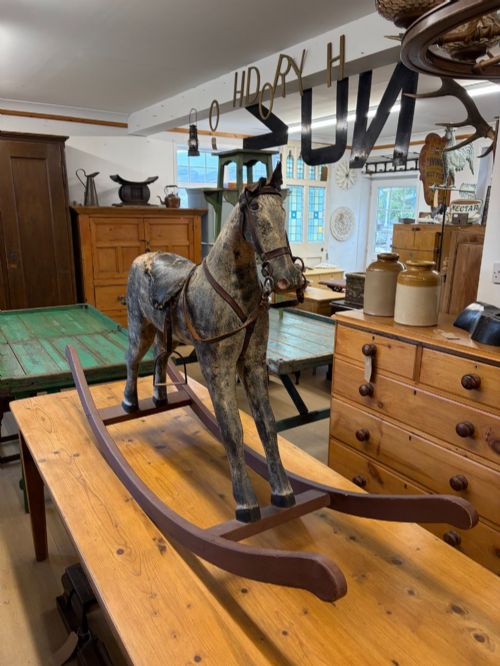
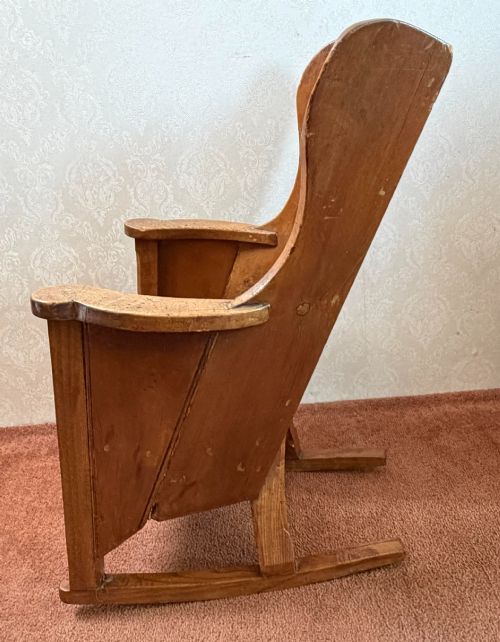
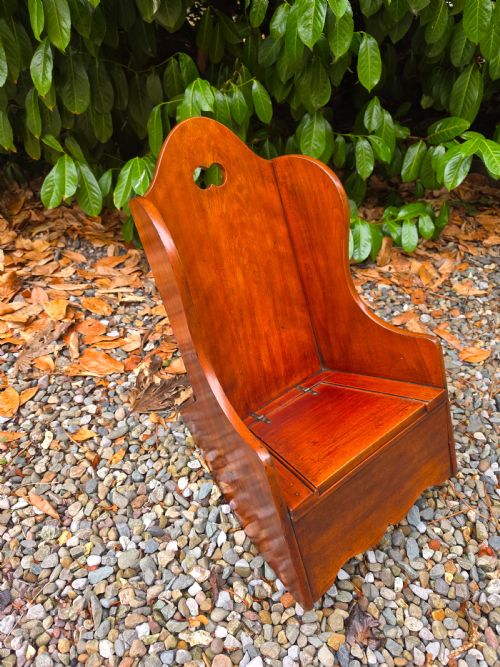
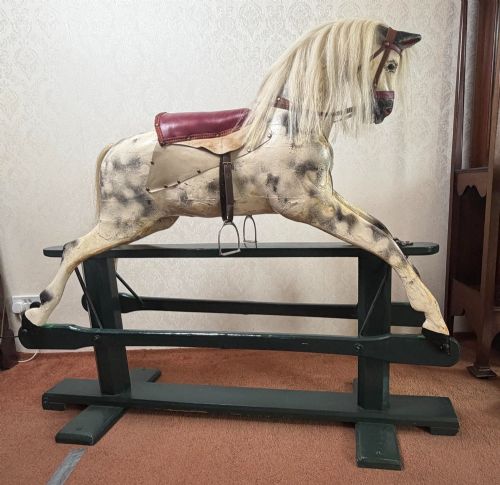
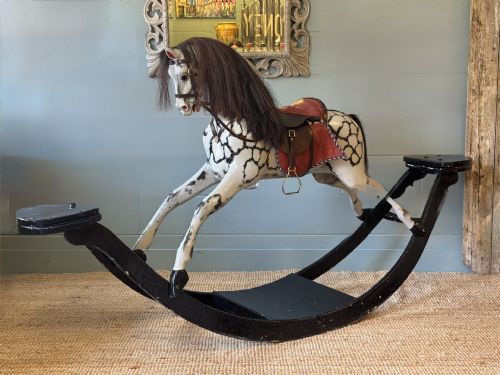
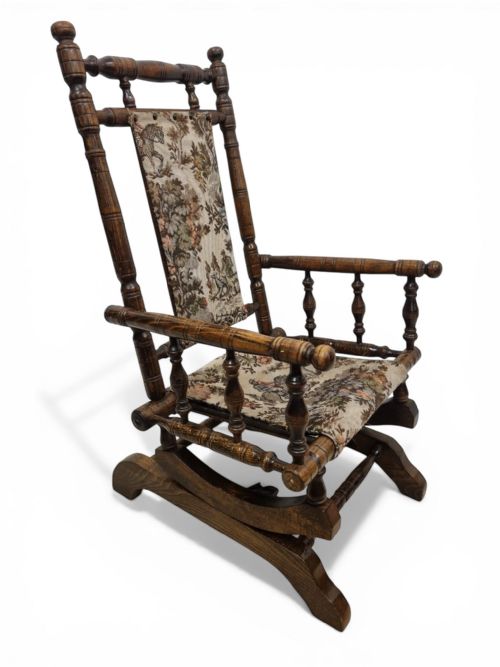
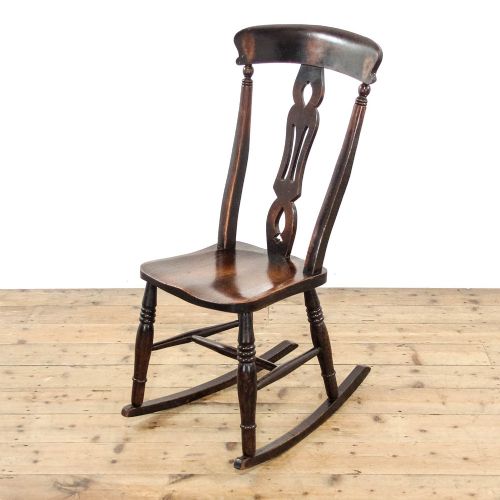
A vintage nursery rocker encompasses small child-sized seating, cradles and rocking horses designed for domestic use. Buyers seeking a vintage nursery rocker will encounter forms ranging from primitive wooden chairs to carved horses on curved stands.
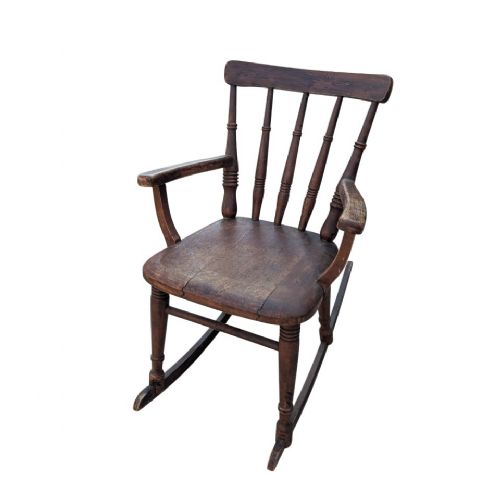
The most common examples on this page are 19th-century children's rocking chairs in elm, beech, fruitwood and pine. These domestic pieces served to soothe young children, utilising simple regional styles from English country to Victorian folk art.
Materials and construction methods
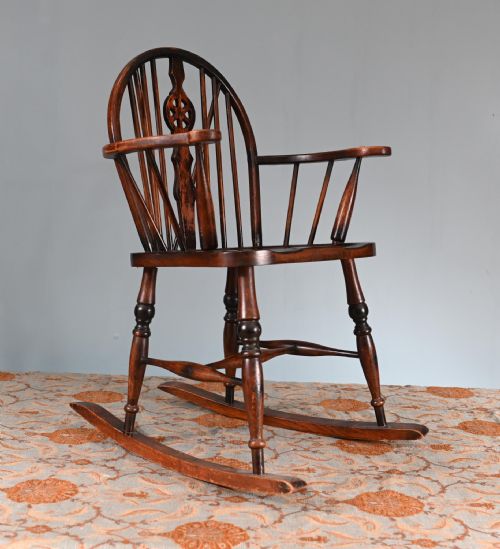
Makers utilised solid timbers such as elm, oak, beech, fruitwood and pine, often shaping them into spindle backs, wheelbacks or Windsor forms. Seats were constructed from solid wood or moulded panels, supported by bentwood elements or integrated wooden rockers.
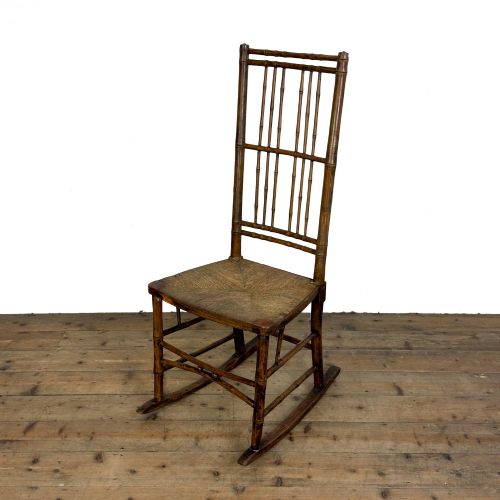
Upholstered versions incorporated horsehair, leather and tapestry over wood frames, while painted finishes, ebonising and faux bamboo decoration appeared on later Victorian and Edwardian examples. Carved wooden horses were fixed onto original curved wooden rockers or safety stands utilising traditional joinery.
An 1895 bentwood rocker is listed specifically as perfect for a doll, proving adults have long indulged miniature furniture.
Distinctions in quality and finish
Quality rests upon the integrity of the original timber, the retention of early or original paint surfaces, and the survival of component parts like original rockers and cradling structures. Examples retaining their initial upholstery materials or uncompromised carved wooden details stand apart from heavily restored pieces.
Construction methods also define the tier, from finely turned spindles and steam-bent bentwood to heavier primitive construction. The harmony between the small scale of the object and the execution of its turning or carving marks the superior output.
G & J Lines of London·Thonet
The Vintage Nursery Rocker Glossary
- Windsor
- A chair built with a solid wooden seat into which the legs and back spindles are separately bored and wedged. This form provides robust structural support for children's seating.
- Bentwood
- Wood that has been rendered pliable via steam and then bent into curved shapes. This technique defines lightweight rocking chairs from makers such as Thonet.
- Fruitwood
- Timber sourced from fruit-bearing trees such as pear or apple, prized by makers for its dense grain and warm tone. It was frequently utilised in smaller chairs and potty rockers.
- Horsehair
- A traditional upholstery filling material made from animal hair, utilised to stuff early padded seats and cushions. It offers a firm and durable foundation.
- Ebonising
- A finishing process that darkens light-coloured wood to imitate ebony. This treatment was popular on Victorian bentwood and occasional chairs.
Vintage Nursery Rocker: Frequently Asked Questions
What is a vintage nursery rocker?
A vintage nursery rocker is a small chair, crib or rocking horse made for children during the eighteenth, nineteenth or early twentieth centuries.
These pieces were scaled down for domestic use in nurseries and children's rooms, employing traditional regional woodworking methods.
How were these chairs used?
They provided a low, stable seat for young children to sit safely near floor level or to soothe infants to sleep.
Cradles and cribs served as sleeping quarters on rockers, while rocking horses offered active play.
How do I date a wooden rocking chair?
Dating relies on identifying timber species, joinery techniques, turning styles and the presence of original paint or surface treatments.
Earlier examples display primitive elm or fruitwood construction, whereas later Victorian and Edwardian pieces show ebonising, bentwood or factory production methods.
Are these pieces safe for children today?
Most antique nursery pieces are collected as decorative antiques, historical items or display objects rather than for modern nursery use.
Their historical construction and small dimensions mean they often do not meet current child safety regulations.