



Vintage Nesting Set
A vintage nesting set brings multiple tiers of timber or lacquer into daily service before tucking neatly away beneath the largest top.
Vintage Nesting Set
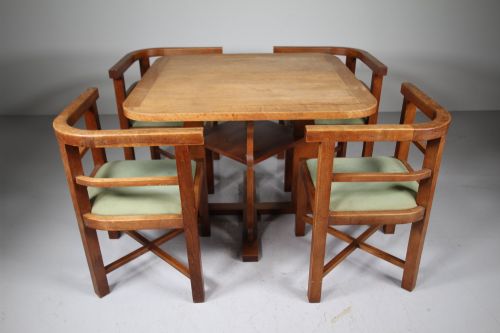
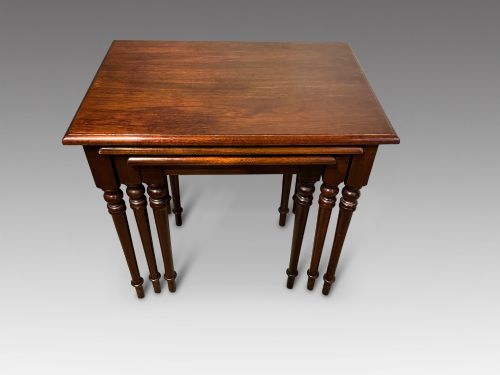
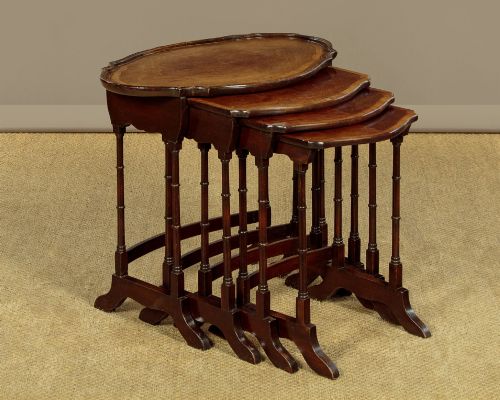
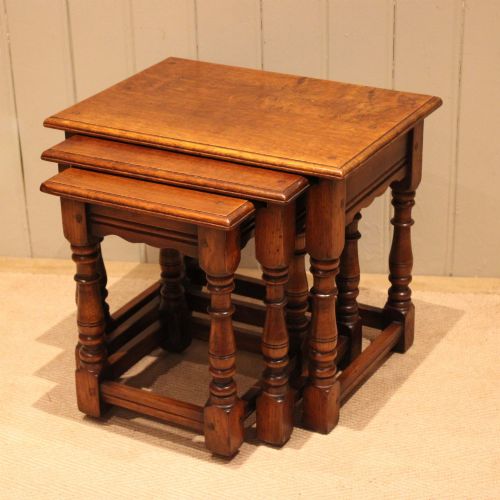
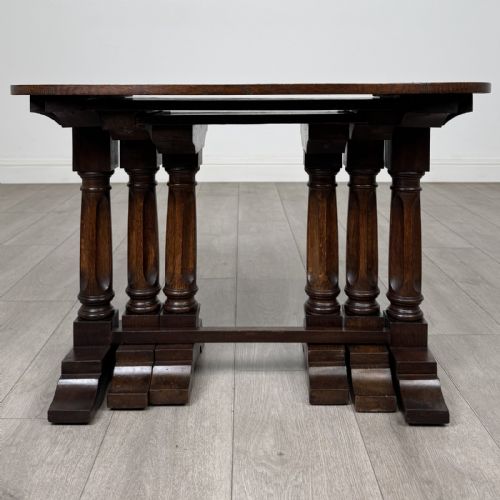
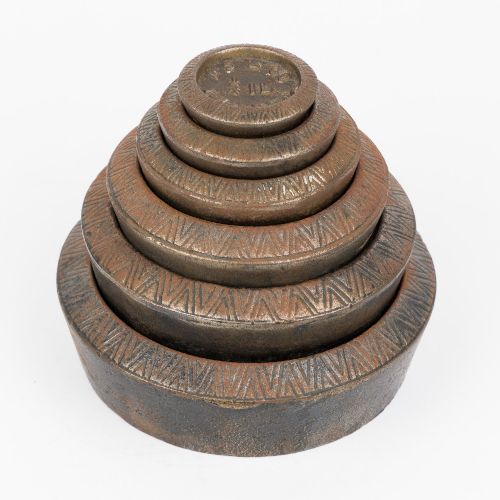
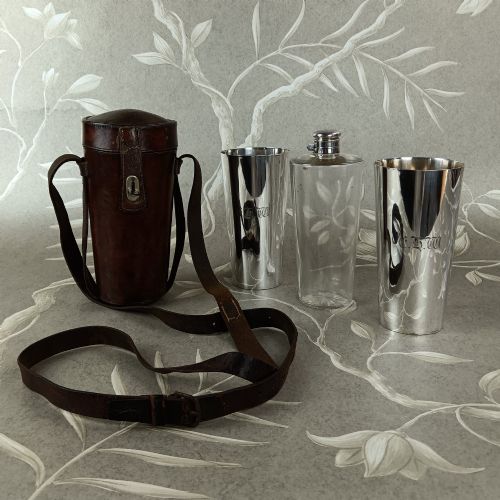
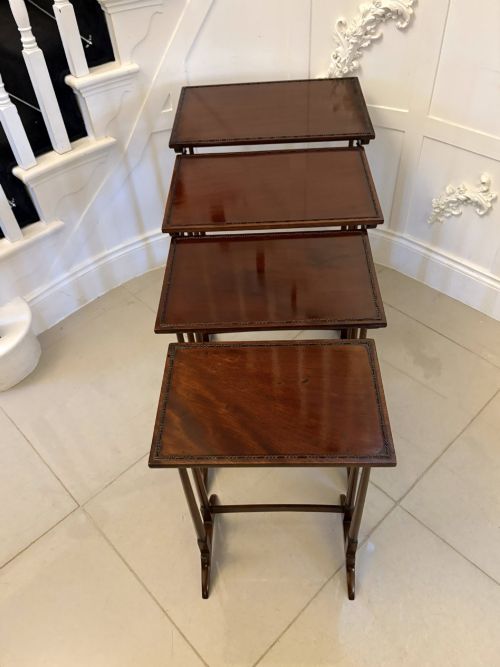
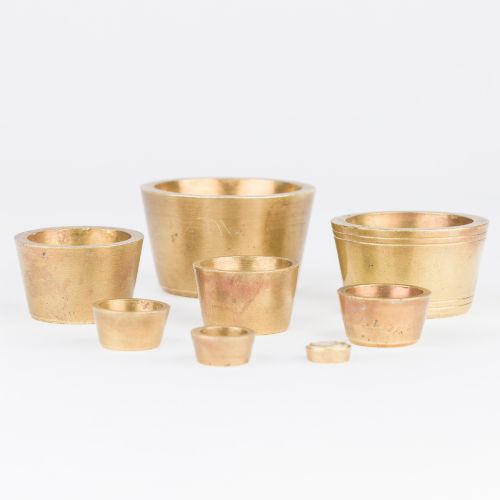
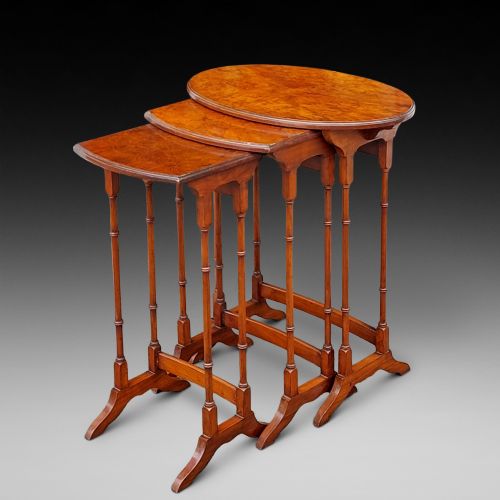
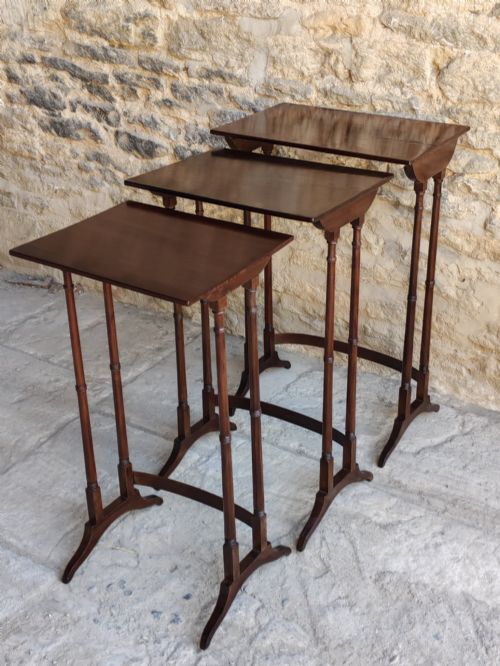
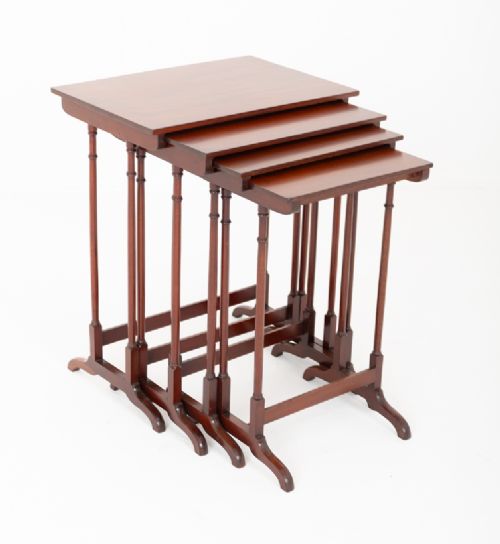
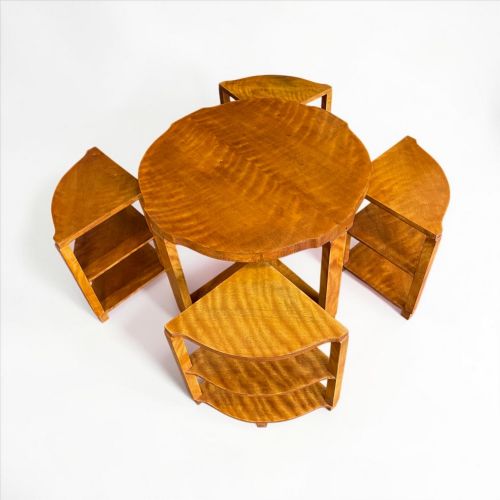
A vintage nesting set primarily takes the form of nested tables, ranging from three to five graduated pieces designed to slide one beneath another. These tables appear frequently in Edwardian, Art Deco, and 1930s formats, alongside occasional grouped objects such as lacquered boxes, weights, and containers.
Makers and designers working in mahogany, walnut, and oak produced these sets for versatile entertaining and compact sitting rooms. The items span the nineteenth century through the mid twentieth century, covering styles from plain golden oak to elaborate Chinoiserie decoration.
Materials and construction
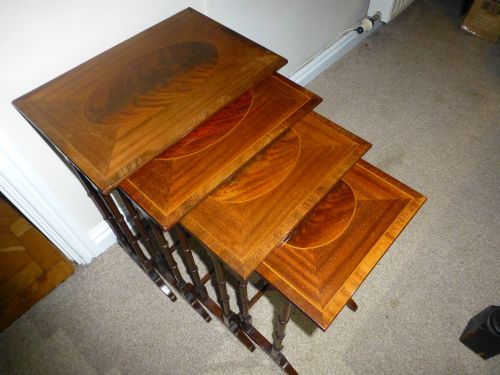
Cabinet makers utilised dense hardwoods like mahogany, walnut, and oak, frequently applying burr walnut veneers or boxwood and brass inlay to the primary table tops. French polishing brought out the grain of the timber, while specialist pieces received red lacquer and gold leaf finishes in Asian styles.
The engineering required precise scaling so that each smaller frame cleared the legs and aprons of the tier above it. Joinery relied on stable framing to prevent warping across multiple interdependent tables sharing a single footprint.
Vintage Nesting Set Retail Price Guide 2026
Typical asking prices for vintage nesting set among the pieces listed under this phrase on Sellingantiques today, from the lower quarter to the upper quarter. They describe what is for sale here now, not the wider market.
Listings span multiple decades, incorporating Victorian, Edwardian, 1930s, and 1940s eras in woods like oak, mahogany, and walnut.
Assessing quality in grouped tiers
Quality rests in the precision of the graduating dimensions and the stability of the joints when all tables stand independently. Finer examples maintain crisp inlay, unblemished veneer work, and substantial timber thickness rather than thin laminates.
The distinction between standard production and top tier pieces shows in the selection of figured timbers, such as burr walnut, and the crispness of hand-carved details or applied Chinoiserie motifs.
Harry and Lou Epstein·Heal's·James Dixon & Sons
The Vintage Nesting Set Glossary
- Quartetto
- A matched set of four tables designed to nest together. This term appears frequently in Edwardian and early twentieth century cabinet making descriptions.
- Chinoiserie
- European decorative style imitating East Asian artistic traditions, commonly seen on lacquered surfaces with gold leaf details. It gained popularity across various revival periods.
- Burr walnut
- Timber taken from the warted growths on walnut trees, showing highly figured, swirling grain patterns. It was prized by makers for high end table tops.
- Parquetry
- Geometric mosaic woodwork used to create patterned surfaces on tabletops. Artisans arranged small wood veneers to form visual depth.
Vintage Nesting Set: Frequently Asked Questions
What is a vintage nesting set used for?
These sets serve as flexible surface space for tea, drinks, or books during gatherings. When not in use, the smaller tables slide beneath the main table to save floor space.
Historically, they filled Victorian and Edwardian drawing rooms where movable furniture accommodated changing social occasions without cluttering the interior.
How do I identify an Edwardian set?
Edwardian examples often feature lightweight mahogany frames, sometimes with inlaid stringing or satinwood banding. They frequently comprise sets of three or four tables with slender turned supports.
Makers from this era leaned towards refined proportions and traditional timber finishes rather than the geometric forms seen in later decades.
Are Art Deco sets different?
Art Deco sets embrace bolder silhouettes, utilising exotic veneers like burr walnut or teak alongside clean, unadorned lines. Some include carved motifs or distinct geometric framing.
These pieces reflect a shift toward modernism in the 1930s and 1940s, moving away from Edwardian revival ornamentation.
How should I care for timber tables?
Keep the wood away from direct sunlight and extreme temperature fluctuations to prevent veneer cracking or fading. Dust gently with a dry cloth and apply occasional specialist wax.
Avoid placing damp glasses directly on polished surfaces to protect the historical finish from water rings.