

Vintage Nested Tables
Vintage nested tables offer a clever space-saving design where smaller surfaces slide neatly beneath the largest one.
Vintage Nested Tables
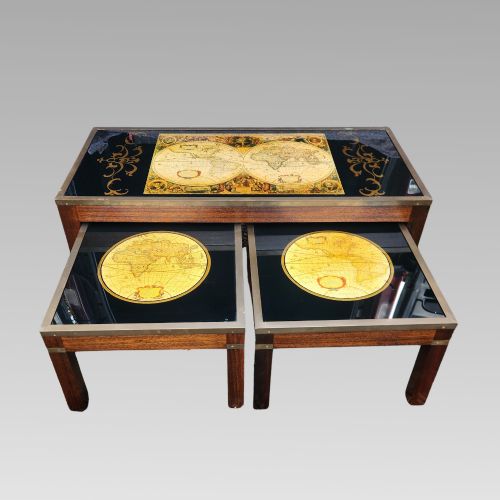
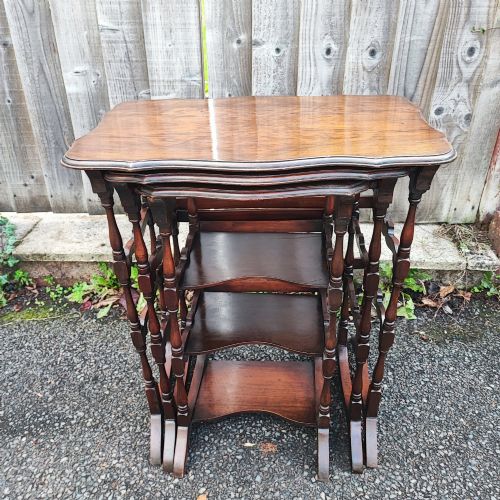
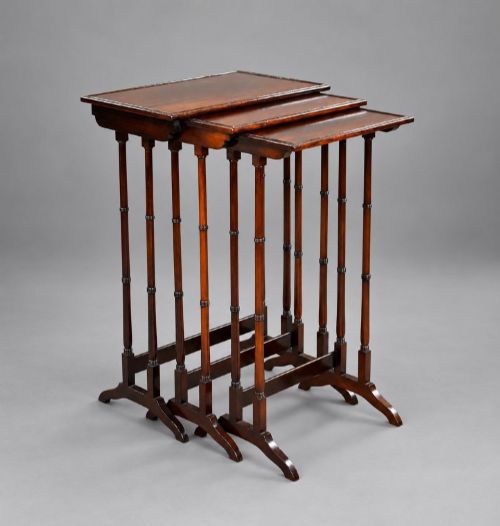
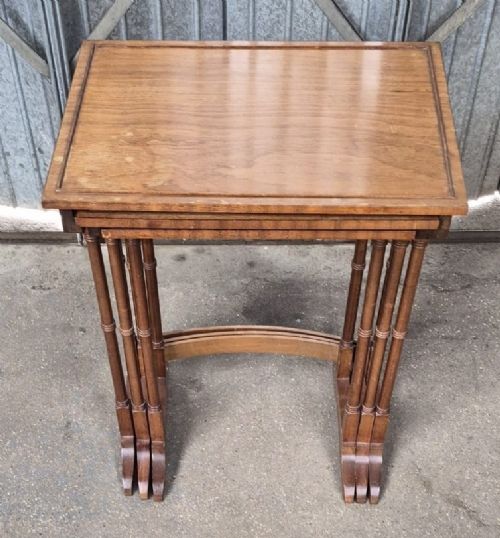
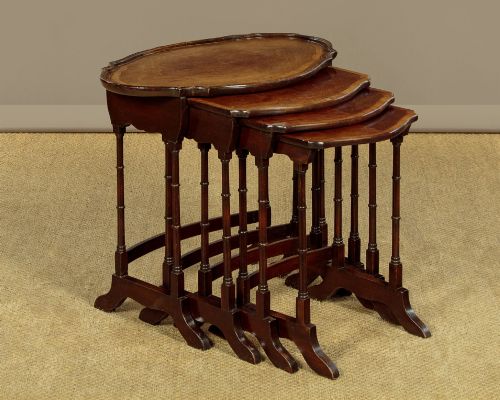
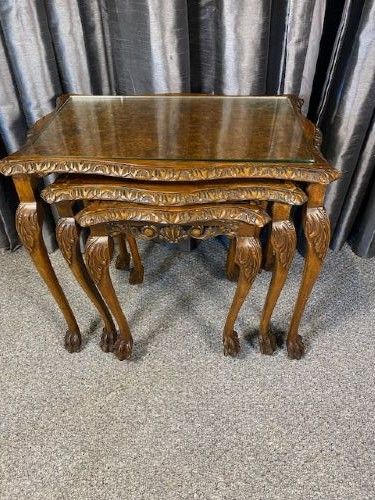
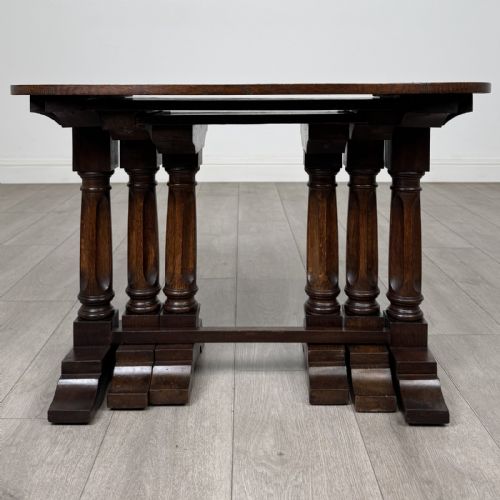
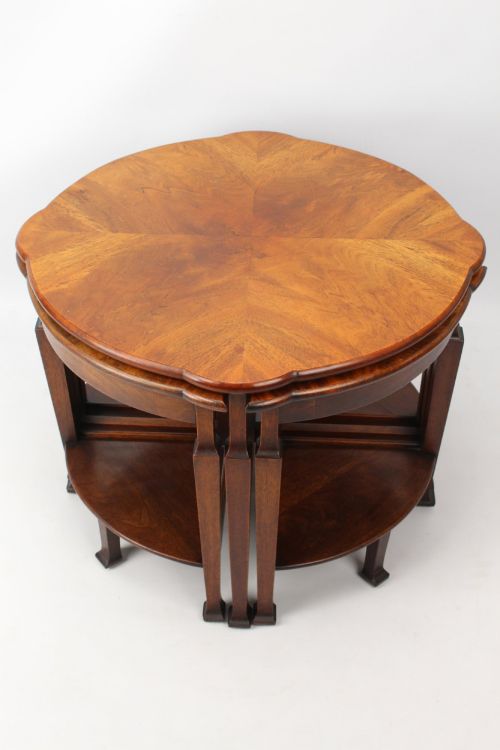
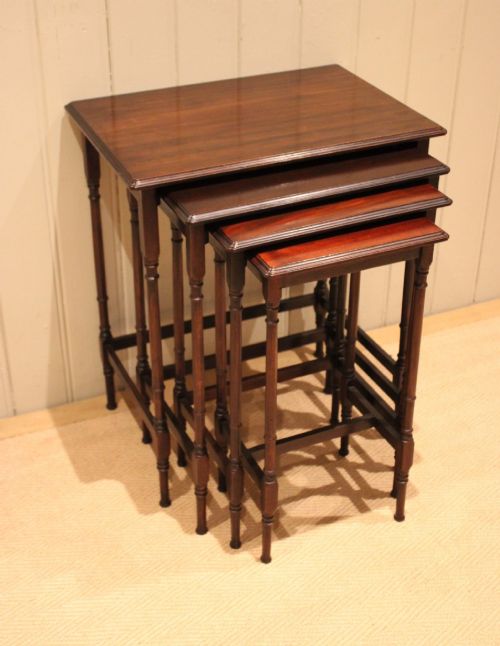
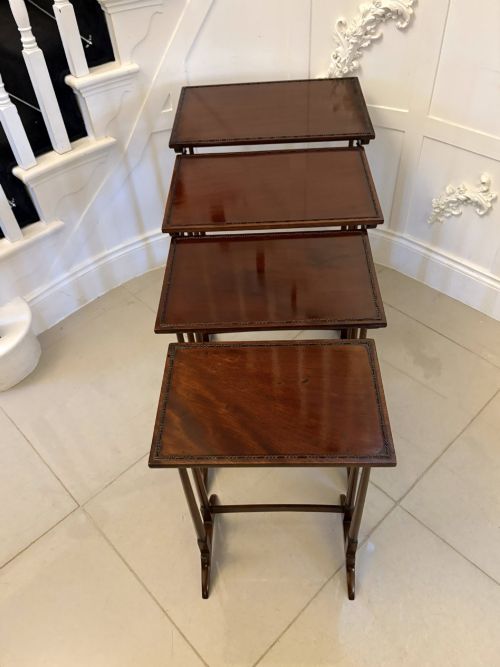
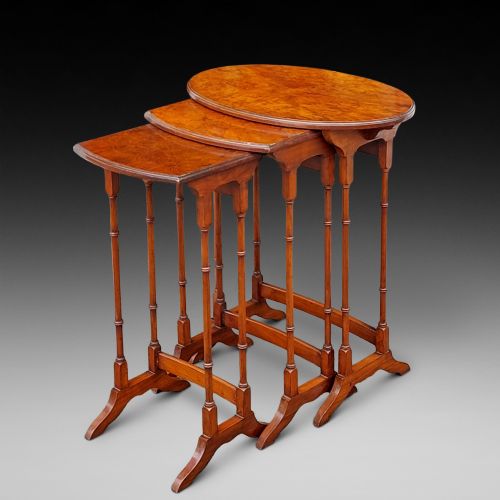
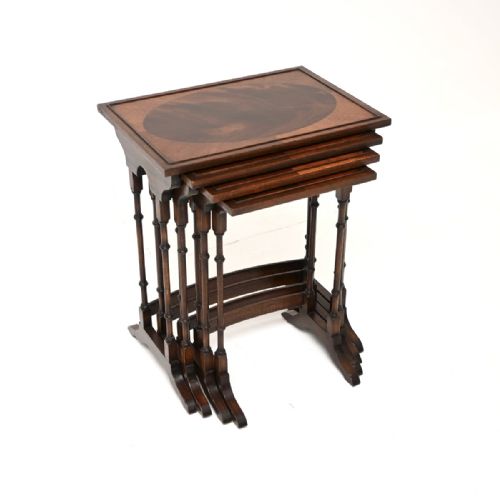
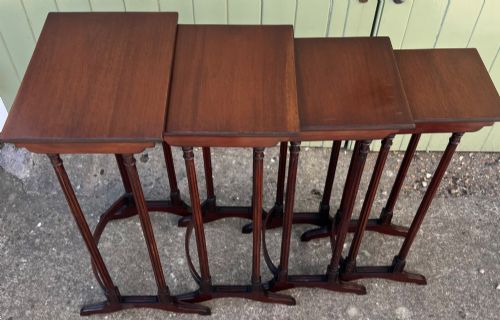
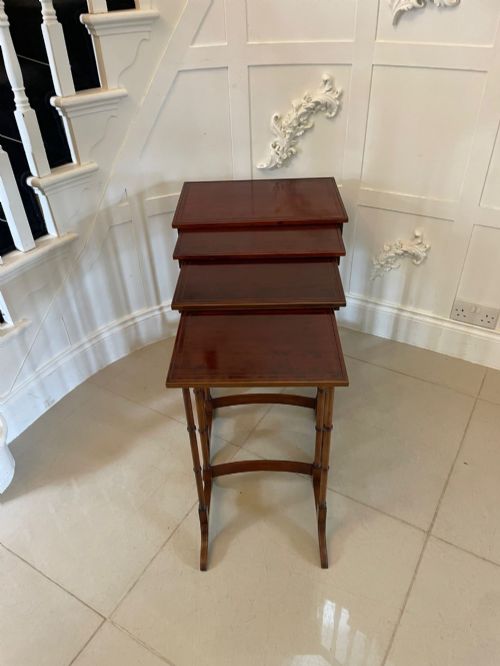
Vintage nested tables comprise sets of occasional tables designed to slide neatly beneath one another to save floor space when not in use. When you search for vintage nested tables, you encounter sets ranging from a trio to a quartetto of four or five pieces.
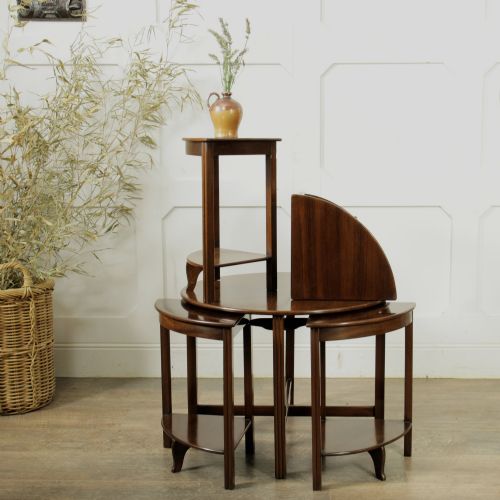
The versions most frequently met on this page date from the Edwardian period and the 1920s or 1930s Art Deco era. They appear in forms spanning simple rectangular coffee tables to circular designs and specialised chess surfaces.
The selection includes woods such as mahogany, walnut and oak, alongside decorative styles like Chinoiserie and Queen Anne Revival. Occasional tables and coffee tables dominate the forms, while individual sets utilise varying timber counts.
Materials and construction
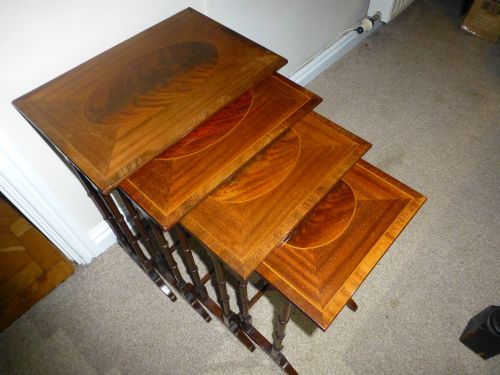
Cabinet makers utilised dense hardwoods including mahogany, walnut, rosewood and oak for the frames and table tops. Selected pieces incorporate burr walnut veneers or delicate satinwood and boxwood inlay.
Detailing on finer examples involves brass stringing, ormolu mounts, lacquer and hand-painted Chinoiserie decoration. Individual tables slide into dedicated grooves or follow precisely proportioned gradations to fit together without friction.
Vintage Nested Tables Retail Price Guide 2026
Typical asking prices for vintage nested tables among the pieces listed under this phrase on Sellingantiques today, from the lower quarter to the upper quarter. They describe what is for sale here now, not the wider market.
Assessing craftsmanship
Quality rests in the precision of the joinery and the selection of timber figures, particularly in how smoothly the smaller tables glide into their housing. Superior sets maintain structural stability across every tier without looseness in the joints.
Decorative execution separates standard production from exceptional models, visible in crisp brass inlay, hand-applied lacquer or finely matched burr walnut veneers. The integrity of the original polish and the preservation of delicate inlaid details dictate the standing of a set.
Émile Gallé·Harry and Lou Epstein·The Hille Furniture Company
The Vintage Nested Tables Glossary
- Quartetto
- A set of four tables designed to nest together. This term appears frequently in Edwardian and Regency listings.
- Nest of tables
- A group of graduated occasional tables that store within the footprint of the largest piece. They serve as versatile side or coffee tables.
- Chinoiserie
- European imitation of Chinese artistic motifs and techniques. This style appears on lacquered and decorated tables.
- Burr walnut
- Timber taken from the warted growths of walnut trees, yielding complex swirling grain patterns. Cabinet makers prized it for table tops.
- Inlay
- A technique where contrasting materials are embedded into the wood surface to create patterns. Boxwood and satinwood frequently serve this purpose.
Vintage Nested Tables: Frequently Asked Questions
What are vintage nested tables used for?
These sets function primarily as occasional surfaces for drinks or lamps. They distribute around a room when guests visit and tuck away compactly afterward.
Their modular nature makes them practical for smaller interiors where permanent large furniture consumes too much floor space.
How do I care for a wooden nest of tables?
Keep wooden surfaces away from direct sunlight and excessive heat sources to prevent the timber and veneer from splitting. Regular dusting with a dry cloth maintains the polish.
Avoid placing damp items directly onto the antique finish by using coasters for glasses and cups.
How do I identify an Edwardian nest of tables?
Edwardian sets frequently feature lighter timbers like mahogany with delicate satinwood inlay or stringing. The construction typically relies on slender turned legs and refined proportions.
Many examples from this era follow the quartetto format, comprising four graduated tables designed to slide together tightly.
How do Art Deco nested tables differ from earlier styles?
Art Deco pieces from the 1920s and 1930s favour bold geometric shapes and rich veneers such as burr walnut or Indian rosewood. They often omit traditional inlaid stringing in favour of clean architectural lines.
Maker attributions to workshops like Hille or the Epstein brothers occasionally accompany these modernist designs.