





Vintage Needlework Sampler
A vintage needlework sampler preserves centuries of domestic handiwork, offering an intimate glimpse into the lives and practice of young makers.
Vintage Needlework Sampler
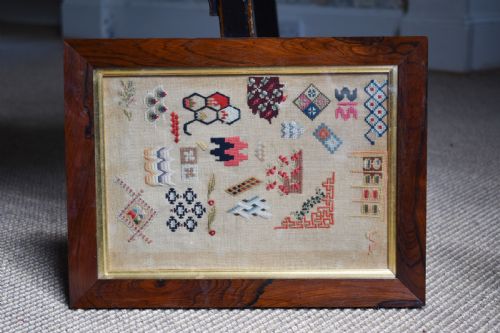
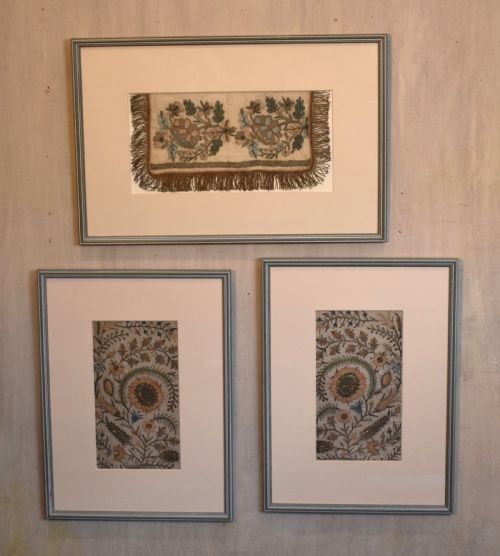
A vintage needlework sampler represents a disciplined textile exercise, typically created by young makers practising stitches, alphabets, numbers, and motifs to demonstrate skill and patience. These pieces take the form of textile art, framed wall art, and needlework pictures, frequently preserved behind glass in wooden frames.
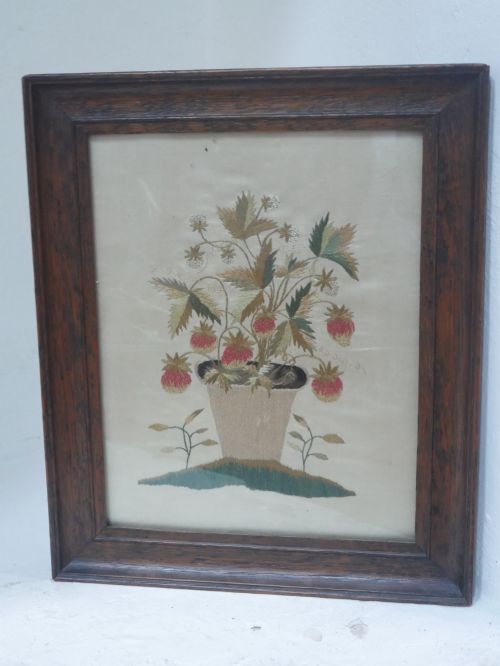
The selection on this page centres heavily on nineteenth-century examples and Victorian works, alongside eighteenth-century English and French pieces. Buyers will frequently encounter alphabets, names, dates, and sometimes maps or botanical subjects worked onto a linen ground.
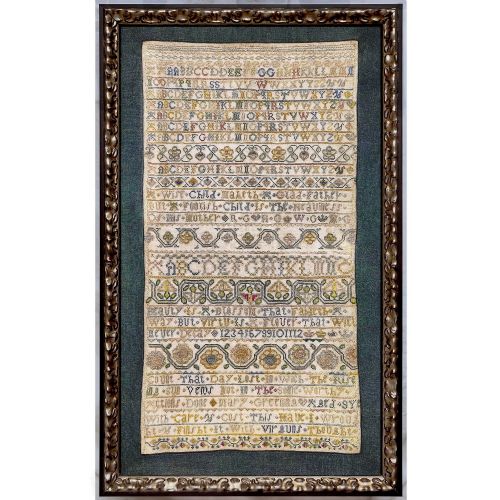
Earlier iterations include seventeenth and eighteenth-century band samplers and needlework pictures, while later pieces stretch into the early twentieth century, including folky stitched examples and firescreens. The variety spans diminutive miniature samplers up to large schoolroom works bearing the maker's age and date.
Materials and construction
The foundation of these works is linen, providing a consistent grid for counting threads and executing precise stitches. Makers utilised wool, silk, and silk thread to build up the intricate pictorial elements, borders, and lettering.
Execution relied on traditional embroidery and needlepoint techniques applied by hand, often framed securely in wood alongside glass to protect the delicate threads from dust and environmental degradation.
Vintage Needlework Sampler Retail Price Guide 2026
Typical asking prices for vintage needlework sampler among the pieces listed under this phrase on Sellingantiques today, from the lower quarter to the upper quarter. They describe what is for sale here now, not the wider market.
Young makers recorded their exact ages alongside their names, leaving permanent proof of childhood diligence executed entirely in thread.
Assessing quality and execution
Quality rests in the regularity of the stitching, the complexity of the motifs, and the clarity of the lettering. A finer needlework sampler displays uniform tension, careful colour selection, and precise execution of difficult pictorial subjects such as figures, houses, or flora.
The presence of documented maker details, such as a named maker, age, school, and date, elevates the historical interest of a piece. Preservation also plays a role, with clean linen grounds and stable threads marking superior survivals.
Mary Greening·Ann Hodson·Margaret Ann Blackow·Mary Mason·Ann B Gilies·Mary Street Didsbury·Emma and Hannah Barnes
The Vintage Needlework Sampler Glossary
- Sampler
- A piece of needlework produced as a demonstration or test of skill in various stitches and patterns. They often include alphabets and numerals.
- Band sampler
- An early format where horizontal bands of diverse decorative patterns and stitches are stacked vertically on a narrow linen strip. This style is particularly associated with seventeenth and eighteenth-century work.
- Needlepoint
- A type of canvas work where yarn or thread is stitched through a stiff open-weave mesh or linen ground. It creates a dense, durable surface completely covering the foundation.
- Linen
- A strong textile made from the fibres of the flax plant, utilised as the primary ground fabric for historical embroidery. Its visible weave aided makers in spacing counted-thread embroidery.
Vintage Needlework Sampler: Frequently Asked Questions
What is a needlework sampler?
A needlework sampler is a historic textile created to practise and showcase stitching skills, typically featuring alphabets, numbers, and decorative motifs.
Makers often included their name, age, and date, turning these exercises into personal and historical records.
How old are these samplers?
The pieces span multiple centuries, ranging from late seventeenth and eighteenth-century band samplers to Victorian and early twentieth-century examples.
Dating is frequently confirmed by stitched dates, styles of lettering, and framing methods.
How were samplers displayed?
Historic samplers were usually framed in wood behind glass to protect the delicate silk and wool threads from dirt and handling.
They were designed for domestic wall display as decorative and moral testaments to household industriousness.
What materials are used?
Traditional samplers use a woven linen ground as the foundation for the embroidery.
Makers stitched onto this base using various combinations of wool, silk, and silk thread.