




Vintage Needlepoint Fire Screen
These vintage needlepoint fire screen pieces are decorative hearth accessories featuring stitched textile panels designed to deflect warmth or shield rooms from glaring flames.
Vintage Needlepoint Fire Screen
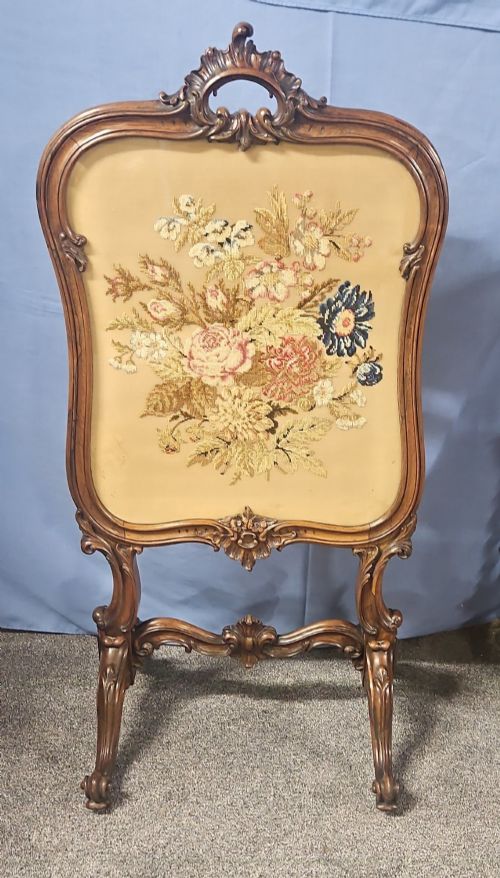
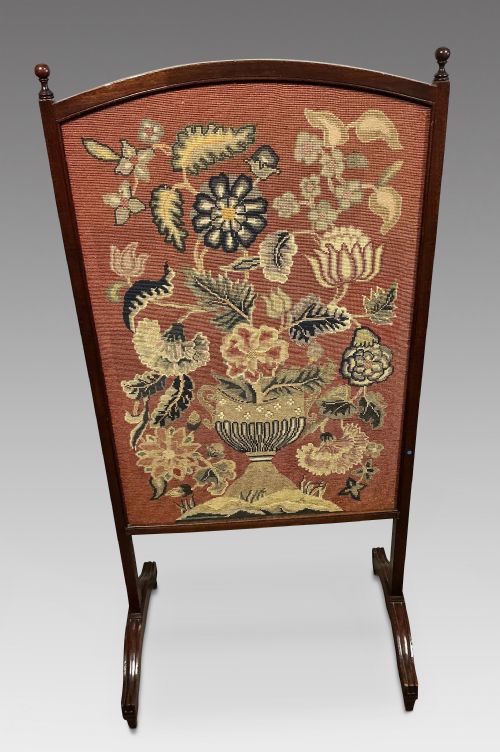
A vintage needlepoint fire screen combines a wooden frame with a hand-worked textile panel intended for placement before a domestic hearth. These furnishings appear across several historical periods, including the Georgian, Regency, William IV, and Victorian eras.
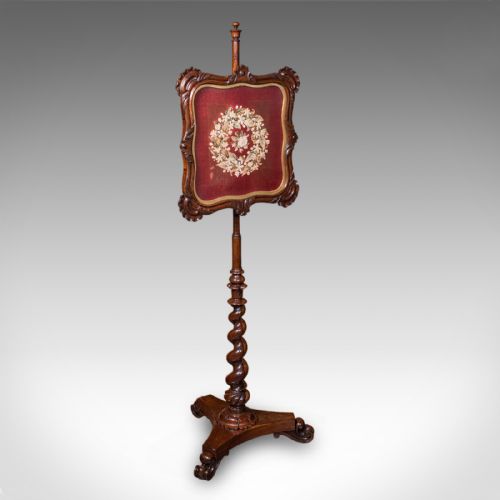
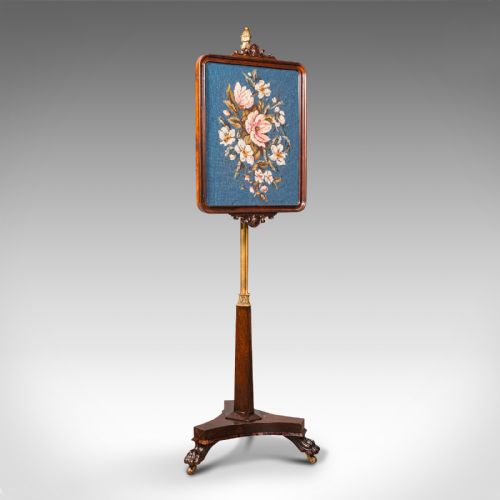
The objects take two distinct structural forms within the evidence. One design utilises a vertical pole with an adjustable shield or heat reflector, while the other presents a fixed frame, sometimes incorporating folding elements or metamorphic occasional table functions.
Materials and Construction
Makers constructed the structural frames using dense timbers such as mahogany, rosewood, walnut, oak, and brass. Turned elements, carved details, and bobbin turning frequently articulate the upright supports and feet.
The central panels feature wool and canvas worked in tapestry, needlework, or embroidery. Pastoral scenes, figural compositions, and samplers form the primary decorative subjects displayed within these textile inserts.
The listings demonstrate frame construction in mahogany, rosewood, walnut, oak, and brass, paired with wool needlepoint and tapestry panels.
Craftsmanship and Proportion
Quality rests in the precision of the timber carving and the complexity of the frame geometry, such as grand proportions or elaborate sculptural bases. Adjustable pole mechanisms require sound mechanical execution to function reliably.
The refinement of the needlepoint panel itself distinguishes finer examples, where dense wool stitching, detailed pictorial execution, and well-preserved textiles elevate the visual impact of the hearth accessory.
The Vintage Needlepoint Fire Screen Glossary
- Pole screen
- A type of fire screen featuring a vertical wooden shaft holding an adjustable sliding shield. This mechanism allowed occupants to raise or lower the textile panel to block radiant heat from the hearth.
- Needlepoint
- A form of counted thread embroidery stitched onto a stiff open-weave canvas ground. It provides the durable pictorial surface seen on the primary panels of these furnishings.
- William IV
- A British design period spanning the early nineteenth century characterised by robust classical revival forms. Pieces from this era often exhibit substantial carved mahogany or rosewood frames.
- Bobbin turned
- A method of woodturning that produces a series of rounded spheres or discs resembling wooden bobbins along a spindle. This technique decorates the upright structural members of Victorian frames.
- Metamorphic
- A descriptive term for furniture designed to transform into another functional object. In this context, the screen converts into an occasional table.
Vintage Needlepoint Fire Screen: Frequently Asked Questions
How did a pole screen work?
The sliding shield mounted on a vertical wooden pole allowed individuals to adjust the height of the textile panel. Sitting close to an open hearth, occupants moved the screen to block direct heat from the fire.
The adjustable mechanism utilised a collar or friction screw to hold the framed needlepoint securely at the desired elevation.
Where were fire screens placed?
These furnishings stood directly on the floor between the seating area and the fireplace. They served primarily to protect the faces of seated guests from the intense glare and heat of open coal or wood fires.
When not in use near the hearth, some versions functioned as decorative room dividers or decorative focal points against a parlor wall.
How do I identify a Victorian needlepoint screen?
Victorian examples frequently exhibit dark timber frames made of walnut or mahogany, sometimes featuring elaborate carving, Rococo revival motifs, or bobbin turned spindle work. The inserted needlepoint panels commonly display pictorial subjects such as pastoral scenes or floral arrangements.
Construction details and timber choices align with nineteenth-century cabinetmaking standards, distinguishing these pieces from earlier Regency or Georgian predecessors.