




Vintage Nautical Picture
When you search for a vintage nautical picture, you step into a centuries-long maritime tradition recorded in oil, watercolour, and woolwork.
Vintage Nautical Picture
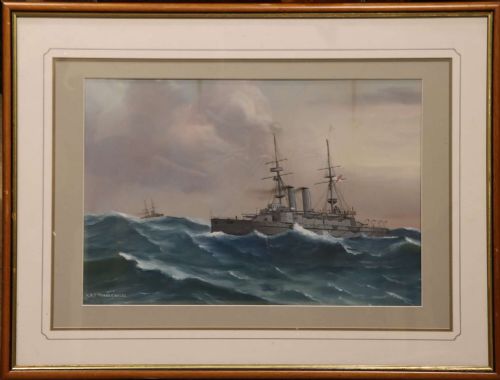
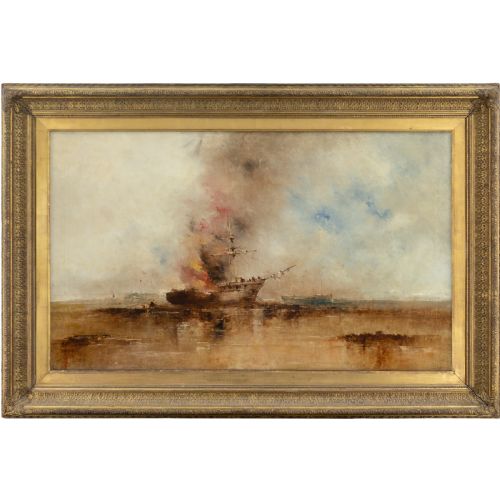
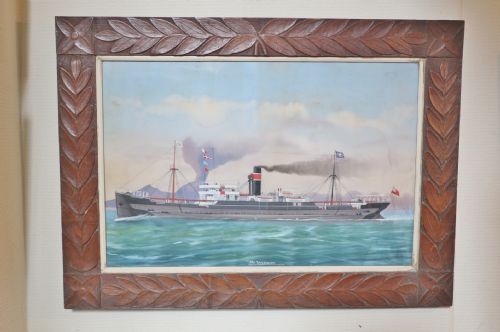
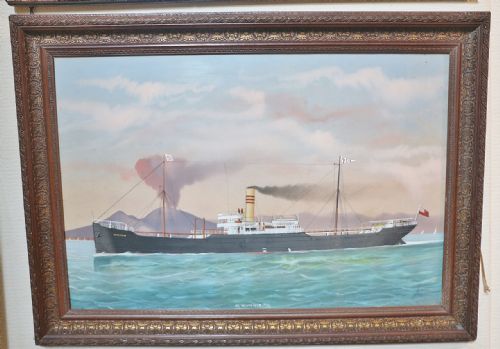
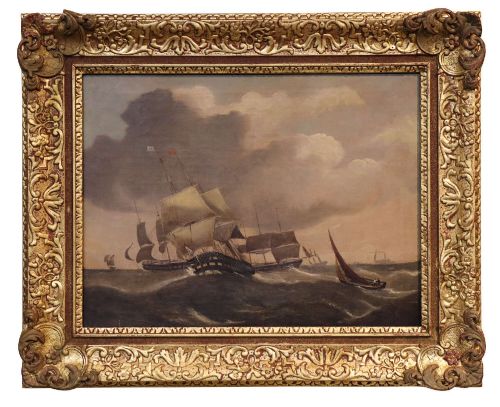
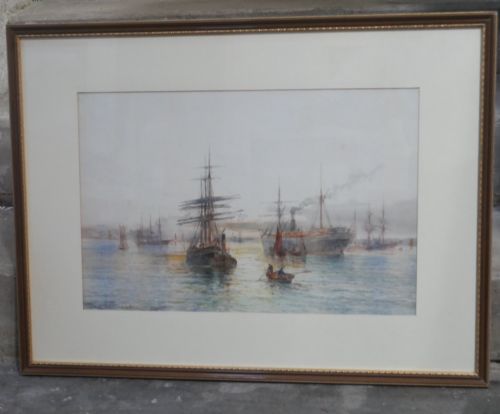
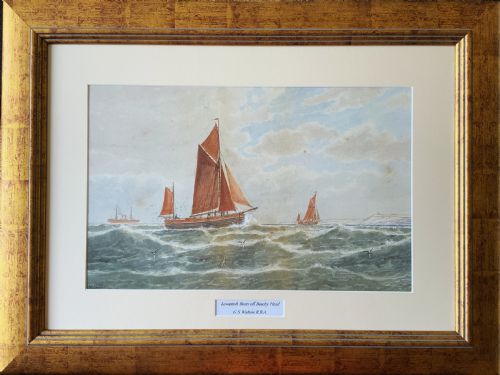
A vintage nautical picture captures maritime history through paintings, oil paintings, wall art, and framed artwork depicting the sea, ships, and coastal life. You will encounter works spanning from the 19th century through the Victorian and Edwardian eras into the mid-20th century.
The subjects range from royal yachts, ironclad battleships, and steamships to local fishing boats, trading vessels, and quiet harbour scenes. Many pieces record specific vessels and locations, such as the River Humber, Dublin Bay, and the Cornish coast.
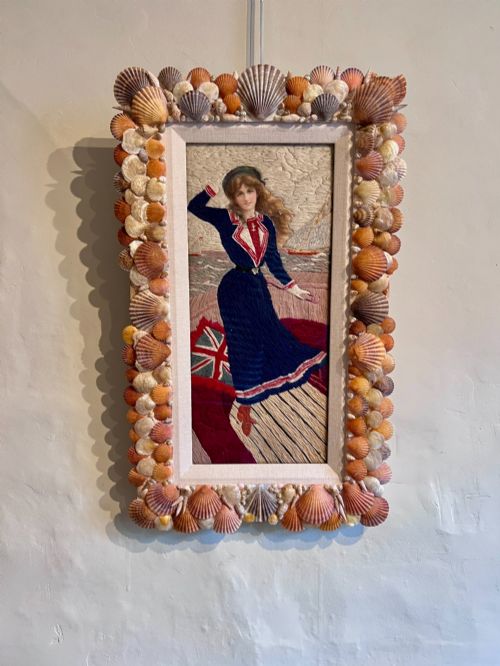
Beyond standard canvas and paper, the category encompasses distinctive textile wall art known as woolies, created by sailors using wool embroidery to portray ships and crew members.
How they were made
Makers utilised oil on canvas, oil on board, and watercolour pigment applied to paper, often finished with glass and framed in wood or gilt wood. Impasto techniques appear in mid-century marine oils, giving texture to the sea and sky.
Watercolour works rely on precise pigment washes to capture the light and movement of coastal weather, while Victorian woolies employ intricate threadwork to build tactile depictions of naval vessels and figures.
Sailors immortalised their sweethearts and steamships in wool because paint was scarce on the open ocean.
What varies in quality
Quality rests in the precision of the draughtsmanship and the artist's ability to render the atmosphere of heavy seas, coastal light, and maritime architecture accurately. Named artists and documented ship portraits command greater attention for their historical record.
Original framing and the preservation of the paper, canvas, or woolwork surface also influence the standing of a piece, with undisturbed historical mounts preserving the integrity of the work.
Kenneth Cozens·George Stanfield Walters·William Frederick Settle·Elisabeth Bardon·Charles Napier Hemy·Vincenzo D’Esposito·William Lee Hankey·Fred Waugh·John Douglas Perrett·Leslie Rackham·Ernest F Hill·Don Wilson·George Henry Knight·E Tucker·William Kay Blacklock·Rowland Henry Hill·Frank Wood
The Vintage Nautical Picture Glossary
- Woolie
- A textile wall art piece embroidered in wool by sailors, typically depicting historic ships or figures from maritime life.
- Gouache
- An opaque water-based pigment that provides flat, bright areas of colour in maritime illustrations.
- Impasto
- A paint application technique where pigment is laid thickly on the surface, standing out from the canvas to create texture.
- Seascape
- A work of fine art that specifically depicts the sea, ships, or coastal views.
Vintage Nautical Picture: Frequently Asked Questions
What periods do these pieces cover?
The selection spans the 19th century, the Victorian period, the Edwardian era, and stretches into the mid-20th century.
You will find works created during wartime periods as well as peacetime maritime documentation.
What materials were used?
Common mediums include oil on canvas, watercolour pigment on paper, gouache, and wool embroidery.
Frames are typically constructed from wood or gilt wood, often preserved behind glass.
How do I identify ship portraits?
Many pieces include specific vessel names, dates, and locations inscribed directly onto the work or the frame.
Historical records of naval vessels and steamships help verify the specific subjects depicted.
What is a woolie?
A woolie is a form of textile wall art created by sailors using wool thread to stitch detailed images of ships and crew members.
These tactile pieces offer a personal perspective on maritime history.