
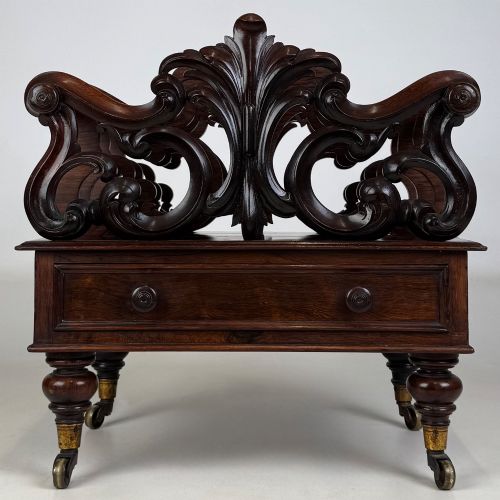
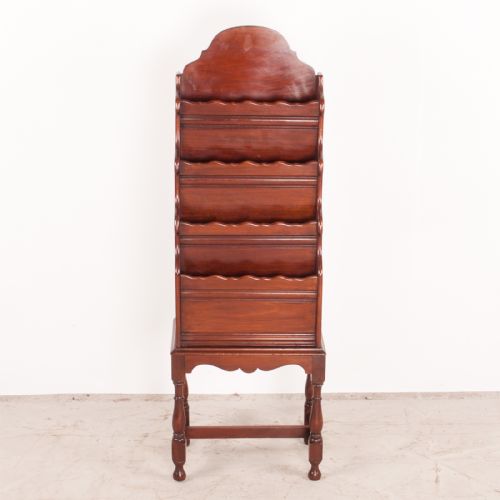
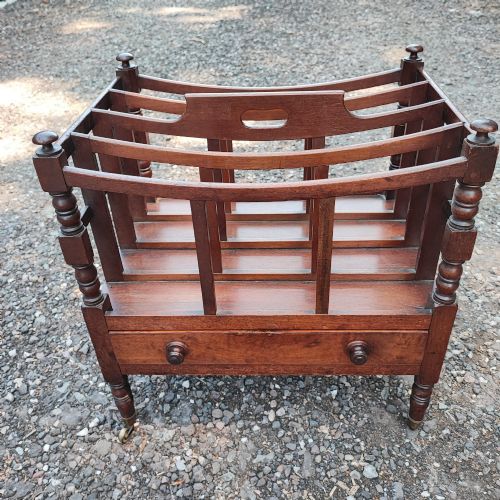
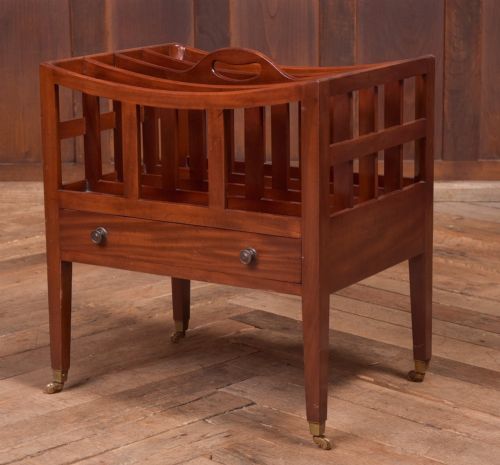


Vintage Music Paper Holder
A vintage music paper holder is a compartmentalised stand for sheet music and folios, offering a practical piece of period furniture.
Vintage Music Paper Holder
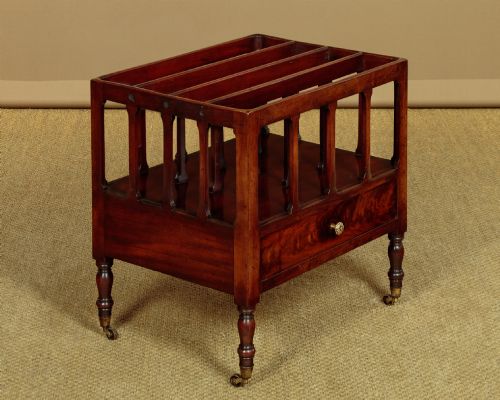
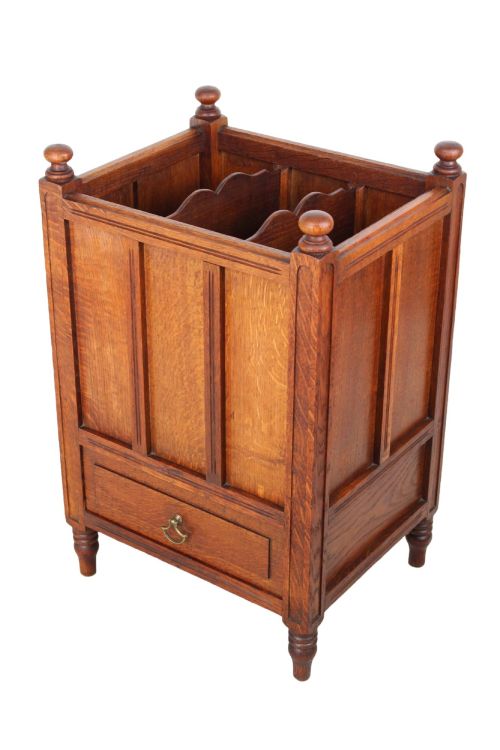
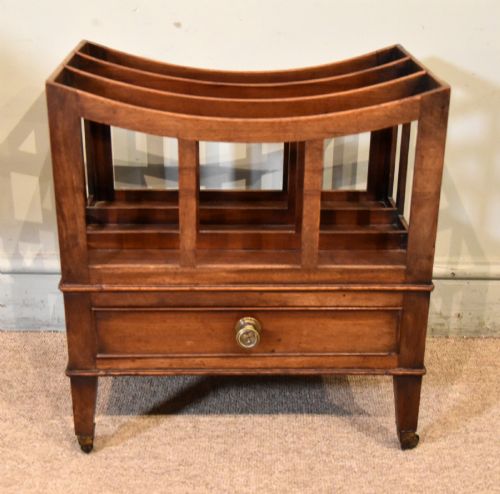
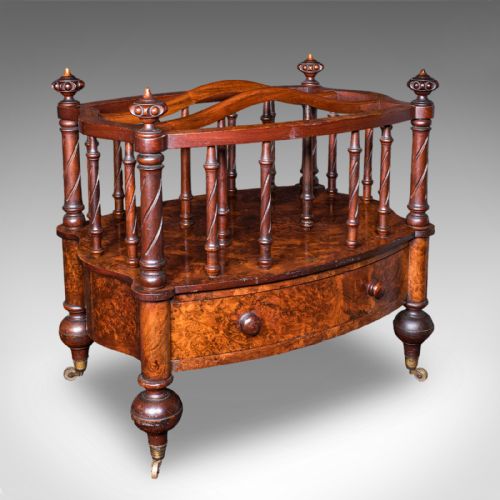
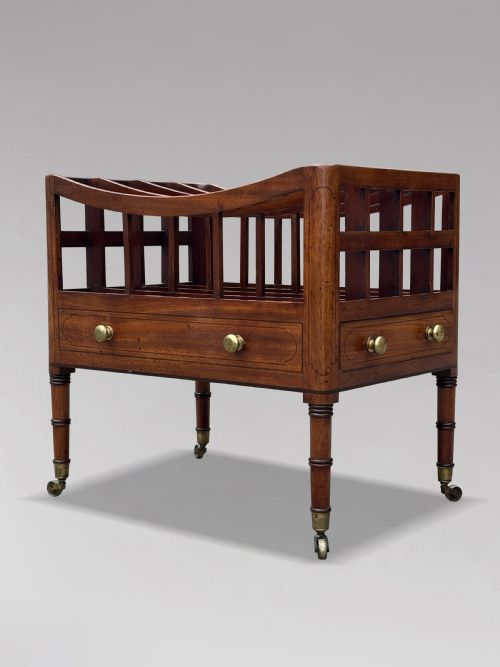
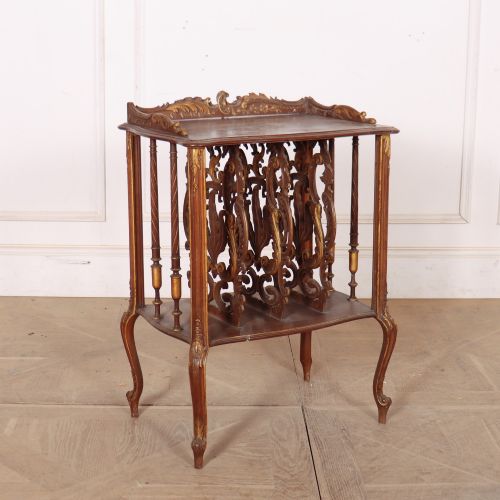
When you search for a vintage music paper holder, you are looking at items primarily recorded as canterburys, magazine racks, and folio stands. These domestic accessories organise loose paper, sheets, and publications within slatted or partitioned compartments.
The versions you are most likely to meet on this page span the 18th century, the Regency period, the Victorian era, and the Edwardian period. They appear in forms ranging from simple freestanding frames to pieces fitted with lower drawers.
Originating largely from English workshops alongside occasional French examples, these pieces bridge the gap between dedicated music rooms and everyday sitting rooms. Their design reflects changing social habits regarding domestic entertainment and reading material.
Materials and Construction
Cabinet makers utilised dense hardwoods such as mahogany, rosewood, walnut, burr walnut, and oak to construct the main framework and slatted partitions of these stands. Secondary timbers like boxwood appear for contrasting stringing and inlay work.
Joinery techniques combine turned uprights, carved details such as foliage or Prince of Wales feathers, and occasionally marquetry or inlaid panels. Stands range from rigid fixed frames to revolving configurations.
Listings span from the 18th century through Regency, Victorian, and Edwardian periods, utilising mahogany, rosewood, burr walnut, oak, and brass.
Evaluating Craftsmanship
The distinction between standard examples and the top of the range rests on timber selection and timber figure, particularly in burr walnut and figured mahogany. Rich grain patterns and dense rosewood elevate the visual weight of the stand.
Refinement of detail marks out superior pieces, seen in crisp carving, delicate spindle turning, and precise marquetry or inlay work. Structural additions such as integrated drawers demonstrate higher tier cabinet making.
Proportion and stability dictate the overall success of the piece, where slender uprights support loaded partitions without distortion. Original brass mounts and handles preserve the integrity of the design.
The Vintage Music Paper Holder Glossary
- Canterbury
- A low freestanding rack with partitioned sections designed to hold sheet music, folios, and periodicals. It frequently incorporates a small drawer beneath the slatted compartments.
- Folio stand
- A larger pivoting or upright stand intended for holding large books, maps, or unbound musical scores flat or at an angle. These pieces often serve country house libraries and music rooms.
- Marquetry
- Decorative veneer work forming intricate patterns using various tinted woods laid into a contrasting ground. This technique decorates the surfaces of select Victorian pieces.
- Regency
- A British design period spanning the early 19th century characterised by classical influences, refined lines, and dark exotic timbers such as rosewood. Pieces from this era often feature brass detailing and elegant turnings.
- Aesthetic Movement
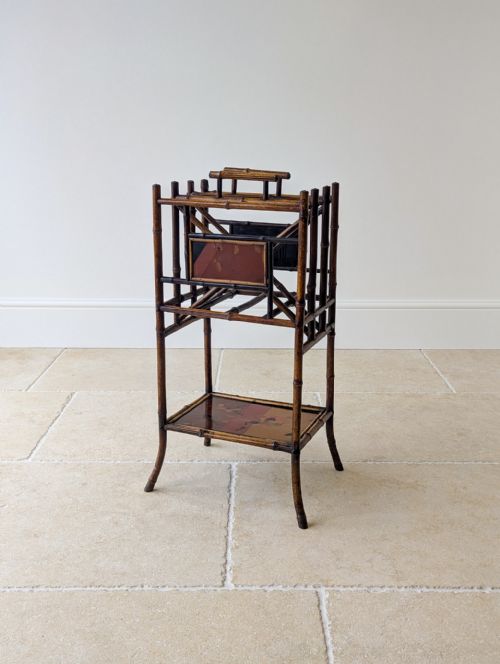
- A late 19th-century style focusing on art for art's sake, which in these listings introduces alternative materials like bamboo into traditional stand forms.
Vintage Music Paper Holder: Frequently Asked Questions
What is a canterbury?
A canterbury is a low compartmentalised stand designed to hold sheet music, newspapers, and magazines off the floor.
Originating in the 18th century, these pieces evolved to keep domestic papers organised near pianos and seating areas.
How do I date a music stand?
Dating relies on identifying the prevailing style, such as Regency curves or Edwardian inlay, alongside the primary timber used.
Mahogany dominates the earlier Georgian and Regency eras, while burr walnut and rosewood become prominent during the Victorian period.
Where were these stands used?
These holders stood principally in drawing rooms, parlours, and music rooms next to upright or grand pianos.
They kept scores and folios close to hand for evening musical performances and reading.
Can these hold modern magazines?
The partitions accommodate standard contemporary periodicals, newspapers, and large format art books.
Their original function for sheet music translates easily to modern reading material in a living room.