


Vintage Multi Strand Pearls
Vintage multi strand pearls bring together multiple rows of lustrous beads fastened with gemstone clasps, offering a classic neck ornament for serious collectors.
Vintage Multi Strand Pearls
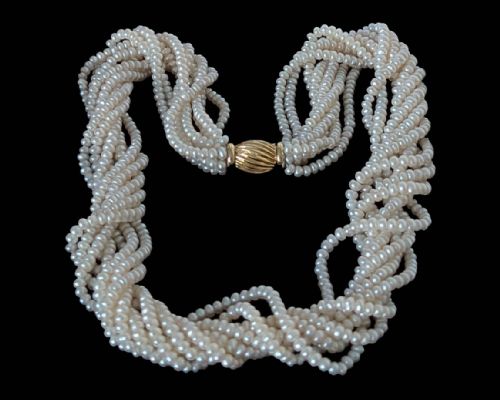
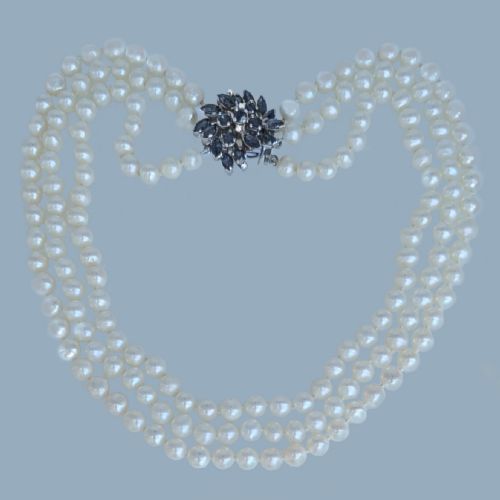
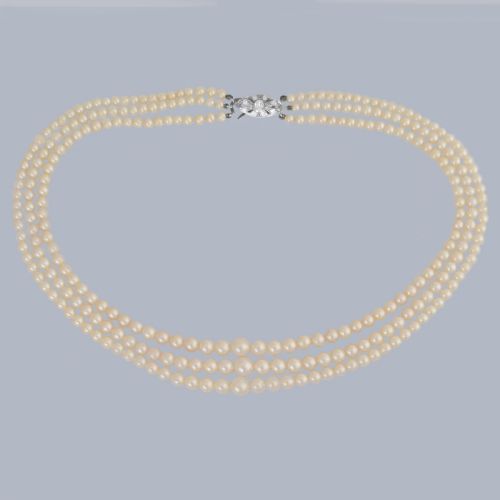
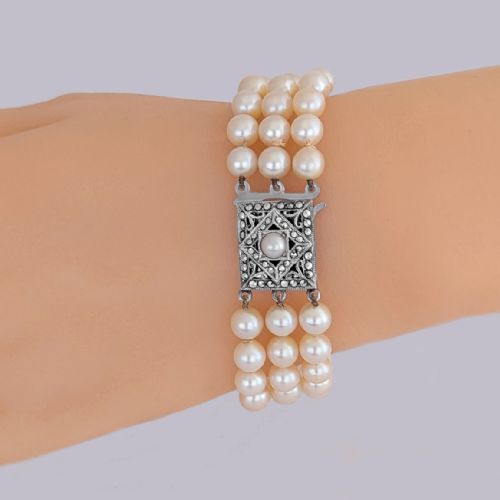
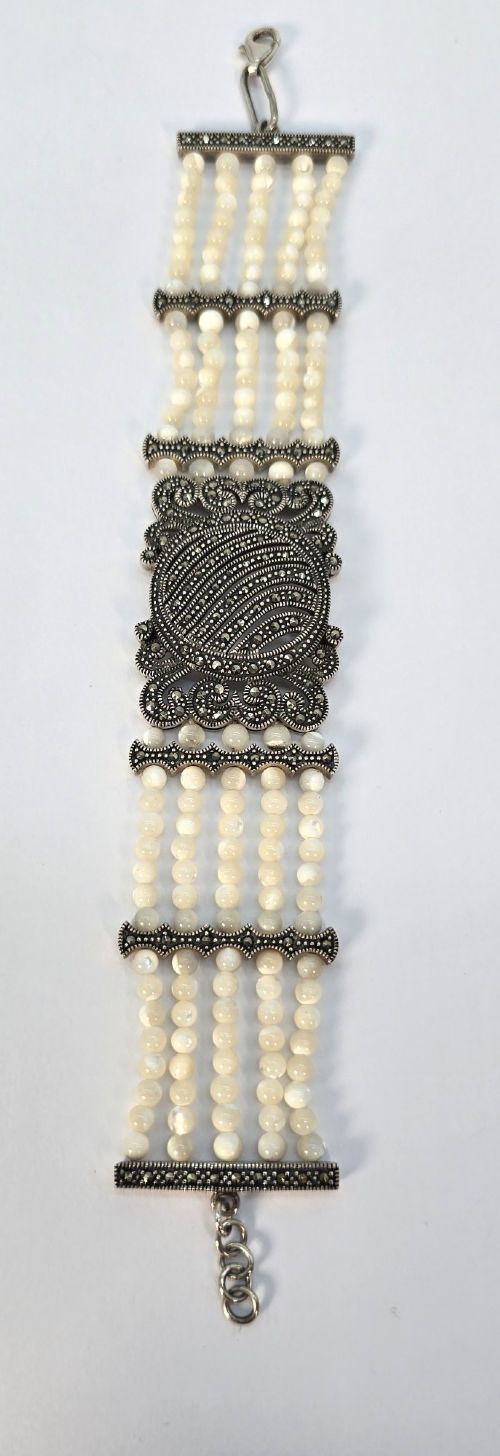
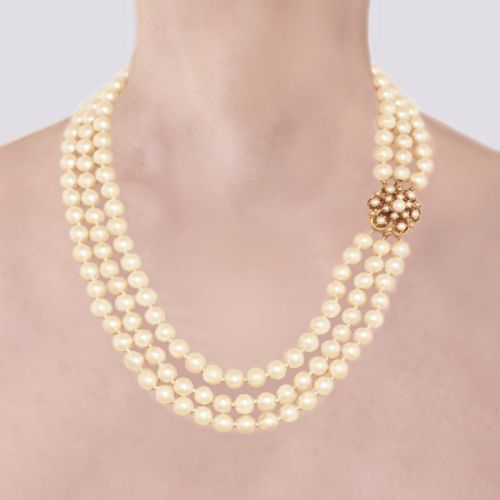
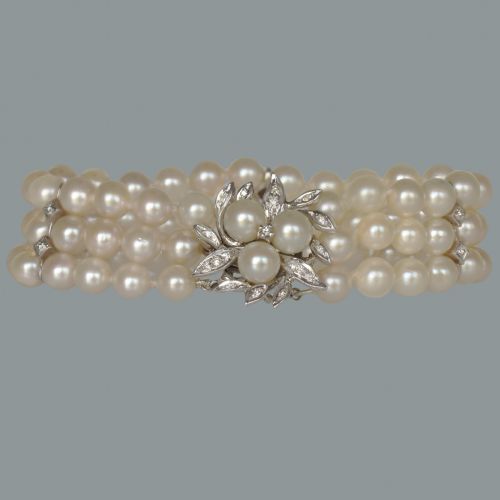
Vintage multi strand pearls comprise necklaces and bracelets formed from several parallel strings of beads, spanning periods from the Victorian era through the Edwardian years and into the Art Deco and Mid-Century decades of the 1950s and 1960s. These pieces primarily take the form of necklaces featuring three, six, or eight strands of cultured pearls, freshwater seed pearls, or natural saltwater pearls.
Buyers searching for vintage multi strand pearls most frequently encounter Mid-Century pieces from the 1950s and 1960s alongside earlier Art Deco examples. The designs range from short triple strand chokers to long continuous rope lengths, often secured by substantial metal clasps.
The materials paired with these necklaces extend beyond the pearls themselves to incorporate precious metals such as 9ct gold, 14ct gold, 18ct gold, and silver. Clasps frequently showcase secondary gemstones including diamonds, sapphires, emeralds, rubies, and amethyst.
How they were made
The construction of these pieces relies on stringing multiple parallel strands of pearls onto durable thread, paired with precious metal clasps in gold and silver. Goldsmiths and silversmiths fashioned intricate box or floral clasps designed to hold several strands simultaneously.
Gemstones such as diamonds, sapphires, and rubies were set into the clasps using traditional techniques appropriate to their period, from Edwardian bezel work to Art Deco geometric arrangements and Mid-Century cluster formations.
One extraordinary piece stretches to a generous fifty inches in length, offering multiple styling possibilities for the wearer.
What varies in quality
Quality in these pieces rests upon the origin and uniformity of the pearls, distinguishing cultured or freshwater seed varieties from natural saltwater specimens. The lustre and matching of the pearls across multiple strands dictate the visual harmony of the piece.
The complexity and material composition of the clasp elevate the standing of a necklace, particularly when master goldsmiths incorporate significant diamonds, emeralds, sapphires, or ruby clusters into 9ct, 14ct, or 18ct gold mounts.
Chaumet·Cropp & Farr
The Vintage Multi Strand Pearls Glossary
- Cultured pearl
- A pearl created by the introduction of an irritant into an oyster or mollusc by human intervention, producing a genuine nacre coating.
- Freshwater seed pearl
- A tiny, naturally or cultured pearl harvested from freshwater mussels, frequently used in multi-row configurations.
- Clasp
- The mechanical fastener joining the ends of a necklace or bracelet, often rendered as an ornamental focal point set with gemstones.
- Art Deco
- A design style prominent during the 1920s characterised by geometric lines, stylized motifs, and precise gemstone settings.
- Mid-Century
- A design period spanning the 1950s and 1960s encompassing clean forms and continued use of traditional precious materials.
Vintage Multi Strand Pearls: Frequently Asked Questions
What periods do these pearl necklaces date from?
The available pieces originate from various historical eras including the Victorian and Edwardian periods, the Art Deco 1920s, and the Mid-Century 1950s and 1960s.
Clasp styles, metal purities, and pearl types typically indicate the specific decade in which the jewellery was manufactured.
Are the clasps made of solid gold?
Many clasps utilise solid 9ct, 14ct, or 18ct gold, while others employ sterling silver or platinum depending on the design period and the maker's preference.
Precious metal hallmarks stamped onto the clasp structure verify the gold or silver content of the mount.
What is the difference between cultured and freshwater pearls?
Cultured pearls grow inside saltwater oysters or freshwater mussels with human assistance, whereas freshwater seed pearls form naturally or through cultivation in rivers and lakes.
Seed pearls are typically much smaller in size, allowing makers to group numerous rows together in dense multi strand configurations.