


Multi Strand Pearl Choker
A multi strand pearl choker wraps the neck closely with layered rows of pearls, bringing a concentrated presence of luminosity and historical charm to the collarbone.
Multi Strand Pearl Choker
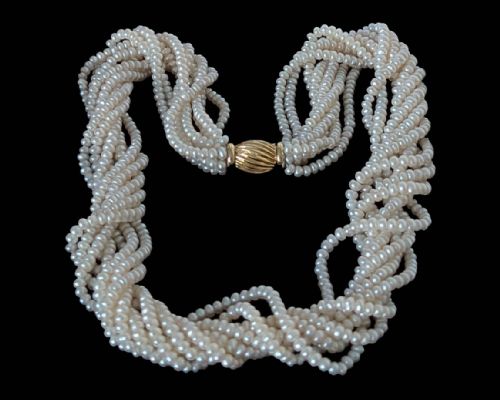
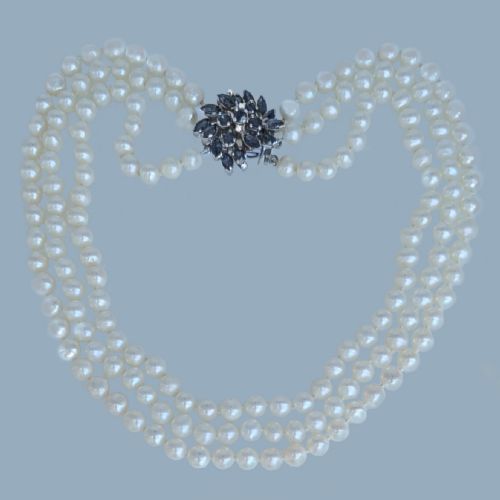
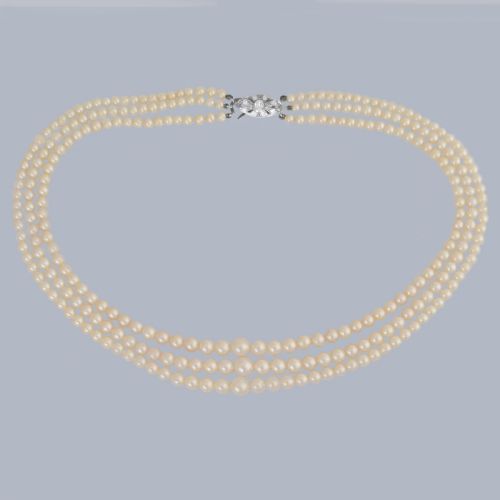
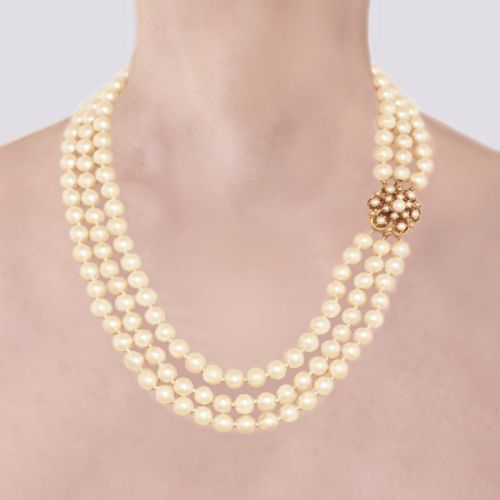
When you search for a multi strand pearl choker, you are looking at short, multi-row necklaces featuring pearl strands gathered tightly around the neck. The pieces available here stretch across the Victorian era, the Art Deco period of the 1920s, and the mid-century decades of the 1950s and 1960s.
The most common forms on this page utilise three or more strands of pearls, secured by elaborate clasps set in 9ct gold, 18ct gold, or silver. These clasps frequently incorporate gemstones such as diamonds, sapphires, rubies, and emeralds, often worn to the front as a decorative focal point.
Materials and construction
The construction relies on silk thread to string the individual pearls, grouping them into parallel strands that maintain an even drape across the neck. Individual pearls range from natural and saltwater varieties to freshwater seed pearls and cultured options.
Clasps are forged from 9ct gold, 18ct gold, white gold, or silver, incorporating metalwork techniques to set diamonds, sapphires, rubies, and emeralds. Many of these clasps double as substantial brooches or decorative centrepieces integral to the design of the necklace.
Listings feature pearls combined with 9ct gold, 18ct gold, white gold, and silver, alongside diamonds, sapphires, rubies, and emeralds.
The markers of quality
Quality rests in the matching, lustre, and uniformity of the pearls themselves, alongside the complexity and precious metal content of the clasp. A higher grade of necklace displays consistent pearl skin, careful grading of size, and secure, well-tensioned stringing across all strands.
The sophistication of the clasp design separates ordinary examples from finer pieces, particularly where master gem-setting, intricate metalwork, and certified precious stones are present. The inclusion of original gemological certificates also marks out pieces with documented provenance and certified materials.
Chaumet
The Multi Strand Pearl Choker Glossary
- Choker
- A short necklace designed to sit high and tight against the middle of the neck. These pieces measure shorter in length than standard matinee or opera necklaces.
- Cultured pearl
- A pearl formed with human assistance by inserting a nucleus into an oyster or mollusc. They dominate mid-century jewellery production.
- Seed pearl
- Very small, naturally occurring pearls often used in multi-strand configurations during the Victorian and mid-century periods. They create a delicate, fine-textured appearance.
- Basra pearl
- Natural pearls originating from the Persian Gulf region, historically prized for their exceptional orient and water. They appear in nineteenth-century and Victorian pieces.
- Rose cut
- An antique diamond cut featuring a flat base and a domed crown composed of triangular facets. This cut predates modern brilliant cutting and appears frequently in Art Deco clasps.
Multi Strand Pearl Choker: Frequently Asked Questions
How do I wear a multi strand pearl choker?
These necklaces sit high on the throat, making them suited to open necklines like V-necks, strapless dresses, or tailored collars. Because the clasps on these pieces are often decorative, you can rotate the clasp to the front to act as a pendant.
Ensure the choker rests comfortably against the skin without pulling. The multiple strands naturally fill the space between the collarbone and the base of the neck.
What is the difference between natural and cultured pearls?
Natural pearls form entirely without human intervention when an irritant enters an oyster in the wild. Cultured pearls start with a human-inserted nucleus, allowing molluscs to coat it in nacre under controlled conditions.
Both types appear across different periods in these listings, with natural saltwater varieties typical of earlier Victorian work and cultured pearls common in mid-century pieces.
How can I date a pearl choker?
Dating relies on the construction of the clasp, the cut of any accompanying gemstones, and the mounting style. Art Deco clasps feature geometric motifs and rose-cut diamonds, while 1950s and 1960s pieces often utilise distinct floral cluster mountings in 9ct gold.
Gemological certificates and hallmarks stamped on the gold or silver components further help pinpoint the exact decade of manufacture.