


Vintage Military Campaign Box
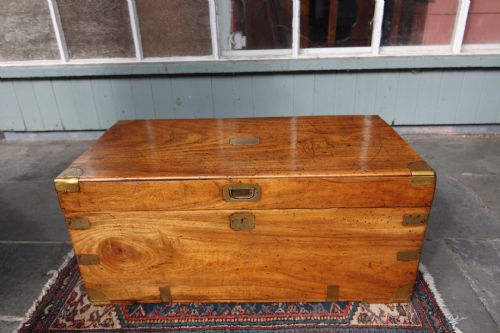
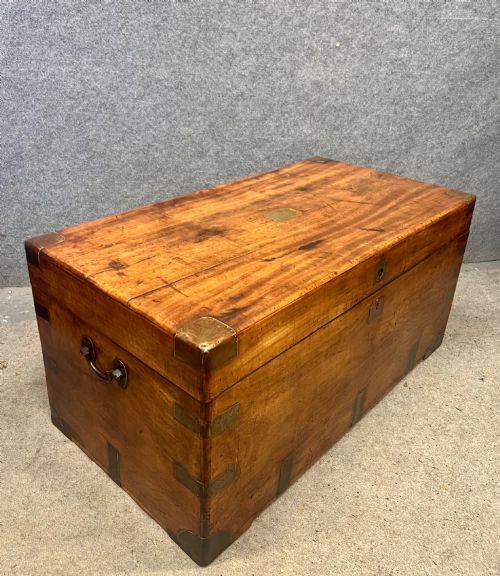
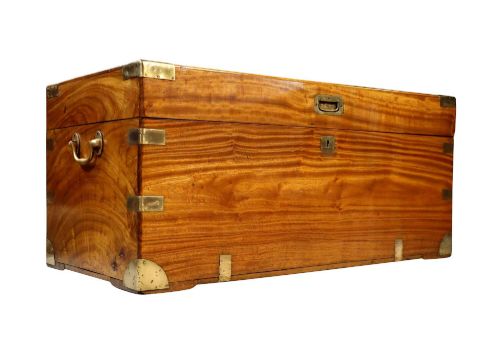
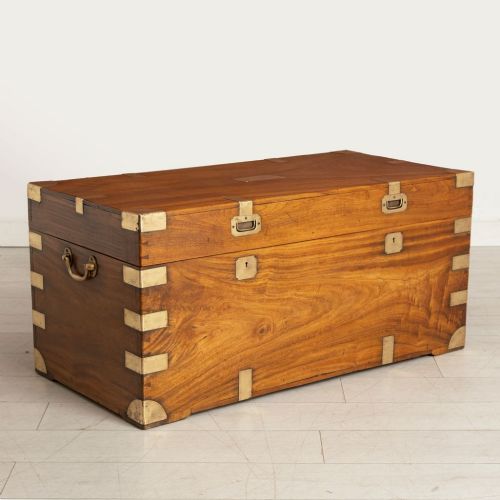
A vintage military campaign box offers portable storage built for travel, drawing collectors with its brass fittings and robust timbers.
Vintage Military Campaign Box
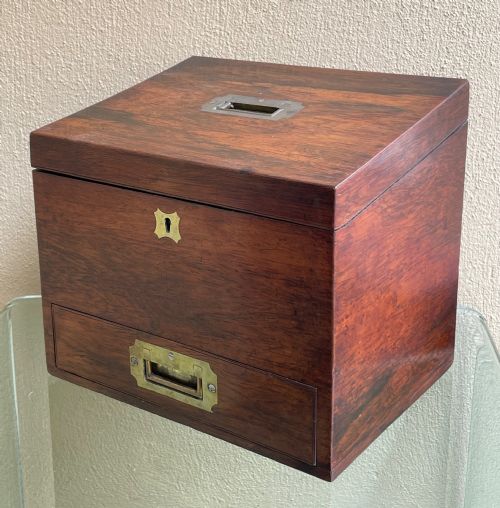
When searching for a vintage military campaign box, collectors encounter sturdy trunks, chests, writing slopes, and hat boxes designed for officers on the move. These pieces span the Georgian, Victorian, and early twentieth-century periods, reflecting the practical needs of travel.
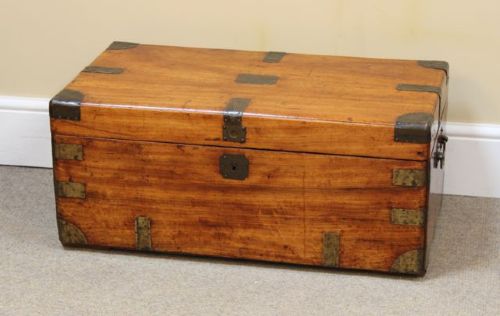
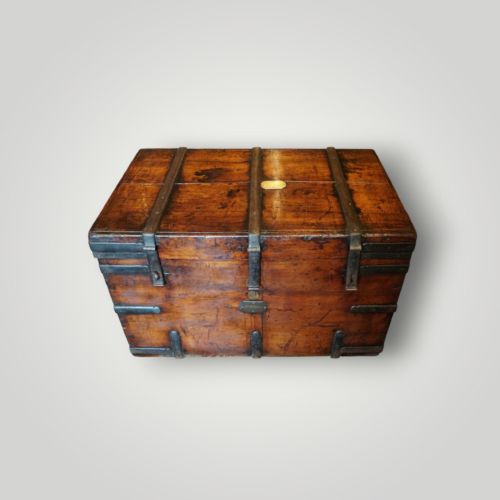
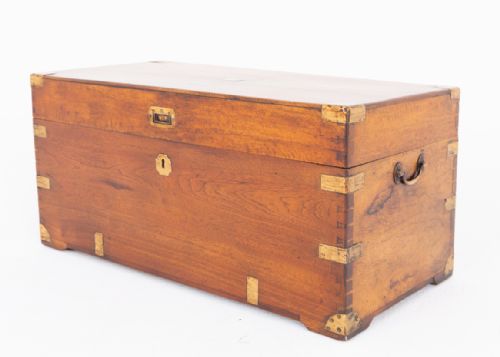
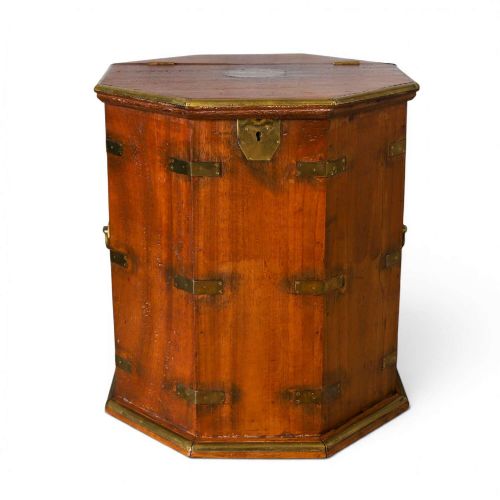
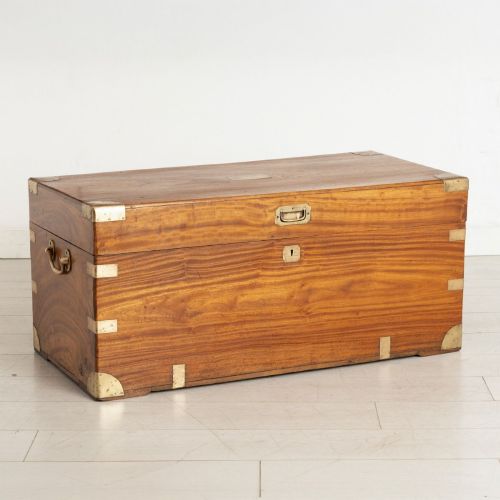
Camphor wood, teak, mahogany, and iron-bound pine appear frequently among these furnishings, often reinforced with brass corners and recessed handles to withstand transit. Trunks and storage chests dominate the forms, alongside specialised correspondence boxes and leather travel containers.
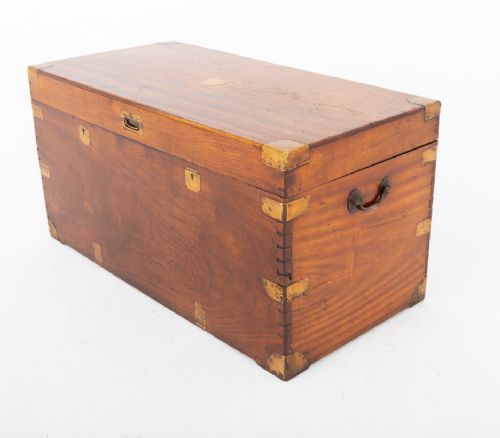
Originating from military service requirements, these items combine utilitarian function with robust construction. Buyers most often meet nineteenth-century camphor wood examples fitted with original hardware and hinged lids.
How they were made
Cabinetmakers utilised dense timbers such as camphor wood, teak, and mahogany to construct these transportable containers, protecting contents from insects and humidity during long journeys. Iron and brass provided essential reinforcement for corners, edges, and lids.
Hardware was typically countersunk or recessed into the wood to prevent snagging during loading and transit. Dovetail joints and secure brass bindings held the heavy wooden panels together under strenuous field conditions.
Listings feature nineteenth-century camphor wood, teak, and mahogany trunks alongside iron-bound pine and leather officer cases.
What varies in quality
The standard of craftsmanship shows in the precision of the joinery and the integrity of the original brass hardware and locking mechanisms. Finer examples retain their fitted interiors, original keys, and untruncated metal fittings.
The selection of timber also defines the grade of the piece, with well-figured camphor wood or rich mahogany commanding attention. Secondary woods and replacement hardware indicate later repairs rather than original military issue.
JW Allen·Drew and Sons·Allen of London
The Vintage Military Campaign Box Glossary
- Campaign chest
- A split-carcass chest designed to separate into modular sections for ease of transport on military expeditions. These pieces utilised recessed brass pulls to maintain flat exterior surfaces.
- Camphor wood
- An aromatic timber valued for its insect-repellent properties, commonly utilised for nineteenth-century campaign trunks and storage chests. This wood displays a characteristic grain and distinct scent.
- Writing slope
- A portable slant-topped desk containing compartments for ink, paper, and correspondence, often integrated into campaign boxes. Such items allowed officers to write dispatches in the field.
- Brass bound
- A method of reinforcing wooden trunk edges and corners with metal strips and brackets. This technique protected the structure from heavy impact during transport.
- Toleware
- Enamelled or japanned metalware utilised for durable household and military goods such as travel hat boxes. This material offered lightweight protection against moisture.
Vintage Military Campaign Box: Frequently Asked Questions
What is a campaign box?
A campaign box is a portable container built for military officers on active service, designed to endure rough transport while keeping belongings organised.
These items range from large storage trunks to fitted writing slopes and hat cases.
Why use camphor wood?
Camphor wood repels insects and resists moisture, making it the practical choice for tropical postings and sea voyages.
Its distinct natural aroma helped protect uniforms and papers inside the trunk.
How were they transported?
Chests were constructed in modular sections or fitted with sturdy rope and metal handles for loading onto pack animals or wagons.
Recessed brass hardware ensured nothing caught on ropes or canvas during transit.
How to date a piece?
Dating relies on timber choices, brass hardware styles, and construction methods spanning the Georgian and Victorian eras.
Inscribed brass plaques and regimental details also help establish a timeline.