


Vintage Mesh Spark Screen
A vintage mesh spark screen protects the room from escaping embers while bringing period character to the hearth.
Vintage Mesh Spark Screen
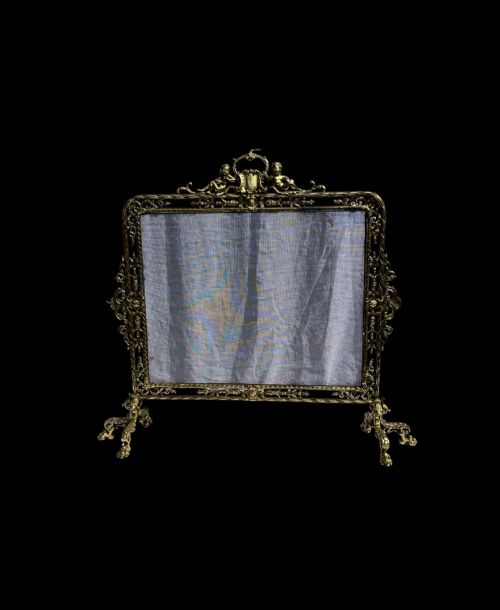
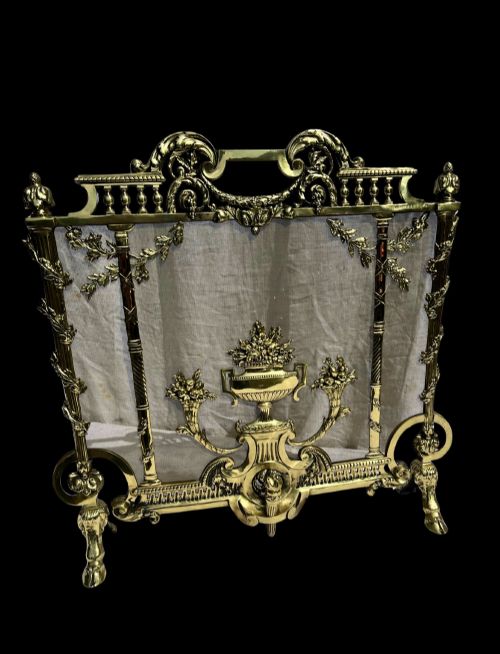
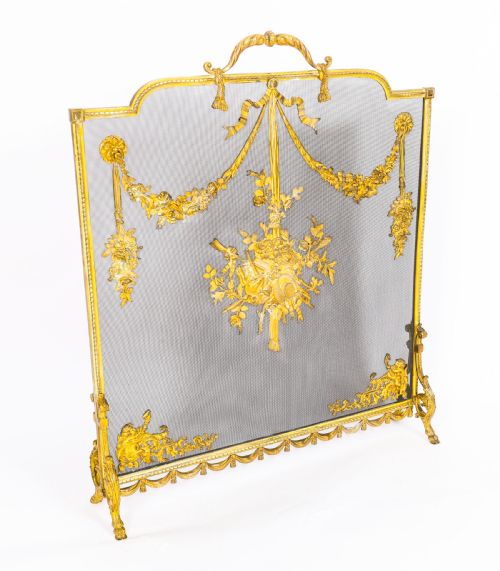
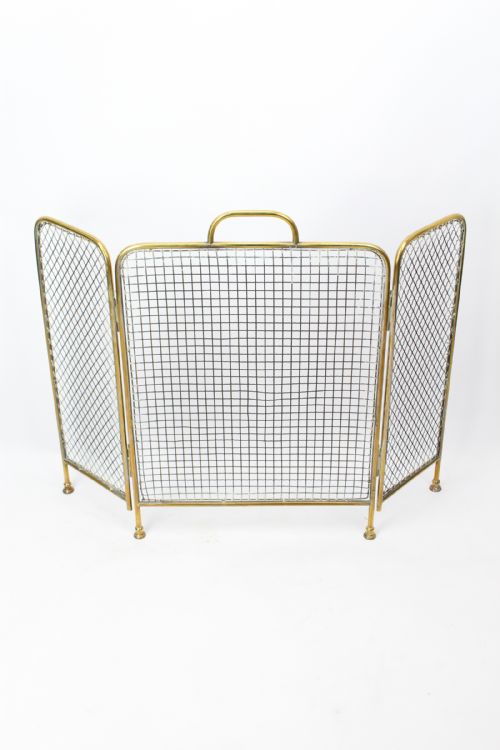
A vintage mesh spark screen functions as a practical hearth accessory designed to contain stray embers while maintaining visibility of the fire. The selection centres heavily on brass frames paired with wire mesh, spanning periods from the Regency era through the Victorian and Edwardian years.
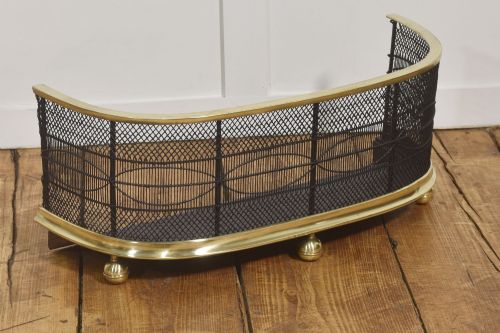
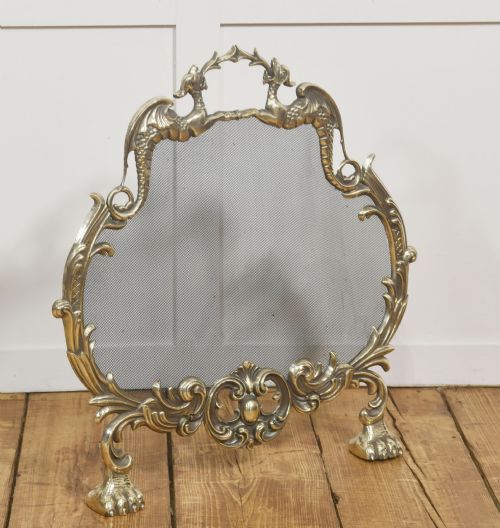
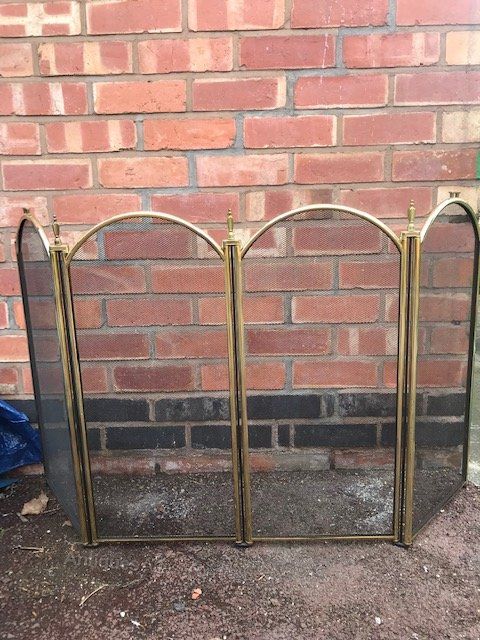
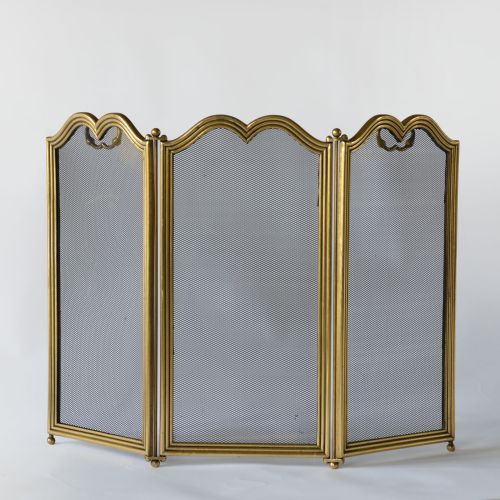
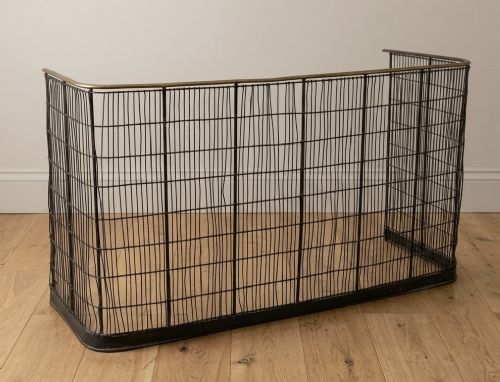
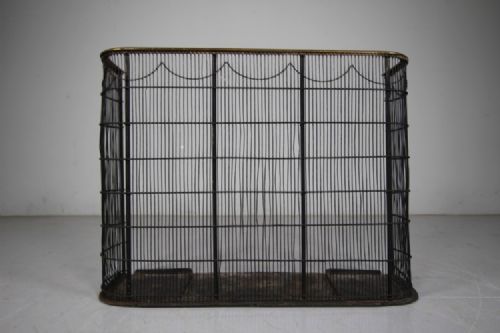
Buyers encounter single-panel screens, folding tripartite and multi-fold versions, and large nursery fenders designed to enclose the hearth completely. French Rococo revival and Louis XVI styles appear frequently alongside simpler utilitarian brass-rimmed wire mesh guards.
The objects take the form of fire guards, spark screens, and nursery fenders featuring fine mesh panels supported by sturdy metal frames. Many incorporate folding side sections, bowed fronts, or top rails intended for domestic utility.
Materials and construction methods
The construction relies primarily on brass, iron, steel, and copper, combined with fine wire mesh or iron mesh panels. Frames are cast, wrought, or assembled with brass rims, while decorative elements utilise gilt bronze or embossed brass sheet.
Makers shaped wire mesh into taut panels secured within rigid metal surrounds, often adding hinges to multi-fold configurations. Surface finishes range from polished brass and black-finished iron to gilded bronze and embossed ornamentation.
Listings feature brass, iron, steel, and copper materials across Victorian, Edwardian, and Regency periods.
Factors that distinguish quality
Quality reveals itself in the weight and gauge of the metal framework, the tightness of the woven mesh, and the precision of the hinges on folding sections. Substantial brass frames and securely anchored wirework indicate superior construction.
Decorative refinement separates standard utility guards from exceptional examples, visible in cast Rococo ornamentation, floral and musical trophy motifs, or finely chased gilt bronze details. The integrity of the mesh panels and the stability of free-standing frames also determine overall standard.
The Vintage Mesh Spark Screen Glossary
- Spark guard
- A protective barrier placed before an open fire to catch flying embers. These pieces use wire mesh panels to maintain visibility.
- Nursery fender
- An enclosed barrier designed to keep children at a safe distance from the hearth. They often feature tall frames and clothes rails.
- Tripartite folding
- A screen constructed in three hinged sections that angle around the hearth opening. This layout allows the guard to fold flat for storage.
- Gilt bronze
- Copper alloy treated with a gold-coloured surface finish. It appears on decorative French revival frames from the nineteenth century.
- Wirework
- Metal formed into mesh or structural grilles. Fine wirework provides spark protection while allowing radiant heat to pass through.
Vintage Mesh Spark Screen: Frequently Asked Questions
How do I clean a brass mesh screen?
Dust the wire mesh gently with a soft brush to remove soot and debris without damaging the weave.
Clean brass frames using a mild metal cleaner suitable for historic surfaces, avoiding abrasive pads that scratch the metal.
Are folding spark screens stable on uneven floors?
Multi-fold screens rely on angled side panels to maintain their free-standing position on hearth stones.
Adjusting the outer sections creates a stable triangular or curved footprint that prevents tipping.
What is the difference between a fire screen and a spark guard?
Traditional fire screens often feature solid panels of wood, embroidery, or brass designed to block radiant heat when the fire is unlit.
Spark guards utilise open wire mesh specifically to permit heat passage while containing active embers during a burn.
How do I date a Victorian nursery fender?
Examine the construction of the wire mesh and the composition of the brass top rail.
Nineteenth-century examples typically show heavier gauge iron frames and hand-assembled wirework distinct from later manufactured pieces.