




Vintage Menu Stand
A vintage menu stand brings character to a dining table, holding cards securely while reflecting the metalwork and design tastes of past decades.
Vintage Menu Stand
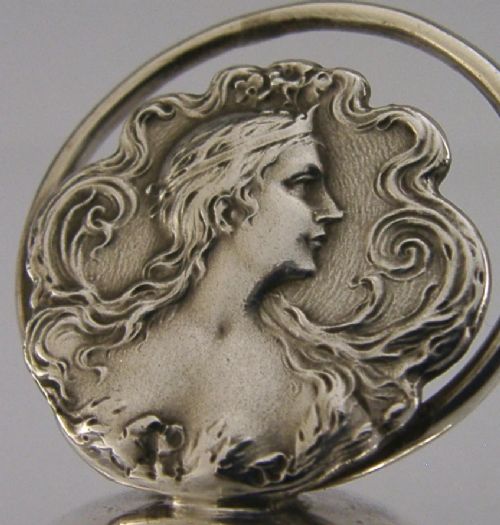
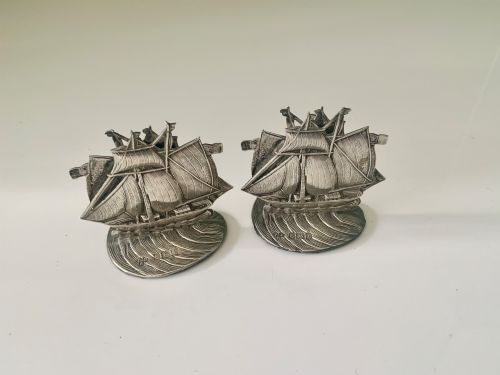
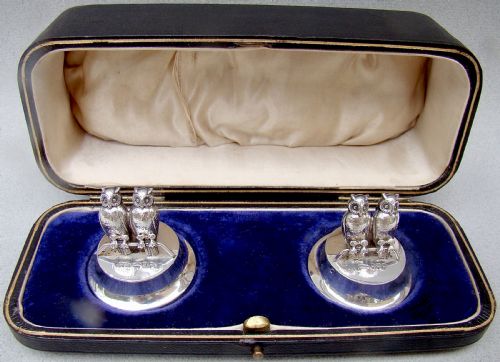
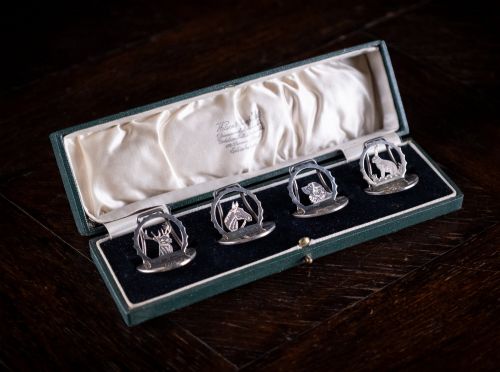
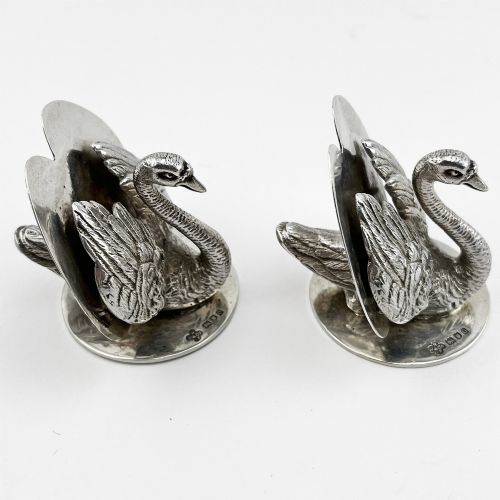
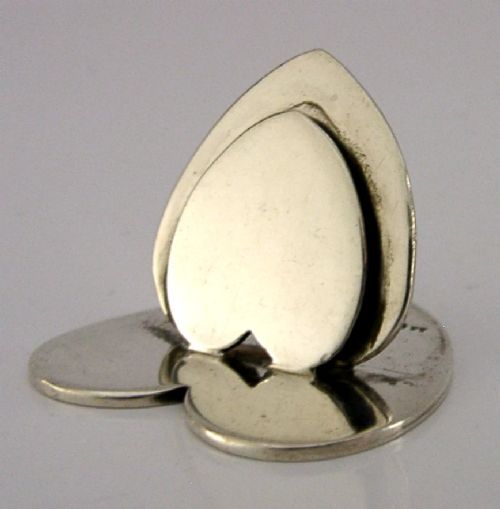
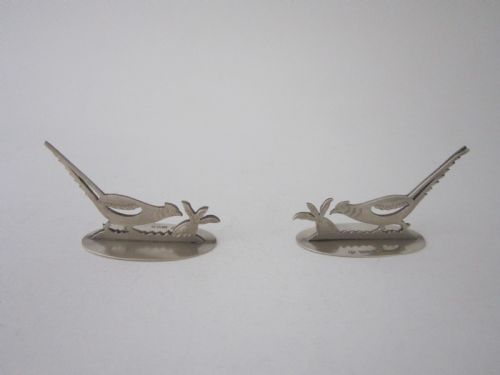
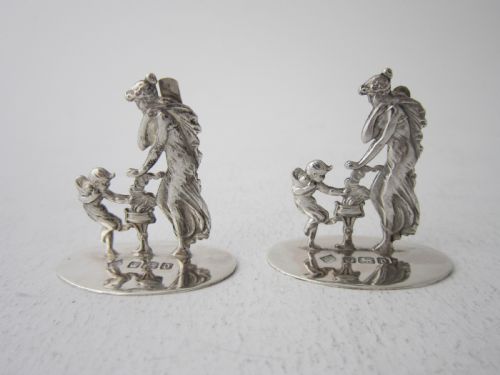
A vintage menu stand encompasses table accessories designed to hold menus or place cards upright during formal dining. The selection spans compact silver holders shaped as animals, birds, galleons, and enamelled flags, alongside larger reception lecterns and restaurant stations.
Edwardian and George V sterling silver examples dominate the current offerings, frequently found as pairs or matched sets. Makers ranged from prominent silversmiths to military and civilian outfitters, producing pieces for domestic dining rooms and institutional messes.
The category also includes silver plate and mixed media items, extending into mid-century table accessories. Functional forms vary from simple easel backs to intricate figurative models that double as place name markers.
How they were made
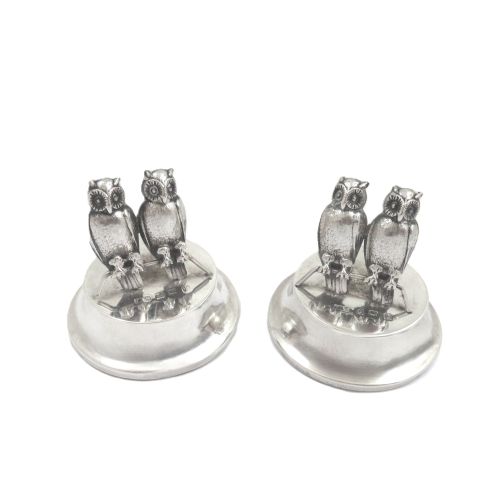
Silversmiths utilised sterling silver and silver plate, often shaping the metal through casting, stamping, and hand-chasing. Figural pieces such as owls, foxes, swans, and horses heads required skilled modelling to render anatomical detail realistically.
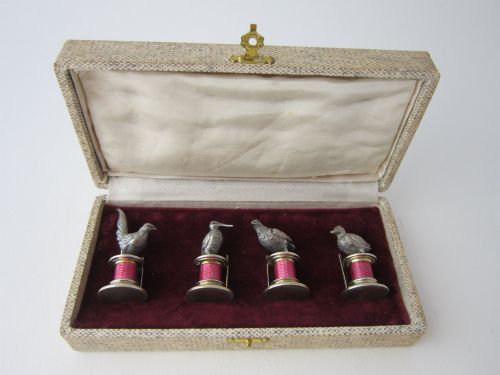
Enamel work appears frequently, including guilloche enamel and detailed miniature flags associated with military units like the RAF. Supporting elements occasionally incorporate leather, silk, velvet, or built-in lighting in larger reception pieces.
Dinners of the past required miniature silver owls, foxes, and galleons to stand guard over the evening menu.
What varies in quality
The preservation of applied enamel and the integrity of original presentation boxes significantly influence the standing of a piece. Complete matched sets demonstrate higher desirability than assembled groups or single survivors.
Levi and Salaman·A. Wilcox·Sampson Mordan·Asprey·Liberty
The Vintage Menu Stand Glossary
- Hallmark
- Official stamps applied to precious metals indicating the standard of purity, the assay office, and the year of manufacture. These marks provide the primary evidence for dating silver items.
- Guilloche enamel
- Decorative technique where an underlying metal surface receives precise mechanical engraving beneath a translucent enamel layer. This creates repetitive geometric patterns that catch the light.
- Place card holder
- Small accessory designed to display the name of a guest at a formal dinner table. They share similar construction methods and makers with menu stands.
- Lectern
- Upright stand with a sloping surface used to hold books or papers for reading. In this context, larger versions serve as restaurant reception stations.
- Sterling silver
- Alloy consisting of ninety-two point five percent silver and seven point five percent other metals, usually copper. It provides the standard material for high-quality table accessories.
Vintage Menu Stand: Frequently Asked Questions
What is a vintage menu stand used for?
These stands held menus or guest names upright on dining tables during formal meals and banquets.
Larger versions functioned as reception lecterns in restaurants and hotels to greet arriving guests.
How do I date a silver menu holder?
Dating relies primarily on the stamped silver hallmarks, which record the assay office and year letter.
Stylistic cues such as Edwardian naturalism or Art Deco geometry also help narrow the period.
Are these pieces sold in sets?
Many menu holders and place card markers survive as pairs or larger matched sets of four, six, or twelve.
Individual pieces also appear, particularly among more elaborate figurative designs.
How do I care for silver table accessories?
Regular dusting and occasional gentle cleaning with a specialised silver cloth maintain the finish without damaging fine details.
Enamelled pieces require extra care to avoid moisture penetration around the edges.