

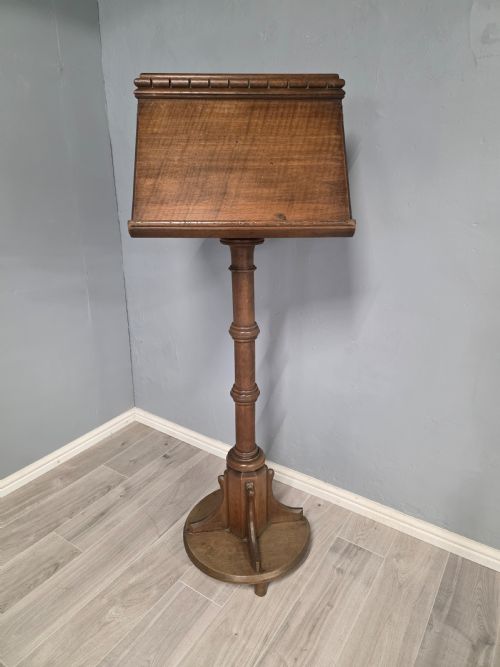


Standing Dictionary Stand
A standing dictionary stand provides a raised, angled surface for heavy reference volumes, combining practical utility with fine period cabinet-making.
Standing Dictionary Stand
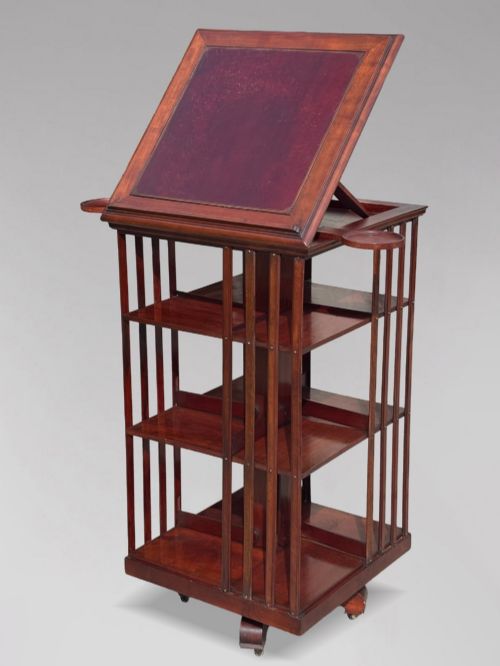
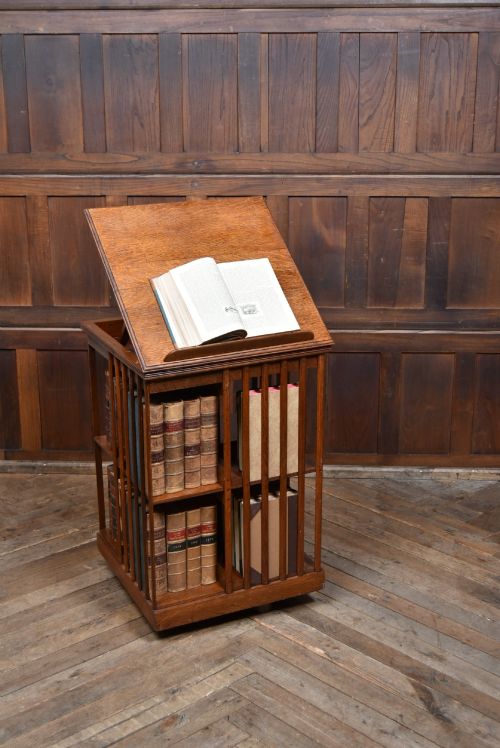
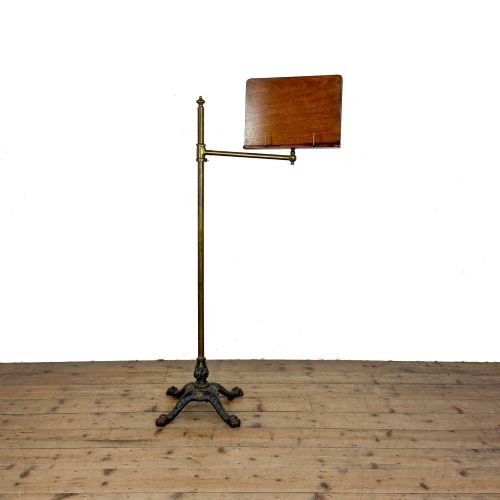
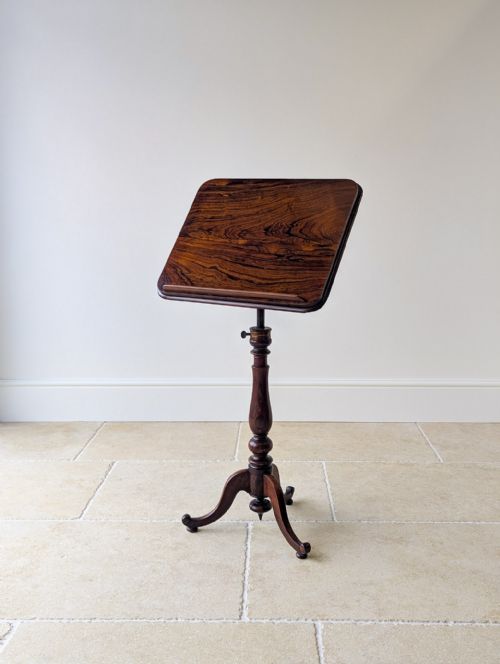
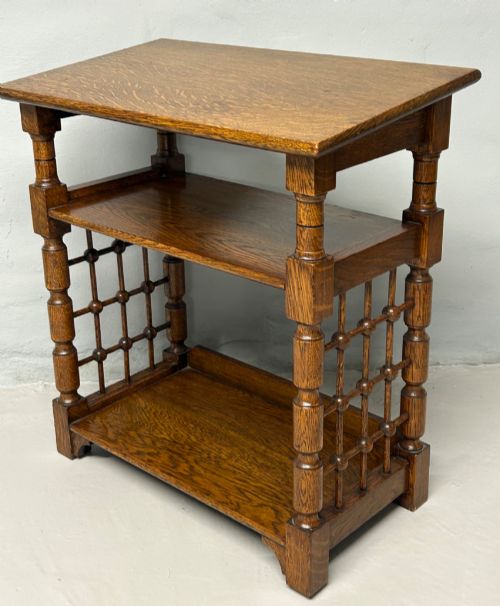
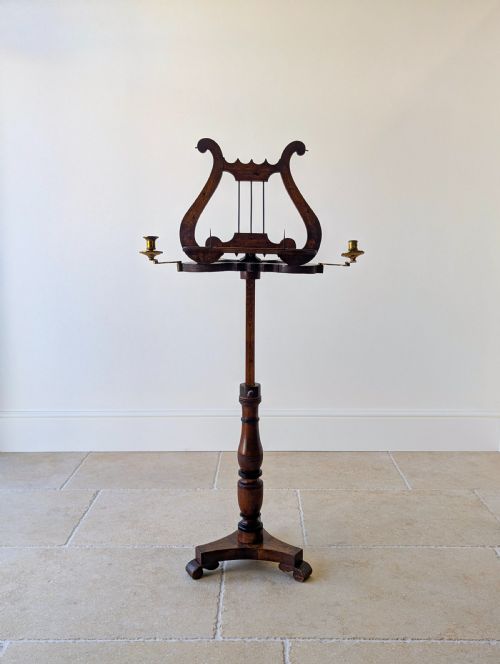
A standing dictionary stand serves as a dedicated support for large books, taking the form of reading stands, lecterns, and adjustable tables designed to hold heavy volumes at a comfortable angle for consultation. These pieces appear in forms ranging from simple slope-shelf bookcases and revolving bookcases to elaborate tripod music stands and church lecterns.
The pieces listed on this page span several key periods, predominantly featuring 19th Century, Victorian, and Edwardian examples alongside Regency, William IV, and George II pieces. Buyers searching for a standing dictionary stand will frequently encounter multi-functional furniture, including occasional tables with adjustable book rests and metamorphic reading tables.
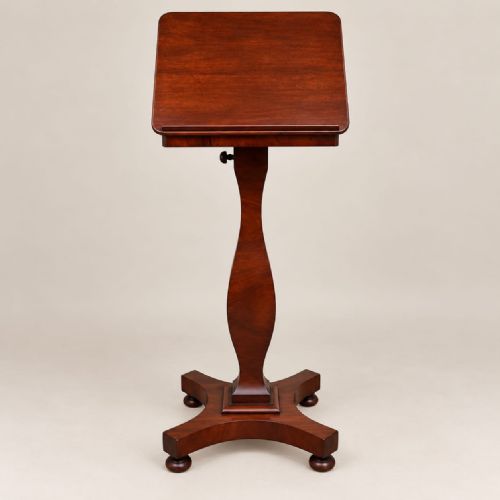
Makers and designers of these items utilised various configurations to suit studies, libraries, and ecclesiastical settings. From pedestal bases with brass work to revolving table formats, each variant provides a stable, elevated platform for reading or display.
What varies in quality
The refinement of the adjustment mechanisms distinguishes the standard production from the exceptional pieces, particularly in the smoothness of the ratchets, screws, and brass fittings that govern the height and angle of the reading surface. Superior examples maintain firm positioning under heavy weight without slipping.
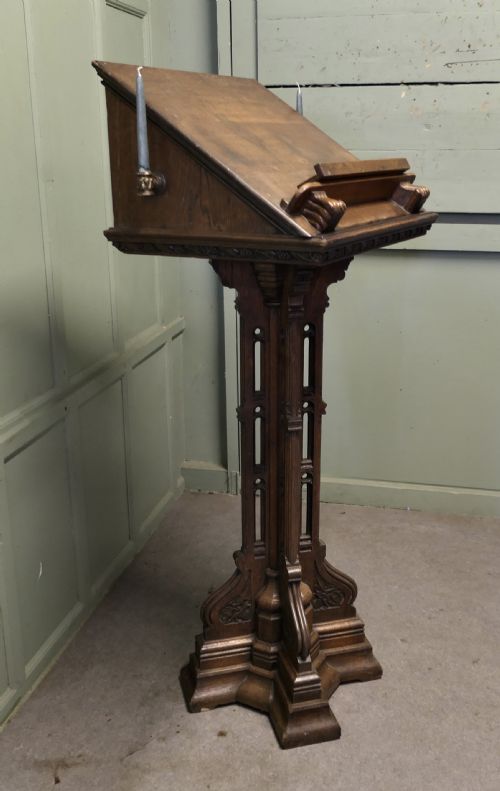
Timber selection and decorative carving set the hierarchy of value, visible in figured mahogany veneers, rich walnut grains, and deeply carved oak details such as those found on Gothic Revival and church lecterns. The integrity of the revolving actions and the solidity of tripod or pedestal bases further determine the standard of craftsmanship.
Listings for this phrase include examples spanning the 18th Century, Regency, Victorian, and Edwardian periods, constructed in mahogany, oak, walnut, and rosewood.
Harrods
The Standing Dictionary Stand Glossary
- Lectern
- A tall stand with a sloping book-rest used to hold a book for reading aloud. They often appear in ecclesiastical or institutional contexts.
- Metamorphic
- Furniture designed to transform from one type of object into another, such as an occasional table that converts into a reading stand.
- Gonçalo alves
- A dense exotic hardwood with striking figuring, sometimes utilised for high-end Victorian and William IV stands.
- Lyre-form
- A decorative shape resembling an ancient Greek lyre, frequently incorporated into the central column or support of Regency music and reading stands.
- Revolving bookcase
- A freestanding book stand designed to rotate on a central pivot, allowing easy access to volumes from any seating position.
Standing Dictionary Stand: Frequently Asked Questions
What is a standing dictionary stand used for?
These stands provide an elevated and angled surface specifically designed to support heavy reference books, folios, or ledgers.
By holding the volume at a readable slant, they reduce strain on the spine of the book and make long periods of consultation comfortable for the reader.
How do I adjust the reading height?
Many period stands incorporate mechanical adjustments using brass ratchets, sliding columns, or screw mechanisms to alter both height and angle.
Operating these parts requires care to ensure the brass components engage correctly without forcing the wood or metal joints.
Where were these stands typically placed?
Historically, these pieces found homes in private libraries, studies, offices, and occasionally churches or public reading rooms.
Their footprint is generally compact, allowing them to sit beside a desk or function independently as a focal point in a study.
What woods are most common?
Mahogany and oak appear most frequently across the listed periods, offering durability and traditional aesthetic appeal.
More decorative pieces utilise walnut, rosewood, or exotic timbers like gonçalo alves to suit formal drawing rooms or fine libraries.