
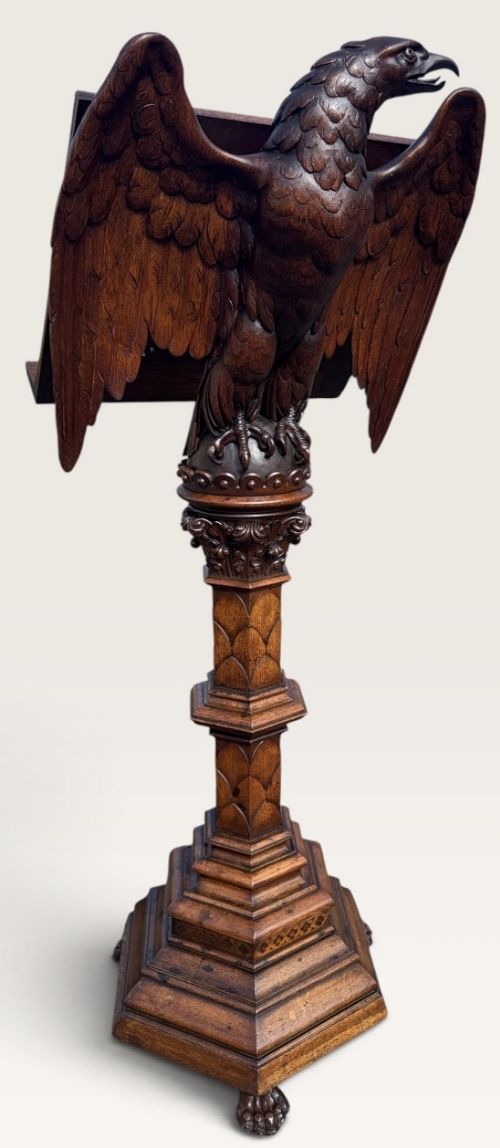
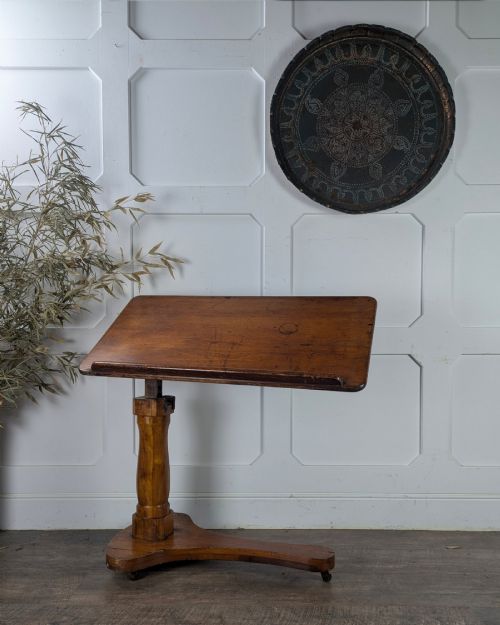
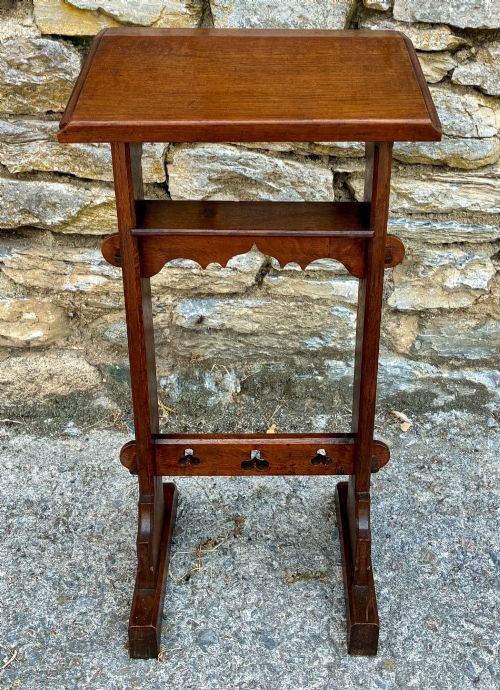
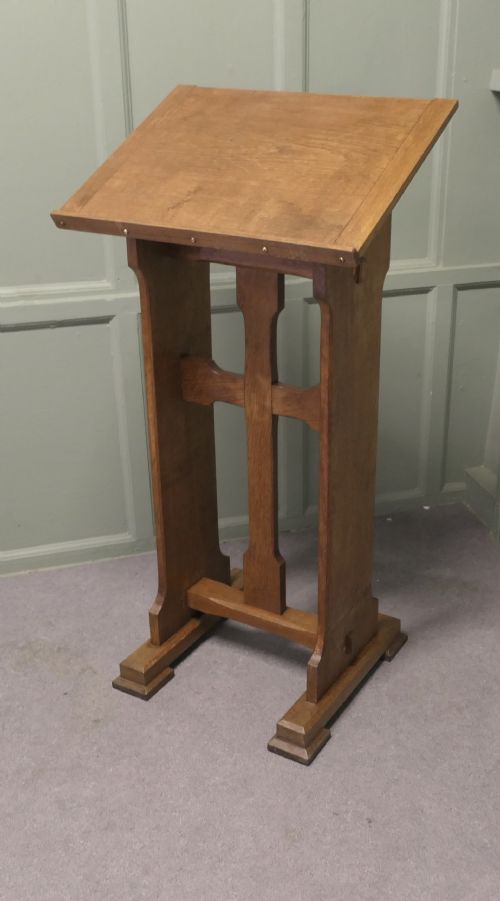




Vintage Podium Stand
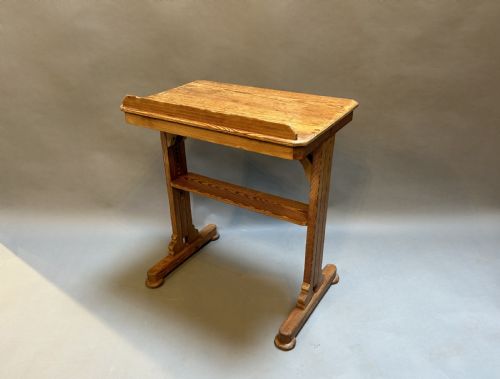
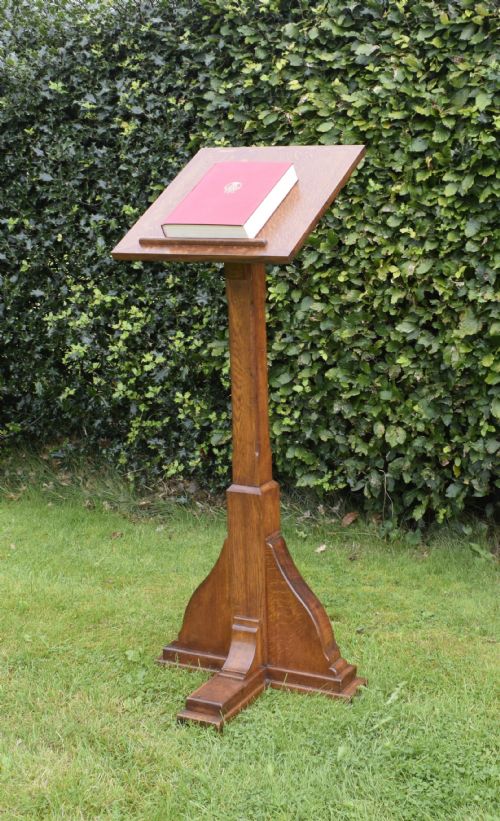
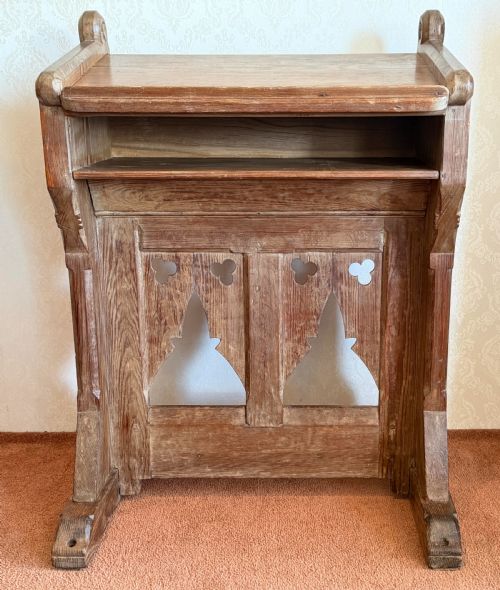
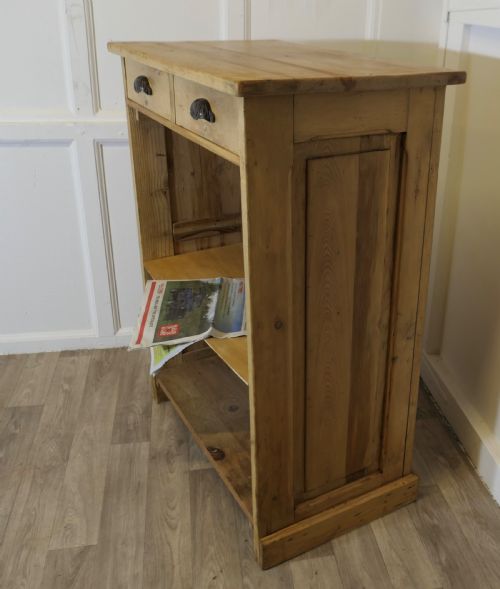
These vintage podium stand pieces are architectural reading desks and reception furniture designed to elevate books or greet guests.
Vintage Podium Stand
The selections on this page lean heavily towards oak and pine constructions, alongside walnut examples from the mid-nineteenth century. Forms vary from simple pine reading tables to elaborate Arts and Crafts reception desks equipped with brass work and integrated lighting.
Makers designed these items for specific institutional, ecclesiastical, and hospitality environments. You will find pieces reflecting Gothic Revival, Edwardian Utility, and rustic farmhouse aesthetics among the offerings.
How they were made
Carpenters constructed these stands primarily from solid timbers like oak, pine, and walnut, often joining them with traditional techniques suited for heavy daily use. Surfaces display the natural grain of the wood, whether left in a rustic pine finish or polished to a warm golden oak tone.
Metal components played a crucial structural and decorative role, featuring prominently in brass work adjustments and cast iron elements. Mechanisms allowed users to tilt reading surfaces or alter heights for music and speech delivery.
One early twentieth-century station comes equipped with its own light, proving that restaurant hosts have needed auxiliary illumination for guest lists for over a century.
What varies in quality
The distinction between standard utility furniture and superior examples lies in the complexity of the adjustment mechanisms and the quality of the timber selection. Fully adjustable walnut music stands with intricate brass fittings represent a higher tier of craftsmanship compared to basic pine lecterns.
Stylistic cohesion also defines the better pieces, particularly those bearing Arts and Crafts design characteristics or provenance from notable retailers. The integration of functional additions, such as built-in lighting or specialised reception station layouts, separates standard reading desks from bespoke commercial furniture.
Harrods
The Vintage Podium Stand Glossary
- Lectern
- A tall stand with a sloping top to hold a book or notes for someone reading aloud. These often feature adjustable heights and reading ledges.
- Arts and Crafts
- A design movement emphasising handcraftsmanship, simple forms, and traditional materials. Pieces from this style often showcase exposed joinery and solid golden oak.
- Gothic Revival
- An architectural and decorative style drawing inspiration from medieval forms. Items in this aesthetic frequently incorporate pointed arches and heavy timber construction.
- Edwardian Utility
- A practical design approach focused on functionality without excessive ornamentation. These pieces date from the early twentieth century and prioritize straightforward construction.
Vintage Podium Stand: Frequently Asked Questions
What is a vintage podium stand used for?
These pieces functioned historically as reading desks, church lecterns, and music stands for holding open books or scores. In commercial settings, they served as reception stations for greeting hotel and restaurant guests.
Today, buyers repurpose them as standing desks for home offices or decorative greeting podiums in hospitality venues.
How do I date a vintage podium stand?
Dating relies on identifying the prevailing style, such as Arts and Crafts, Gothic Revival, or Victorian, alongside the primary wood used. Oak and pine pieces span the nineteenth century through the interwar period, while walnut examples often point to mid-nineteenth-century origins.
Hardware details like brass work and mechanical adjustment systems also provide clues to the manufacturing decade.
Are these podium stands adjustable?
Many of the reading stands and lecterns feature mechanical adjustments for altering the height or the angle of the reading surface. These mechanisms allowed speakers and musicians to customize the position of their texts.
Not all models move, as heavy reception desks and stationary church lecterns were built fixed to a single height.
Where were these stands originally placed?
Original locations included churches, institutional reading rooms, music rooms, and upscale hotel or restaurant reception areas. Commercial pieces were built specifically to greet visitors at the entrance of establishments.
Domestic examples typically resided in studies or parlours for holding large Bibles, atlases, or sheet music.