

Standing Wooden Lectern
A standing wooden lectern brings a serious architectural presence to a room, holding open heavy folios, sheet music and manuscripts with steady grace.
Standing Wooden Lectern
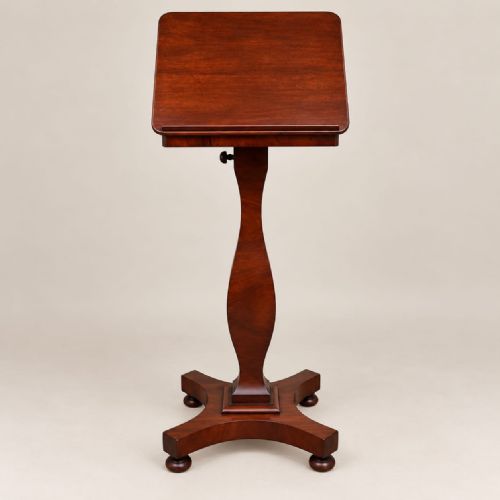
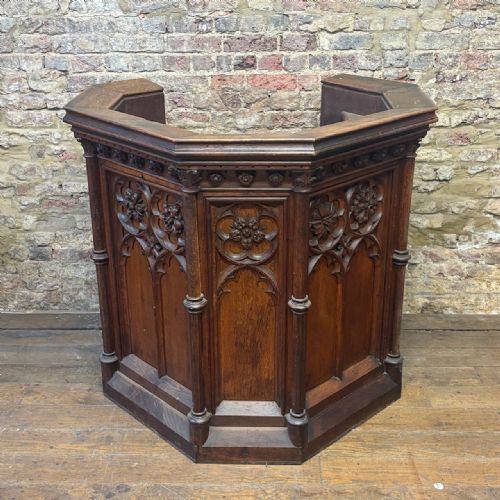
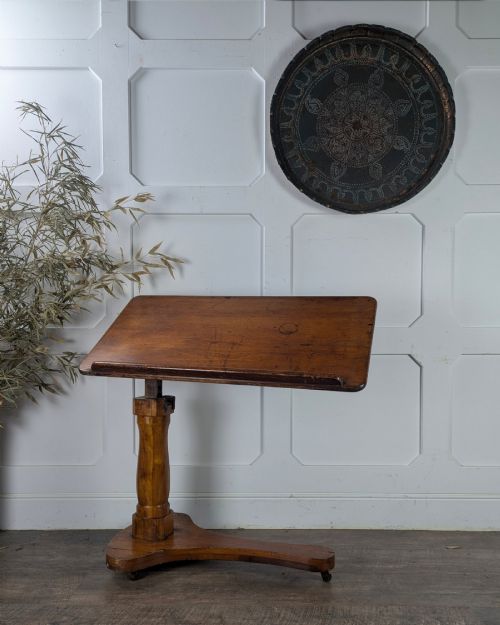
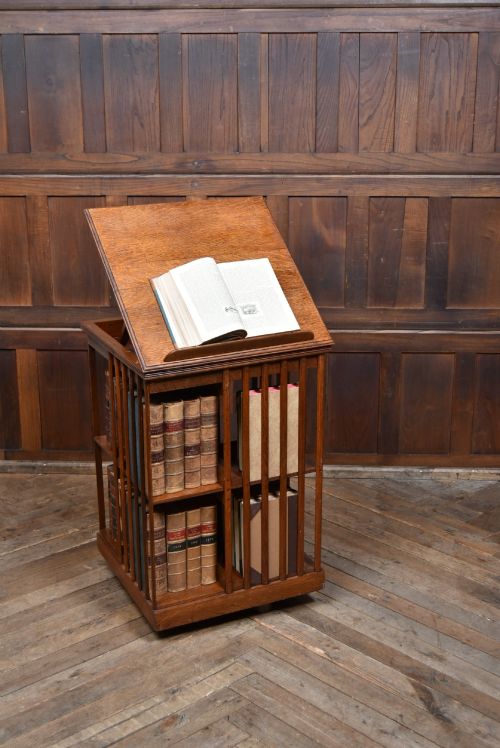
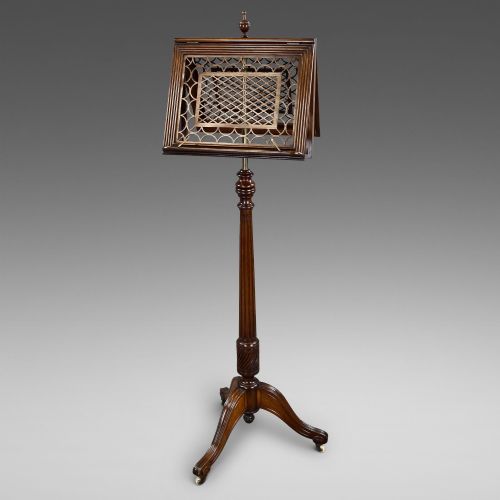
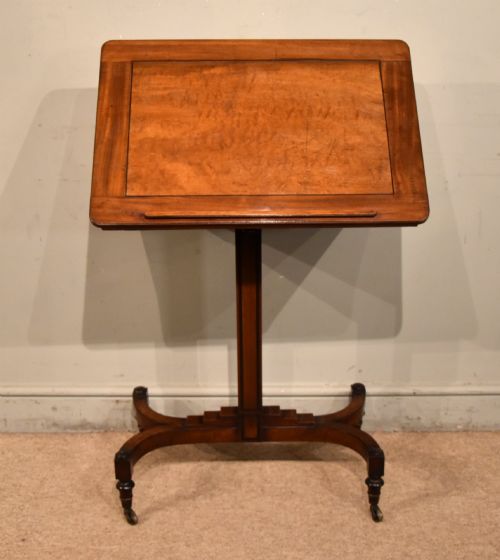
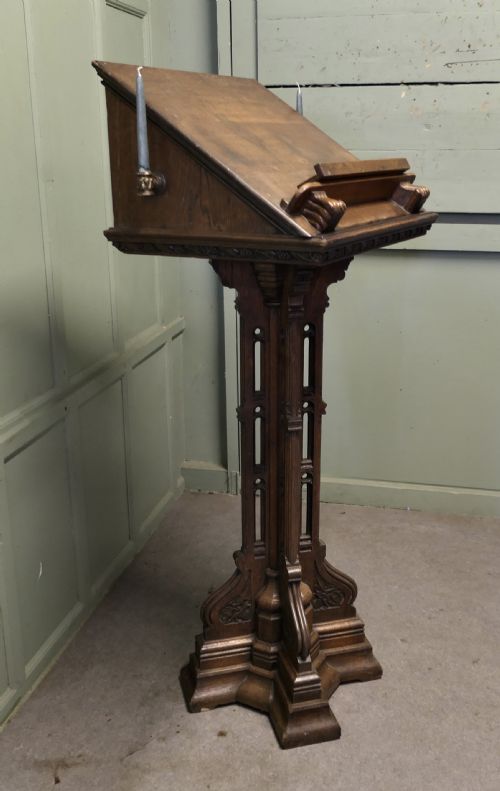
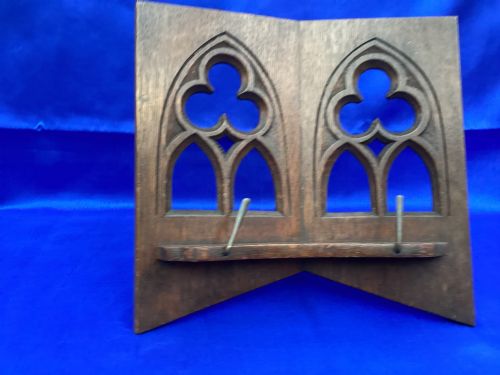
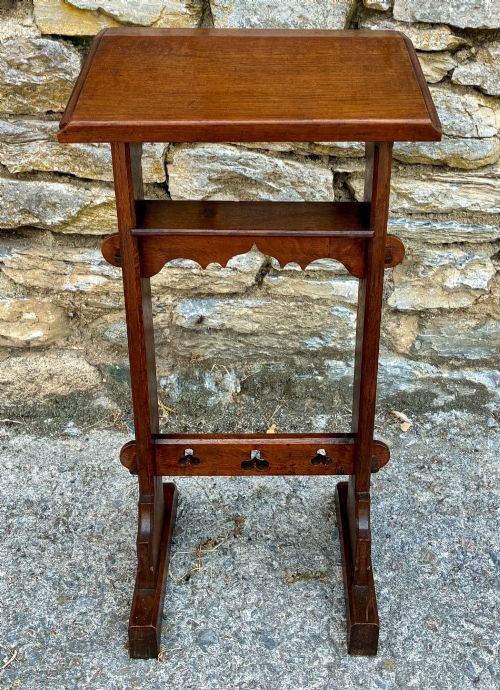
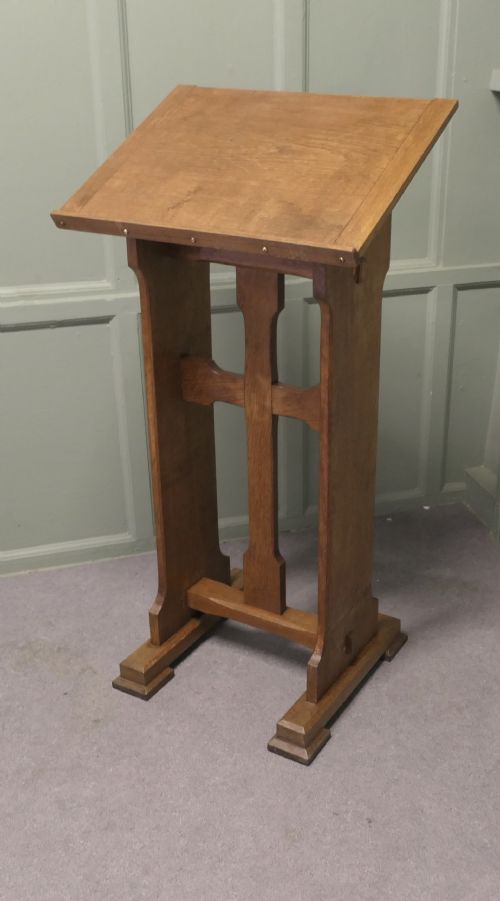
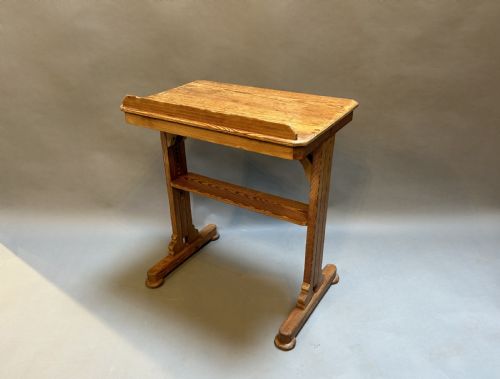
A standing wooden lectern encompasses heavy church pulpits, adjustable reading tables, music stands and reception greeter stations. These pieces span the eighteenth, nineteenth and early twentieth centuries, drawing on Gothic Revival, Regency and Arts and Crafts design.
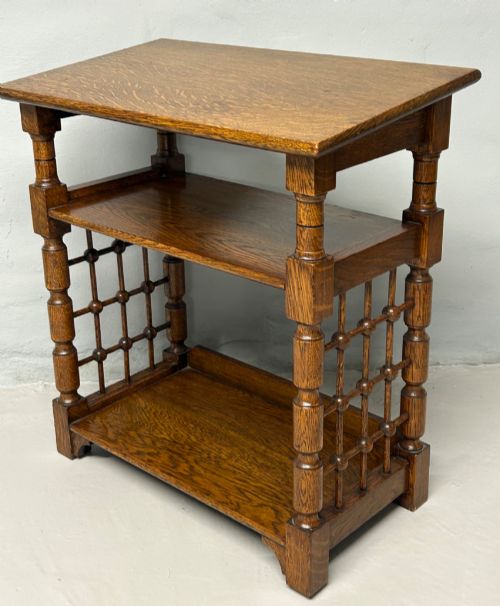
Oak and mahogany form the backbone of the selection, appearing in ecclesiastical church pulpits, adjustable reading stands and restaurant reception stations. Simpler pine and walnut examples provide domestic reading surfaces and music holders.
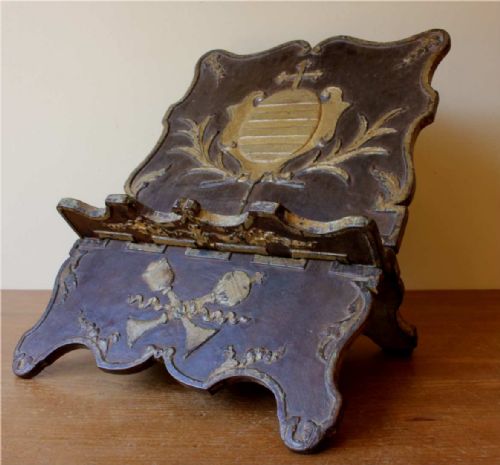
Makers drew on varied regional traditions, ranging from English oak ecclesiastical furnishings to French missal stands and Italian carved eagle pedestals. Pieces range from grand architectural church furniture to portable folding prayer desks.
Materials and Technique
Solid oak and mahogany dominate the construction, often joined with pegged mortise and tenon joints to bear the weight of heavy books. Carved details define the Gothic Revival and Victorian pieces, showing deep chisel work on panels and pedestals.
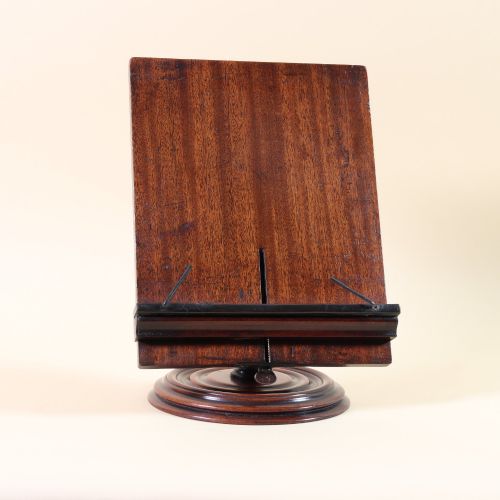
Adjustable brass mechanisms and iron ratchets allow reading slopes to tilt and heights to rise, pairing metal hardware directly with dense hardwoods. Inlaid details in mother of pearl or contrasting timbers appear on select Victorian music stands and book rests.
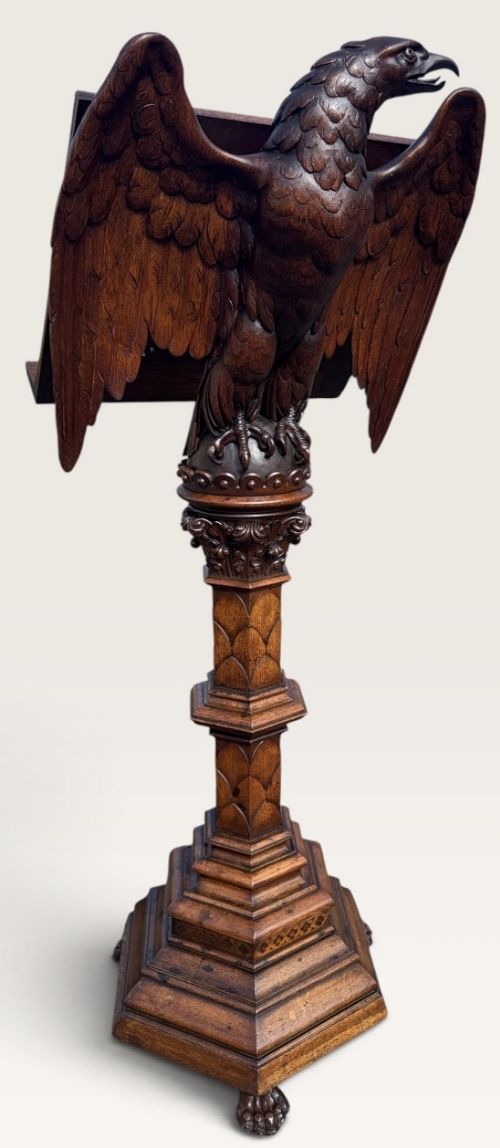
One eighteenth-century Italian lectern takes the form of an eagle with outstretched wings, ready to lift the Sunday service straight off the floor.
Judging Quality
The standard of carving sets the finer church pulpits and reading stands apart, separating flat machine work from crisp, deeply undercut hand chisel marks. The integrity of the adjusting mechanism determines utility, with smooth brass ratchets and screws indicating superior workshop execution.
Timber selection dictates the presence of the piece, where richly figured mahogany or quartersawn oak with prominent medullary rays elevates a functional stand into a commanding focal point.
The Standing Wooden Lectern Glossary
- Gothic Revival
- A nineteenth-century style imitating medieval ecclesiastical architecture, featuring pointed arches, tracery and heavy carved oak. This aesthetic heavily influences church pulpits and prayer desks.
- Prie Dieu
- A small prayer desk designed for kneeling while reading devotional books, often equipped with a sloping top and a padded lower rail. These compact pieces serve well as devotional furniture or specialised reading stands.
- Duet Stand
- A music stand wide enough to hold two side-by-side open scores for shared playing or reading. They frequently feature adjustable brass candle arms or heavy turned pedestals.
- Missal Stand
- A low folding book rest traditionally used on church altars to hold liturgical texts. These portable supports collapse flat when not in use.
- Quartersawn Oak
- Timber cut radially from the growth rings, producing distinctive decorative silver grain flecks. This cut provides exceptional stability for heavy reading furniture.
Standing Wooden Lectern: Frequently Asked Questions
How were standing wooden lecterns used originally?
These pieces served primarily in churches, chapels and grand libraries to support heavy bibles, missals and bound manuscripts at a comfortable reading height for standing speakers.
Domestic versions also functioned as music stands for instruments, reading desks for scholars and reception greeting stations in public spaces.
Are these lecterns suitable for modern reading?
Adjustable reading stands and music tables integrate easily into contemporary rooms as book displays, laptop stands or architectural music holders.
Heavier church pulpits and reception desks require dedicated floor space but offer striking focal points for large entryways or studies.
How do I identify the period of a lectern?
Construction methods, timber choices and decorative styles point directly to the era of manufacture, such as heavy linenfold carving for Gothic Revival or clean linear forms for Arts and Crafts.
Brass adjustment hardware, screw types and secondary woods underneath also help anchor the piece to the nineteenth or early twentieth century.
Do these stands adjust in height and angle?
Many nineteenth-century music stands and reading tables feature functional brass screws and iron ratchets designed to alter both the slope of the book rest and the overall height.
Fixed architectural pulpits and heavy church lecterns remain stationary, relying on a permanent sloping desk surface built for standing use.