
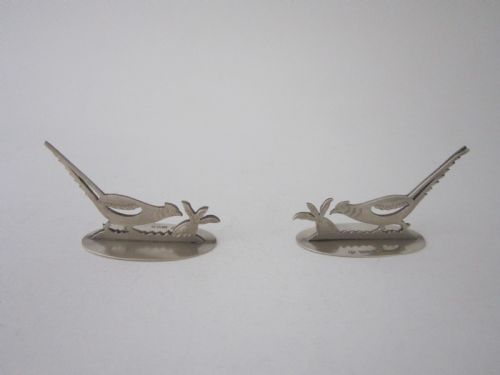


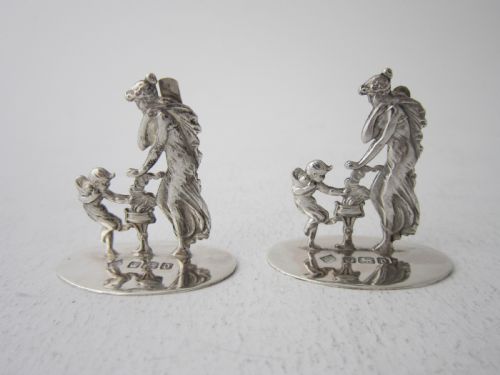


Vintage Menu Card Stands
These vintage menu card stands hold dinner tables together with miniature sculpture and shining metal.
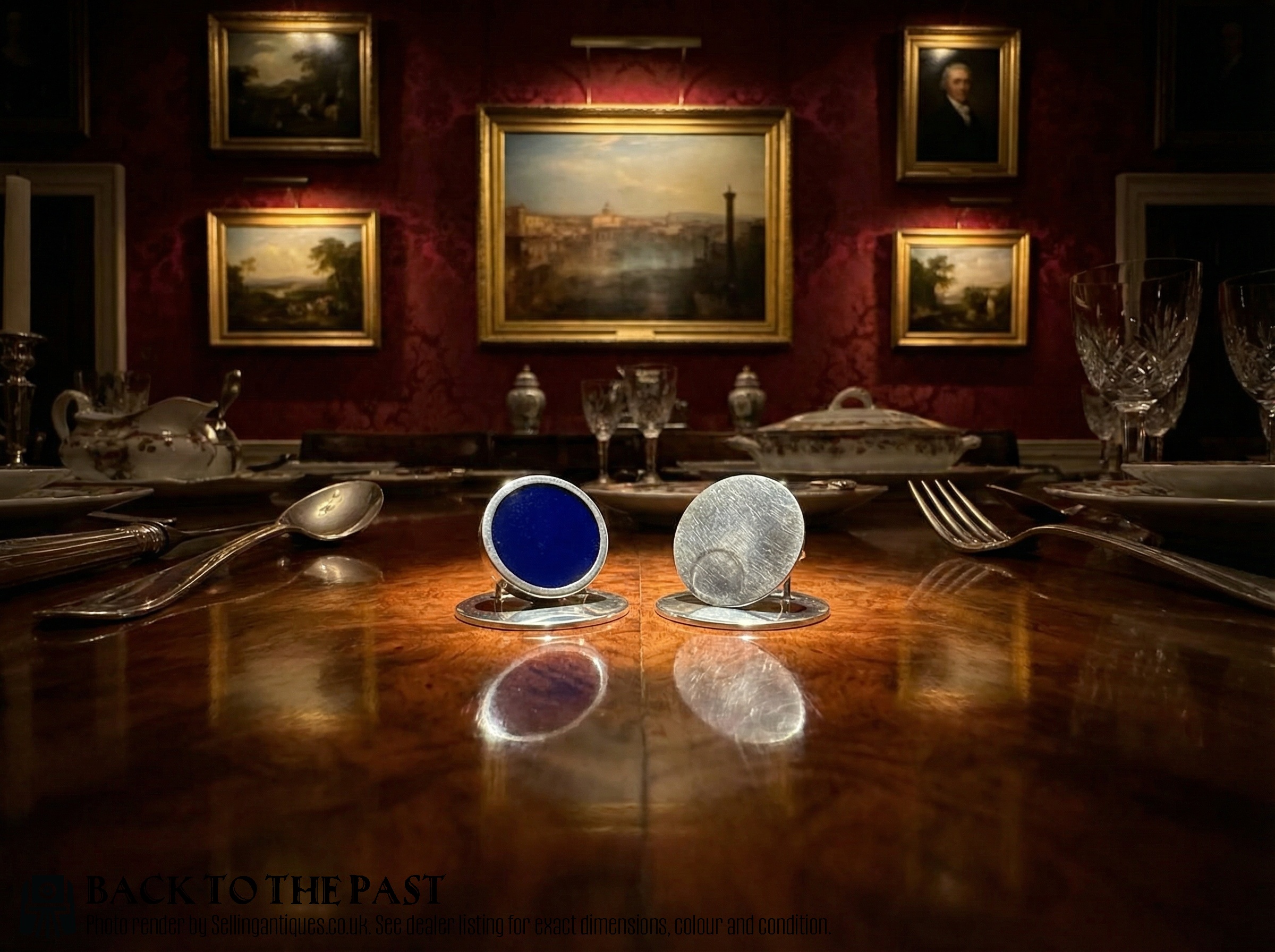
Vintage Menu Card Stands
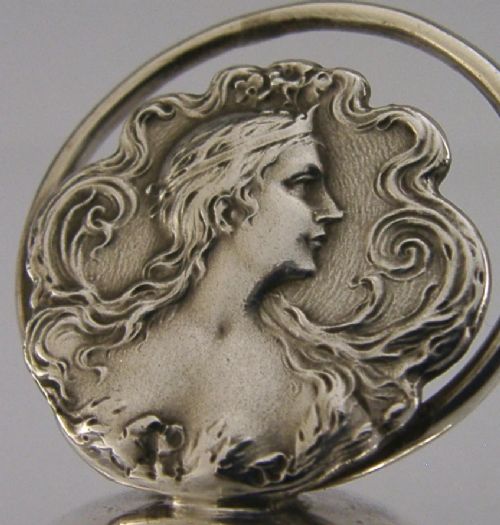
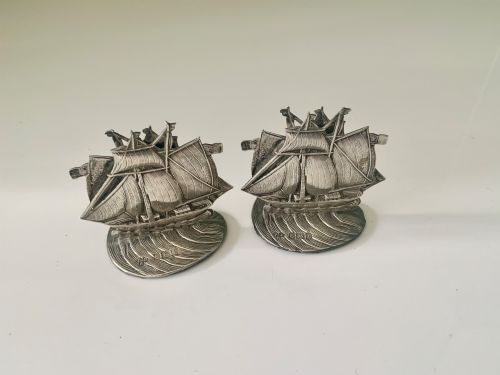
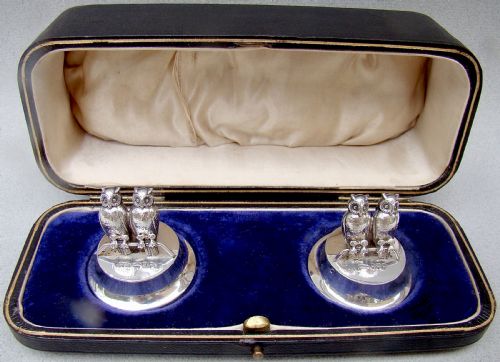
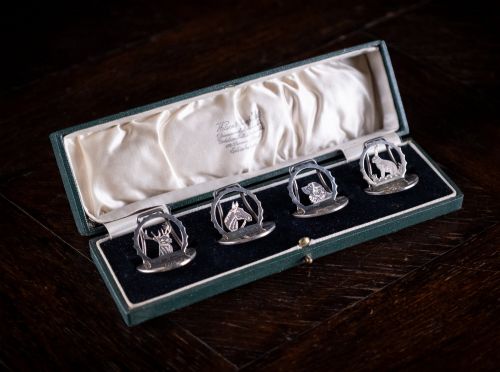
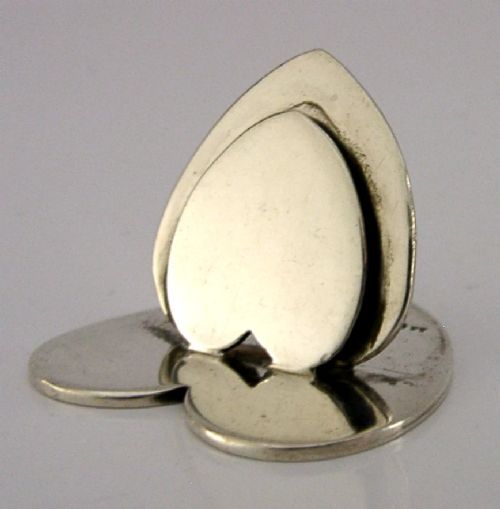
Vintage menu card stands arrive as single pieces, pairs, or matched sets designed to display dining room menus and place cards upon the table. These table accessories range from simple geometric frames to intricate animal figures cast in metal.
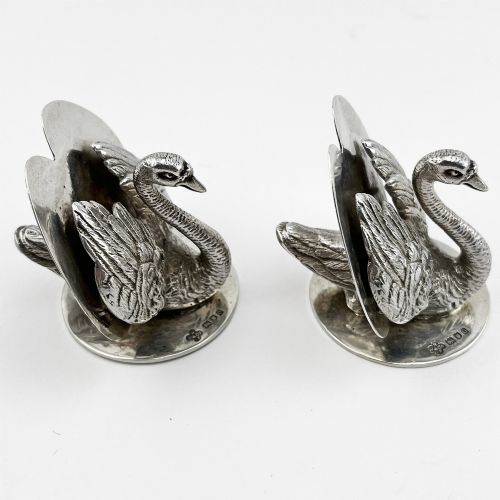
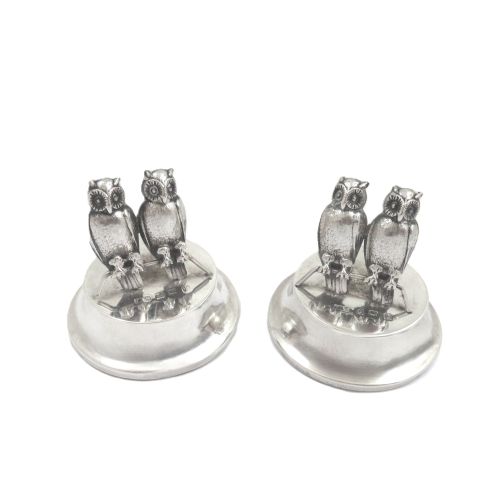
The pieces seen on this page span the Edwardian, George V, George VI, Victorian, and Mid-Century Modern periods, with strong representation in Edwardian silver work. Collectors encounter forms modelled as birds, animals, military insignia, and literary subjects alongside classic stands.
Makers utilised silver, silver plate, enamel, leather, silk, and velvet to construct these functional tableware items. They serve today both as decorative table appointments and as miniature silver sculptures.
What varies in quality
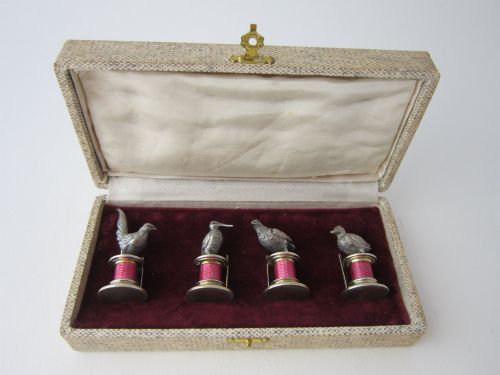
Complexity of form elevates certain pieces, such as multi-part enamel flags, matched sets of four or more, or signed works by notable makers. The integration of coloured enamel or specialised thematic subjects separates ordinary functional holders from exceptional cabinet pieces.
Listings include sterling silver, silver plate, enamel, velvet, and leather across Edwardian, George V, George VI, and Mid-Century Modern styles.
Levi and Salaman·A. Wilcox·Sampson Mordan·Asprey·Liberty
The Vintage Menu Card Stands Glossary
- Sterling silver
- A silver alloy containing 92.5 percent pure silver by mass and 7.5 percent other metals, usually copper. This standard alloy provides the primary material for the majority of Edwardian and Georgian menu holders.
- Guilloche enamel
- A decorative technique where a precise geometric pattern is mechanised into an underlying metal surface and covered with translucent enamel. This method appears on colourful flag and decorative card stands.
- Silver plate
- A layer of silver applied to a base metal core such as copper, nickel, or brass. This technique offered a more accessible alternative to solid sterling silver for larger sets.
- Place card holder
- A small table accessory designed to hold a guest name card rather than a menu. These pieces share identical forms and manufacturing techniques with menu card stands.
Vintage Menu Card Stands: Frequently Asked Questions
What are vintage menu card stands?
These items are small decorative stands created to hold paper menus or guest name cards upright on dining tables during formal meals. They combine utilitarian function with miniature sculpture.
Craftsmen produced them primarily in sterling silver and silver plate, often shaping them as animals, birds, or geometric markers.
How were menu card stands used?
Hosts placed them at intervals along dining tables so guests could easily read the courses planned for the meal or locate their designated seats. Sets often matched the scale of the dinner party.
During formal Edwardian and George V dining, they formed part of an elaborate tablescape alongside matching silverware and glassware.
How do I date an Edwardian menu holder?
Dating relies heavily upon the stamped hallmarks found on sterling silver pieces, which indicate the assay office, maker's mark, and year of manufacture. Edwardian examples typically date from 1901 to 1910.
Stylistic cues such as naturalistic animal casting and specific Edwardian or George V design motifs also help confirm the period.
How do I display them at home?
Collectors often display sets of menu holders within glass cabinets, on sideboards, or arranged across dining tables as decorative objects. Their small scale allows them to fit easily into cabinet displays.
When not holding cards, individual figural pieces function effectively as standalone miniature sculptures.