



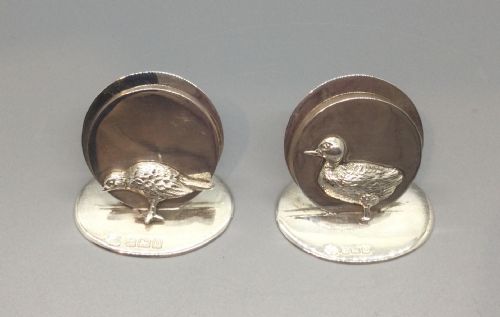


Pair of Menu Stands
These pair of menu stands bring a touch of formal dining history to the table, offering a decorative way to display place cards and menus.
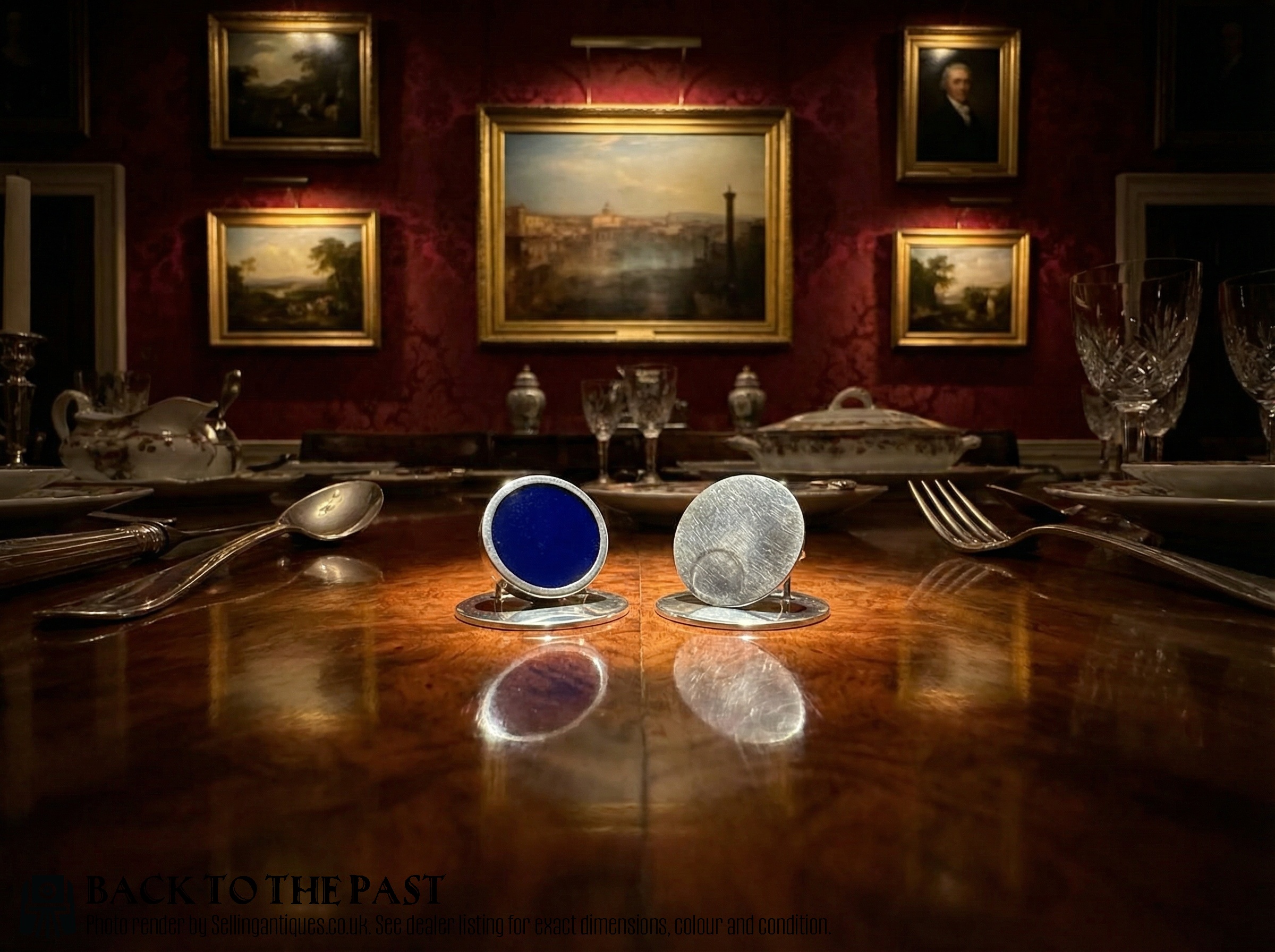
Pair of Menu Stands
A pair of menu stands serves as a decorative accessory for the dining table, holding place cards and menu cards upright for guests to view. When searching for a pair of menu stands, buyers encounter various forms designed to complement formal table settings.
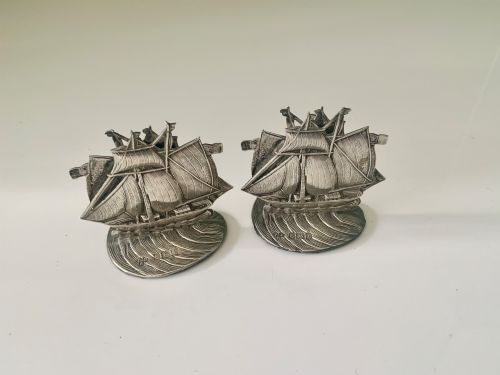
The examples found here span several periods including the Victorian, Edwardian, and 1920 eras, alongside Anglo-Indian designs. These pieces often take specific shapes, such as menu holders, place card holders, and menu card holders.
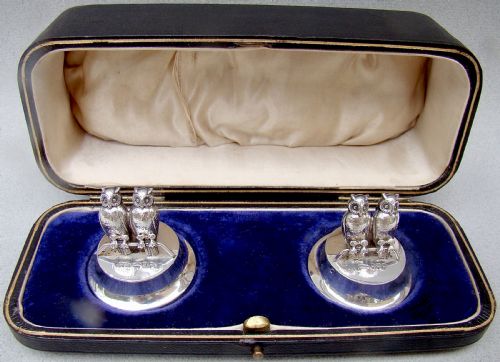
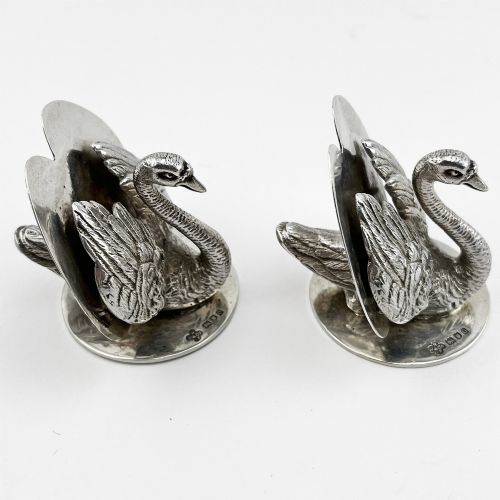
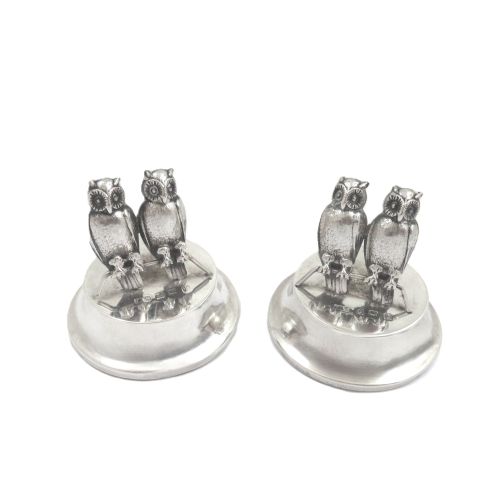
Novelty and figurative designs dominate the selection, featuring animal and literary motifs rather than plain architectural shapes. This variety reflects the playful yet refined dining customs of the early twentieth century and the late nineteenth century.
How they were made
Silversmiths constructed these pieces primarily from sterling silver and standard silver, utilising techniques such as casting and chasing to achieve detailed figurative forms. The metal provides both the necessary weight for stability on the dining table and a polished surface for decorative detail.
Certain examples incorporate supplementary materials like velvet, leather, silk, enamel, leatherette, and glass to enhance their visual appeal or structural backing. These secondary elements work alongside the silver framework to create varied textures within a single matched pair.
Dinners gained literary flair when silver owls and Alice in Wonderland characters joined the menu cards on the table.
What varies in quality
The complexity of the design and the integration of secondary materials such as enamel or specialised backing substances also influence the standard of the piece. Matching pairs demonstrate consistent manufacturing quality across both individual holders.
Levi and Salaman·Sampson Mordan
The Pair of Menu Stands Glossary
- Sterling silver
- A silver alloy containing 92.5 percent pure silver and 7.5 percent other metals, usually copper, chosen for durability.
- Menu holder
- A small desk or table accessory designed specifically to prop up a paper menu card.
- Place card holder
- A miniature stand used to hold a guest's name card at a designated seat during a formal meal.
- Novelty
- An object shaped in a whimsical, humorous, or unexpected form, such as an animal or a character from fiction.
- Anglo-Indian
- A style reflecting British aesthetic influence combined with traditional Indian craftsmanship and design motifs.
Pair of Menu Stands: Frequently Asked Questions
What is a pair of menu stands used for?
These items were placed on dining tables to hold printed menus and place cards upright during formal meals. They allowed guests to easily read the courses and find their designated seats.
Over time, their decorative appeal surpassed their strict utility, turning them into collectible silver objects for display.
How do I identify Edwardian examples?
Edwardian pieces generally date from the early twentieth century and often feature hallmarks indicating the year and assay office. Stylistically, they frequently lean towards playful novelty shapes and detailed animal motifs.
The craftsmanship reflects the prosperity and leisure-oriented dining culture of the period leading up to the First World War.
How should I clean silver menu stands?
Silver accessories require gentle cleaning with a specialised silver cloth to remove tarnish without scratching the metal surface. Harsh chemical dips can damage fine details and any integrated materials like enamel.
Store them in a dry environment to slow down the natural tarnishing process of the silver.