


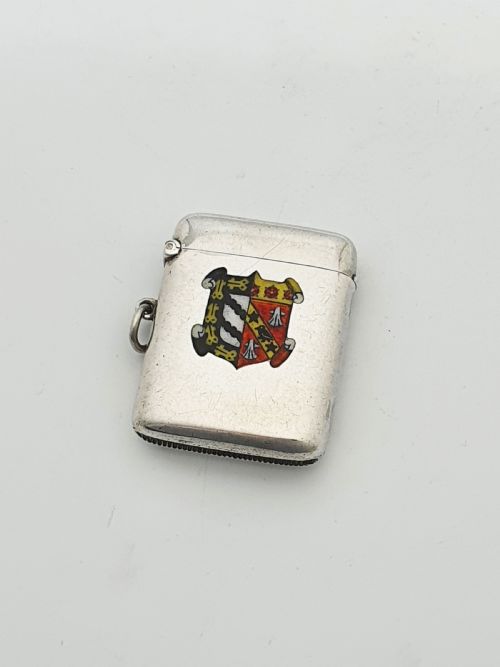

Vintage Match Case
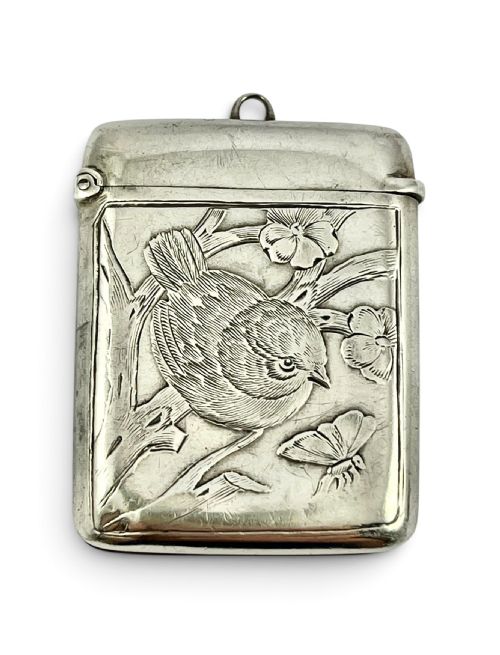
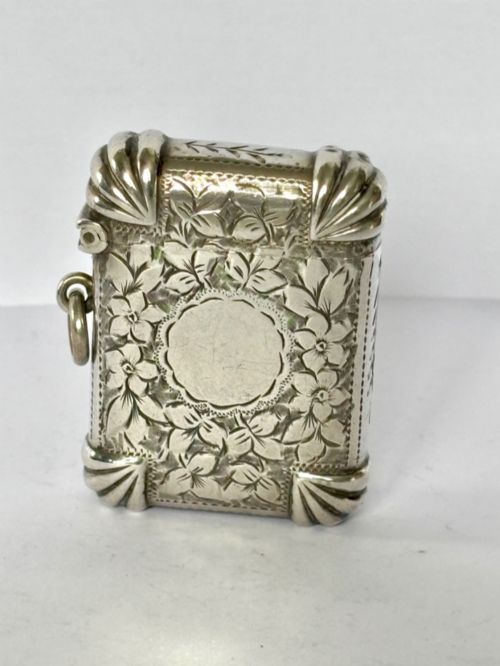
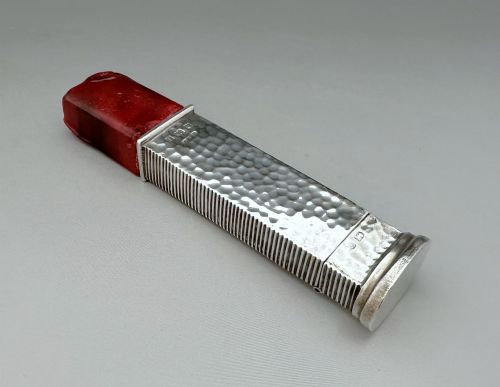
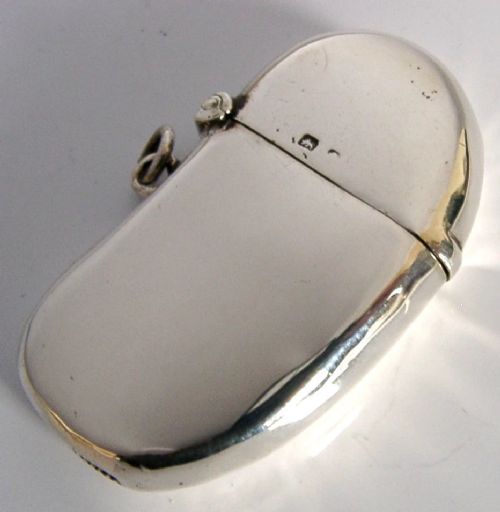
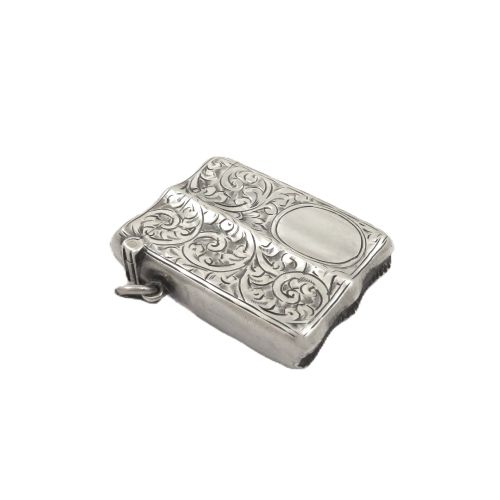
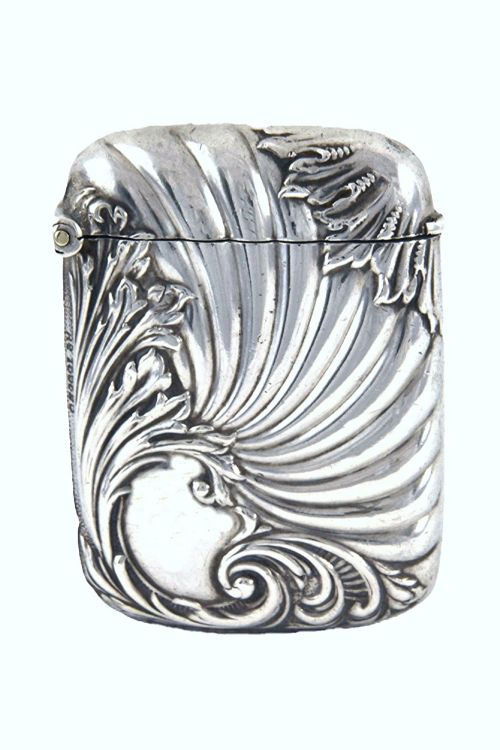
These vintage match case examples are pocket-sized silver, brass and enamel containers designed to hold and strike matches safely.
Vintage Match Case
A vintage match case serves as a portable container for holding matches while protecting the user from accidental ignition in the pocket. When exploring this selection of vintage match case designs, buyers encounter pocket vesta boxes, matchbox covers, and desk match strikers originating from the Victorian, Edwardian, and Art Deco periods.
The majority of pieces date from the late nineteenth century through to the nineteen thirties, spanning the reign of George V and earlier eras. Forms range from simple engraved sterling silver rectangles to novelty animal shapes and enamelled conversation pieces.
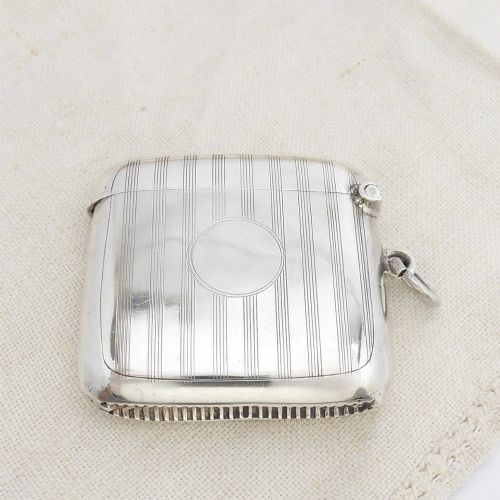
Pocket vestas predominate in the current selection, constructed primarily as hinged metal boxes with integrated striker grooves on the base. Alongside these, table versions and matchbook holders appear in brass, glass, and pottery.
Materials and methods of construction
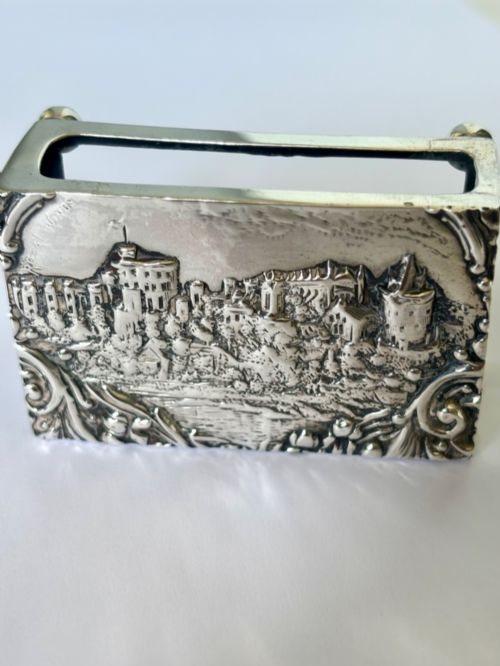
Silversmiths utilised sterling silver and silver plate as the principal substrate, shaping the metal through stamping, casting, and repoussé techniques. Many pieces feature intricate hand engraving, engine-turned patterns, or applied shields and crests.
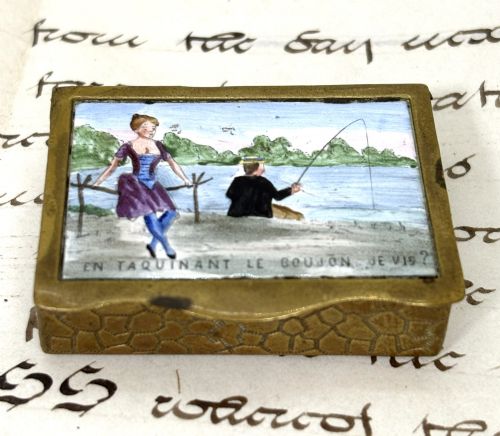
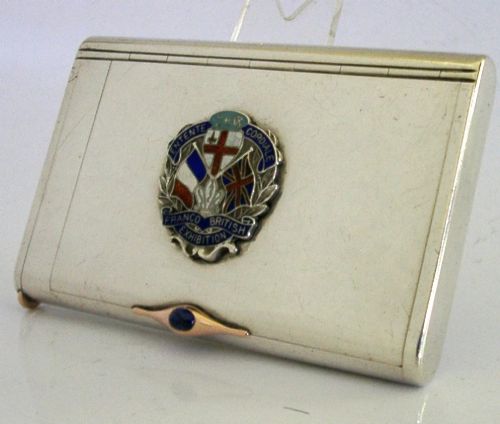
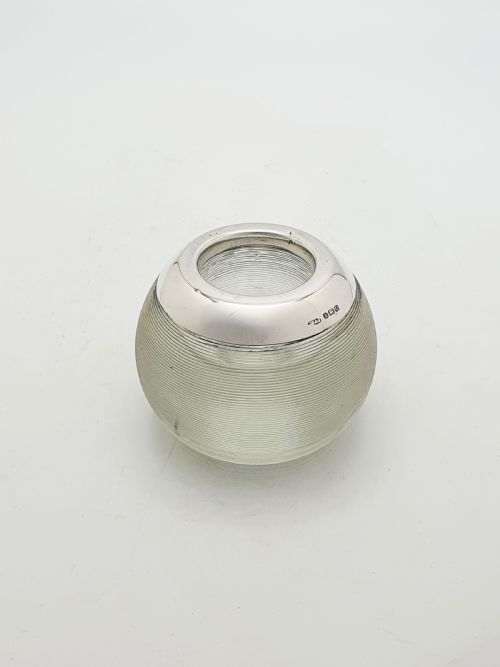
Makers incorporated decorative elements such as vitreous enamel, gold highlights, and applied jewels onto the metal bodies. Certain table pieces combine sterling silver mounts with heavy textured glass or ceramic bodies, while novelty forms rely on detailed metal casting to render figures like cats and dogs.
A metal pug dog stares from the front of one silver pocket box, guarding the matches within.
Distinctions in quality and execution
Quality rests upon the crispness of the chasing, the precision of the hinge mechanism, and the integrity of any applied enamel work. Superior examples exhibit deep, clear hallmarks and well-defined relief work that retains sharp edges without softening from excessive wear or over-polishing.
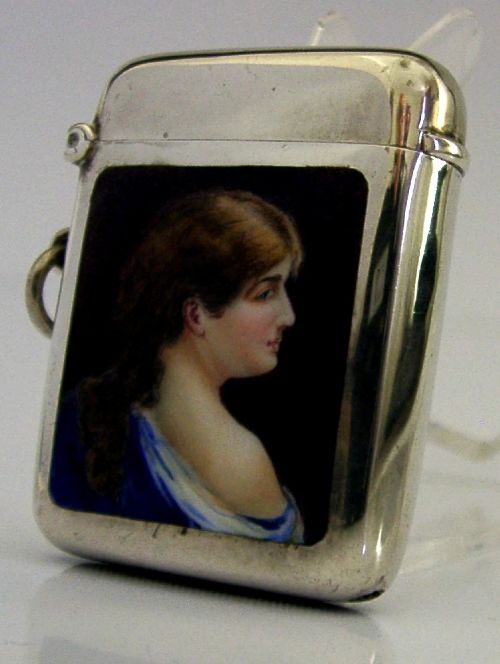
Novelty and portrait pieces achieve distinction through anatomical accuracy or likeness in the casting, alongside the skill required to hand-paint miniature enamel portraits or crests. Plain silver cases rely entirely on the weight of the metal and the geometric precision of engine-turned decoration to signal superior manufacture.
EV Pledge & Son·Robert Pringle·Alfred Clark·George Betjemann
The Vintage Match Case Glossary
- Vesta case
- A small pocket box designed to hold matches, known colloquially as vestas after the short-lived patent match of the nineteenth century. These containers feature a serrated striking surface on the bottom.
- Hallmark
- An official stamp applied by an assay office to indicate the metal purity, year of manufacture, and maker. British pieces commonly show town marks such as the anchor for Birmingham or the three wheatsheaves for Chester.
- Repoussé
- A metalworking technique where the artisan hammers the design from the reverse side to form raised relief patterns on the front. This method adds tactile depth to silver match cases.
- Match striker
- A ribbed or textured surface, often integrated into table match holders or glass pots, designed to create the friction necessary to ignite safety matches. Ceramic and glass strikers rely on unglazed ridges.
- Enamel
- A durable glass-like substance fused to a metal base through high-temperature firing, used to add colour and miniature illustrations to the exterior of the case.
Vintage Match Case: Frequently Asked Questions
What is a vesta case?
A vesta case is a small pocket container used to hold and protect matches before safety matches became universally packaged in cardboard.
The integrated striking serrations on the bottom allowed users to ignite a match securely while outdoors.
How do I date a silver match case?
Dating relies upon the assay office hallmarks stamped into the metal, which include a specific letter code corresponding to the year of testing.
Style indicators such as Edwardian crests or Art Deco geometric engraving also help narrow down the period of production.
Can I still use them for modern matches?
Most vintage pocket vesta cases are proportioned for older match sizes and modern safety matches may prove too long to fit inside the compartment.
Book matches or specially trimmed safety matches often work inside larger silver or brass covers.
What is the difference between a vesta and a matchbook holder?
A vesta is a rigid metal box with a hinged lid designed to hold loose matches directly within its hollow body.
A matchbook holder is a sleeve open at one end intended to slide over a standard paper match booklet.