

Vintage Marquetry Side Tables
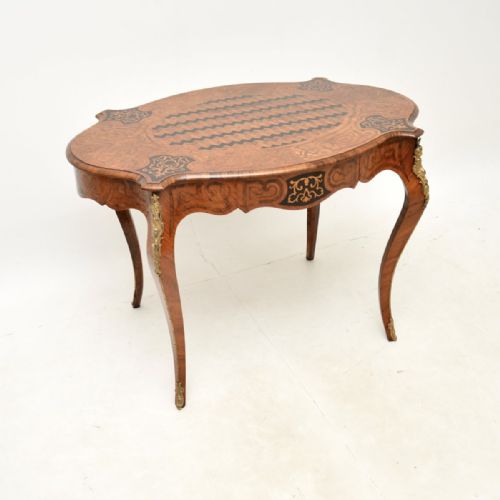
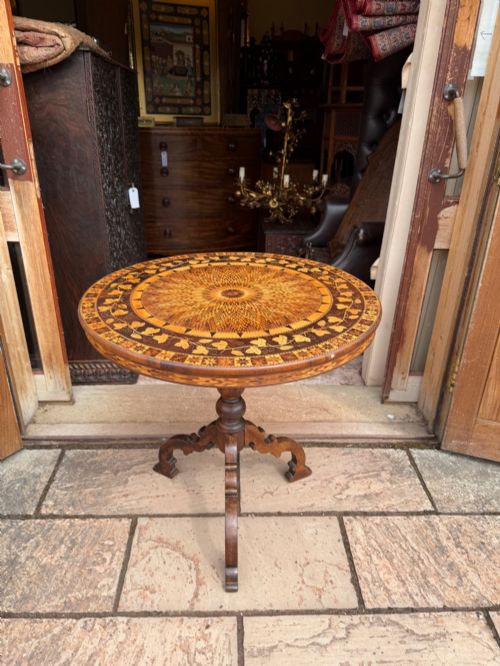
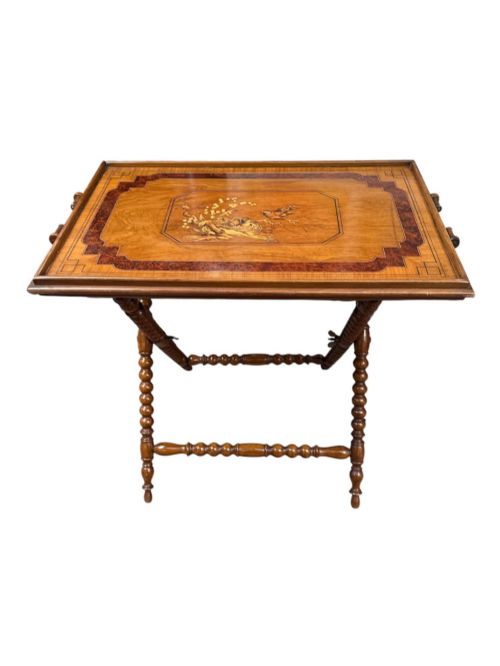
These vintage marquetry side tables bring detailed wood-inlay work and practical surfaces into a room.
Vintage Marquetry Side Tables
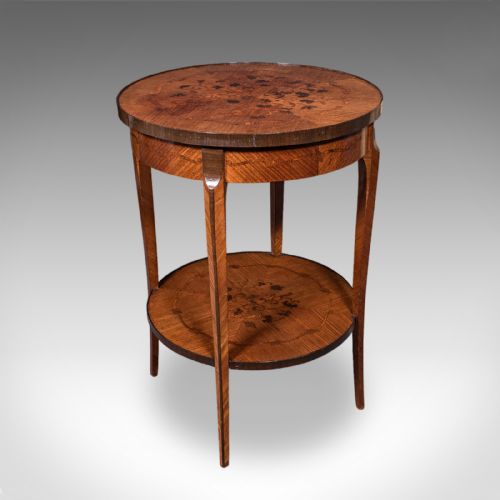
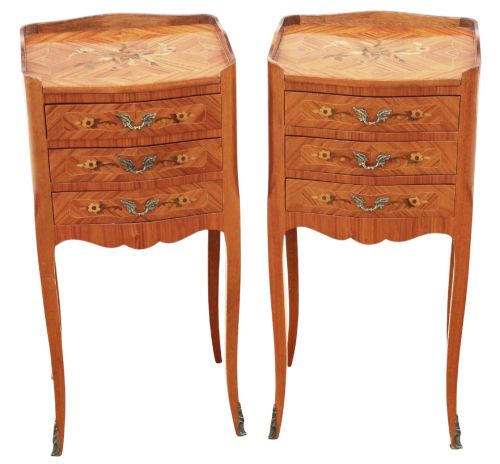
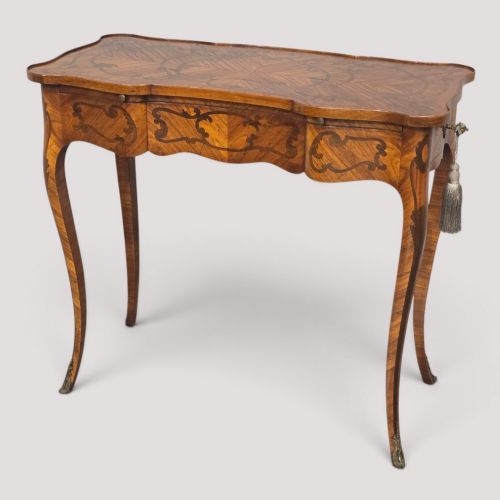
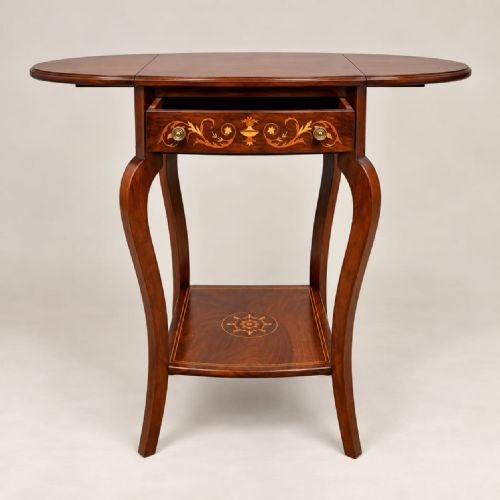
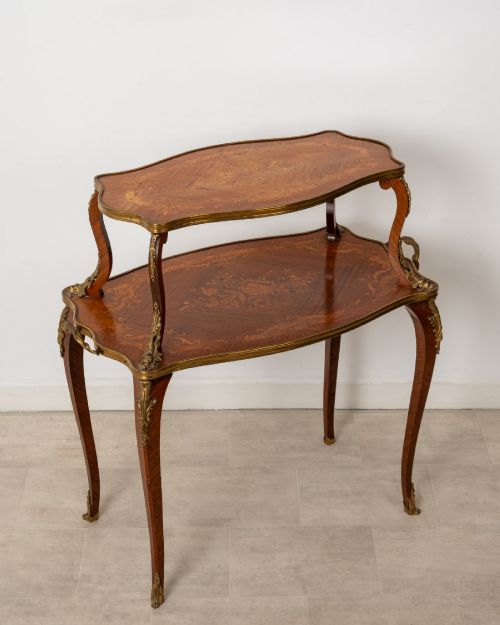
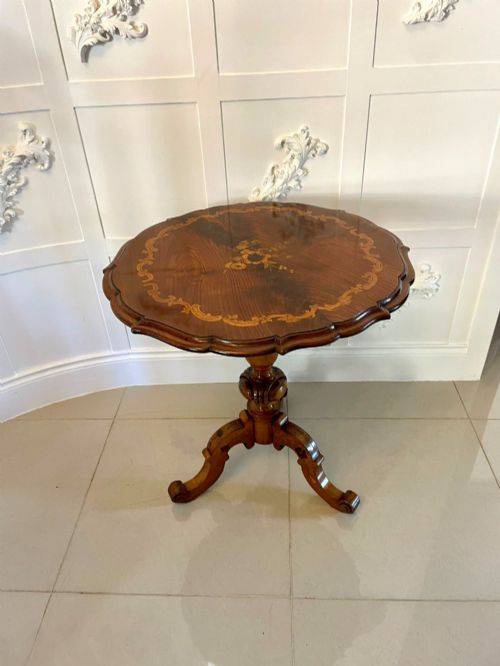
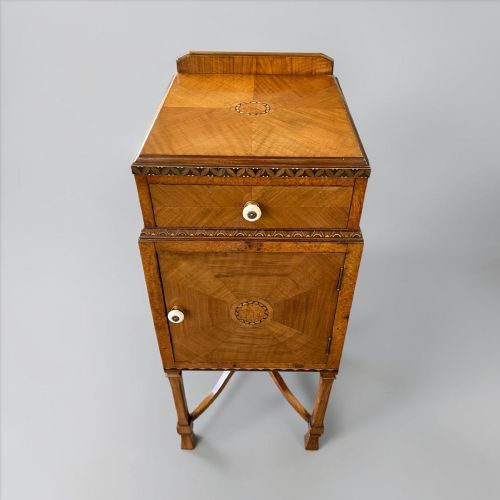
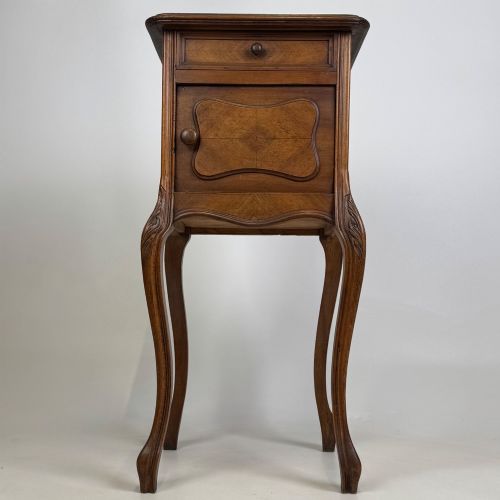
Vintage marquetry side tables encompass a variety of small occasional furniture pieces featuring patterned wood veneer designs. When searching this phrase, you encounter forms ranging from bedside tables and lamp tables to two-tier étagères and writing desks.
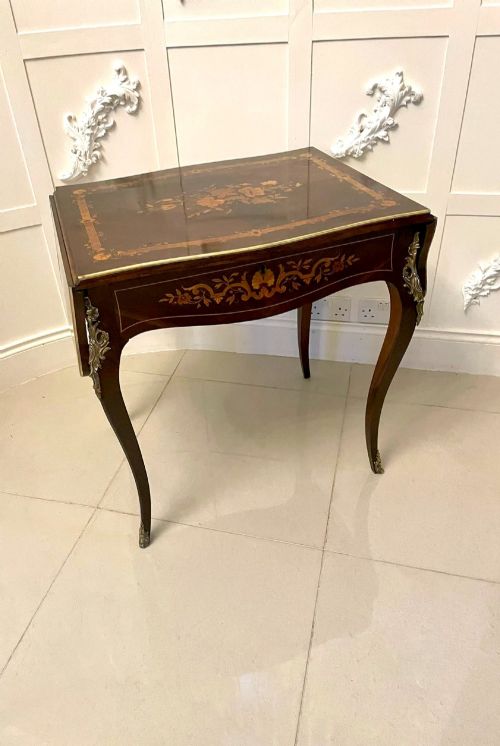
The pieces on this page heavily reflect French styles and Edwardian production, with Kingwood, walnut, and mahogany forming the primary carcases for intricate floral and geometric patterns.
The selection spans the nineteenth century through to the art deco and mid-twentieth periods, showing how craftsmen adapted portable occasional tables for domestic lamp-holding and bedside storage.
Materials and construction
Cabinetmakers constructed these tables using a sturdy foundational timber such as mahogany, walnut, or oak, onto which thin veneers of exotic woods were applied. Kingwood, rosewood, and satinwood provided distinct colour contrasts for the pictorial or geometric marquetry motifs.
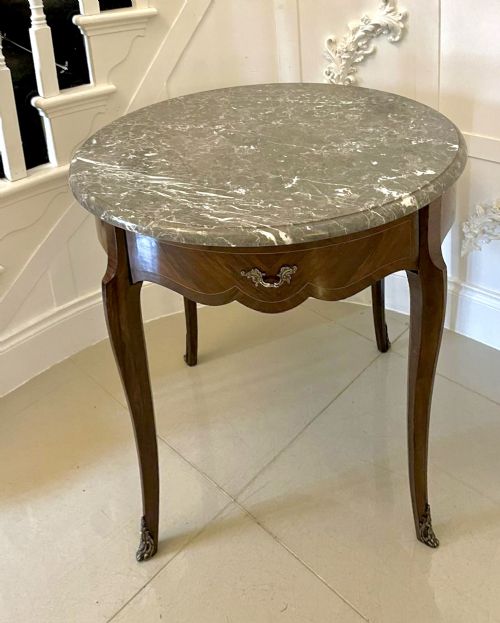
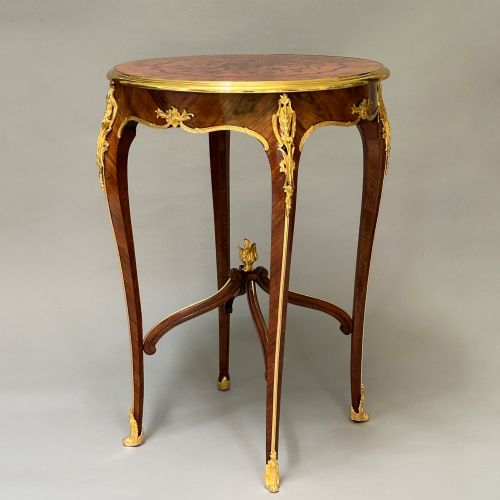
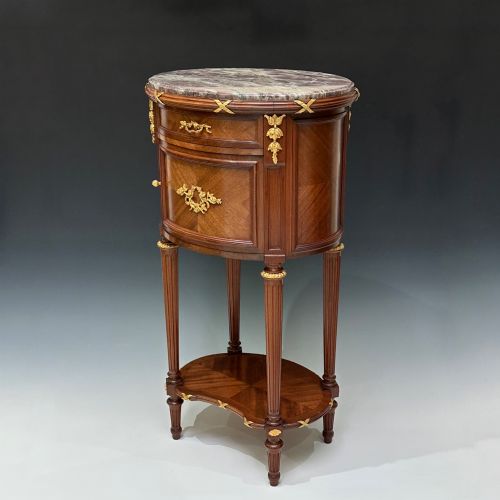
Many examples incorporate cast brass or ormolu mounts to edge marble tops, frame drawer fronts, or accentuate cabriole legs. Joinery relies on traditional techniques suited to small furniture, including dovetailing for drawers and mortise and tenon joints for frames.
Factors of quality
Quality in these tables rests heavily on the precision of the veneer cutting and the variety of timbers utilised within the picture or pattern. Finer examples display meticulous shading of individual wood pieces to create a three-dimensional effect.
The integration of mounts and stone elements separates standard production from finer cabinet work. Heavy, crisp ormolu mounts and inset marble slabs that sit flush within rebated wooden edges indicate superior craftsmanship.
François Linke·Émile Gallé
The Vintage Marquetry Side Tables Glossary
- Marquetry
- A decorative technique where small pieces of veneer are fitted together to form pictorial or geometric patterns on a wooden surface.
- Kingwood
- A dense, richly grained tropical timber often used in cabinet making during the eighteenth and nineteenth centuries.
- Ormolu
- Gilded bronze mounts applied to furniture for decorative enrichment and edge protection.
- Étagere
- A small open shelving unit or side table with multiple tiers designed for display.
- Satinwood
- A lustrous, yellowish timber utilised for contrasting inlay work and banding.
Vintage Marquetry Side Tables: Frequently Asked Questions
How do I clean a marquetry top?
Dust the surface regularly with a soft, dry cloth to prevent grit accumulation in the veneer joins. Avoid modern chemical sprays that can penetrate old polishes and lift the delicate wood pieces.
Apply a microcrystalline wax periodically to nourish the timber and protect the aged finish from moisture.
Can I use these tables daily?
These occasional tables suit light daily use such as holding a lamp, a book, or a cup. Placing coasters underneath drinks prevents moisture rings from forming on the vintage polish.
Avoid positioning them in direct sunlight or beside active heat sources to prevent the veneers from shrinking and cracking.
How do I identify Edwardian pieces?
Edwardian examples frequently employ mahogany as a primary timber combined with lighter satinwood stringing and classical floral motifs. Construction techniques from this era balance traditional cabinet-making with early machine-assisted standardisation.
Proportions tend to remain light and elegant, reflecting the interior tastes of the early twentieth century.
What distinguishes French style tables?
French-inspired tables often feature curved cabriole legs, serpentine drawer fronts, and elaborate ormolu mounts framing the wood panels. The marquetry work frequently depicts floral sprays, musical trophies, or intricate scrolling foliage.
They rely on rich cabinet timbers like kingwood and rosewood to achieve a decorative presence.