

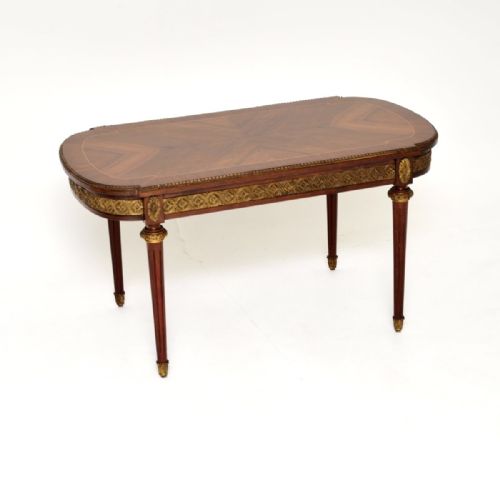


Vintage Marquetry Low Table
A vintage marquetry low table brings intricate wood inlay and low-slung proportion to a room, offering both a functional surface and a focal point.
Vintage Marquetry Low Table
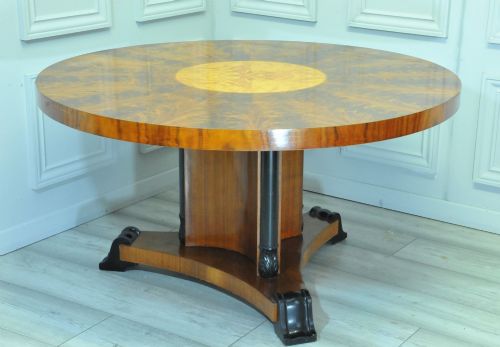
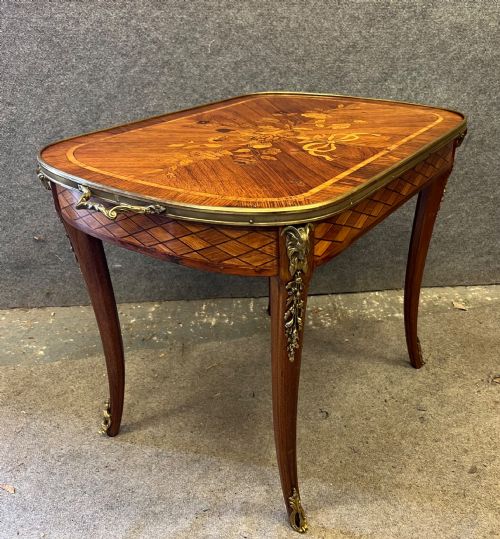
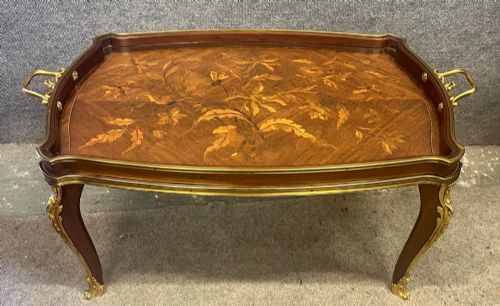
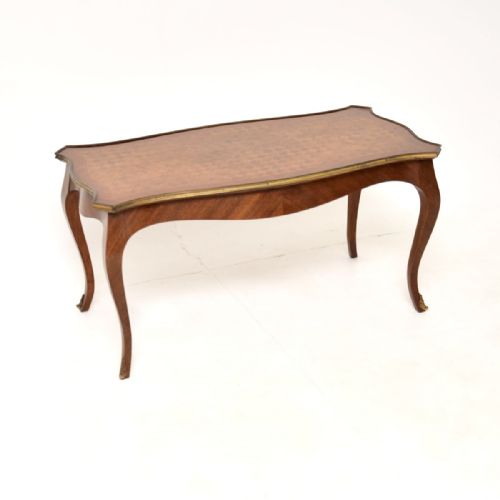
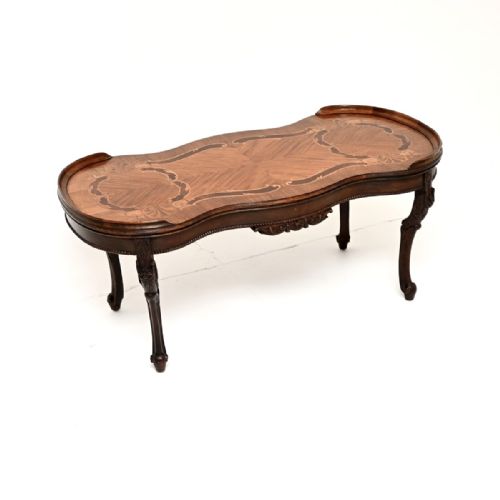
A vintage marquetry low table combines low-profile coffee table forms with decorative wood veneers arranged in pictorial or geometric patterns. These pieces draw heavily on historical revivals, particularly French Louis styles and Victorian craftsmanship, merging historic decorative techniques with domestic utility.
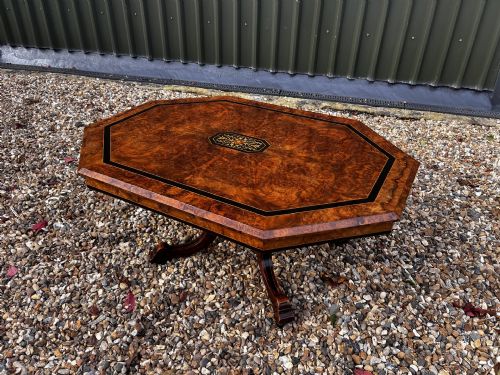
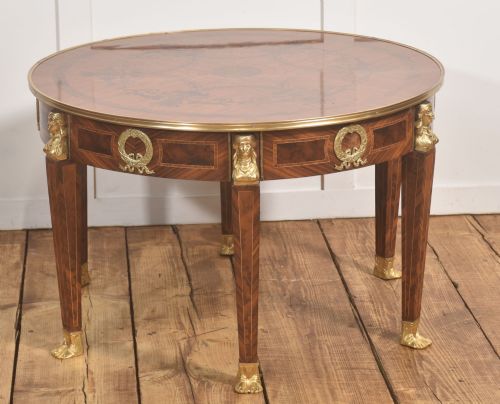
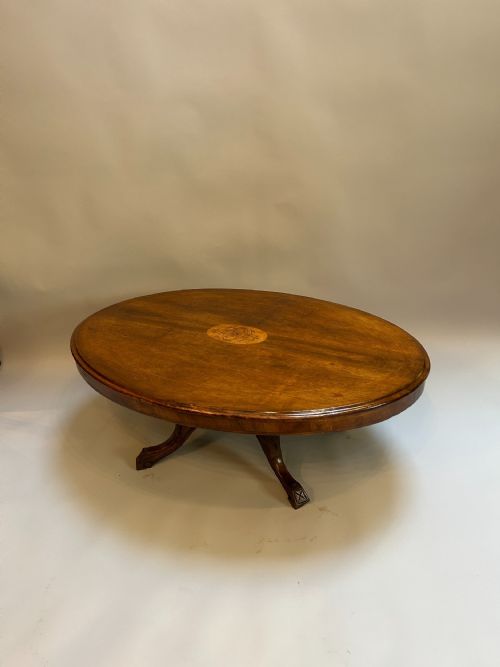
The selection ranges from French tray top and square tables dating to the early twentieth century to nineteenth-century Victorian walnut designs and Italian Sorrento pieces. Buyers encounter round, square, and tray top formats resting on wooden frames or modern cast iron bases.
Origins span British, French, Italian, and Indian workshops, reflecting diverse regional interpretations of inlay work from the Victorian era through the Art Deco period. Walnut, rosewood, and burr walnut dominate the surfaces, often paired with contrasting lighter woods like boxwood.
Materials and construction
Cabinetmakers constructed these tables using solid timber carcases overlaid with fine veneers of walnut, kingwood, rosewood, and fruitwood. Skilled artisans cut contrasting timbers such as boxwood to create intricate marquetry and parquetry patterns across the tabletop surface.
Mounts in cast brass and ormolu frequently accent the corners, edges, and legs, particularly on pieces influenced by French Louis XV and XVI revivals. Certain examples incorporate specialised surface treatments like oyster veneering in yew wood or ebonised finishes.
Frames vary from traditional carved wooden legs to utilitarian modifications, such as Victorian burr walnut tops mounted onto modern cast iron tripod bases. Joinery and edging work dictate the structural integrity beneath the decorative veneer.
Vintage Marquetry Low Table Retail Price Guide 2026
Typical asking prices for vintage marquetry low table among the pieces listed under this phrase on Sellingantiques today, from the lower quarter to the upper quarter. They describe what is for sale here now, not the wider market.
Represented periods span the Victorian era, the nineteenth century, and the early decades of the twentieth century.
Assessing quality and execution
The precision of the wood inlay work distinguishes superior examples from simpler production, where tighter joints between contrasting timber species indicate higher workshop skill. The complexity and pictorial depth of the marquetry design reflect the artisan's expertise.
Choice of primary and secondary woods dictates baseline quality, with dense burl timbers and richly figured burr walnut commanding greater visual presence than plain fruitwoods. The integration of cast ormolu mounts and solid brass details adds a layer of refinement.
Structural cohesion between the decorative tabletop and the supporting base determines longevity, particularly where nineteenth-century tops meet later supports. Preservation of the original veneer surface without excessive past restoration preserves the integrity of the piece.
The Vintage Marquetry Low Table Glossary
- Marquetry
- The art of applying decorative pieces of veneer to a structure to form intricate pictorial designs. Artisans cut various coloured woods and fit them together precisely before gluing them to the tabletop.
- Parquetry
- A geometric mosaic of wood pieces used for decorative floors and tabletops. Unlike marquetry, it relies on repeating angular shapes rather than pictorial scenes.
- Ormolu
- Gilded bronze used for decorative mounts and furniture trimming during the eighteenth and nineteenth centuries. It provides metallic contrast against dark woods like walnut and rosewood.
- Oyster veneer
- A method of cutting branches transversely to produce circular or oval cross-section patterns resembling oyster shells. This technique creates a distinctive repeating grain effect across the surface.
- Tray top
- A tabletop style featuring a raised moulded edge designed to prevent items from sliding off. This form appears frequently on French revival low tables.
Vintage Marquetry Low Table: Frequently Asked Questions
How do I clean a marquetry table?
Dust the surface regularly with a soft, dry cloth to prevent particulate accumulation in the veneer joints. Avoid modern silicone sprays and harsh chemical polishes that can degrade historical finishes.
Apply a microcrystalline wax sparingly once or twice a year to nourish the wood and protect the inlay work. Keep the table away from direct sunlight and heat sources to prevent the wood veneers from drying and lifting.
Are these tables sturdy enough for daily use?
Most of these low tables provide adequate stability for everyday placement in a living space, holding books, drinks, and decorative objects. The original joinery is designed to support standard domestic loads.
Care should be taken with older veneer surfaces, which can be sensitive to moisture rings and impact. Using coasters and protective mats helps preserve the historic wooden top over time.
What is the difference between marquetry and parquetry?
Marquetry involves cutting and assembling wood veneers to create pictorial motifs, landscapes, or floral designs. The artisan uses varied timber colours and grains to achieve tonal shading.
Parquetry constructs geometric patterns such as cubes, chevrons, or triangles using uniform shapes. Both techniques appear on vintage low tables, sometimes combined on the same surface.