




Vintage Maritime Seascape
A vintage maritime seascape captures the movement of coastal waters, busy harbours and historic vessels across canvas and paper.
Vintage Maritime Seascape
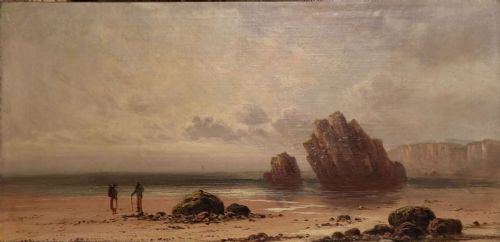
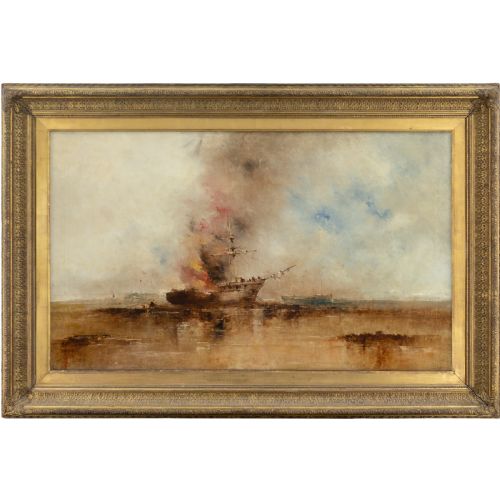
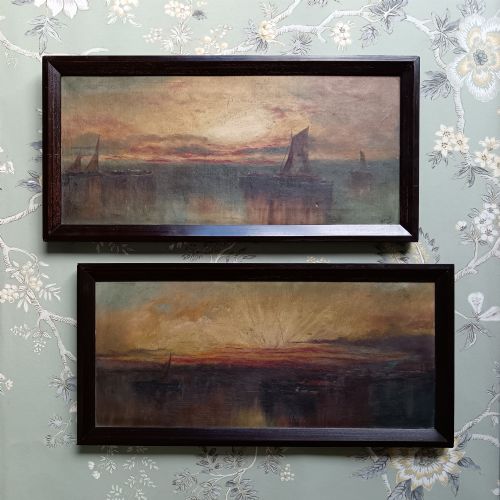
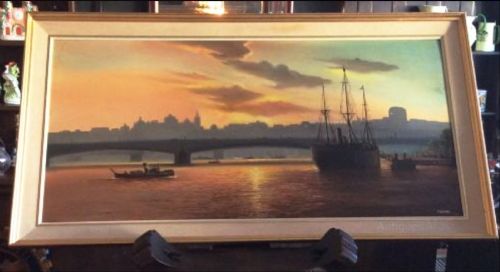
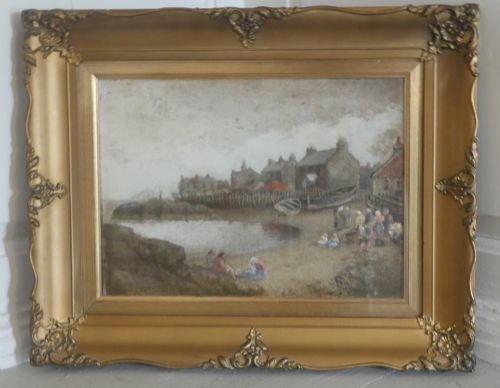
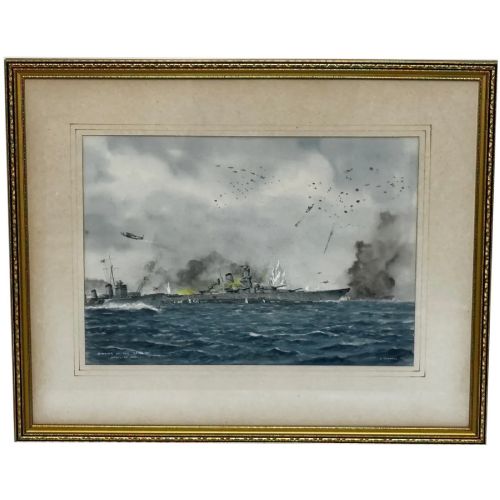
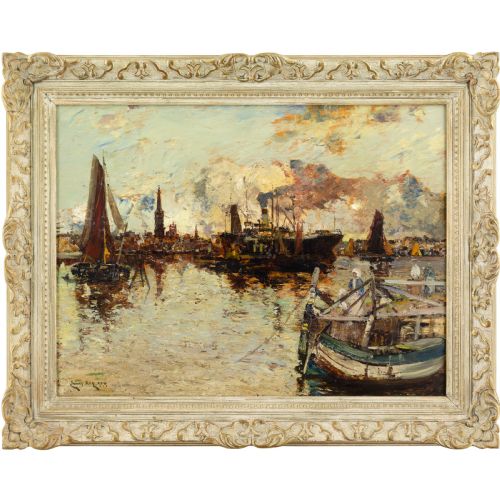
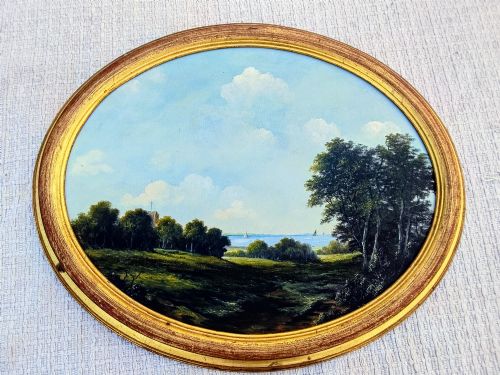
A vintage maritime seascape encompasses framed works depicting coastal views, open seas, bustling ports and historic shipping. Buyers searching for a vintage maritime seascape will find oil paintings and watercolours originating from the nineteenth century through the mid-twentieth century.
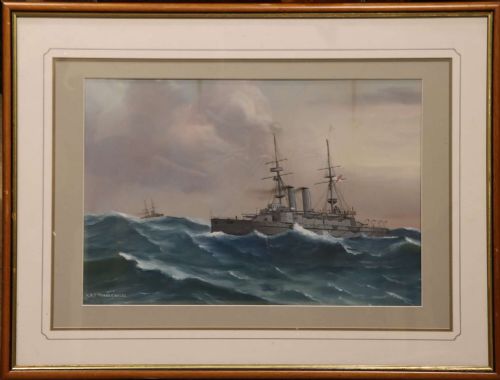
The selections span traditional British coastal scenes, calm river estuaries and dramatic stormy waters involving naval vessels and working barges. Most pieces adhere to Victorian, Edwardian, British Impressionist and Post-Impressionist styles.
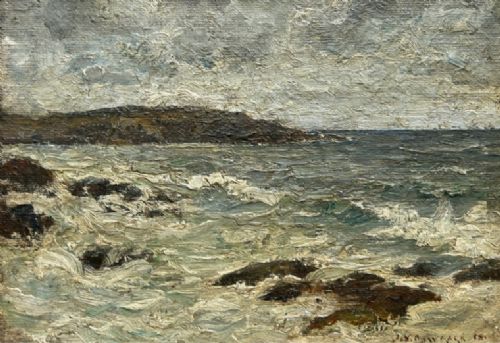
Works appear on canvas, wood panels, paper and board, frequently retained in their period gilt frames. Examples range from quiet moonlight watercolours to large impasto oil paintings of ships in heavy seas.
Materials and methods
Artists painted these seascapes using oil paints on canvas, wood board or paper, and applied watercolours or gouache for lighter, tonal coastal studies. Pigments were layered to capture the shifting light of the sea, the heavy smoke of steamships and the texture of foaming waves.
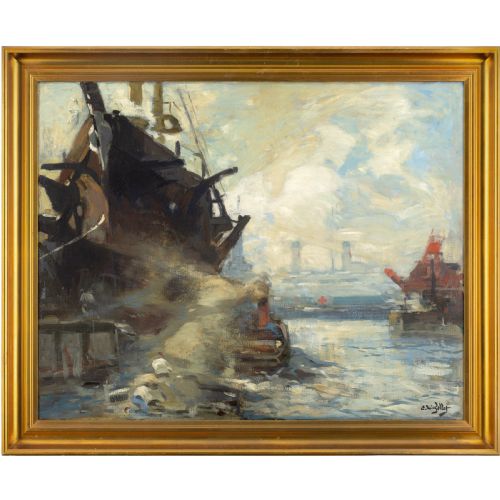
Many works are housed in their original wooden frames, often finished with gilt leaf moulded in traditional patterns. Canvas supports were stretched over wooden bars, whilst smaller works on board utilise sturdy timber panels.
Listings feature works spanning the nineteenth century through the 1960s, executed in oil, watercolour and gouache.
Judging quality in maritime art
Quality rests upon the artist's command of light, water movement and atmospheric perspective, distinguishing masterly observations from rigid formulaic depictions. Superior examples display confident brushwork, accurate rendering of rigging and hulls, and a convincing sense of depth across the water.
The condition of the pigment surface and the integrity of the original frame also influence the standing of a piece. Works retaining their untouched surface and contemporary gilt framing hold greater visual harmony.
Kenneth Cozens·Eugène-Louis Gillot·William McAlpine·Charles Edward Dixon·Eric Tufnell·William Banks Fortescue·James Kay·Frank Watson Wood·Bernard Gribble·Thomas William Morley·Frank William Scarbrough·F. Corpuz·Peter Brannan·Bernard Benedict Hemy·Willem Bos·Cecil Allan Mould·Lai Fong·Nicholas Condy·William Henry Williamson·John Holland·George Stanfield Walters
The Vintage Maritime Seascape Glossary
- Watercolour
- A painting method where fine pigments are suspended in a water-based solution and applied to paper. This medium creates translucent washes ideal for capturing shifting coastal light and transparent sea spray.
- Impasto
- A technique where paint is laid onto a surface in thick layers that stand out from the canvas. Artists use this method to give texture and physical weight to crashing waves and turbulent skies.
- Gouache
- An opaque water-based paint that includes a white pigment filler for solid coverage. It produces a matt finish often utilised for detailed ship rigging and bright highlights on water.
- Gilt wood
- Timber carved or moulded and coated with a thin layer of gold leaf or metallic powder. These frames provide a reflective border that complements the dark tones of oil seascapes.
- Barque
- A sailing vessel with three or more masts having the fore and main masts square-rigged and the mizzen mast fore-and-aft rigged. This rig configuration appears frequently in nineteenth-century shipping art.
Vintage Maritime Seascape: Frequently Asked Questions
What subjects appear in these seascapes?
The works depict a broad range of maritime activity, including sailing barques, steamers, naval engagements and fishing boats off rocky coasts. Scenes also record specific locations such as London's Thames, Whitby and Antwerp harbour.
Compositions vary from calm moonlight coastal landscapes to dramatic depictions of ships in heavy storms and wartime operations.
How do I date an oil painting?
Dating relies on the style of the vessel, the artist's documented working period, and the physical construction of the canvas and stretcher. Victorian and Edwardian works often feature detailed rigging of specific steam or sailing ships.
Inscriptions on the reverse or signatures by identified painters also help establish the exact decade of creation.
Are these paintings supplied framed?
Many listings include the original period frame, which is frequently constructed of wood with a gilt finish. These frames complement the artwork and reflect the aesthetic of the nineteenth or early twentieth century.
Some pieces on board or canvas are offered without framing, allowing buyers to select a mount suited to their interior.
How should I care for a vintage painting?
Keep works out of direct sunlight to prevent the fading of watercolours and the yellowing of older varnish on oil paintings. Maintain stable room temperatures to avoid wood warping and canvas tension issues.
Dust surfaces gently with a dry, soft brush and avoid liquid cleaners on both the canvas and the gilt frame.