


Vintage Marble Centre Table
A vintage marble centre table brings weight and polish to a room, anchoring the space with a stone surface.
Vintage Marble Centre Table
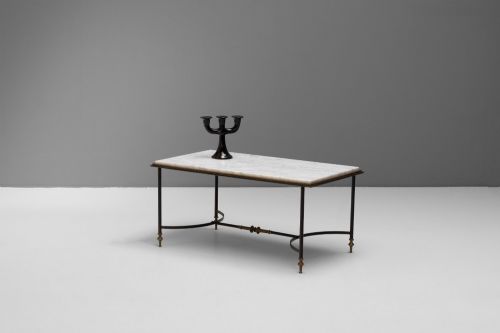
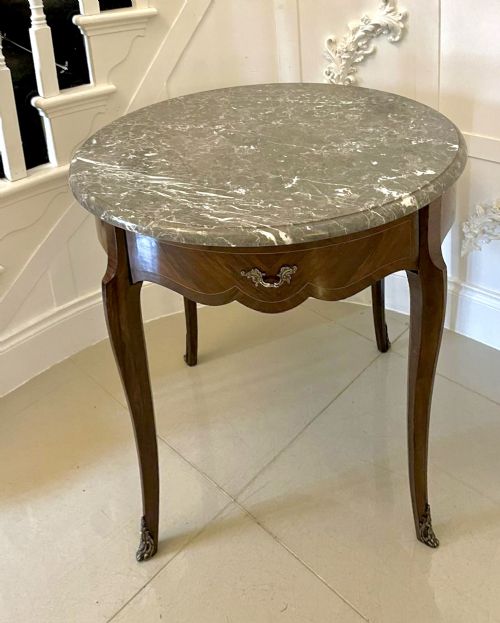
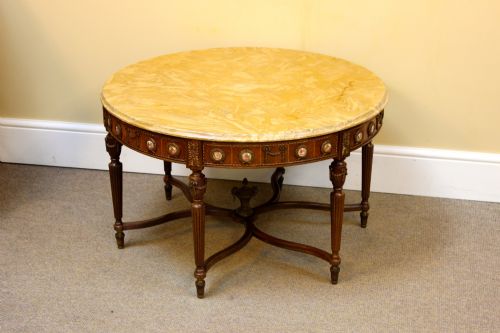
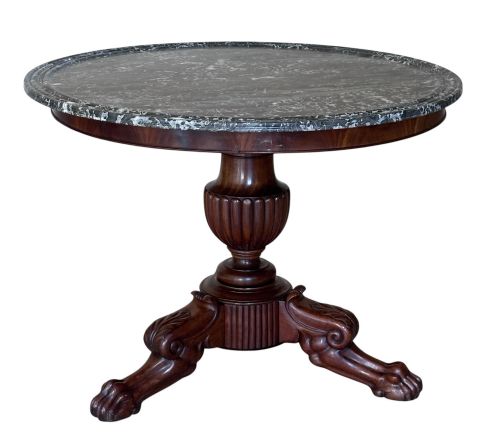
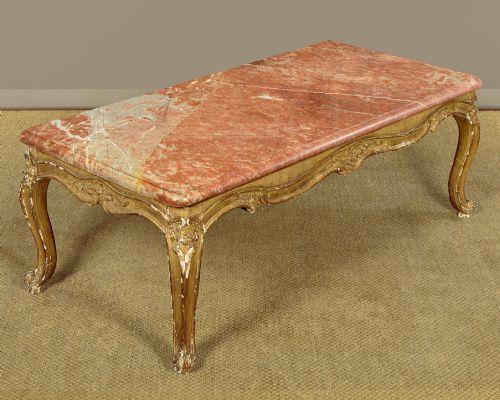
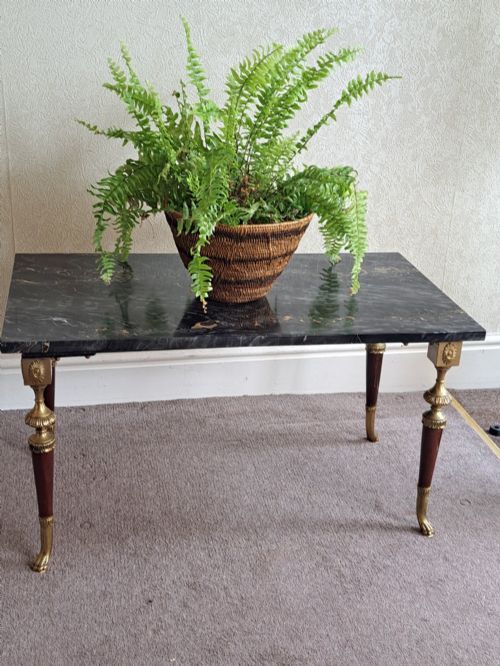
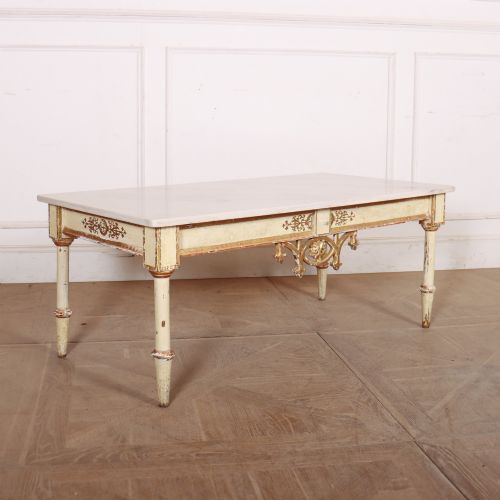
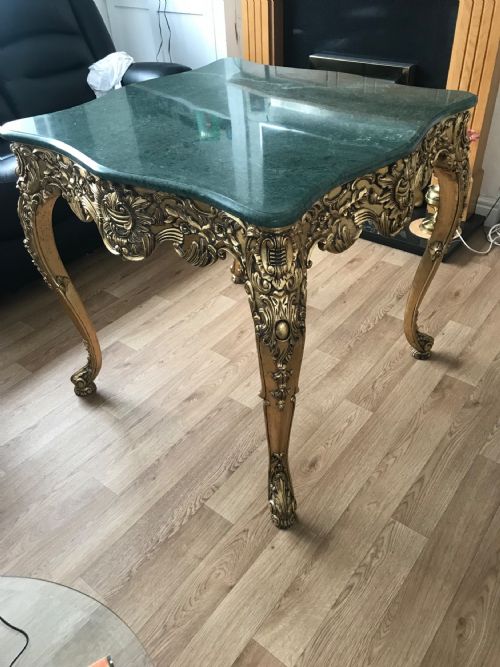
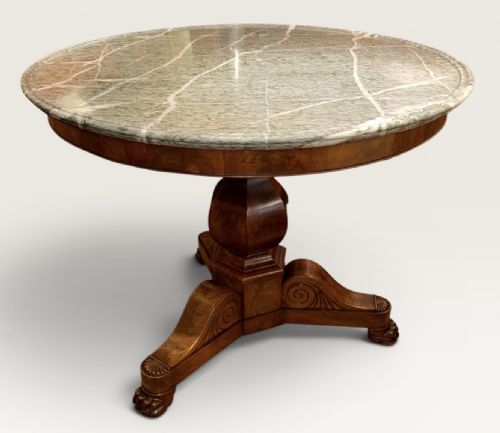
A vintage marble centre table serves as a striking focal point in a reception room, combining a sturdy stone top with a supportive wooden or metal base. Buyers seeking a vintage marble centre table encounter various historical formats, from round pedestal gueridons to low coffee tables designed for modern living.
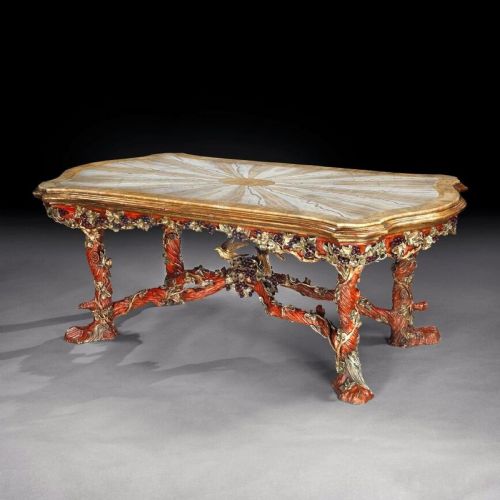
The selection ranges across the nineteenth century, the Edwardian era, and mid-twentieth-century decades like the nineteen-twenties and nineteen-thirties. French and Italian origins dominate, with regional variations stretching from Parisian gueridons to ornate Italian carved stands.
Different forms fulfill distinct practical roles within a home, functioning as central display pieces, lamp tables, or occasional coffee tables. Most examples pair a smooth marble slab with timber frames such as walnut, mahogany, kingwood, or burr elm.
Materials and construction
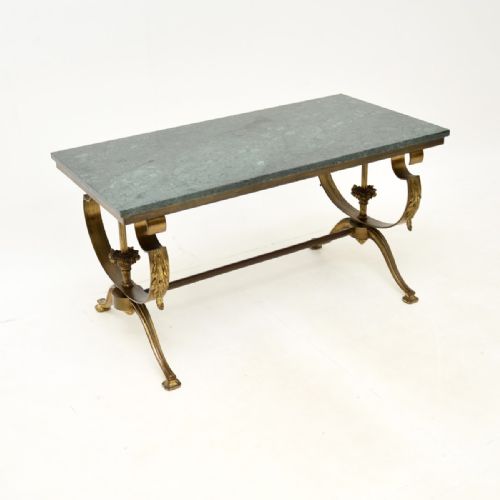
Cabinetmakers constructed the frames using timbers like walnut, mahogany, kingwood, and burr elm, frequently accentuating the woodwork with ormolu mounts, bronze ornaments, or giltwood details. These structural bases provide the necessary strength to support heavy stone surfaces.
The tabletops utilise slabs of natural stone, including green marble, purple marble, pink Salome marble, Derbyshire fossil marble, and onyx. Artisans polished these stone surfaces to a high finish to highlight the natural veining and colour variations.
Makers integrated the stone into the wooden or metal framework using precise joinery and supportive aprons. Gilding, hand-painting, and polychrome finishes were applied to the wooden elements to achieve decorative French and Italian revival styles.
Dolphin-form bases swim alongside fossil marble and ormolu mounts in this eclectic gathering of stone-topped tables.
Factors of quality
The refinement of the carving on the wooden or gilt base separates standard production from exceptional artistry. Pierced giltwood, intricate ormolu mounts, and detailed figural supports indicate superior workshop input.
The integration between the stone top and the supporting frame demonstrates the builder's skill. A stable, flush fit that accommodates the natural weight of the stone without straining the apron signifies careful construction.
Amleto Bertoni·B Battioli, Varese
The Vintage Marble Centre Table Glossary
- Guéridon
- A small French table, often round and supported by a single central pillar or slender legs. These forms frequently feature inset marble tops.
- Ormolu
- Gilt bronze mounted onto furniture as decorative ornament. This technique involves applying a finely ground gold-mercury amalgam to bronze.
- Kingwood
- A dense, heavy timber featuring rich dark brown and violet-black grain patterns. Cabinetmakers utilised this veneer extensively on nineteenth-century French tables.
- Giltwood
- Wood that has been treated with a thin layer of gold leaf or gold paint. This finish creates a bright, reflective surface popular in revival styles.
- Polychrome
- Decorated in multiple colours. This technique appears on painted wooden tables from Italian and French workshops.
Vintage Marble Centre Table: Frequently Asked Questions
How do I clean a marble top?
Use a soft cloth dampened with warm water and mild, non-acidic soap to wipe the stone surface gently. Avoid harsh chemical cleaners or vinegar, which can etch the polished finish.
Dry the marble thoroughly afterwards with a clean towel to prevent water spots. Promptly wipe away spills of wine or citrus to protect the stone.
Are these tables heavy to move?
The stone tops contribute substantial weight to the overall structure of the table. Two people are typically required to lift and reposition them safely.
The base and the marble slab are frequently separate components resting together, meaning they should be unfastened and transported individually.
Can I use a centre table as a coffee table?
Many historical centre tables and gueridons feature heights comparable to standard coffee tables. Their generous surface area makes them suitable for resting books and drinks.
Verify the specific dimensions of the piece to ensure it matches your seating height. Lower twentieth-century examples function naturally in this role.
How do I identify French and Italian styles?
French examples often display neoclassical lines, kingwood veneers, and ormolu mounts inspired by Louis styles. Italian pieces frequently exhibit carved wood, polychrome paintwork, and bolder baroque or neoclassical forms.
The choice of marble and the style of the wooden carving generally point to the originating region.