

French Low Cocktail Table
These french low cocktail table examples bring low-slung continental character to a room, offering practical surface space paired with distinct period detailing.
French Low Cocktail Table
A french low cocktail table is typically encountered as a coffee table or occasional table, drawing on historical forms such as the Louis XV style, Art Deco, and French Provincial designs. These pieces sit low to the floor, adapting traditional table heights for modern seating arrangements.
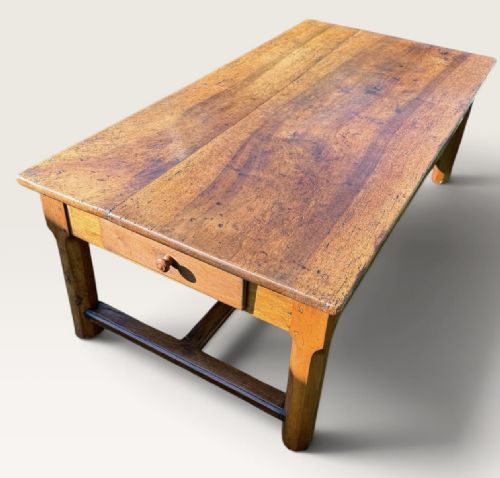
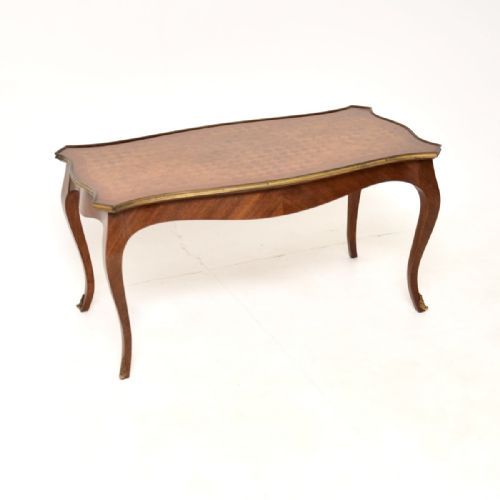
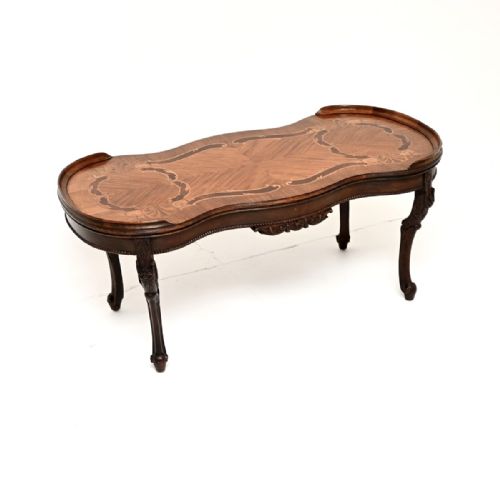
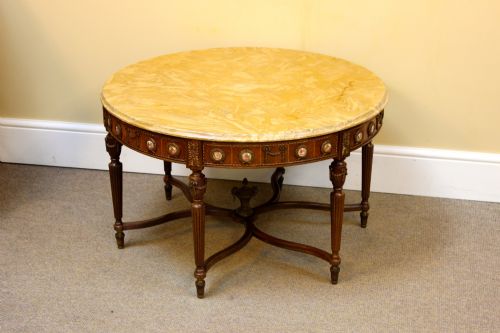
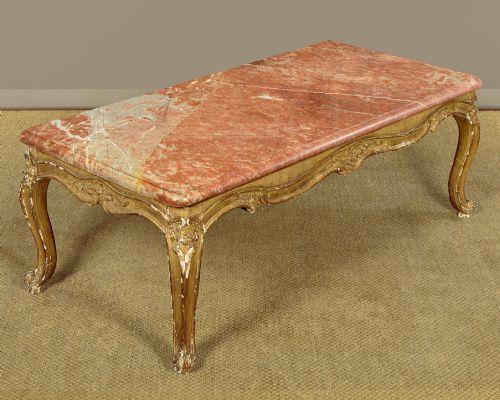
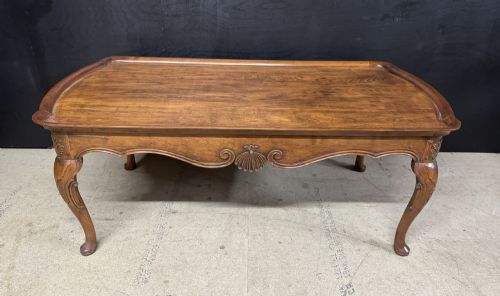
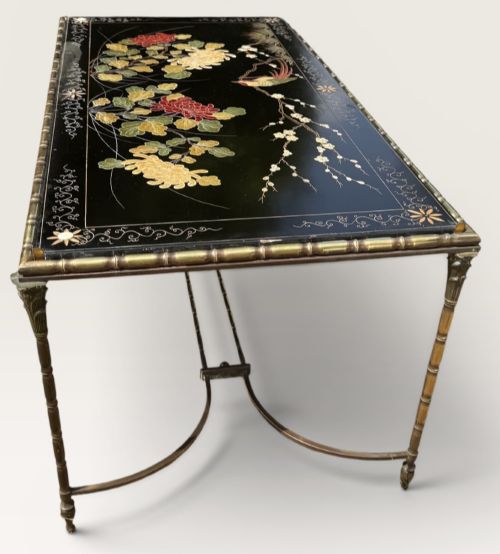
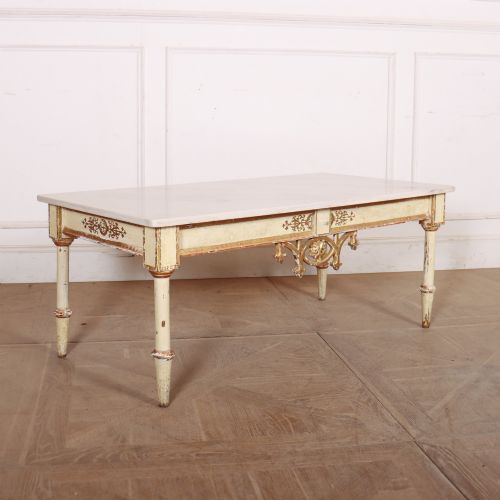
The selection ranges from 19th-century walnut and oak constructions to early 20th-century iterations featuring marble tops, giltwood, and intricate parquetry or marquetry. Pieces span the Edwardian era through to later mid-century works.
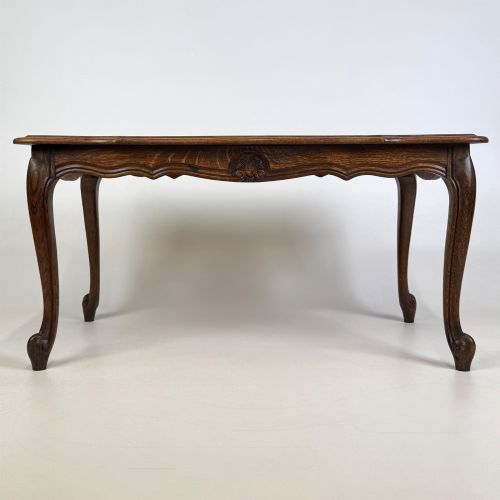
Makers such as Maison Jansen, Maison Bagues, and Maison Ramsay appear among the selections, alongside provincial farmhouse tables in cherrywood and pine.
Materials and construction methods
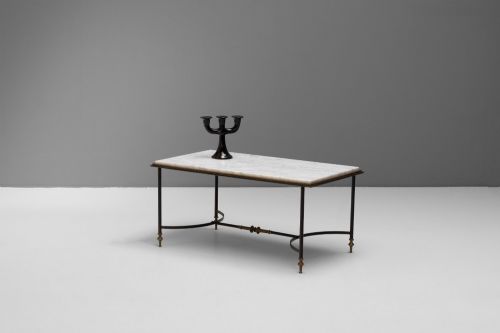
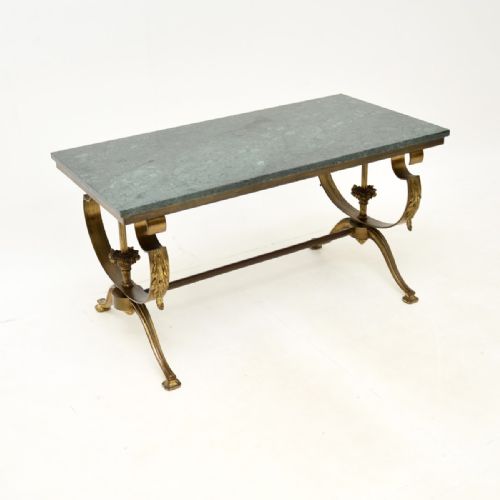
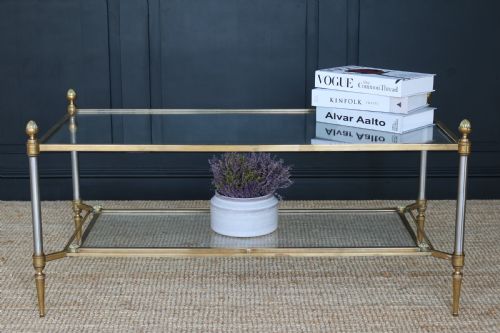
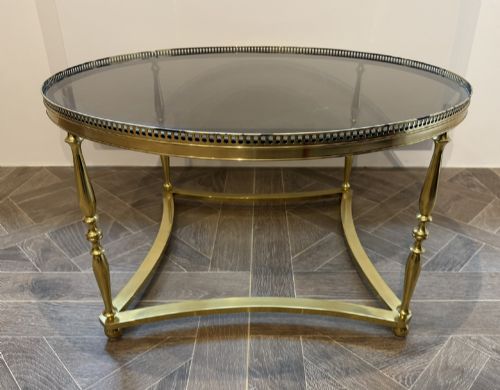
Construction relies heavily on traditional timber framing using walnut, oak, cherry wood, and burr walnut, often enhanced with marquetry and parquetry inlay patterns. Metalwork plays a prominent role, with brass, bronze, and wrought iron providing structural frames and decorative mounts.
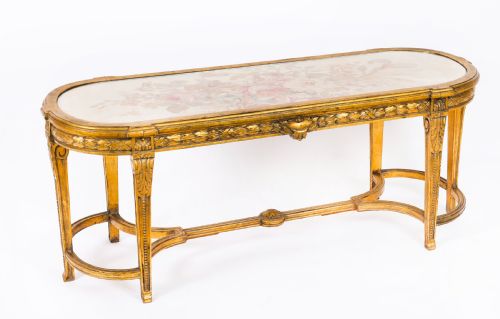
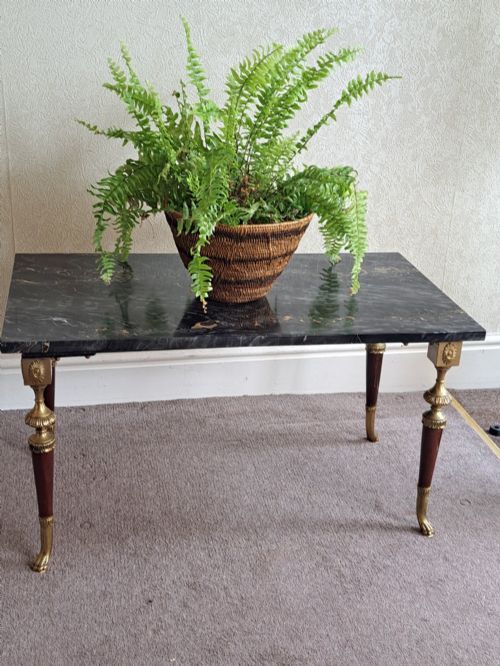
Surfaces are frequently topped with white or black marble, glass, or mirrored panels, while frames utilise giltwood, paint, and black lacquer finishes. Carved wooden details and turned legs reflect regional French and neoclassical workshop traditions.
Distinguishing quality across the range
Quality rests in the precision of the joinery and the execution of surface decoration, such as hand-cut parquetry veneers and detailed bronze or brass casting. Superior pieces often bear attribution to notable design houses or exhibit finer carving in walnut and giltwood.
The integrity of inset materials, including veined marble slabs and original glass or mirrored panels, distinguishes standard utility pieces from more ambitious decorative works.
Maison Jansen·Maison Bagues·Maison Ramsay
The French Low Cocktail Table Glossary
- Marquetry
- Decorative veneer work forming pictorial or geometric patterns using various coloured woods. This technique requires meticulous hand-cutting and fitting.
- Parquetry
- Geometric mosaic woodwork used for table tops and panels. It creates a repeating pattern of regular shapes like squares or triangles.
- Giltwood
- Wood that has been treated with gold leaf or a gold-colored finish. It is frequently seen on revival and neoclassical frames.
- Louis XV Style
- A design movement characterised by asymmetrical curves, cabriole legs, and naturalistic scroll motifs. It draws inspiration from mid-eighteenth-century French royal aesthetics.
French Low Cocktail Table: Frequently Asked Questions
What is a french low cocktail table?
A french low cocktail table is a low-profile surface designed for living spaces, drawing on historical styles like Art Deco and Louis XV.
These pieces use traditional materials such as walnut, brass, and marble to combine utility with continental design.
How do I date a french low cocktail table?
Dating relies on identifying period characteristics, from 19th-century oak and cherry wood framing to 1920s marquetry and later wrought iron work.
Construction methods and stylistic motifs provide the primary clues for determining the era of manufacture.
Are these tables original period pieces?
The selection includes items originating from the nineteenth century through to the mid-twentieth century and later.
Materials like hand-worked bronze, aged marble, and period veneers help confirm authenticity.
How should I style a marble top table?
Marble topped tables pair well with soft seating by offering a durable, cool surface that contrasts with textile upholstery.
Keep items minimal to let the natural grain and veining of the stone remain visible.