

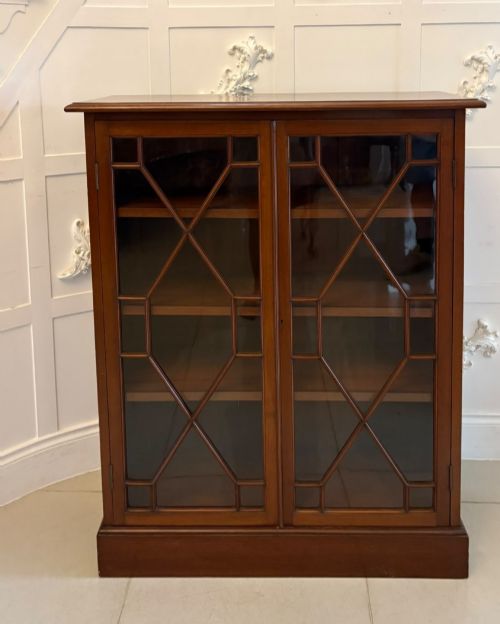
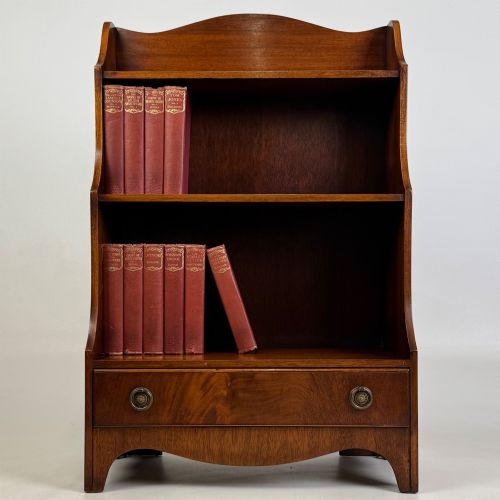
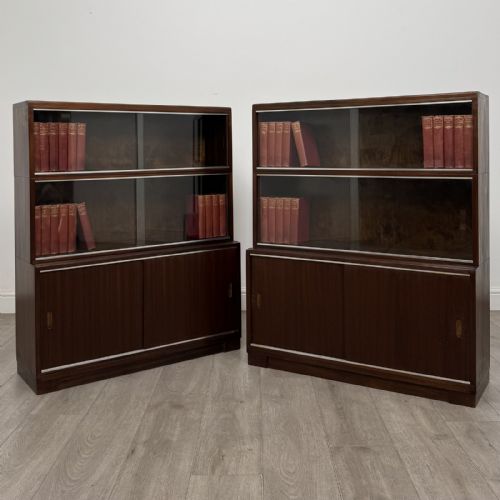
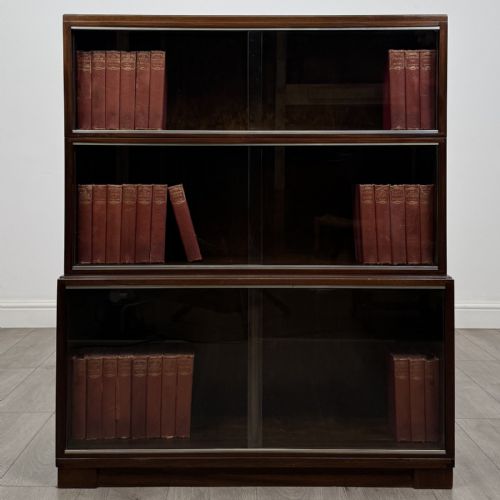
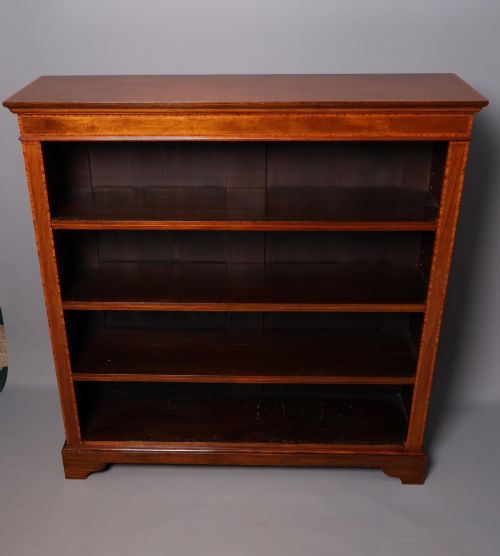
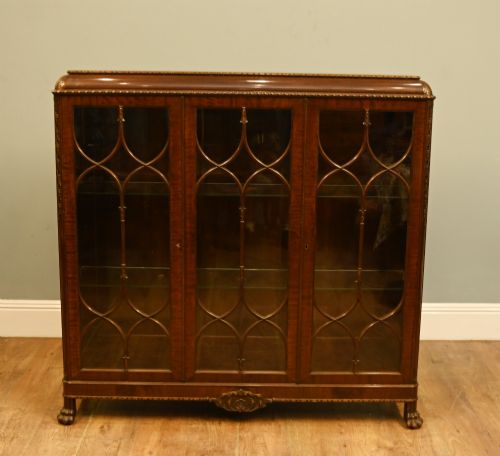
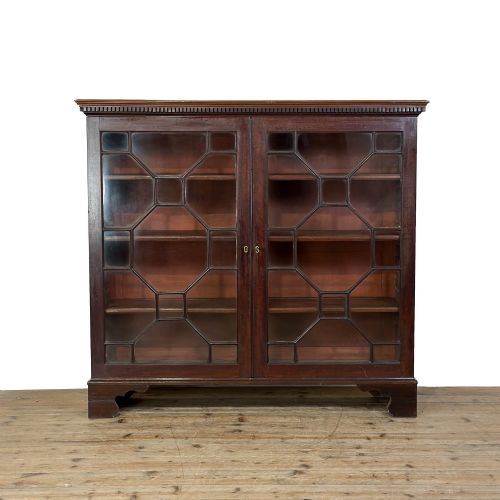
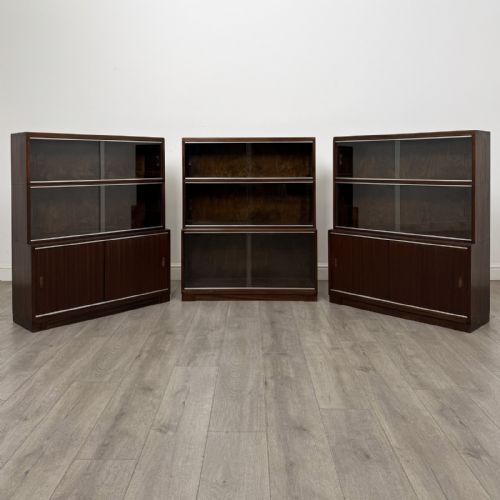
Vintage Mahogany Low Bookcase
A vintage mahogany low bookcase brings rich timber grain and compact proportions to a room, holding volumes without dominating the floor plan.
Vintage Mahogany Low Bookcase
Buyers seeking a vintage mahogany low bookcase find a range of practical shelving units designed to sit comfortably below eye level. These pieces serve living spaces and studies by combining accessible shelf storage with the warm, dark tones of traditional timber.
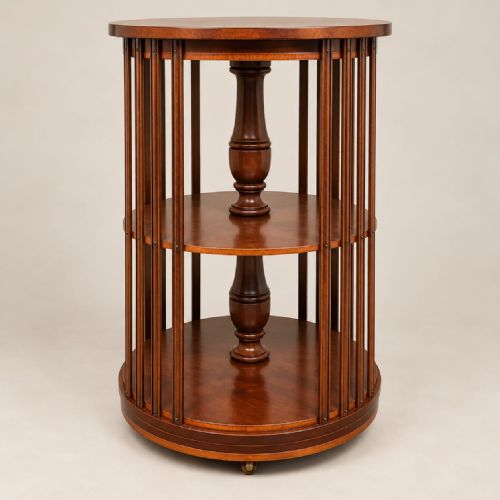
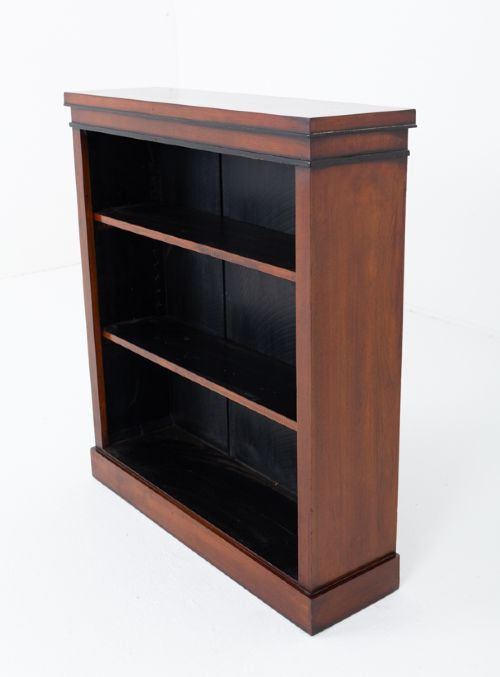
The selections available here lean heavily toward Edwardian and Victorian pieces alongside later twentieth-century interpretations. Open shelving dominates the forms, though variations include glazed doors, display cabinets, and rotating tiers.
Origins stretch from the late nineteenth century into the early decades of the twentieth, often displaying styles that echo earlier Georgian or Regency lines. The low profile remains the defining characteristic across all listed examples.
Materials and construction
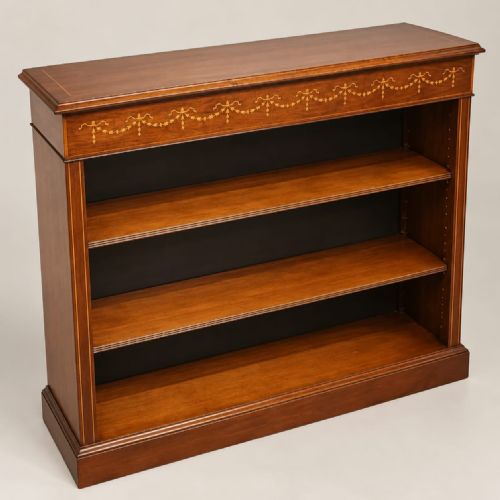
Makers relied primarily on mahogany timber, prized for its durability and deep reddish-brown colour, frequently enhanced by satinwood inlay or brass hardware. Glass panels appear on glazed variations, while brass castors support heavier items for mobility.
Construction techniques balanced structural strength with aesthetic refinement, utilising open shelving or astragal glazing to frame the contents. Cabinetmakers integrated decorative details such as mirror backs and fabric linings in specific display variants.
Vintage Mahogany Low Bookcase Retail Price Guide 2026
Typical asking prices for vintage mahogany low bookcase among the pieces listed under this phrase on Sellingantiques today, from the lower quarter to the upper quarter. They describe what is for sale here now, not the wider market.
Listings span the Victorian and Edwardian eras, incorporating mahogany, brass, and glass alongside satinwood inlay.
Distinguishing quality in low bookcases
The standard of timber selection and inlay work sets finer examples apart from simpler utility pieces. Precision in the joinery of adjustable shelves and the crispness of carved or inlaid details indicate the maker's skill.
Proportion and decorative restraint dictate the visual success of each cabinet. Pieces featuring balanced breakfront designs or fine brass fittings demonstrate greater ambition than plain functional iterations.
Lamb of Manchester·Collinson and Lock London
The Vintage Mahogany Low Bookcase Glossary
- Astragal
- A moulding profile used to hold glass panes within a glazed door. These fine wooden strips create a grid pattern across the front of the cabinet.
- Breakfront
- A piece of furniture where the central section projects forward from the flanking sides. This architectural arrangement adds depth and visual rhythm to the front elevation.
- Inlay
- A technique where pieces of contrasting wood, such as satinwood, are inserted into recessed areas of the mahogany surface to form decorative patterns.
- Revolving bookcase
- A compact shelving unit mounted on a concealed rotating base. This allows books to be accessed easily from multiple angles in a tight space.
- Waterfall bookcase
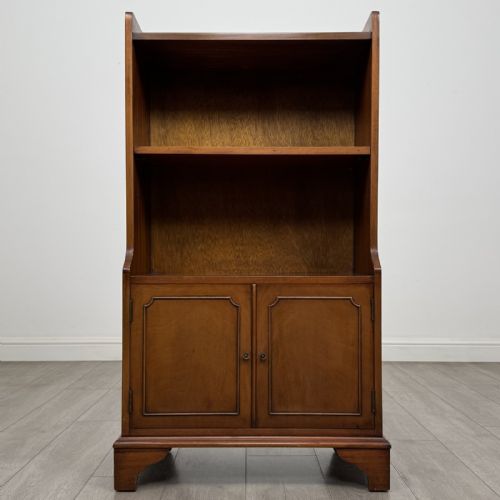
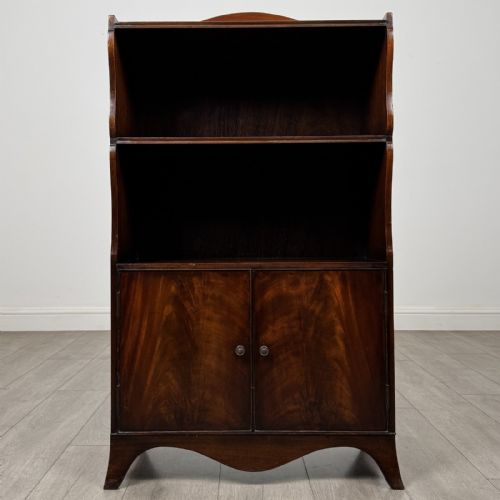
- A shelving unit featuring tiers that step back progressively from bottom to top. The profile resembles cascading water.
Vintage Mahogany Low Bookcase: Frequently Asked Questions
What rooms suit a low bookcase?
These low cabinets fit easily beneath windows or along living room walls where standard tall shelving would block light or overwhelm the space. Their reduced height also makes them suitable for hallways and bedrooms.
Because the top surface remains accessible, it often serves as a display area for lamps, ceramics, or decorative objects in addition to holding books.
How do I adjust the shelves?
Many period bookcases feature fixed shelving, but nineteenth and twentieth-century examples frequently incorporate adjustable wooden supports. These usually rest on vertical ratchets, peg holes, or metal tracks.
Carefully tilt each shelf to clear the support mechanisms when altering heights to avoid damaging the interior veneer or side panels.
Are the glass doors original?
Glazed cabinets often retain their original hand-drawn glass, which displays subtle ripples and minor imperfections visible under raking light. Replacements tend to be perfectly flat and clear.
Examining the putty or wooden glazing beads from the interior helps determine whether the panes match the age of the surrounding mahogany frame.
How do I care for mahogany?
Mahogany responds well to regular dusting with a soft, dry cloth and occasional treatment with quality beeswax to nourish the timber grain. Avoid placing these pieces in direct sunlight or near heat sources to prevent the wood from drying out.
Keeping the room at a stable humidity level protects both the solid timber and any delicate satinwood inlay work.