


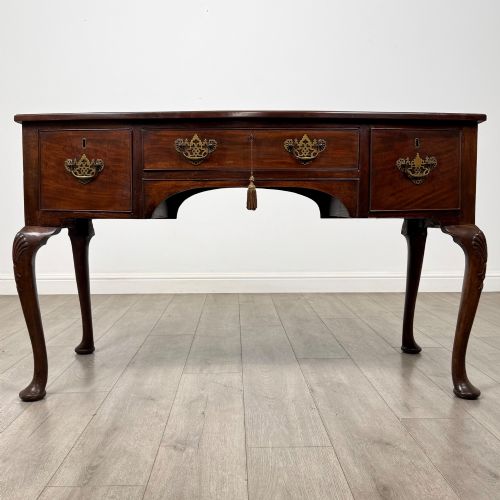
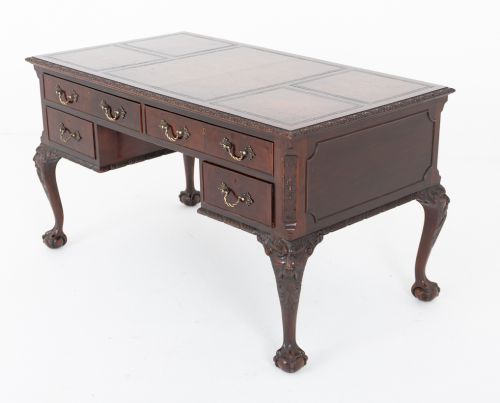
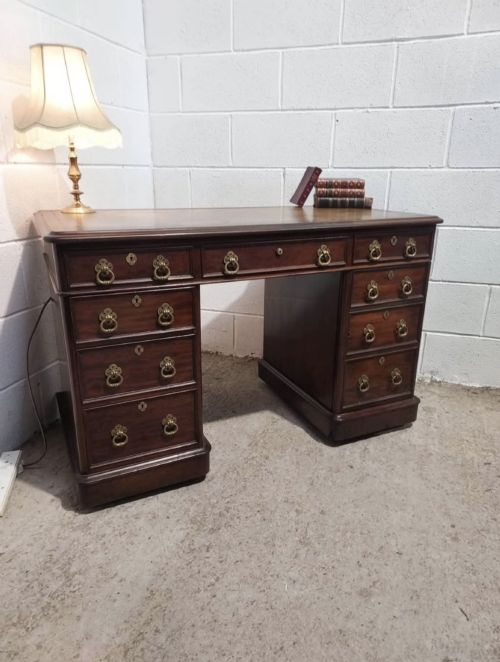
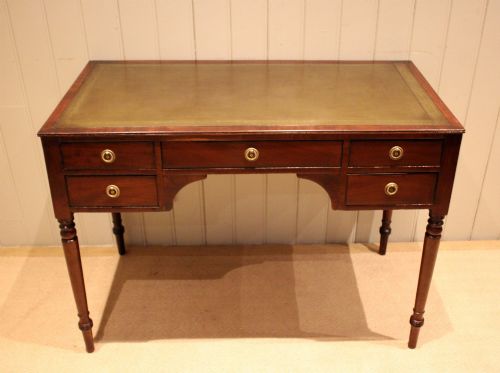

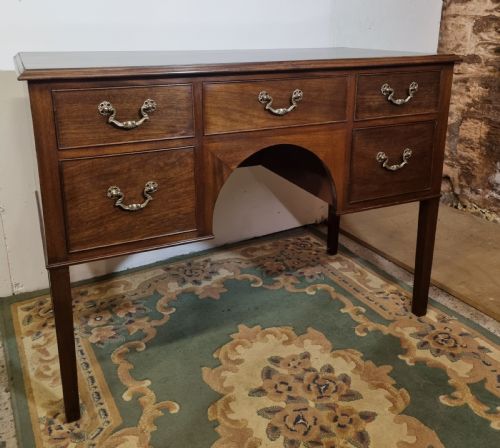
Vintage Mahogany Kneehole Table
These vintage mahogany kneehole tables offer practical workspace and handsome timber figuring for a study or bedroom.
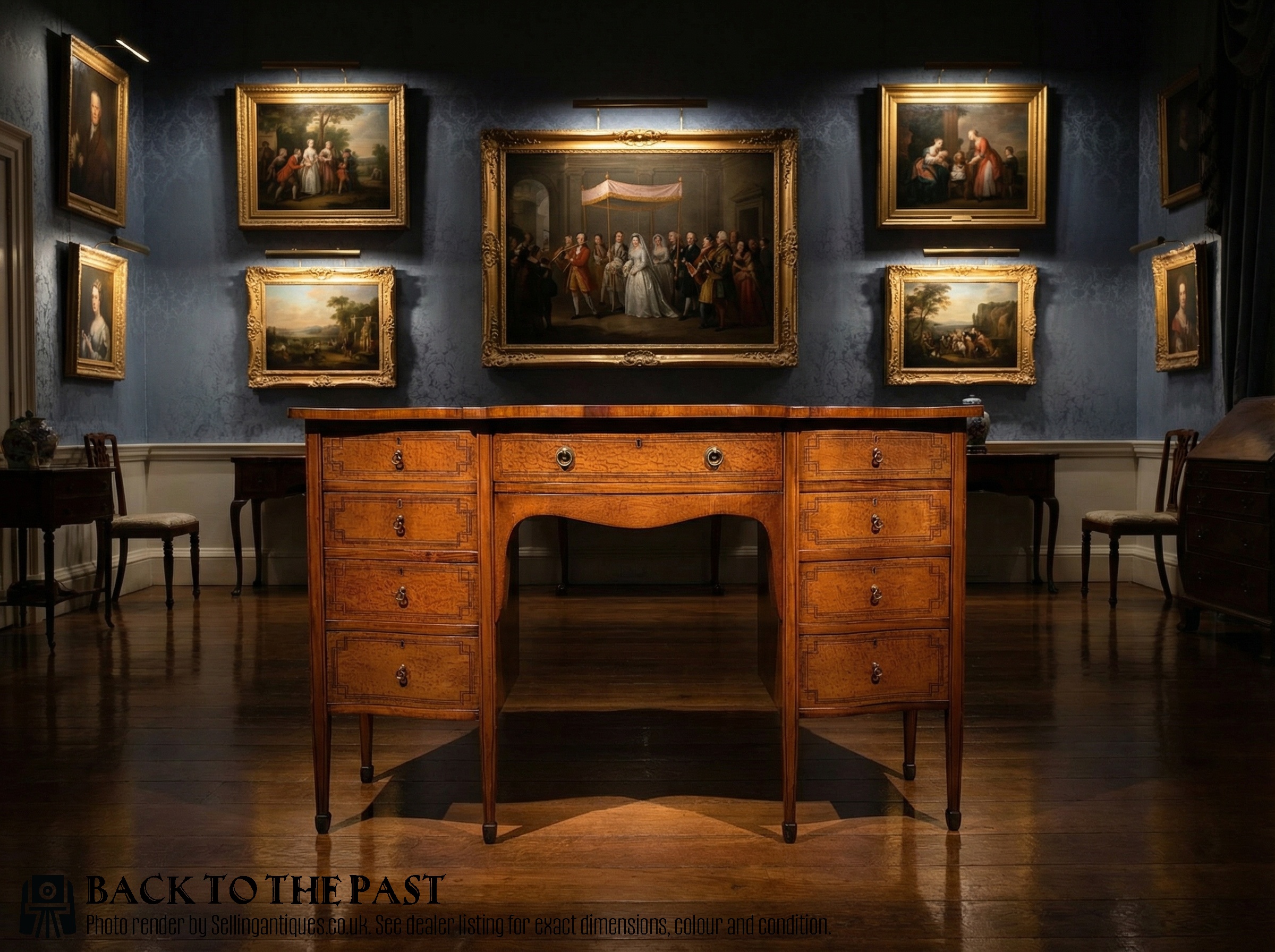
Vintage Mahogany Kneehole Table
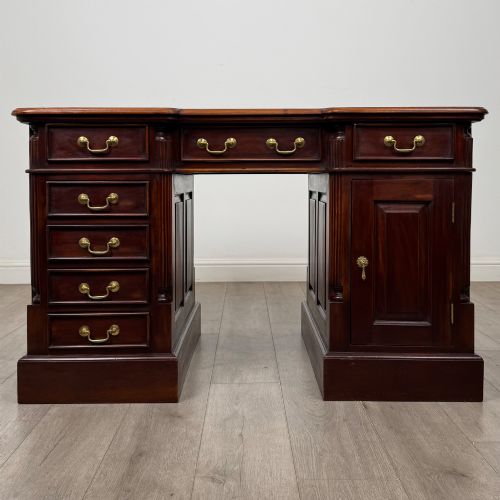
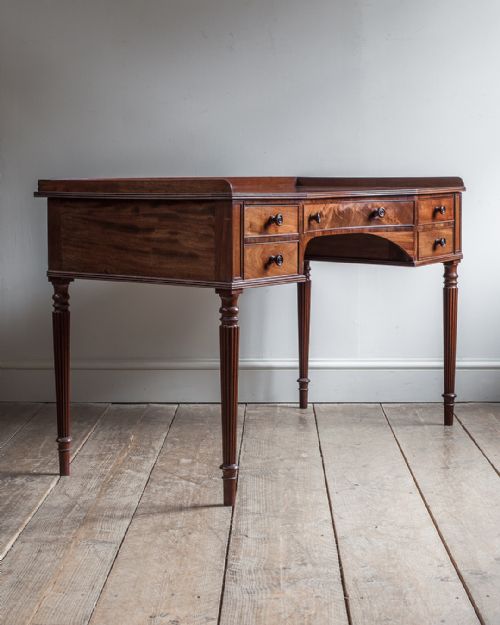
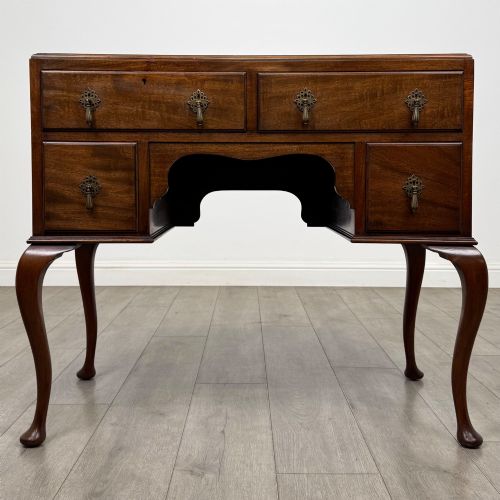
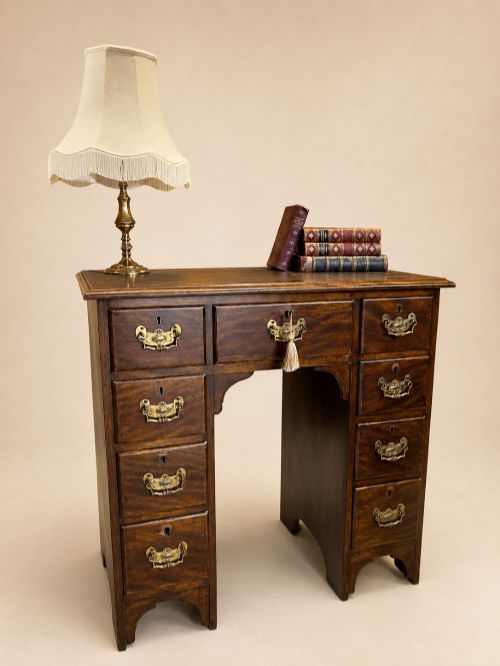
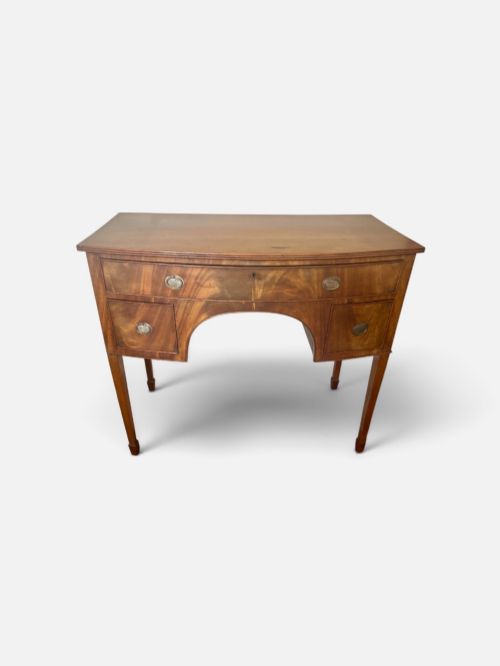
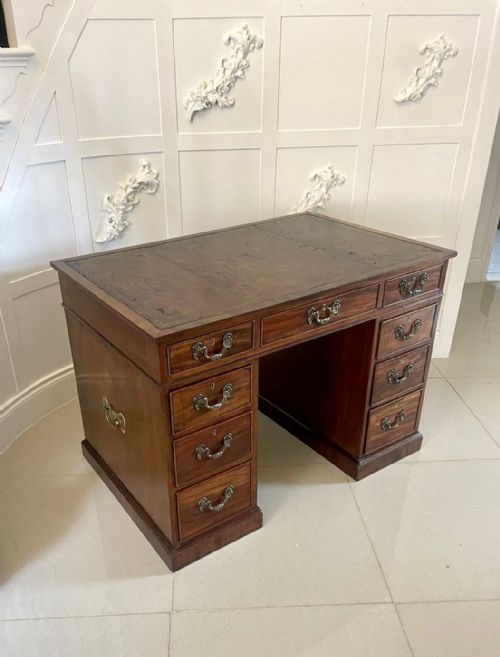
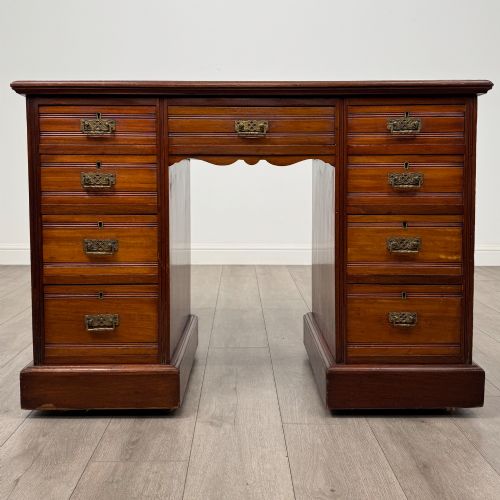
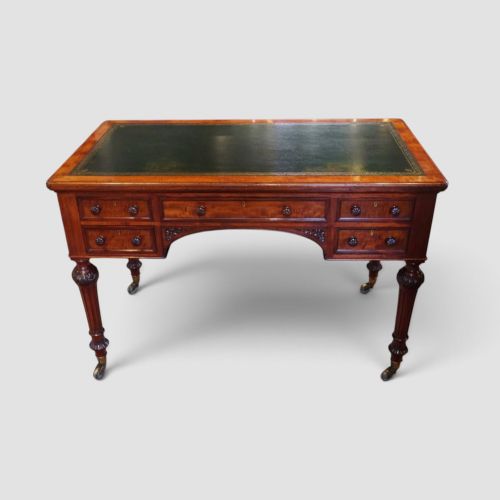
A vintage mahogany kneehole table serves as a compact desk or dressing table, featuring a central recess beneath a series of drawers. When searching for a vintage mahogany kneehole table, buyers encounter pedestal desks, writing tables, and dressing tables spanning the Georgian, Victorian, and Edwardian periods.
The pieces on this page lean heavily towards nineteenth-century Victorian and Edwardian examples, alongside revival pieces from the early twentieth century. These tables range from simple writing desks with modest side drawers to substantial freestanding pedestal forms fitted with brass hardware and leather inserts.
How they were made
Cabinet makers constructed these tables using solid mahogany and flame mahogany veneers laid over secondary timbers, often incorporating satinwood stringing for contrast. Drawer linings typically employ oak or pine, joined with traditional hand-cut dovetails that signal period workmanship.
Surfaces are finished with hand-applied polish that highlights the rich grain of the wood. Brass handles, escutcheons, and occasional glass tops or tooled leather writing surfaces complete the construction of these desks.
Periods represented range from eighteenth-century Georgian through Victorian and Edwardian to 1930s Art Deco.
What varies in quality
The grade of timber dictates much of the visual appeal, with richly figured flame mahogany veneers commanding greater attention than plain stock. Crispness in the carving of revival details, such as Chippendale-style blind frets or bracket feet, separates standard workshop production from finer cabinet work.
Structural integrity rests on the quality of the internal drawer construction and the original condition of the brass hardware and leather inserts. Tables retaining their matched sets of locks and keys hold higher distinction among collectors.
Trollope & sons·Holland & Sons·Betty Joel
The Vintage Mahogany Kneehole Table Glossary
- Kneehole
- A recessed space beneath the central part of a desk or dressing table designed to accommodate the user's legs. This arrangement allows for banks of drawers on either side.
- Pedestal desk
- A heavy table form consisting of two separate drawer pedestals supporting a single wide writing top. It provides generous storage alongside the central kneehole.
- Flame mahogany
- A veneer cut from the fork of the mahogany tree where the branch meets the trunk. It creates a distinctive, swirling flame-like pattern across the wood surface.
- Escutcheon
- A protective brass plate surrounding a keyhole on a drawer front. It prevents the surrounding wood from wearing away through repeated use of the key.
- Dovetail joint
- An interlocking wood joint formed by wedge-shaped fingers that lock together. Hand-cut versions are a hallmark of traditional cabinet making.
Vintage Mahogany Kneehole Table: Frequently Asked Questions
How do I date a mahogany desk?
Examine the secondary timbers inside the drawers and the style of the construction joints. Hand-cut dovetails and vernacular woods generally point to Georgian or Victorian origin, while machine-cut elements suggest later revival periods.
Look closely at the brass hardware and the lock mechanisms. Hand-cast brass pulls and wrought iron locks often align with earlier periods, whereas stamped numbers and mass-produced fixings indicate twentieth-century manufacture.
Are these tables suitable for daily computer work?
Many nineteenth and early twentieth-century examples provide adequate surface area for a laptop and writing materials. Pedestal layouts offer sufficient legroom, though drawer depth can occasionally restrict modern ergonomic adjustments.
Consider the kneehole height before purchasing for constant daily use. Older desks can sit slightly lower than modern office furniture due to historical seating standards.
How should I care for the leather top?
Clean the leather surface gently using a slightly damp cloth without harsh chemical detergents. Apply a neutral leather cream periodically to maintain suppleness and prevent cracking.
Avoid placing hot cups or liquids directly on the leather or polished wood. Use coasters and blotters to protect the antique finish from moisture rings and stains.
What is the difference between a writing table and a pedestal desk?
A writing table stands on four legs, sometimes with a single row of shallow drawers beneath the top. It offers a lighter visual profile suitable for sitting rooms or bedrooms.
A pedestal desk uses two solid stacks of drawers to support the writing surface instead of legs. This heavy form is designed for primary office use and provides substantially more storage.