

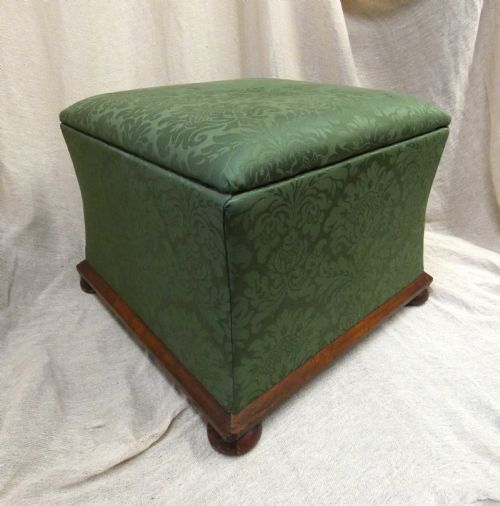


Vintage Mahogany Footrest
A vintage mahogany footrest brings solid timber frames and traditional upholstery into a room, offering a practical seat or support.
Vintage Mahogany Footrest
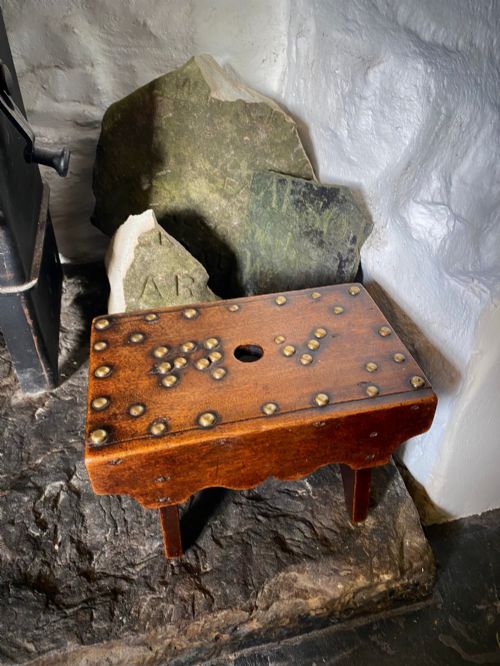
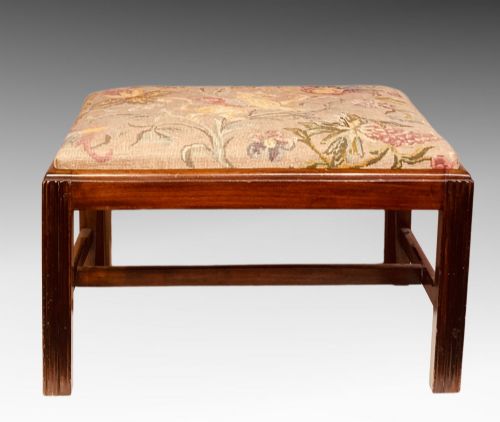
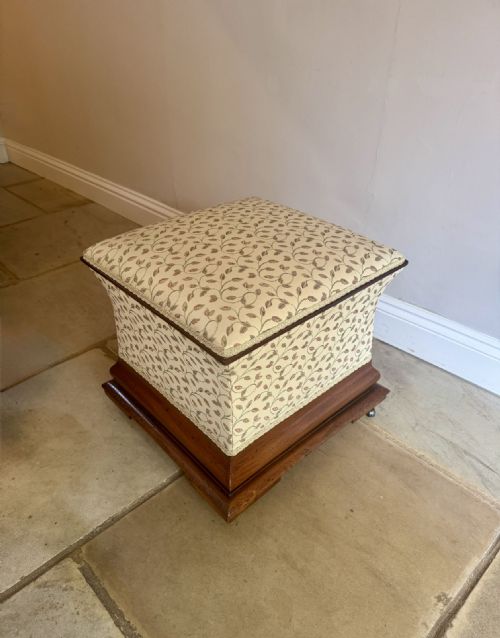
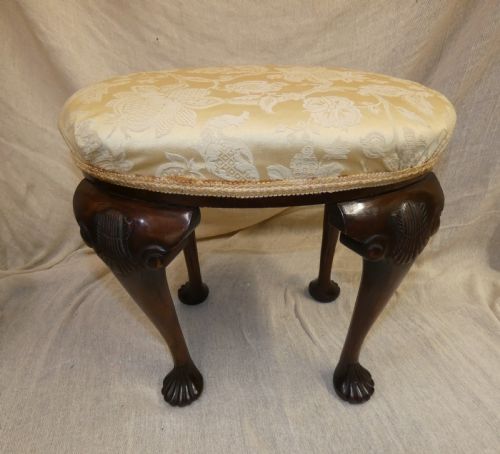
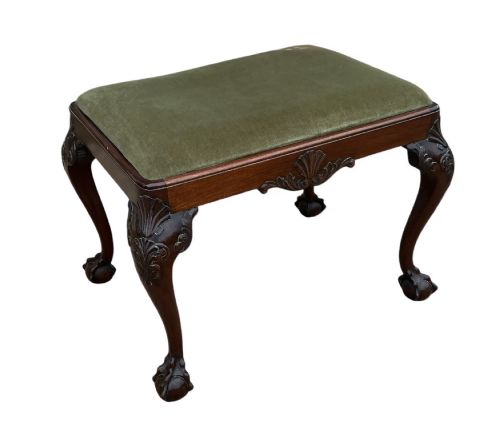
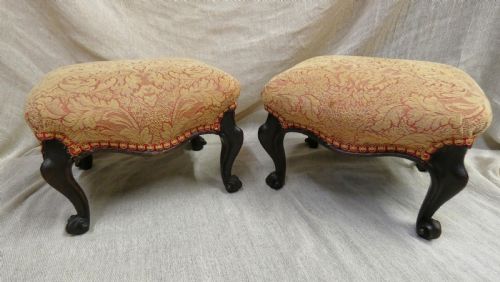
When buyers search for a vintage mahogany footrest, they encounter a range of low stools, long footstools, and gout stools originating from the nineteenth and early twentieth centuries. These pieces appear in forms spanning simple square frames to elaborately carved cabriole leg designs.
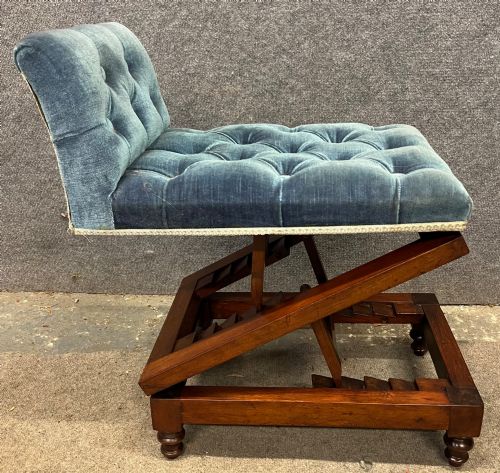
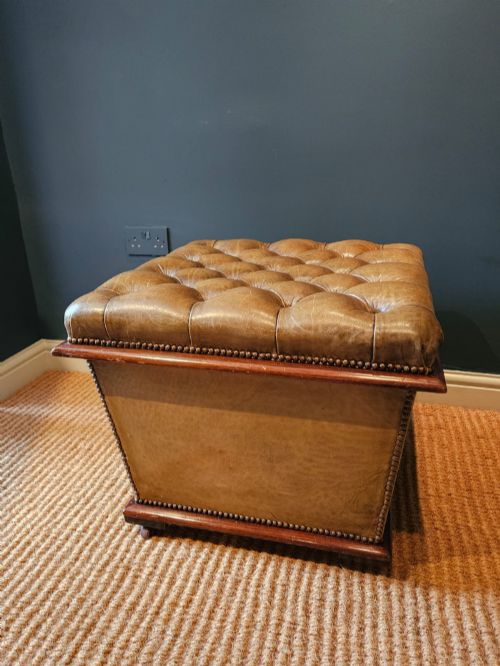
The selections on this page draw from Victorian, Edwardian, and Regency periods, alongside revival styles such as Chippendale and George II. Most examples function as independent footstools or ottomans, while occasional metamorphic designs provide adjustable support.
Materials and construction methods
Cabinet makers utilised solid mahogany for the structural frames, often shaping the timber into cabriole or straight legs with carved detailing. Brass fittings frequently appear on castors or adjustable mechanisms.
Upholstery forms a major component of these pieces, incorporating materials such as leather, wool, fabric, tapestry, needlepoint, damask, and kilim. Artisans secured these textile coverings over padding, sometimes finishing the edges with deep buttoning.
Vintage Mahogany Footrest Retail Price Guide 2026
Typical asking prices for vintage mahogany footrest among the pieces listed under this phrase on Sellingantiques today, from the lower quarter to the upper quarter. They describe what is for sale here now, not the wider market.
The listings span multiple periods from the eighteenth century onward, dominated by Victorian and 1920s examples.
Quality variations across the range
Quality rests in the crispness of the mahogany carving and the structural integrity of the frame joints. Hand-carved details on cabriole legs or decorative rails distinguish finer examples from plain utility pieces.
The grade and authenticity of the upholstery materials also dictate standing. Pieces retaining original leather, hand-worked tapestry, or specialised adjustable mechanisms command greater attention from collectors.
Howard and Sons·Thonet
The Vintage Mahogany Footrest Glossary
- Mahogany
- A dense tropical hardwood prized by cabinet makers for its rich grain and suitability for carving. It forms the primary structural material for these frames.
- Gout stool
- An adjustable footrest designed to elevate and support the foot of a person suffering from gout. These items often feature a mechanism to alter the angle of the rest.
- Cabriole leg
- A furniture leg that curves outward at the knee and tapers inward toward the foot, inspired by animal limbs. This shape appears frequently on Victorian and revival stools.
- Bergere
- A type of enclosed upholstered armchair or seat featuring woven cane panels. It occurs on specific seating items within these listings.
- Kilim
- A flatwoven textile or rug used traditionally in parts of the Near East. Examples appear covering the top of nineteenth-century footstools.
Vintage Mahogany Footrest: Frequently Asked Questions
What is a metamorphic gout stool?
A metamorphic gout stool is an adjustable piece of furniture designed to raise and angle the feet for comfort.
These specialised items utilise mechanical hinges to alter the incline of the upholstered platform.
How do I identify a Victorian footstool?
Victorian footstools are generally identified through heavy mahogany frames, turned or cabriole legs, and traditional upholstery.
Many examples incorporate deep buttoning or period textiles like wool tapestry and leather.
Are these footstools suitable for daily use?
Most of these mahogany footstools remain structurally robust for everyday sitting or resting feet.
Buyers should consider whether the upholstery is modern or retains historic fabric when planning regular usage.
What styles are common in these listings?
The listings feature significant examples from the Victorian, Edwardian, and Regency eras.
Revival styles such as Chippendale and George II also appear frequently among the mahogany frames.