


Vintage Mahogany Dumb Waiter
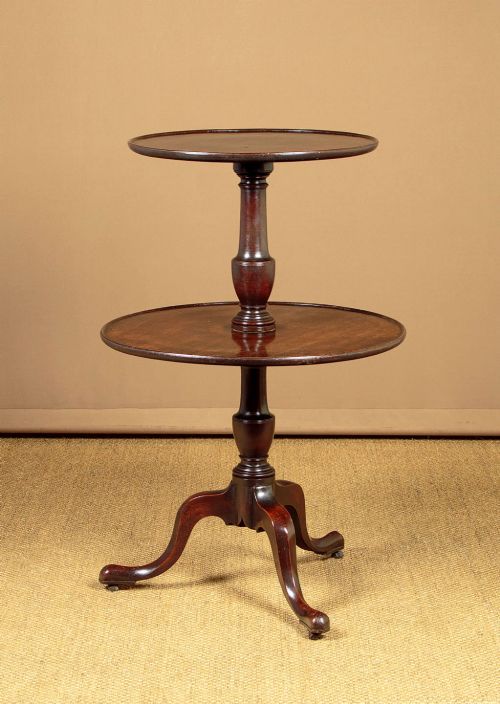
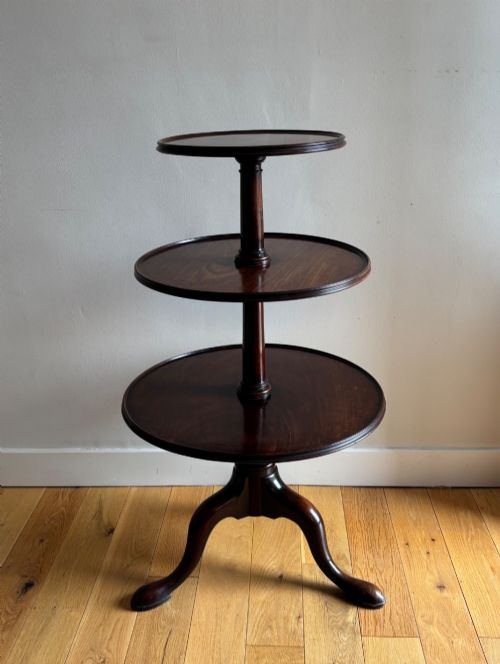
These vintage mahogany dumb waiter tables offer tiered revolving storage designed to hold meals and drinks near the dining table.
Vintage Mahogany Dumb Waiter
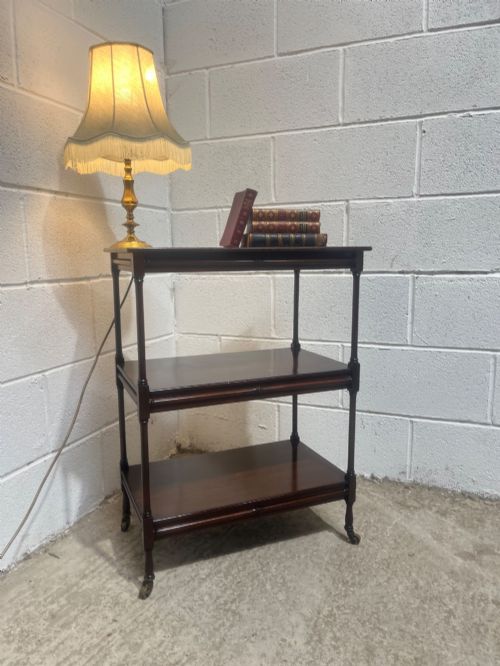
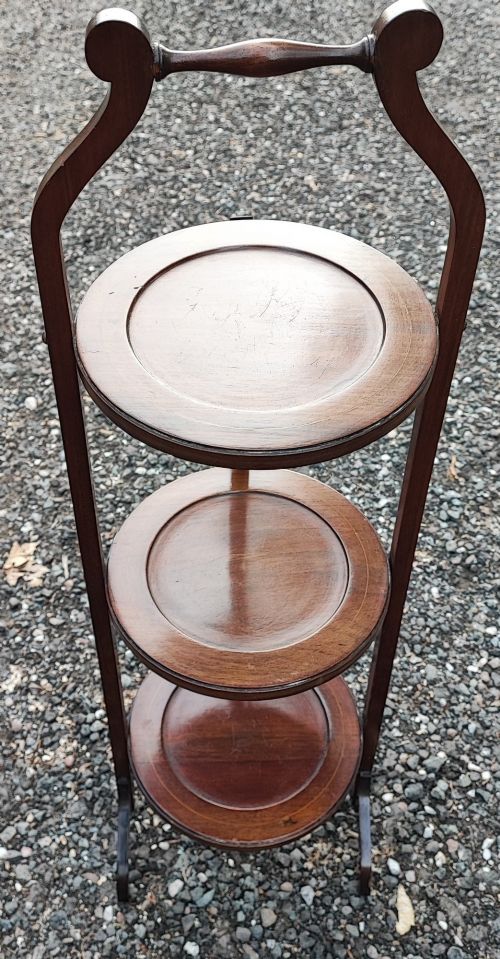
When you search for a vintage mahogany dumb waiter, you are looking at tiered serving furniture designed to hold food, drinks, and tableware in dining rooms. The pieces appearing here span Georgian, Regency, Victorian, and Edwardian periods, alongside later Sheraton Revival items. You will frequently find multi-tiered circular revolving stands, folding tiers, and occasional cake stands sharing this functional form.
The material palette is anchored by rich mahogany timbers, often accented with satinwood inlay, boxwood stringing, and brass fittings or cast iron elements. Makers constructed these stands with graduated circular trays supported on turned central columns and tripod or castor bases. Some examples incorporate clever folding mechanisms or rotating lazy susan mechanisms to ease service during meals.
Functionally, these pieces serve equally well as side tables, drinks trolleys, or display surfaces in modern interiors. The selection ranges from early George III rotating tiers to Edwardian cake stands and marble-topped serving tables. Each variation reflects the evolving dining habits of the eighteenth, nineteenth, and early twentieth centuries.
Materials and construction
Cabinetmakers built these tables primarily using solid mahogany and mahogany veneers, prized for deep grain patterns and durability. Workshops frequently incorporated contrasting satinwood inlay and boxwood stringing around tray edges to create decorative geometric borders.
Structural integrity relied on turned central pillars joined to sturdy tripod legs, sometimes fitted with brass castors for mobility. Rotating tiers utilised central pivots or brass swivel mechanisms, while folding variants employed ingenious wooden hinges and brass brackets.
Listings feature pieces spanning the Georgian, Regency, Victorian, and Edwardian periods, constructed primarily from mahogany with brass and marble accents.
Distinctions in quality
Quality rests heavily on the choice of timber and the precision of the joinery within the central column and tier joints. Superior examples display finely figured Cuban mahogany, crisp hand-carved details on the pillar, and tight, seamless inlay work.
Mechanical execution also separates standard production from finer pieces, particularly in the smooth rotation of tiered trays and the sturdy operation of folding stands. Maker signatures or stamps add considerable distinction to surviving items from notable workshops.
Gillow
The Vintage Mahogany Dumb Waiter Glossary
- Dumb waiter
- A multi-tiered freestanding piece of dining room furniture with rotating or fixed shelves used for holding food and beverages without servant assistance.
- Lazy susan
- A revolving tray or tabletop placed on a central pivot to allow easy sharing of dishes across a dining surface.
- Etagere
- An open piece of furniture featuring multiple tiers for displaying small objects, ornaments, or serving items.
- Satinwood inlay
- A decorative technique where contrasting light-coloured satinwood is inserted into recesses within the darker mahogany surface to form patterns.
- Tripod base
- A three-legged support structure commonly found beneath the central column of dumb waiters and occasional tables for stability.
Vintage Mahogany Dumb Waiter: Frequently Asked Questions
What is a vintage mahogany dumb waiter used for?
These pieces originally served meals by holding dishes, bottles, and glasses near the dining table so diners could help themselves. Today, they function wonderfully as corner display stands, side tables, or drinks trolleys.
Their tiered shelves provide generous surface area without occupying excessive floor space in a room.
How do you date a vintage dumb waiter?
Dating relies on observing stylistic details such as leg shapes, column turnings, and inlay patterns associated with periods like Georgian, Regency, or Edwardian. Cabinetmaking construction methods, including the type of fixings and timber preparation, also indicate age.
Earlier pieces from the eighteenth century typically feature heavier proportions and hand-turned pillars compared to lighter Edwardian cake stands.
Are the tiers on a dumb waiter always revolving?
Not all tiers rotate, though many traditional forms include revolving trays to allow easy access to items from any seating position. Some variations feature fixed shelves, folding tiers, or specialised mechanisms for drop-leaf storage.
Checking the central axis reveals whether the trays are pinned in place or mounted on a rotating pivot.
How do you care for mahogany serving furniture?
Protect the timber by dusting regularly with a soft, dry cloth and avoiding placement near direct heat sources or strong sunlight. Periodic application of quality beeswax helps nourish the grain and maintain the natural lustre of the polished wood.
Using coasters and placemats prevents moisture rings from forming on the vintage surfaces.