
Vintage Mahogany Dining Carver
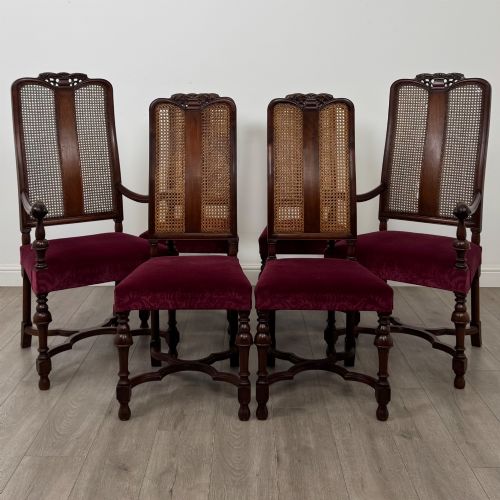
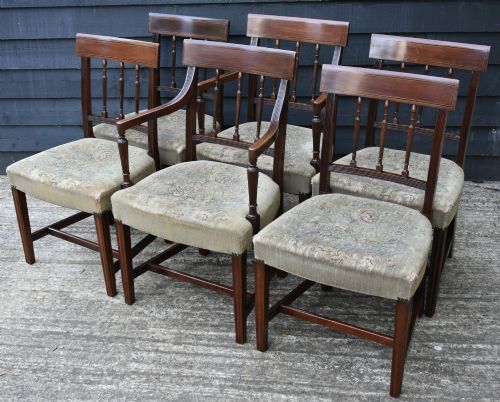
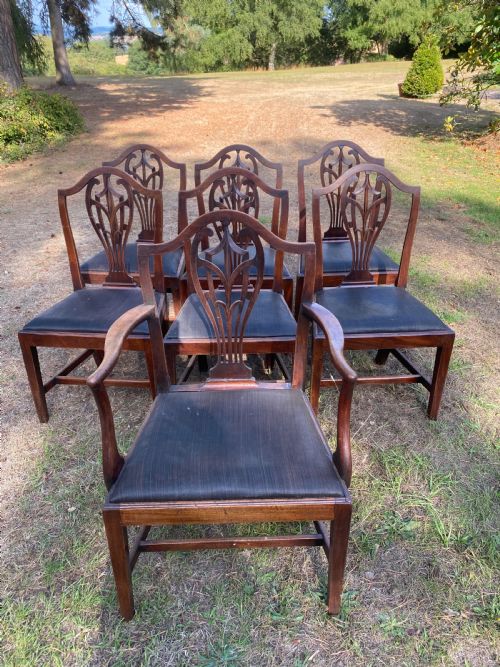
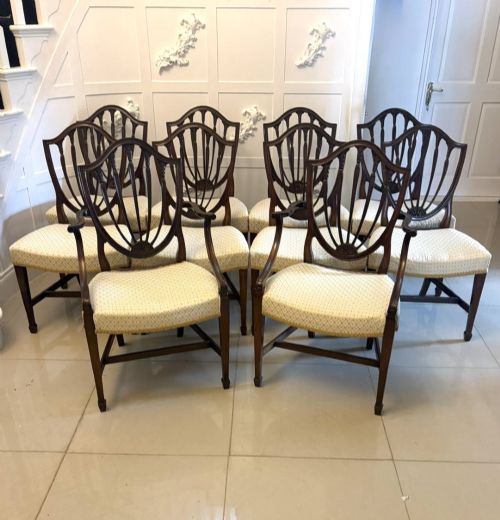
These vintage mahogany dining carver chairs bring solid wood frames and substantial armrests to the table, offering sturdy comfort for long meals.
Vintage Mahogany Dining Carver
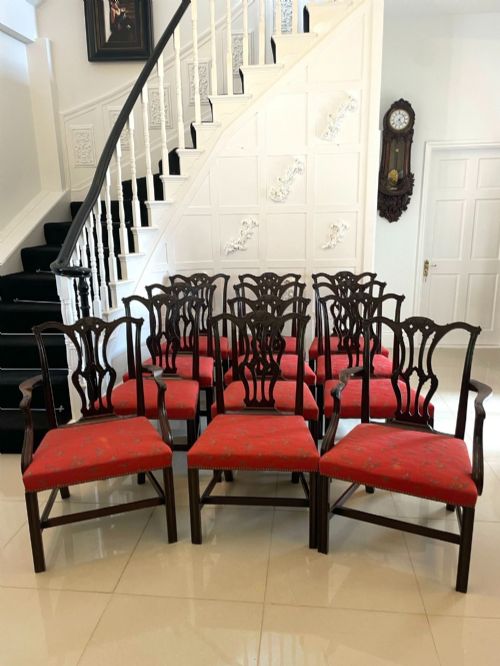
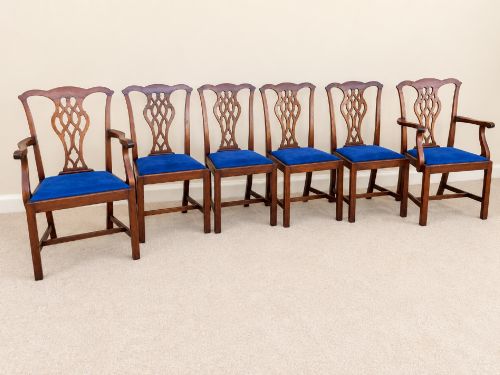
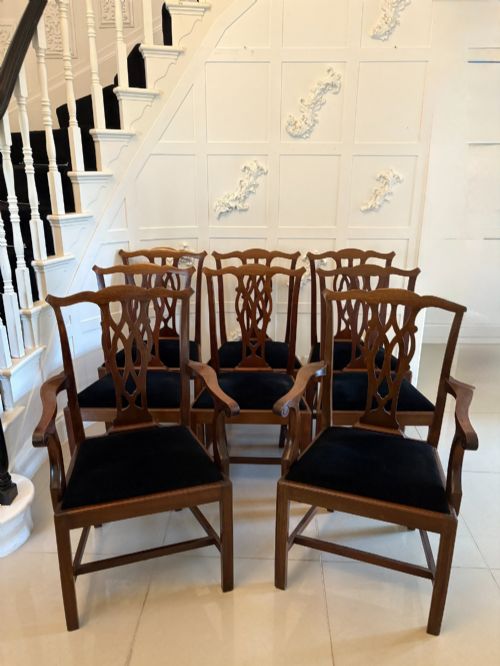
A vintage mahogany dining carver functions as the principal seat at either end of a table, distinguished by supportive armrests that mark it out from standard side chairs. When you search for a vintage mahogany dining carver, you encounter single examples, matched pairs, and individual armchairs drawn from larger dining suites.
The pieces on this page span several centuries and revival movements, ranging from genuine eighteenth-century examples to Edwardian reinterpretations and twentieth-century reproductions. You will frequently find chairs finished in nineteenth-century workshops or constructed during early twentieth-century revivals inspired by earlier cabinet-makers.
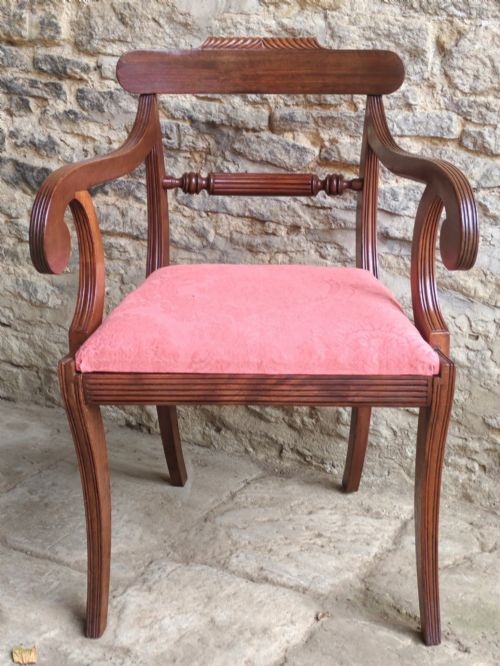
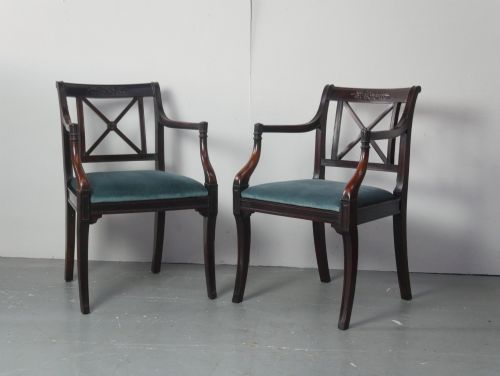
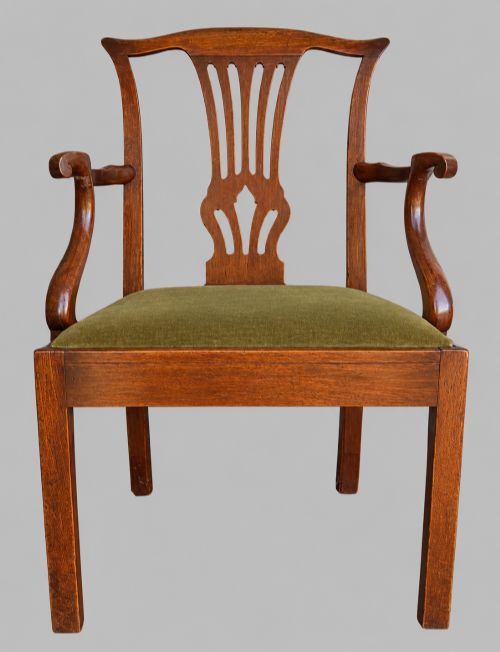
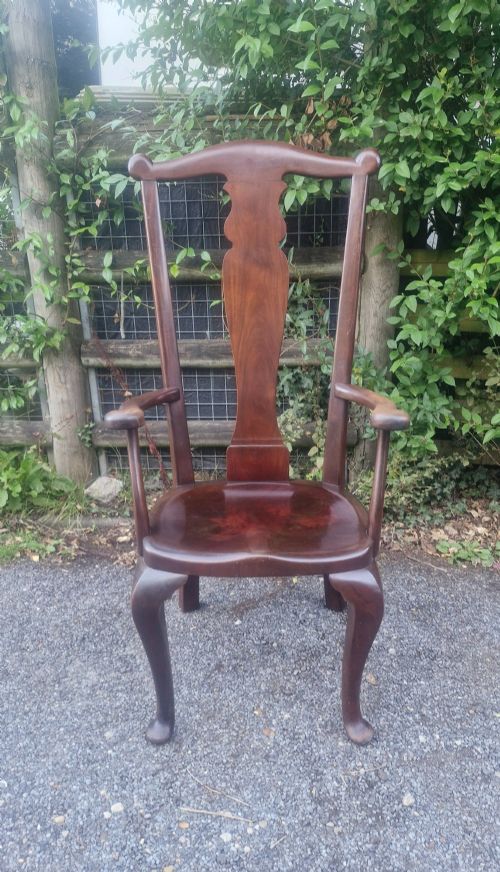
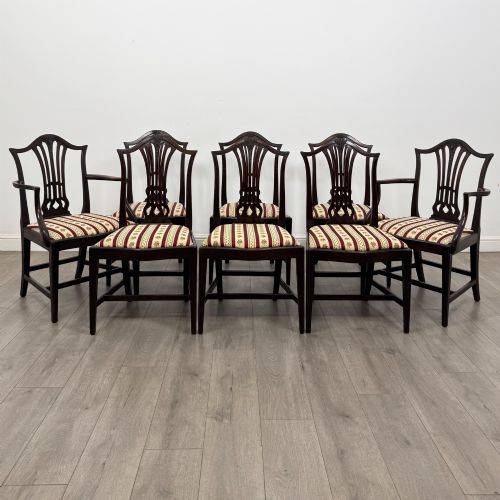
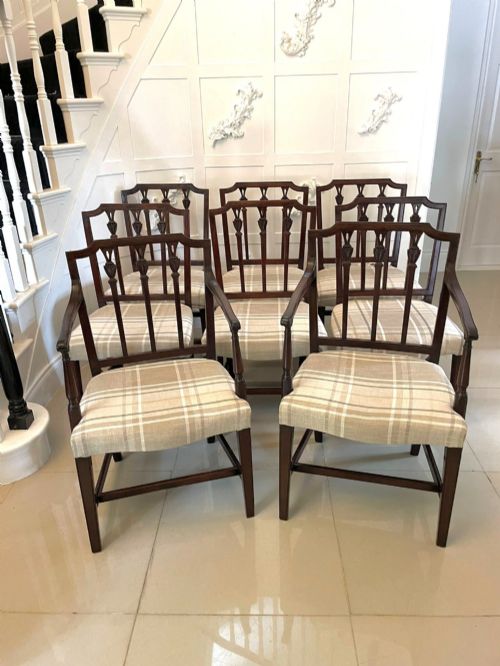
Makers drew heavily on established forms, producing shield backs, lyre backs, and high-backed desk variants alongside scroll arm designs. These armchairs typically combine a solid mahogany frame with upholstered seats covered in fabric, velvet, leather, or specialised upholstery material.
How they were made
Carpenters and cabinet-makers built these carvers primarily using solid mahogany, selected for its dense grain and structural stability. Workshops supplemented the timber with brass fittings and various textiles for the drop-in or fixed seat pads.
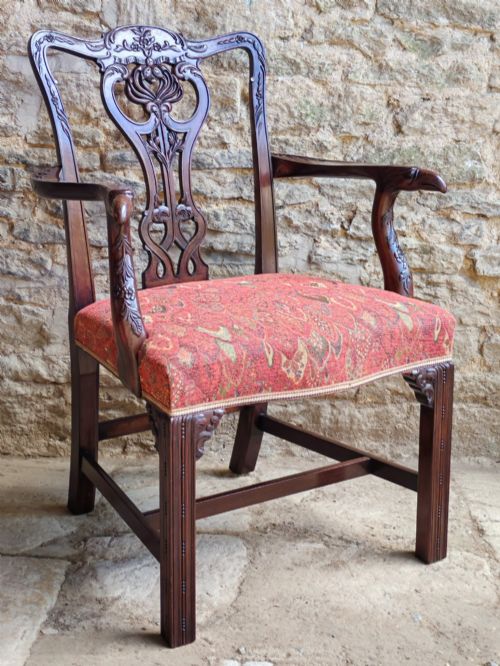
Construction techniques relied on traditional joinery such as mortise and tenon joints to secure the legs, rails, and back splats. Backrests and arms often received hand-carved details, reflecting regional styles and the prevailing aesthetic of the period.
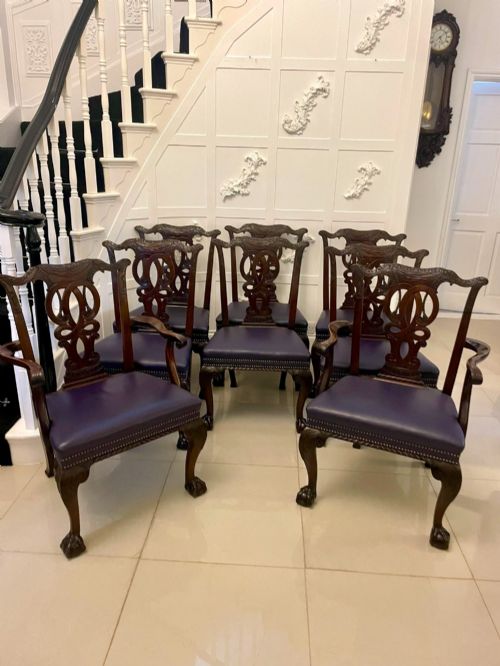
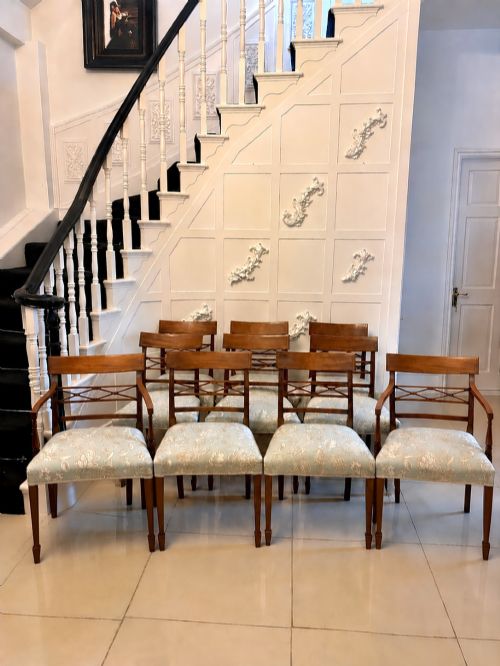
The furniture styles represented here include Chippendale, Hepplewhite, and Regency, alongside various revival interpretations from the Edwardian era.
What varies in quality
The standard of a carver depends heavily on the crispness of the hand-carved woodwork and the weight of the timber used in the frame. Superior examples display deeply moulded rails and finely sculpted arm terminals that require considerable skill from the artisan.
Proportion and structural integrity also set pieces apart, as better-made chairs maintain rigid joints and balanced posture over decades of daily use. The choice of upholstery materials, from supple leather to heavy velvet, reflects the original commission's budget and purpose.
Howard and Sons·Alfred Allen of Birmingham·Maple and Co·Wheelers of Arncroach
The Vintage Mahogany Dining Carver Glossary
- Shield back
- A chair back shaped like a heraldic shield, popularised by eighteenth-century designers and frequently revived in later periods. The wooden frame encloses carved splats that often incorporate floral or classical motifs.
- Chippendale style
- A design vocabulary derived from the eighteenth-century cabinet-maker Thomas Chippendale, characterised by interlaced ribbon splats and cabriole legs with claw and ball feet. Revival pieces from the nineteenth and twentieth centuries emulate these distinctive carved silhouettes.
- Hepplewhite style
- A graceful furniture style associated with George Hepplewhite, notable for shield-backed chairs, slender tapered legs, and delicate painted or carved ornamentation. Edwardian interpretations frequently adopted these lighter proportions.
- Lyre back
- A chair back featuring an open splat shaped in the profile of a musical lyre. This classical motif appears frequently in Regency and revival seating.
- Scroll arm
- An armchair arm that curves outward and downward in a tight scroll shape. It provides a comfortable handhold and adds decorative weight to the frame.
Vintage Mahogany Dining Carver: Frequently Asked Questions
How do I spot a revival carver?
Revival carvers often exhibit machine-cut precision in their joinery and standardised timber selections typical of late nineteenth and early twentieth-century workshops. Examining the underside of the seat frame and the wear patterns on the wood helps distinguish a later interpretation from an eighteenth-century original.
Makers working during the Edwardian period and the early twentieth century frequently borrowed proportions from Georgian and Regency models. Comparing the carving depth and the patina of the mahogany against known period examples provides further clarity.
Can I mix carvers with standard chairs?
Mixing carvers with standard dining chairs is a traditional practice, as these armchairs were originally made to sit at the head and foot of a table. Many listings offer carvers in pairs or as part of larger suites that already include matching side chairs.
When pairing an antique carver with an existing table, check the height of the armrests against the underside clearance of your table apron. Matching the wood tone and the period style ensures a cohesive appearance around the dining room.
What is mahogany like to live with?
Mahogany is a durable, heavy hardwood that resists warping well and develops a deep, rich lustre over decades of handling and polishing. Everyday maintenance involves little more than dusting with a dry cloth and occasional application of appropriate furniture wax.
The sturdy nature of mahogany frames makes these carvers well suited for daily seating rather than purely decorative placement. Protecting the timber from direct sunlight and excessive heat sources preserves the finish and prevents the wood from drying out.
How are seats usually upholstered?
Dining carvers typically feature drop-in seat pads or webbed upholstery frames covered in fabric, leather, velvet, or specialised upholstery material. Many antique chairs retain their original leather or fabric, while others have been recovered by later owners to suit modern interiors.
Inspect the description to determine whether the upholstery is original to the piece or a recent replacement. Re-covering a drop-in seat pad is a straightforward process that allows you to integrate the chair into your existing colour scheme.