

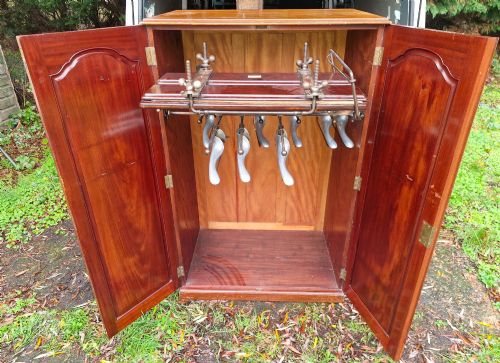
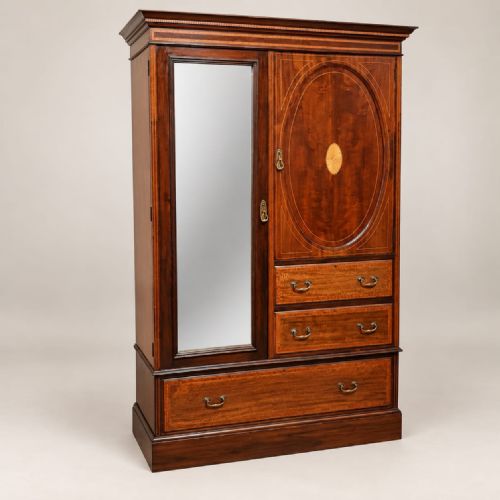
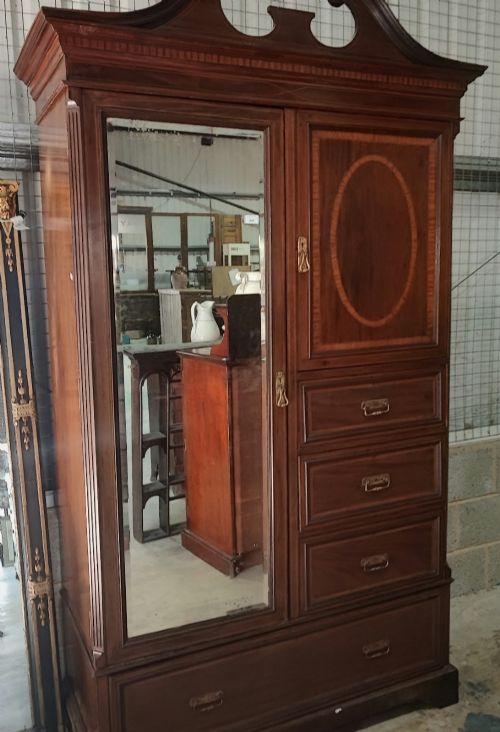
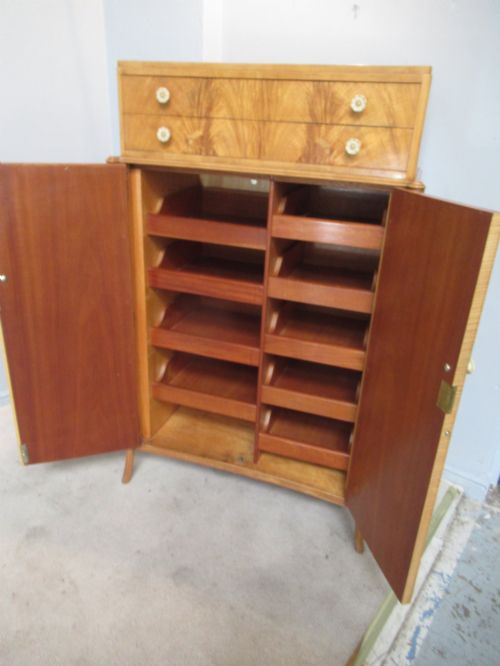


Vintage Mahogany Compactum
A vintage mahogany compactum combines hanging space and drawer storage in a single timber cabinet, offering practical clothes organisation with period presence.
Vintage Mahogany Compactum
A vintage mahogany compactum serves as a combined wardrobe and chest of drawers, designed to hold multiple garments within a single footprint. Buyers searching this phrase most frequently encounter Edwardian and nineteenth-century examples.
The pieces on this page span several decades, including Edwardian, Victorian, and later twentieth-century iterations up to the nineteen-thirties. Forms range from triple wardrobes and breakfront designs to smaller tallboys and combination units.
Originating from periods that valued fitted bedroom furniture, these cabinets often feature internal compartments alongside standard hanging sections. The timberwork draws on traditional cabinet-making methods passed down through generations.
Materials and Construction
Makers built these pieces primarily using solid mahogany and flame mahogany veneer over secondary timbers, occasionally incorporating satinwood inlay and maple details. Brass hardware and mirror glass frequently complete the construction.
Surface decoration relies on contrasting veneers and fine inlay work rather than heavy carving, though carved elements appear on specific Edwardian and Victorian variants. Joinery techniques ensure structural stability across large multi-door wardrobe frames.
Vintage Mahogany Compactum Retail Price Guide 2026
Typical asking prices for vintage mahogany compactum among the pieces listed under this phrase on Sellingantiques today, from the lower quarter to the upper quarter. They describe what is for sale here now, not the wider market.
The furniture forms include gentlemens chests, vanity tables, and breakfront wardrobes alongside standard compactums.
Distinctions in Quality
The caliber of a vintage mahogany compactum rests on the selection of timber figures, particularly the depth and movement within flame mahogany veneers. Superior examples display precise satinwood inlay and balanced proportions across breakfront or triple-door facades.
Internal organisation and the original condition of brass fittings and mirror glass also distinguish finer pieces. Maker attribution, such as work originating from established firms, further sets apart the highest tier of craftsmanship.
Edwards and Roberts·Maples and Co
The Vintage Mahogany Compactum Glossary
- Compactum
- A multi-functional piece of furniture combining wardrobe hanging space with drawers and shelving. It provides comprehensive bedroom storage in one unit.
- Flame mahogany
- A veneer cut from the fork of the mahogany tree to create a distinctive flickering flame pattern. Cabinet makers used it on prominent exterior surfaces for visual impact.
- Breakfront
- A piece of furniture where the central section projects forward from the outer wings. This architectural arrangement adds depth and shadow to large wardrobes.
- Satinwood inlay
- Contrasting light-coloured wood inserted into recesses in the mahogany surface to form decorative borders or motifs. It creates a crisp visual boundary against the darker timber.
Vintage Mahogany Compactum: Frequently Asked Questions
What is a compactum?
A compactum is a specialised combination piece that houses hanging space, drawers, and shelving within one unified timber frame. It emerged to provide comprehensive wardrobe storage without requiring multiple separate bedroom items.
These cabinets often divide their internal layout into dedicated compartments for different garments. This design suits rooms where floor space remains at a premium.
How do I date a compactum?
Dating relies on observing stylistic markers, construction methods, and timber treatments characteristic of specific eras like the Edwardian period or the nineteenth century. Details such as inlay motifs and hardware styles provide clear chronological clues.
Earlier pieces often feature heavier proportions and rich Victorian finishes, whereas Edwardian examples frequently display lighter satinwood inlays and Neo-Classical influences.
Where should I place a compactum?
These large timber cabinets require adequate wall space and clearance for their wide doors and internal pull-out drawers. Bedrooms and large dressing rooms provide the traditional setting for their scale and utility.
Positioning the piece away from direct heat sources helps protect the mahogany timber and prevents veneer movement over time.
How do I care for mahogany?
Maintaining mahogany involves keeping the wood clean with a soft, dry cloth and avoiding silicone-based polishes. Consistent indoor humidity levels prevent the timber and veneers from drying out.
Treating the surface gently preserves the natural patina developed over the decades. Regular dusting prevents particle buildup in carved or inlaid details.