


Vintage Mahogany Cake Stand
A vintage mahogany cake stand brings tiered elegance to a room, offering practical display space with traditional cabinetmaking.
Vintage Mahogany Cake Stand
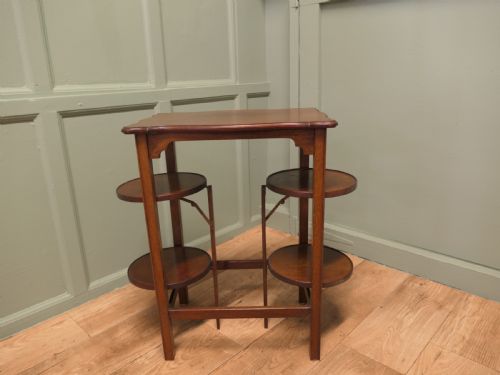
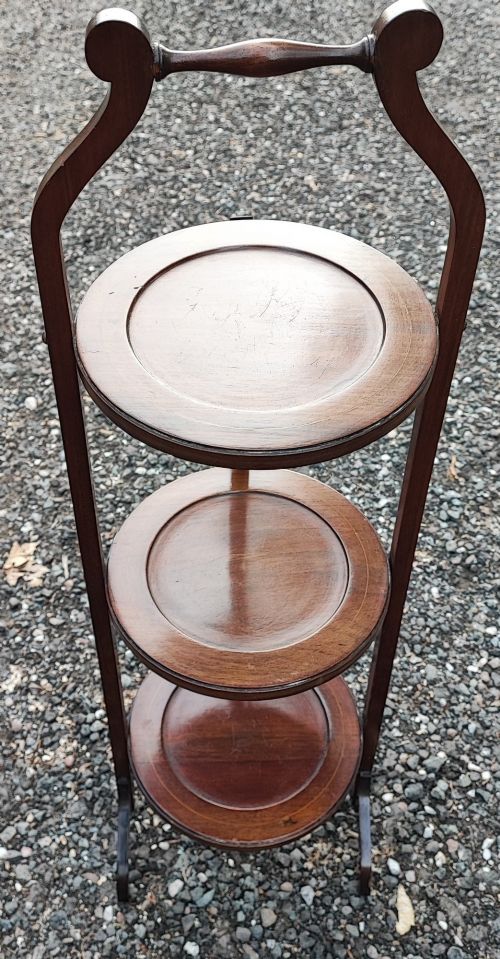
A vintage mahogany cake stand typically appears as a tiered structure designed for presentation and serving, most commonly found in Edwardian and early twentieth century interpretations. These pieces often feature folding mechanisms, allowing the tiers to collapse for storage when not in use.
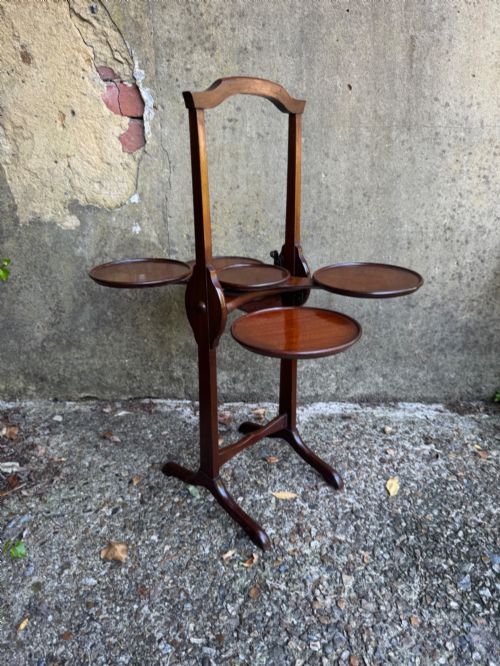
The selection ranges from simple circular tiered stands to more complex revolving designs and occasional tables. Edwardian examples frequently incorporate inlaid details, whilst Victorian and Georgian antecedents lean towards solid timber construction and functional turning.
Buyers seeking a vintage mahogany cake stand will encounter various configurations, including three-tier models and circular revolving trays. Each form reflects the domestic habits of its period, from formal tea service to dining room organisation.
Materials and construction
Makers utilised mahogany as the primary timber, valued for its rich grain and stability. Secondary woods and decorative elements like satinwood and boxwood inlay appear on refined examples, adding linear contrast to the warm brown surfaces.
Joinery methods varied according to the period and form, employing turned uprights, folding brass hinges, and shaped shelves. Metal components such as brass fittings facilitate the movement in revolving trays and folding frames.
Assessing quality in mahogany stands
Quality rests in the crispness of the turning, the precision of any inlay work, and the structural integrity of the joints. Finer pieces demonstrate careful timber selection, where the grain runs harmoniously across the tiers.
The sophistication of the mechanism also marks the difference between standard production and superior craftsmanship. Smooth folding actions and stable revolving tiers indicate thoughtful design and careful assembly.
The Vintage Mahogany Cake Stand Glossary
- Mahogany
- A durable tropical hardwood known for its deep reddish-brown colour and fine grain. It served as the principal material for quality cabinetmaking across multiple centuries.
- Inlay
- A decorative technique where contrasting woods such as boxwood or satinwood are inserted into recesses in the primary timber. This creates geometric or botanical patterns on the surface.
- Dumb waiter
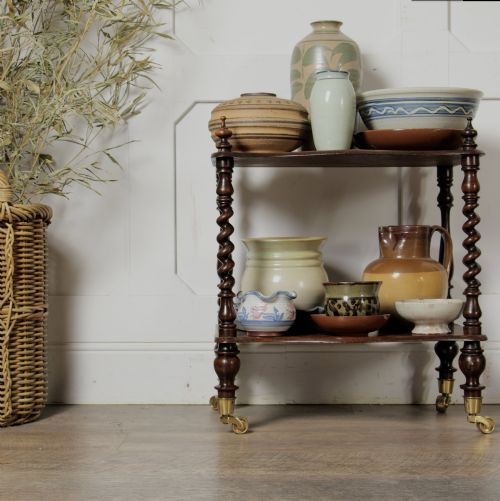
- A tiered revolving stand used in dining rooms to hold dishes or food without requiring servant attendance. These sturdy pieces form the heavier precursor to lighter cake stands.
- Lazy Susan
- A circular revolving tray placed on a surface to allow easy access to items. They share technical similarities with the rotating tiers found on specific stands.
- Sheraton Revival
- A late nineteenth and early twentieth century style inspired by the neoclassical designs of Thomas Sheraton. Pieces in this style often feature delicate inlay and tapering supports.
Vintage Mahogany Cake Stand: Frequently Asked Questions
What is a vintage mahogany cake stand?
A vintage mahogany cake stand is a tiered wooden furnishing created for holding food or displaying decorative objects.
Most examples date from the Edwardian era or the late Victorian period, often featuring folding frames for domestic convenience.
How do I date a cake stand?
Dating relies on observing construction methods, timber choice, and stylistic details such as inlay or turning.
Edwardian pieces often show lighter folding mechanisms and satinwood stringing, whilst Georgian or Victorian items display heavier timbers and simpler turned supports.
Are these stands stable?
Stability depends on the design, with three-legged folding frames offering a balance between portability and structural support.
Heavier tiered designs and dumb waiters provide a more solid base, whereas folding variants require careful placement on level flooring.
Can these stands be folded away?
Many Edwardian and twentieth-century versions incorporate hinged mechanisms designed for easy collapse and storage.
Heavier Victorian and Georgian revolving stands generally remain fixed in their assembled form due to their heavier construction.