
Vintage Mahogany Bowfront Dresser
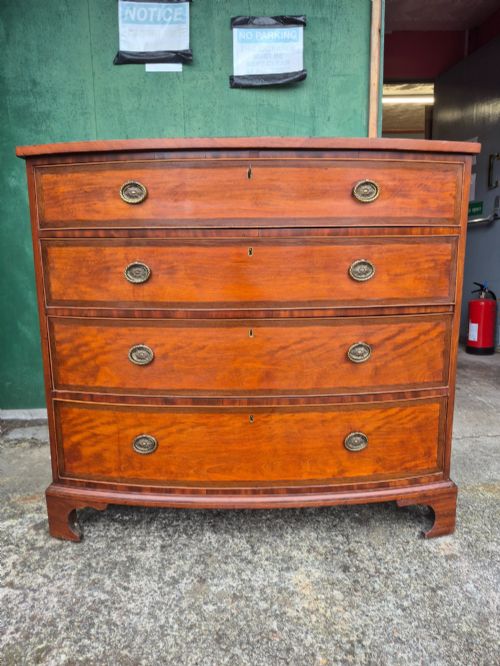
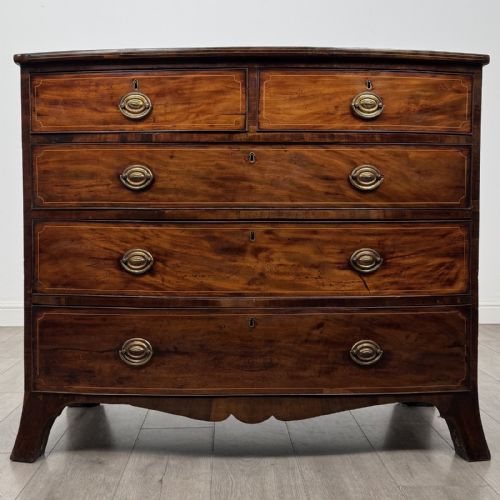
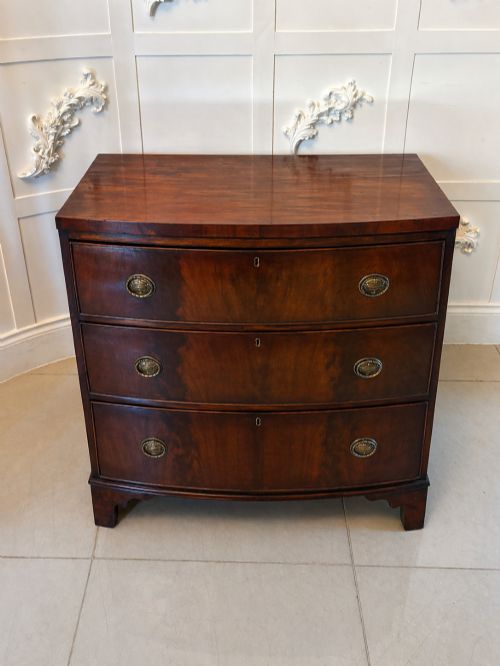
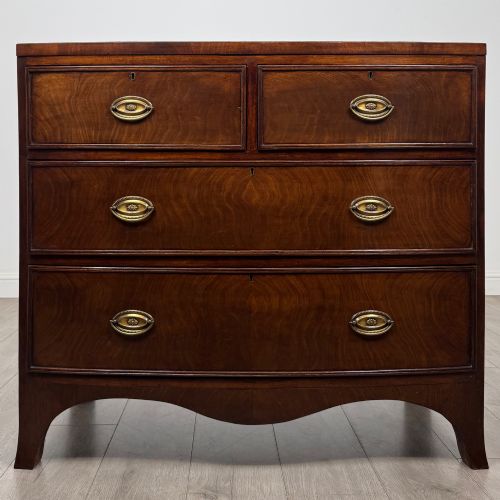
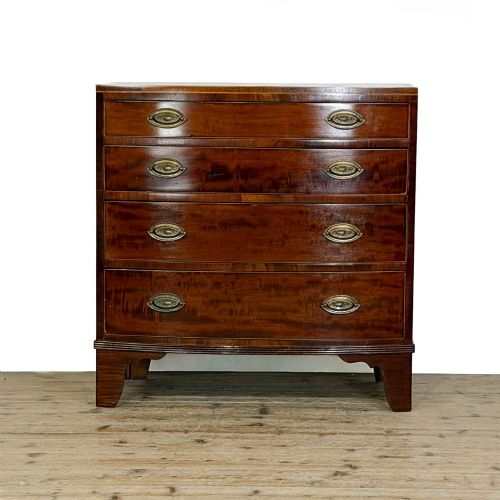
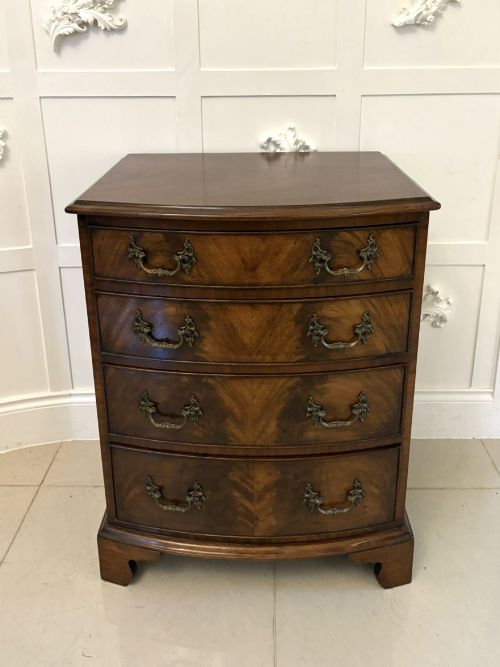
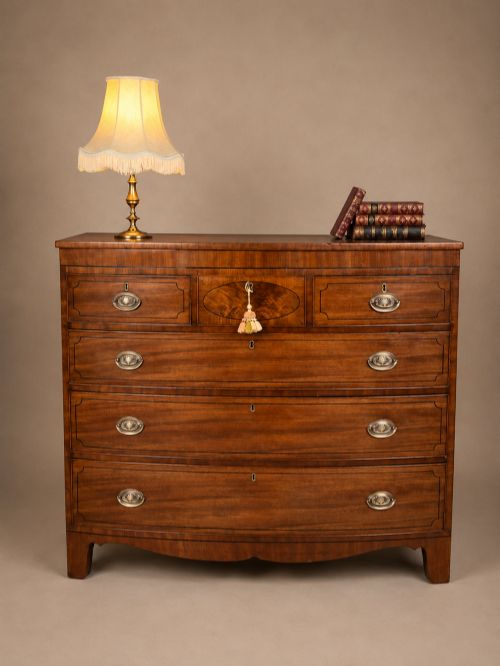
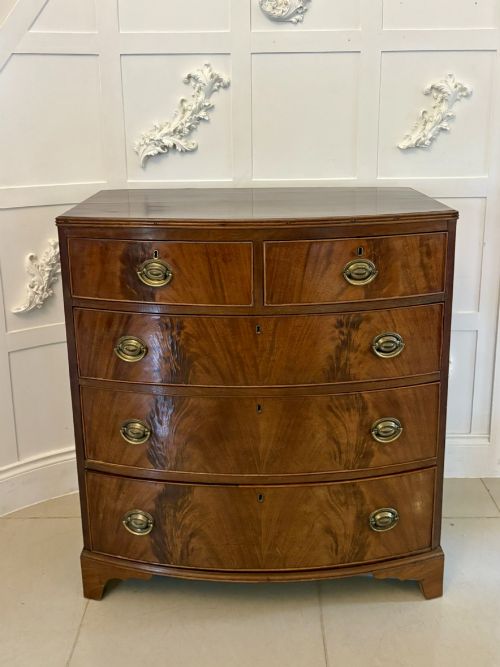
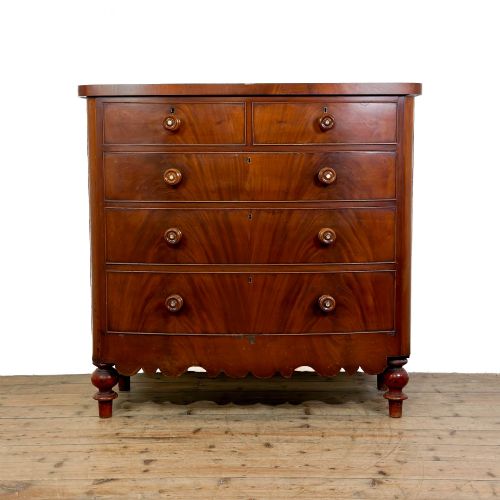
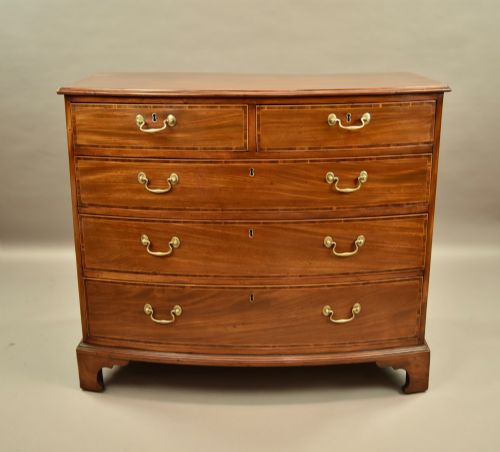
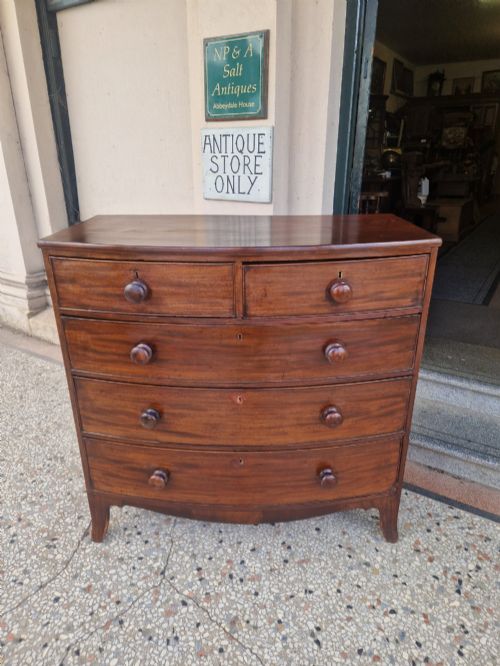
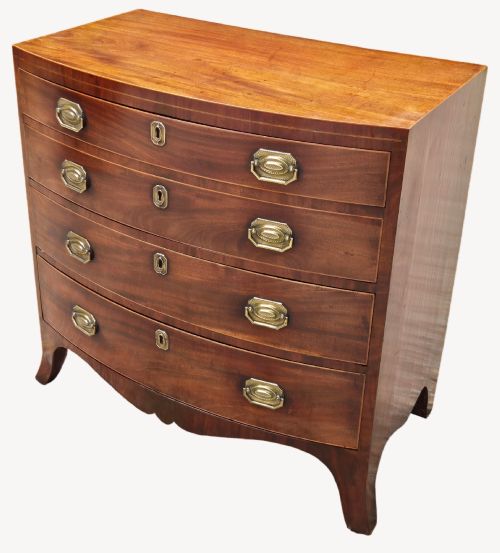
A vintage mahogany bowfront dresser offers curved fronts and rich timber grain, bringing traditional storage into a room.
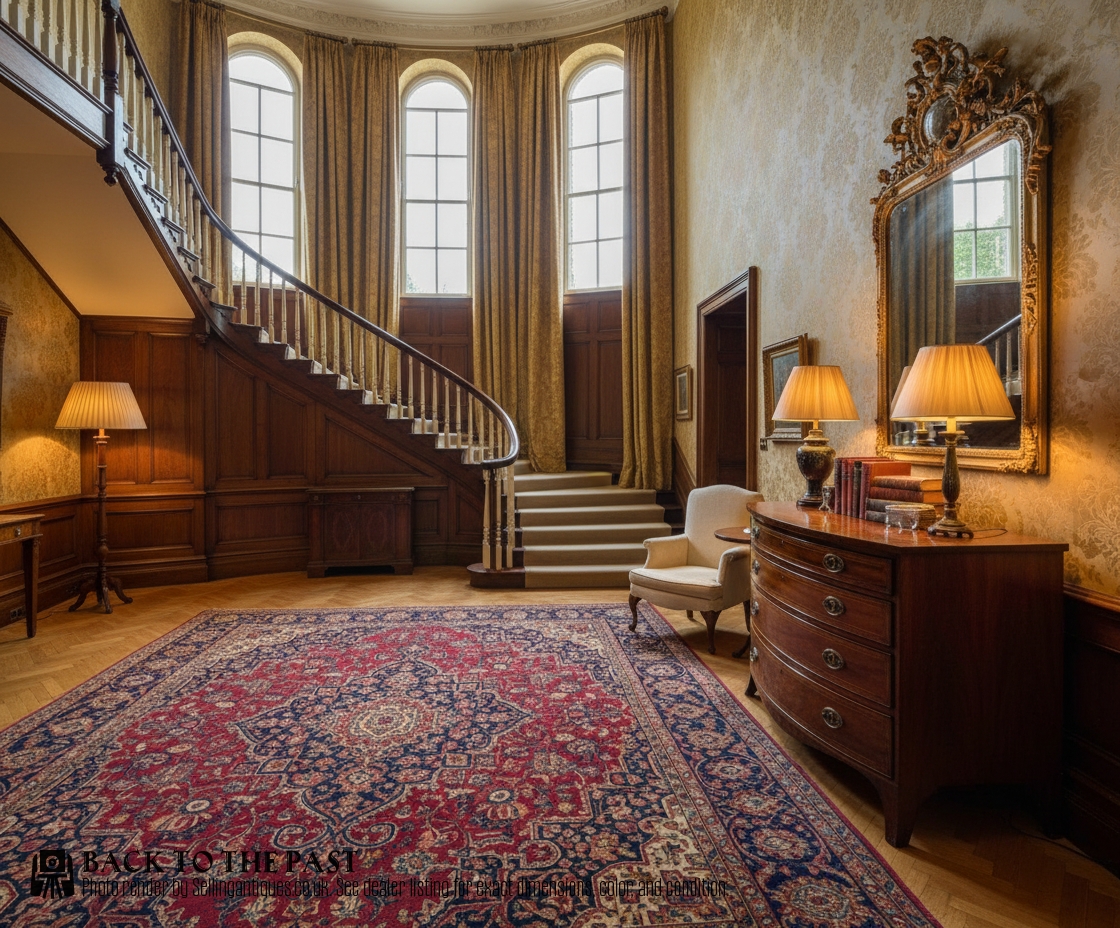
Vintage Mahogany Bowfront Dresser
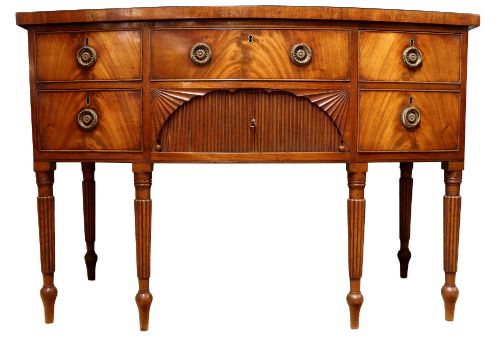
When you search for a vintage mahogany bowfront dresser, you encounter pieces designed primarily as chests of drawers alongside related sideboard forms. The selection spans Georgian, Regency, Victorian and Edwardian periods, stretching from the eighteenth century into the early twentieth century.
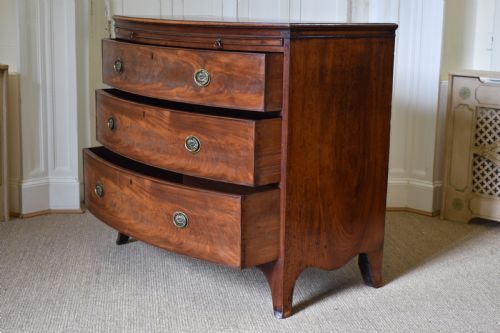
Most examples you meet on this page take the form of chests with graduated drawers, often resting on bracket feet or short turned supports. The curved projecting front defines the group, softening the silhouette compared to standard flat-fronted furniture.
Origins include English workshops and Scottish cabinetmakers, spanning periods from George III through to Edwardian interpretations. These items served domestic bedchambers and dining spaces, providing practical storage behind polished timber facades.
Materials and construction methods
Cabinetmakers built these pieces using solid mahogany and pine carcasses, frequently applying flame mahogany veneer to drawer fronts to create figured grain patterns. Secondary timbers like oak and pine appear in drawer linings and internal framing.
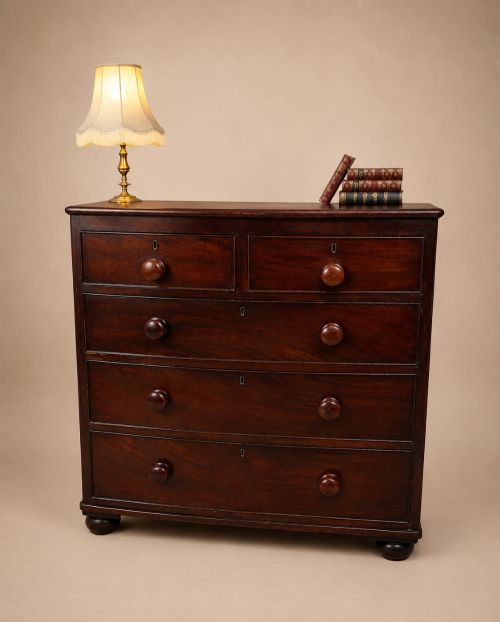
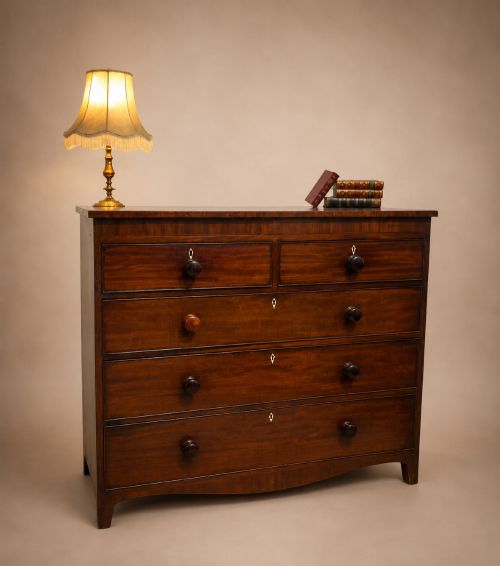
Workshops utilised brass handles, turned wooden knobs and boxwood inlay for decorative contrast against the dark timber. Drawer dividers and carcase frames relied on traditional joinery techniques suited to the curved bowfront shape.
Listings span Georgian, Regency, Victorian, and Edwardian periods, incorporating mahogany, flame mahogany veneer, oak, pine, and boxwood inlay.
Distinctions in craftsmanship and materials
The choice of timber creates a primary distinction, with highly figured flame mahogany veneers and selected solid mahogany sitting above plain grain surfaces. Superior pieces display careful book-matching on drawer fronts and precise execution of boxwood stringing.
Construction details such as graduated drawer depths, hand-cut dovetails and original brass hardware or turned handles signal higher workshop standards. The integrity of the curved carcase and smooth drawer operation determine the overall success of the piece.
The Vintage Mahogany Bowfront Dresser Glossary
- Bowfront
- A convex curved front that projects outward in the centre. This shape defines the classic silhouette of these chests and sideboards.
- Flame mahogany
- A veneer cut from timber where the branch meets the trunk, producing a rippling, flame-like pattern. Cabinetmakers placed these veneers on prominent drawer faces.
- Graduated drawers
- A series of drawers that decrease in depth from bottom to top. This arrangement provides stability and visual balance to the chest.
- Bracket foot
- A simple foot shape formed by two pieces of wood mitred together at the corner. They support many Georgian and Regency examples on this page.
Vintage Mahogany Bowfront Dresser: Frequently Asked Questions
Where did people place these in the home?
These pieces functioned primarily in bedchambers for holding garments and linens, utilising the deep drawers for storage. Sideboard variants stood in dining rooms to store tableware and serving items.
Their decorative curved fronts allowed them to sit prominently against walls in hallways and reception rooms without obstructing walkways.
How do I identify a Regency period piece?
Regency items often display bolder mahogany grains, brass ring handles, and sometimes simpler geometric lines reflecting early nineteenth-century taste. Look for proportions and foot styles characteristic of the 1800 to 1830 decades.
Cabinetmakers of this era frequently employed flame mahogany veneers combined with dark polished finishes to accentuate the curved bowfront shape.
What timber was used inside the drawers?
Secondary woods such as oak and pine commonly appear in drawer linings, carcase backs, and internal dividers. These native timbers provided structural stability while the costly mahogany remained visible on exterior surfaces.
Examining internal construction helps reveal the age and traditional building methods of the cabinetmaker.
How do I care for mahogany furniture?
Keep the timber away from direct heat sources and strong sunlight to prevent the mahogany veneer from drying out or fading. Dust regularly with a soft, dry cloth and apply occasional wax polish to maintain the finish.
Avoid excessive moisture and place protective pads under any objects set on the top surface to guard against rings.