


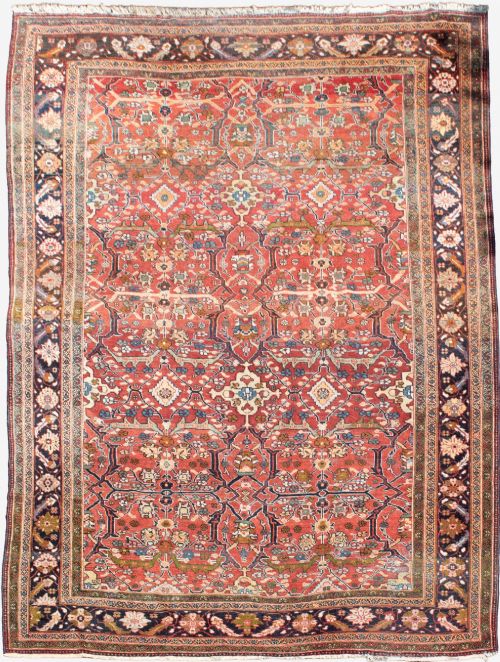


Vintage Mahal Wool Rug
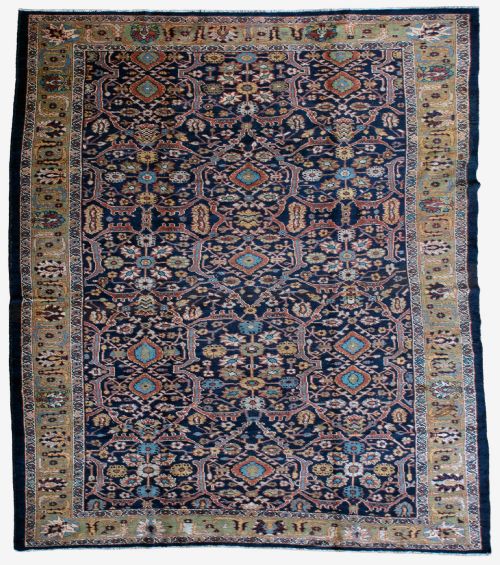
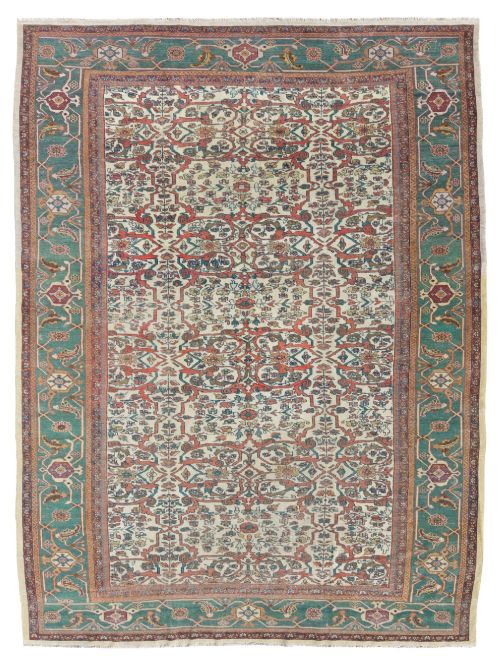
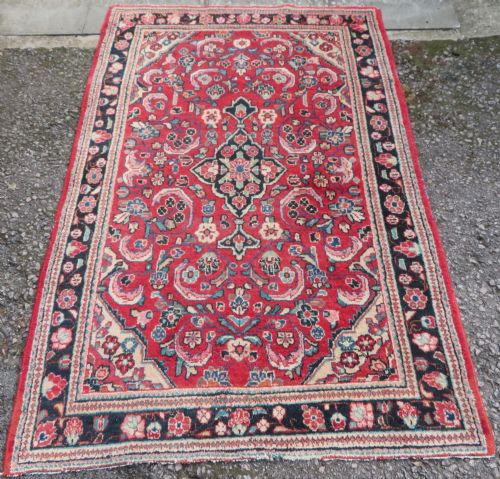
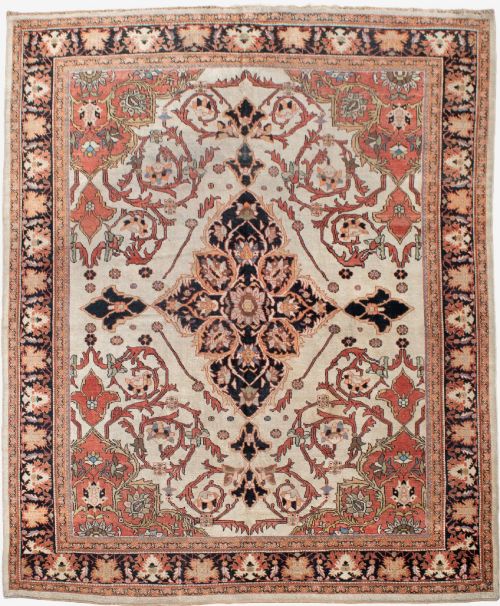
A vintage mahal wool rug brings the bold scale and rich vegetable tones of western Persian weaving straight into a traditional interior.
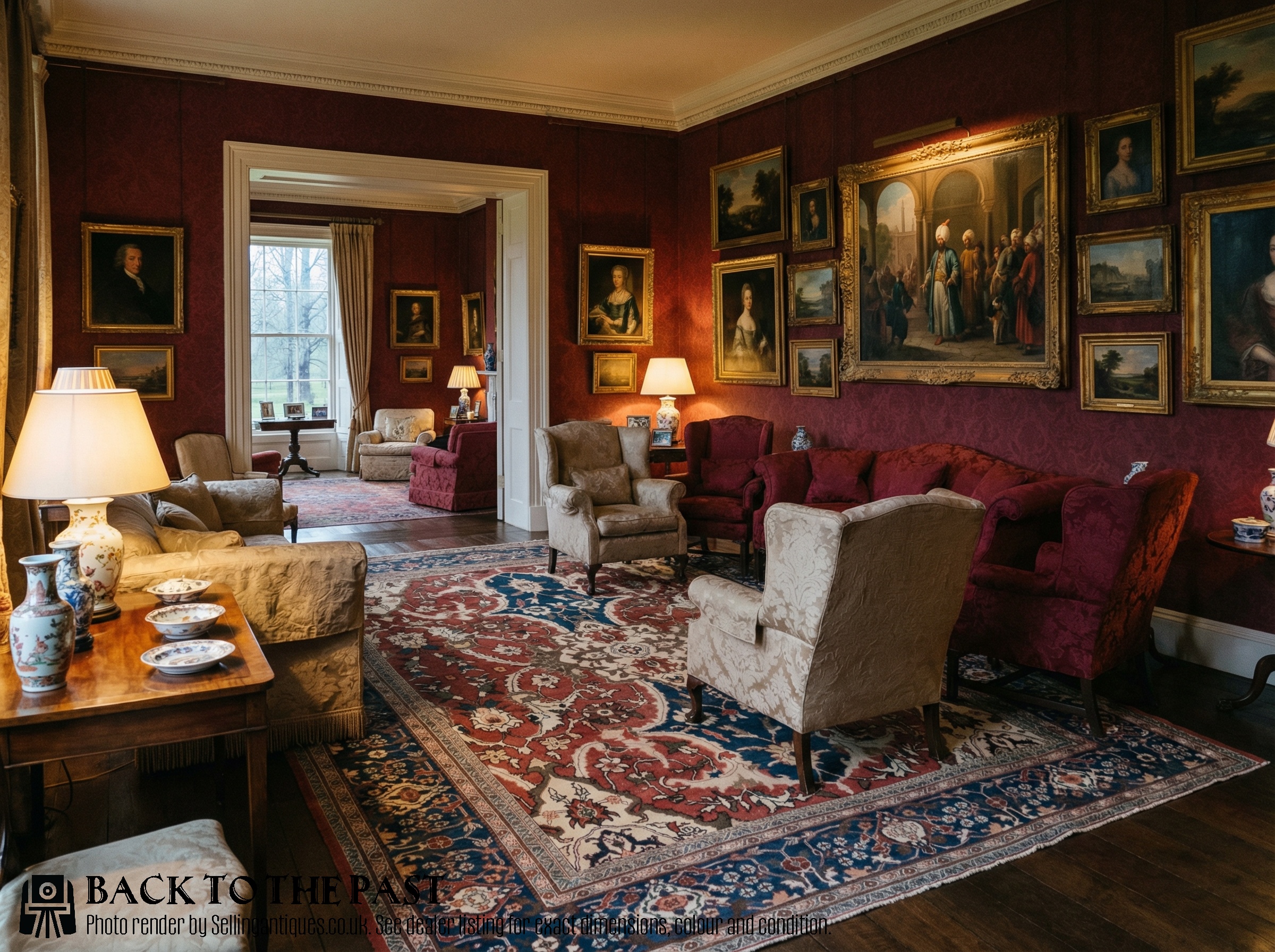
Vintage Mahal Wool Rug
A vintage mahal wool rug originates from the central western region of Persia, often encompassing village and workshop productions from the nineteenth and early twentieth centuries. These large floor coverings and smaller tribal pieces display an artistic lineage connected to Sultanabad and Ziegler carpets, marked by expansive floral layouts and geometric medallions.
The items found here span the 1870s to the 1930s, featuring classic village rugs, long corridor runners, and specialised nomadic items such as tacheh wheat sacks and bread sofreh. Buyers encounter substantial room-size carpets alongside smaller format area rugs, all carrying the distinct aesthetic of the Chahar Mahal valley.
Makers in this tradition utilised recurring motifs such as all-over shrub patterns, ivory grounds, and terracotta fields that anchor the traditional Persian style. Each piece reflects the specific regional weaving vocabulary of western Persia, distinguishing itself from other Persian centres through softer palettes and larger scale patterns.
Factors that define quality
Quality rests upon the clarity of the natural dye palette and the integrity of the hand-spun wool, which determines how richly the pile reflects light. Superior examples display balanced proportions in their all-over shrub or medallion designs without clumsy crowding at the borders.
The precision of the weave and the health of the cotton foundation dictate the longevity of the piece, separating robust room-size carpets from fragile specimens. A well-preserved village rug retains strong selvedges and even pile height across the entire field.
Several nomadic sacks in this collection were originally packed tight with grain before finding a second life as decorative floor art.
The Vintage Mahal Wool Rug Glossary
- Mahal
- A type of Persian carpet originating from the Sultanabad region in western Persia, known for large-scale floral patterns and room-size formats. These rugs often feature more relaxed village interpretations of formal workshop designs.
- Tacheh
- A traditional woven wheat sack or storage bag created by nomadic tribes in the Chahar Mahal valley. They display dense tribal iconography and serve as compact examples of regional weaving.
- Ziegler
- A nineteenth-century commercial design style associated with western Persian production, tailored for Western aesthetic tastes with softer palettes and expansive fields. These carpets emphasise muted terracotta and ivory grounds.
- Sofreh
- A flatwoven or piled textile used traditionally for domestic food preparation or bread-making among tribal groups. Their geometric compositions reflect the utilitarian artistry of Luri and Bakhtiari weavers.
- Sultanabad
- A nineteenth-century Persian carpet centre in western Persia noted for bold, large-scale floral patterns. The term shares close stylistic ties with Mahal productions.
Vintage Mahal Wool Rug: Frequently Asked Questions
How do I care for a vintage mahal wool rug?
Vacuum gently without using a rotating brush roll to protect the hand-spun wool pile and cotton foundations. Rotate the carpet periodically to ensure even wear across high-traffic areas.
Professional cleaning by specialists familiar with antique vegetable-dyed textiles is essential every few years. Keep the rug out of direct, harsh sunlight to preserve the natural dye colours.
Where were these rugs made?
These textiles were produced in the Chahar Mahal valley and surrounding districts of western Persia. This region includes village workshops and nomadic encampments associated with Bakhtiari and Luri tribes.
The town of Sultanabad served as a primary commercial hub for organising the production and export of these large carpets during the nineteenth and early twentieth centuries.
What is a tacheh rug?
A tacheh is a functional storage bag or wheat sack woven by nomadic groups like the Luri and Bakhtiari tribes. Collectors prize them for their concentrated tribal designs and smaller dimensions.
These pieces were originally utilised for domestic storage before entering the collector market as decorative small formats.
Are these carpets suitable for heavy foot traffic?
The sturdy hand-spun wool pile and robust cotton foundations make these carpets well-suited for everyday living spaces. Their durable construction has already demonstrated resilience over a century or more of existence.
Placing a quality underlay beneath the rug prevents slipping and cushions the fibres against hard flooring.