



Vintage Luggage Table
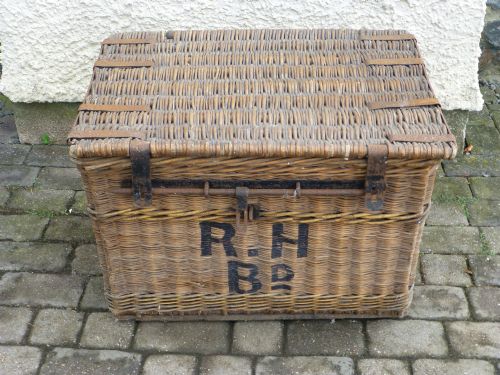
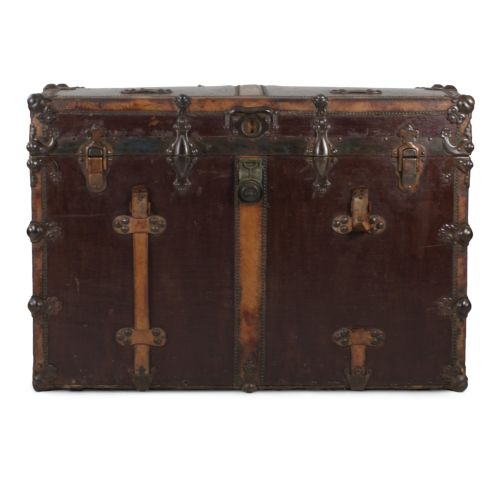
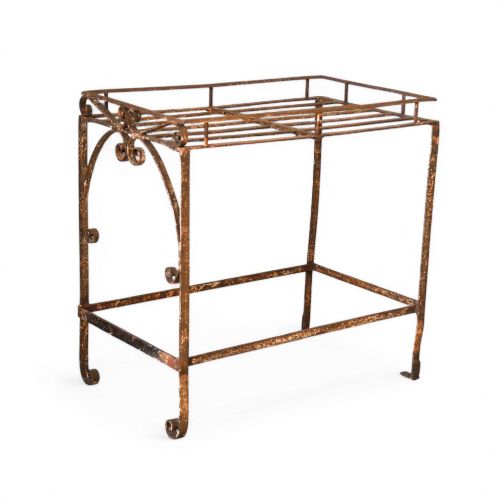
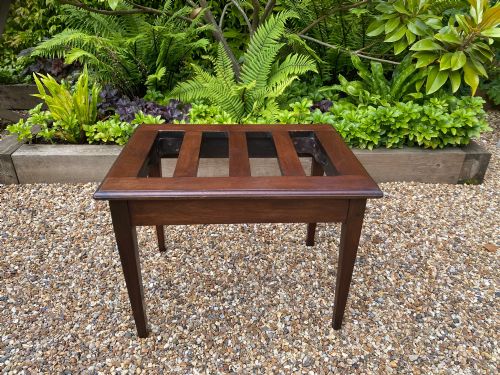
These vintage luggage table pieces are repurposed trunks and stands offering practical storage with distinct historical character.
Vintage Luggage Table
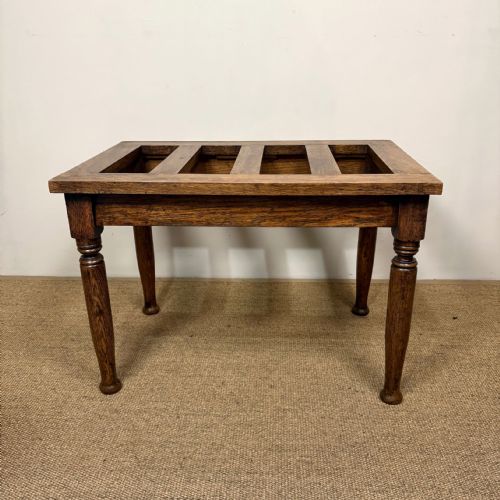
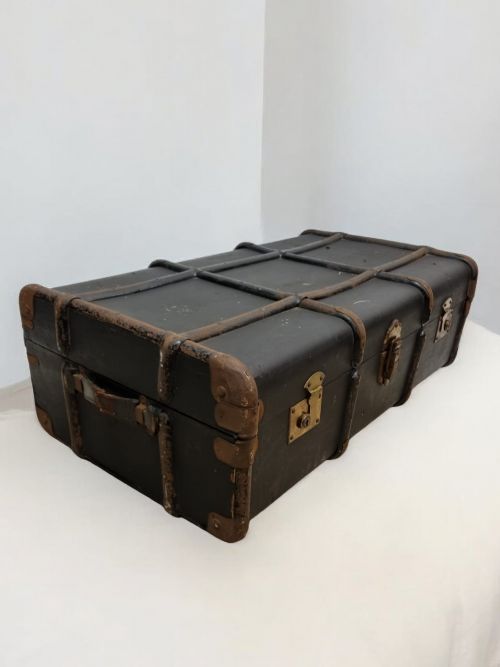
A vintage luggage table repurposes historical travel gear, transforming trunks, chests, and folding stands into functional furniture. These items range from leather-bound travel chests to sturdy mahogany luggage stands and coaching tables.
Buyers browsing this selection frequently encounter nineteenth-century pieces alongside early twentieth-century examples. Common formats include steamer trunks, campaign chests, and low storage chests adapted for use as coffee tables or accent surfaces.
Origins vary across English, French, and continental workshops, displaying influences from Victorian, Edwardian, and colonial campaign styles. The resulting collection combines utilitarian transport origins with domestic utility.
Materials and construction methods
Construction relies on robust structural timbers such as mahogany, oak, and camphor wood, reinforced for travel. Outer surfaces feature leather, canvas, pig skin, or woven cane, protected by brass, iron, or aluminium hardware and bindings.
Joinery and metalwork reflect the rigorous demands of transit, incorporating brass capping, riveted metal straps, and secure locking mechanisms. Interior fittings often include wooden compartments, zinc linings, or silk-lined vanity trays.
Vintage Luggage Table Retail Price Guide 2026
Typical asking prices for vintage luggage table among the pieces listed under this phrase on Sellingantiques today, from the lower quarter to the upper quarter. They describe what is for sale here now, not the wider market.
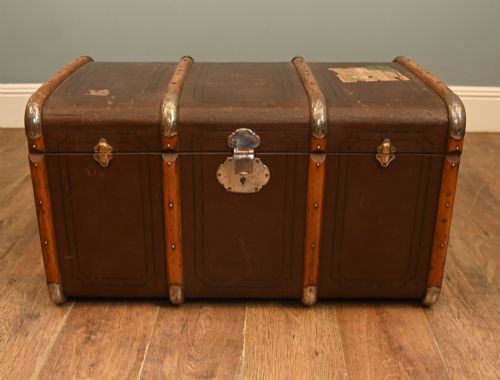
Some trunks retain faded travel labels and shipping stickers from long-forgotten cross-continental steamship voyages.
Factors determining quality
Quality rests upon the integrity of the original materials and the sophistication of the hardware. Pieces featuring heavy brass bindings, intact leather, and original locks demonstrate superior craftsmanship.
The degree of preservation and the presence of maker details or original travel labels elevate a piece. Structural stability in folding mechanisms and substantial timber frames distinguish finer stands and chests from standard utility items.
LOUIS VUITTON·Aux Etats Unis·Mr Selfridge·J.Burton London
The Vintage Luggage Table Glossary
- Steamer trunk
- A lightweight, flat-topped travel trunk designed to fit beneath a steamship berth. These items form the basis for many modern luggage tables.
- Campaign chest
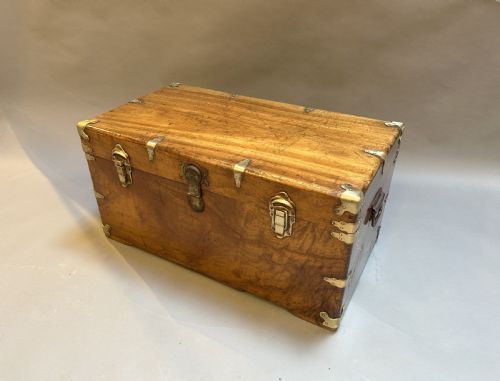
- Portable modular furniture used by military officers during campaigns, typically constructed in sections with brass corners and recessed handles.
- Coaching table
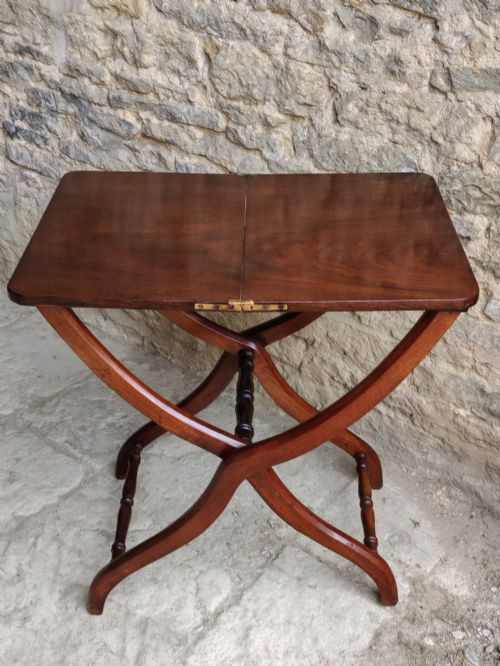
- A folding wooden table designed for easy transport during travel, featuring an X-frame or folding leg mechanism.
- Luggage stand
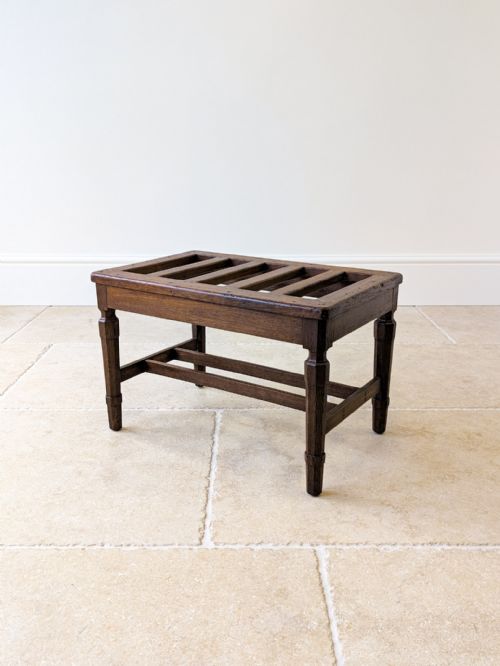
- A low wooden or iron rack originally used in hotel rooms or domestic dressing areas to hold travel bags.
- Brassbound
- Furniture or trunks edged and reinforced with brass strips and corners for durability during transit.
Vintage Luggage Table: Frequently Asked Questions
What is a vintage luggage table?
A vintage luggage table is an adapted historical trunk, chest, or folding luggage stand utilised as a functional surface in modern interiors. These items retain their original travel hardware and structural framework.
They serve primarily as coffee tables, accent tables, or low storage chests while preserving the aesthetic of early travel.
How do I clean leather luggage tables?
Leather surfaces require gentle cleaning with a soft, dry cloth to remove dust and debris. Conditioning treatments help maintain the suppleness of nineteenth and twentieth-century hides without damaging the material.
Harsh chemical cleaners and excessive moisture should be avoided to protect the original finish and metal bindings.
Are these tables suitable for daily use?
These pieces are built with robust materials like mahogany, iron, and reinforced leather designed for durability. Their sturdy construction handles normal daily use as living room tables or storage units.
Care should be taken to protect antique wooden tops and delicate fabrics from liquid spills and heavy impact.
How do I date a vintage trunk?
Dating relies on examining the construction materials, hardware styles, and maker labels. Nineteenth-century pieces often feature heavy iron straps and oak framing, while twentieth-century examples introduce aluminium and canvas.
Internal linings and locking mechanisms also provide chronological clues regarding the manufacturing period.